

P0706 on 2003-2008 Honda Pilot: Transmission Range Sensor Causes and Fixes
For a 2003-2008 Honda Pilot, code P0706 is almost always caused by a faulty Transmission Range Sensor (also called a Neutral Safety Switch). Symptoms include a flashing 'D' light, no-start conditions, and erratic shifting. Replacing the sensor is the most common fix. The OEM part number is 28900-P7W-013.
- P0706 on a 2003-2008 Pilot almost always points to a bad Transmission Range Sensor.
- Key symptoms are a flashing 'D' light, the engine not starting, and/or erratic shifting.
- The sensor is located on the outside of the transmission, making it a feasible DIY repair for those with moderate experience.
- Proper alignment of the new sensor in the Neutral position during installation is critical for the repair to be successful.
- Before replacing the sensor, always inspect its electrical connector and wiring for corrosion or damage, as this can cause the same symptoms.
What's Unique About the 2003-2008 Honda Pilot
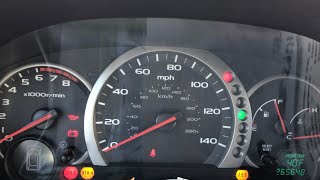
On the first-generation Honda Pilot, the P0706 code is a very common issue pointing directly to the externally-mounted transmission range switch. Unlike some vehicles where this sensor is internal and requires significant transmission work, the Pilot's sensor is accessible from outside the transmission, making replacement a much simpler job. Owners on forums like Piloteers.org frequently report the classic symptom of a flashing 'D' on the gear indicator, which is a hallmark of this specific failure 🎬 Watch: Diagnosing a flashing 'D' light on a Pilot on this platform and its relatives like the Acura MDX.
Symptoms You May Notice
- Check Engine Light is on
- Flashing 'D' (Drive) indicator light on the instrument cluster
- Vehicle will not start, or will only start in Neutral
- Harsh or delayed gear engagement
- Inability to shift out of Park
- Gear indicator on the dashboard may light up all positions at once or not match the shifter position
- Reverse lights do not work
- Cruise control may randomly disengage (a known quirk on this platform when the sensor signal is erratic)
- Replacing the entire transmission. The symptoms can mimic serious internal transmission problems, but P0706 is almost always an external sensor or wiring issue. Given the high rate of transmission failures on early 1st-gen Pilots, this misdiagnosis is a costly mistake.
- Replacing the starter, if a no-start condition is the primary symptom. The root cause is the range sensor not telling the computer it's safe to start the engine.
Most Likely Causes
- Faulty Transmission Range Sensor (Neutral Safety Switch) 🔴 High Probability → Shop Transmission Assembly The sensor is exposed to the elements on the side of the transmission, making it susceptible to moisture intrusion, internal corrosion, and wear over time. This is a widely documented failure point for this vehicle generation.
How to confirm: With the key on, shift through the gears and observe the gear position indicator on the dash. If it doesn't match the shifter position, or if the 'D' light flashes, the sensor is the likely culprit. A scan tool can also be used to monitor the sensor's output signal for each gear position, comparing it to the specified voltage ranges in the service manual.
Typical fix: Replace the transmission range sensor. This involves disconnecting the wiring, removing the shift cable linkage, unbolting the old sensor, and installing the new one. Crucially, the new sensor must be properly aligned in the Neutral position before tightening. Many owners recommend using a genuine Honda part (28900-P7W-013) as aftermarket sensors have a reputation for premature failure.
Est. part cost: $55-$180 - Damaged Wiring or Corroded Connector 🟡 Medium Probability The wiring harness leading to the sensor is located under the vehicle and is exposed to road debris, moisture, and heat, which can lead to corrosion (green or white powder), frayed wires, or loose pins in the connector.
How to confirm: Visually inspect the wiring harness and connector for the transmission range sensor. Look for any signs of corrosion, frayed wires, or loose pins in the connector. Wiggle the connector while monitoring the sensor data on a scan tool to see if the signal drops out.
Typical fix: Clean the connector terminals with an electrical contact cleaner. If the wiring is damaged, it will need to be repaired or the connector pigtail replaced.
Est. part cost: $10-$50 - Misaligned Transmission Range Sensor ⚪ Low Probability → Shop Transmission Assembly This typically only occurs if the sensor has been previously replaced without being properly aligned, or if the mounting bolts have loosened over time. An owner on an Acura forum reported the code returning after a replacement, with misalignment being the suspected cause.
How to confirm: Check if the vehicle starts in Neutral but not in Park (or vice versa). This indicates the sensor's reported position is out of sync with the actual gear selection. The sensor's alignment can be checked by ensuring the neutral alignment marks on the sensor and its body line up when the transmission is physically in Neutral.
Typical fix: Loosen the sensor's mounting bolts, shift the transmission into Neutral, and rotate the sensor until the alignment marks line up perfectly. Tighten the bolts and verify correct operation. This procedure is detailed in the Honda service manual.
Est. part cost: $0
Rare But Worth Checking
- Faulty Powertrain Control Module (PCM): This is extremely rare. Before condemning the PCM, all other possibilities, including the sensor, wiring, and alignment, must be exhaustively ruled out. A mechanic can perform advanced diagnostics, such as checking for voltage at the PCM terminals, to confirm if the PCM is not correctly processing the signal from a known-good sensor.
- Low or Faulty Transmission Pressure Switches: → Shop Transmission Assembly While P0706 specifically points to the range sensor, some owners have reported a flashing 'D' light caused by failing 3rd or 4th gear clutch pressure switches. These can trigger other codes but sometimes present with similar symptoms. One owner fixed a flashing 'D' light on a 2006 Pilot by replacing these switches (OEM parts 28600-RKE-004 and 28610-RKE-004).
Diagnosis Steps
- Scan for Codes: Use an OBD-II scanner to confirm P0706 is present. Note any other codes, especially P0705.
- Check Basic Operation: Turn the key to the 'ON' position (without starting). Slowly move the gear selector through all positions. Watch the instrument cluster to see if the indicator matches the gear you've selected and if the 'D' light flashes.
- Test Start in Park and Neutral: Attempt to start the engine in Park. Then, attempt to start it in Neutral. If it starts in one but not the other, it strongly suggests a sensor alignment or sensor failure issue.
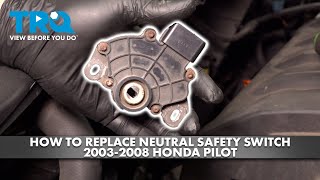
- Inspect the Sensor and Wiring: Locate the transmission range sensor on the side of the transmission, typically accessible from the driver's side 🎬 Watch: Locating and replacing the neutral safety switch wheel well. Visually inspect the electrical connector and wiring harness for any obvious signs of damage, corrosion, or loose connections.
- Test the Sensor (Advanced): Using a multimeter and the vehicle's service manual, back-probe the connector to test for correct voltage signals from the sensor in each gear position. This will definitively confirm if the sensor is faulty.
- Check Alignment: If the sensor has been recently serviced, verify its alignment. Ensure the transmission is in Neutral and check that the alignment marks on the sensor body and lever are correctly lined up.
- Replace the Sensor: If the sensor is confirmed to be faulty, replace it. Ensure the new sensor is properly aligned during installation. It is highly recommended to use a genuine Honda part.
Parts You'll Likely Need
- Transmission Range Sensor / Neutral Safety Switch
(OEM #28900-P7W-013 (Supersedes 28900-P7W-003))— This sensor is the most common point of failure for the P0706 code on this vehicle due to wear and exposure to the elements. Owner forums are filled with accounts of this part failing and resolving the issue upon replacement.
Trusted brands: Honda (OEM), Rostra, Duralast, Standard Motor Products (Intermotor)
OEM price range: $160-$240
Aftermarket price range: $55-$180
Related Codes That Often Appear With This One
- P0705 — P0705 (Transmission Range Sensor Circuit Malfunction) is a closely related code that often appears with P0706. While P0706 points to a performance or range issue (an illogical signal), P0705 can indicate a more general circuit failure. Honda's official diagnostic procedure for P0706 even begins by checking if P0705 is also present.
Technical Service Bulletins (TSBs) & Recalls
- Honda Service Bulletin 04-021: Addresses the automatic transmission second gear inspection and the installation of an oil jet kit as part of a safety recall for 2003-04 models. While not for P0706, it is critical context for any transmission work on these vehicles.
Platform-Specific Known Issues
- Owner experience from a 2005 Acura TSX (platform relative) on Acurazine.com highlights a common pitfall: the user replaced the sensor with an aftermarket part from a local auto parts store, only to have the P0706 code return within a year. The community advised that proper alignment is critical and that OEM parts are often more reliable for this specific sensor.
- The 2003-2004 Pilot was subject to NHTSA recall 04V176000 for its automatic transmission, which could overheat and cause gear failure or lockup. While this recall does not directly involve the P0706 sensor, it underscores the sensitivity of this transmission and the importance of correctly diagnosing electronic faults versus internal mechanical failures.
Mechanic-Grade Diagnostic Values
- Transmission Range Sensor Internal Switch Continuity — expected: While a specific resistance chart is not readily available, the sensor contains multiple switches that open and close in a specific pattern for each gear. A technician should test for continuity across the various pin combinations for each gear position (P, R, N, D, etc.). There should be a logical change in continuity when shifting. An illogical state, such as a pin showing continuity in both Park and Drive, indicates a failed sensor.. Failure: No change in continuity between gear positions, or a pin combination showing open or shorted when it should not, according to the service manual's logic chart.
- Transmission Range Sensor Live Data (via Honda HDS) — expected: The Honda Diagnostic System (HDS) can display the status (ON/OFF or OPEN/CLOSED) of the individual switches inside the range sensor. As the shifter is moved, the combination of switch statuses on the scan tool display should logically correspond to the selected gear.. Failure: The HDS shows an illogical combination of switch statuses. For example, the data might indicate the transmission is in 'P' and 'D' simultaneously, which is impossible and triggers code P0706.
Scan Tool Commands That Help
- Honda Diagnostic System (HDS): A/T Data List - TR Switch Status — This is the primary professional diagnostic step for P0706. Instead of just seeing a single voltage, the HDS shows the on/off state of the multiple internal switches that make up the sensor. A technician can move the shifter through each gear and watch the data list to see if the switch combination is logical. An illogical state (e.g., two gears reported at once) instantly confirms an internal sensor failure without needing to perform manual electrical tests at the sensor itself.
Wiring & Ground Locations
- Transmission Range Sensor Connector — On the front or side of the transmission, typically accessible after removing the driver's side front wheel and a plastic splash shield.. This is the primary point for visual inspection of corrosion (green/white powder) and for performing electrical tests (voltage, continuity) on the sensor and harness.
- G101 — On the rear of the engine block.. This is a primary ground point for the engine and transmission control systems. A loose or corroded G101 ground can cause a host of erratic electrical issues, including illogical signals from sensors like the transmission range switch.
- PCM Connector A (for 2006 model) — The Powertrain Control Module (PCM) is located on the right side of the engine compartment. The range switch signals run to specific pins on its connectors.. For a 2006 Pilot, wiring diagrams show signals from the range switch go to pins like A16 (ATP-R) and A18 (ATP-P) on the PCM connector. Advanced diagnosis involves checking for signal continuity and voltage directly at these pins to isolate a fault between the sensor and the PCM.
Real Owner Repair Stories
- General forum consensus and common knowledge (2003-2008 Honda Pilot, all trims) — Flashing 'D' light, Check Engine Light with P0706, sometimes a no-start or starts only in Neutral.
❌ Tried (didn't work) Clearing the code (it returns immediately or after a short drive)., Checking transmission fluid (level is usually fine and unrelated).
✅ What actually fixed it Replacing the transmission range sensor with a new OEM part and carefully aligning it in the Neutral position before tightening the mounting bolts. A common mistake is improper alignment, which causes the code to return immediately after replacement. - NHTSA ODI #10544028 (Honda Accord cross-reference) — An owner reported that their transmission was diagnosed as failing due to codes P0705 and P0706, with a dealership quote of $4800 for replacement, highlighting how these codes are often associated with expensive transmission failure estimates.
OEM Part Supersession History
28900-P7W-003→28900-P7W-013, then 28900-P7W-023— Part revision and improvement by the manufacturer.
Heads up: This part series is only for 2003-2004 model year Pilots and will not work on 2005-2008 models.28900-RDK-003→28900-RDK-013— Part revision and improvement by the manufacturer.
Heads up: This part series is for the updated transmission in the 2006-2008 Pilots and is not compatible with 2003-2004 models.
Model Year Variations Within This Range
- 2003-2004: These early models use a transmission range sensor with the latest OEM part number being 28900-P7W-023. This part is physically different from the one used in later models.
- 2005: The 2005 model year used an updated transmission (PVGA code) compared to the 03-04 models (BVGA code). It most likely uses the later style sensor (28900-RDK-xxx series), but parts catalogs are ambiguous. Owners should verify the correct part by VIN or by visually inspecting the installed sensor before ordering.
- 2006-2008: These facelifted models use a different transmission range sensor. The latest OEM part number is 28900-RDK-013. This part is not interchangeable with the sensor for 2003-2004 models.
Diagnostic Flowchart
Other Known Issues on This Vehicle
Issues unrelated to this code that are worth knowing about as an owner of this generation:
- Automatic Transmission Failure (2nd Gear Clutch Pack) 🔴 High → Shop Transmission Assembly — Very common, especially on 2003-2004 models. Often occurs between 70,000 and 150,000 miles. (Ref: NHTSA Recall #04V176000. Honda issued a recall to install an oil jet kit to improve lubrication to the second gear. However, many transmissions still failed.)
- Torn Front Compliance Bushings 🟠 Medium — Extremely common. The fluid-filled bushings on the front lower control arms frequently tear, leaking black fluid and causing clunking noises or sloppy steering feel. (Ref: While TSBs existed for later models, this is a well-documented wear item on the first generation.)
- Variable Cylinder Management (VCM) Complications 🟠 Medium — Affects 2006-2008 models equipped with VCM-1. Can lead to increased oil consumption, fouled spark plugs, and premature engine mount failure due to vibrations. (Ref: Honda faced a class-action lawsuit for VCM issues on later J-series engines, but the 1st-gen Pilot's VCM-1 system is also a known source of owner complaints.)
- Failing Motor Mounts 🟠 Medium — Common, especially the hydraulic front and side mounts. Failure leads to excessive engine vibration felt in the cabin, particularly at idle or when in gear.
- Takata Airbag Inflator Recalls 🔴 High — Affects all model years (2003-2008). Part of the massive global Takata recall. (Ref: Multiple NHTSA recalls (e.g., #19V182000, #16V344000). It is critical to verify that all airbag recalls have been completed.)
Used vs. New Parts: Buying Guide for This Vehicle
When a used part is the smart pick: A used OEM sensor from a reputable salvage yard can be a cost-effective option, as the OEM parts are generally more reliable than new aftermarket alternatives for this specific component. It is a good choice if the budget does not allow for a new OEM part.
Donor-vehicle mileage cap: roughly under 100000 miles for the part to have meaningful remaining life.
What to inspect on the donor part:
- Verify the donor vehicle's mileage is reasonably low.
- Inspect the electrical connector pins for any signs of corrosion, bending, or damage.
- Ensure the plastic housing of the sensor is not cracked or showing signs of extreme heat stress.
- Confirm the part number on the used sensor matches the required part for your specific model year (P7W for 2003-04, RDK for 2006-08).
OEM-only on this vehicle (don't cheap out):
- Transmission Range Sensor
Aftermarket brands forum-validated for this vehicle:
- While OEM is strongly recommended, Standard Motor Products (Intermotor) and Rostra are generally considered higher-quality aftermarket brands if OEM is unavailable.
Brands owners have reported issues with on this vehicle:
- Unnamed, 'white-box' or ultra-low-cost brands found on online marketplaces often have a high rate of premature failure or incorrect calibration, leading to the code returning shortly after installation.
Real Owner Stories
Aggregated from forums and TSBs cited above. Mileages and costs reflect what owners reported in those sources.
2005 Acura TSX
Symptoms: The P0706 code returned within a year after replacing the sensor with an aftermarket part from a local auto parts store.
What fixed it: The community advised that proper alignment of the sensor is critical and recommended using an OEM part for reliability.
Source hint: Acurazine - 'CheckEngine Light P0706' (May 2018)
2003 Honda Pilot — ~110000 miles
Symptoms: Automatic transmission failure related to the 2nd gear clutch pack; vehicle was part of a recall for transmission overheating.
What fixed it: Installation of an oil jet kit to improve lubrication to the second gear as part of a safety recall.
Source hint: NHTSA Recall #04V176000
Documented NHTSA Reports
Honda Accord (Cross-Manufacturer Reference)
Symptoms: An owner reported the transmission failing due to codes P0705 and P0706.
What fixed it: A local dealership stated the repair would require a full transmission replacement at a cost of $4800, noting this as a long-standing issue.
Source hint: NHTSA ODI #10544028
Related OBD-II Codes
Frequently Asked Questions
My 2003 Honda Pilot has a flashing 'D' light and won't start in Park. Does the transmission recall 04V176000 cover the P0706 sensor?
Can I use an aftermarket sensor to fix the P0706 code on my Pilot?
Why does my cruise control randomly disengage on my 2007 Pilot when I have a P0706 code?
I replaced the sensor but the P0706 code came back. What did I do wrong?
Is the P0706 issue common on other Honda vehicles besides the Pilot?
Helpful Videos

We Have This Part in Stock



The information in this article is provided for general reference and educational purposes only. Vehicle specifications, procedures, and part compatibility can vary by production date, trim level, and region. Always consult your vehicle's factory service manual and verify part numbers before purchasing or performing repairs. Safety-critical components such as airbags, seat belts, and braking systems should be installed by a qualified professional.
- Honda Pilot:
- 🧭 Diagnostic Flowchart
- 🎬 Helpful Videos
- 🛍️ Shop This Part
- What's Unique About the 2003-2008 Honda Pilot
- Symptoms You May Notice
- Most Likely Causes
- Rare But Worth Checking
- Diagnosis Steps
- Parts You'll Likely Need
- Related Codes That Often Appear With This One
- Technical Service Bulletins (TSBs) & Recalls
- Platform-Specific Known Issues
- Mechanic-Grade Diagnostic Values
- Scan Tool Commands That Help
- Wiring & Ground Locations
- Real Owner Repair Stories
- OEM Part Supersession History
- Model Year Variations Within This Range
- Other Known Issues on This Vehicle
- Used vs. New Parts: Buying Guide for This Vehicle
- Real Owner Stories
- 2005 Acura TSX
- 2003 Honda Pilot — ~110000 miles
- Documented NHTSA Reports
- Honda Accord (Cross-Manufacturer Reference)
- Related OBD-II Codes
- Frequently Asked Questions
- 🎟️ Get 5% Off