

P0706 on 2007-2017 Jeep Compass: Transmission Range Sensor Causes and Fixes
On a 2007-2017 Jeep Compass, code P0706 almost always points to a faulty Transmission Range Sensor (TRS) or its wiring. This sensor tells the car what gear it's in. A very common symptom is the PRNDL indicator on the dash lighting up all positions at once or showing an incorrect gear. Expect to pay around $50-$150 for an aftermarket sensor and $150-$250 for professional installation.
- P0706 on a Jeep Compass usually means the Transmission Range Sensor has failed or its wiring is damaged.
- Symptoms often include a no-start condition, being stuck in gear, or an illuminated Check Engine Light, and frequently a scrambled gear display on the dash.
- Diagnosis should start with a scan tool to check live data from the sensor, followed by a visual inspection of the wiring.
- Do not immediately assume the transmission or computer is bad; the fix is usually a much cheaper external sensor or wiring repair.
- Verify the correct Mopar part number for your specific year and transmission type (CVT vs. 6-speed automatic) before purchasing.
What's Unique About the 2007-2017 Jeep Compass
The first-generation (MK) Jeep Compass (2007-2017) primarily used a Jatco JF011E Continuously Variable Transmission (CVT), also known as the CVT2. The external Transmission Range Sensor (TRS) on these units is a very common failure point. While the P0706 code is generic, on this specific platform and its siblings (Dodge Caliber, Jeep Patriot), it's very frequently a straightforward sensor or wiring issue rather than a deeper internal transmission problem. Owners often experience this code as the first sign of the sensor's failure, sometimes with the dash gear indicator lighting up completely before more severe shifting problems begin.
Generation note: The 2007-2017 range covers the entire first generation (MK, 2007-2017) and the first model year of the second generation (MP, 2017-present). This guide primarily focuses on the first-generation MK models with the Jatco CVT (JF011E) or the later 6F24 6-speed automatic, as they are most commonly associated with this code. While the code can appear on MP models with the 9-speed transmission, the sensor part numbers and locations differ.
Symptoms You May Notice
- Check Engine Light is illuminated
- Vehicle may not start or only starts in Neutral.
- Inability to shift out of Park
- Incorrect gear indicator on the dashboard (e.g., all positions lit up, a "--" symbol, or the wrong gear shown).
- Vehicle enters 'limp mode' with reduced engine power.
- Harsh or delayed gear engagement.
- Reverse camera stays on after shifting out of reverse.
- Replacing the entire transmission when only the external range sensor is faulty.
- Replacing the PCM/TCM before thoroughly testing the sensor and its wiring circuit.
- Replacing the starter when a no-start condition is caused by the TRS not sending the 'Park' or 'Neutral' signal.
Most Likely Causes
- Faulty Transmission Range Sensor (TRS) 🔴 High Probability → Shop Transmission Assembly The sensor is mounted externally on the Jatco CVT, exposed to heat, vibration, and moisture. Internal components and contacts can wear out over time, causing its signal to drift outside the expected voltage range, a common failure on the MK platform.
How to confirm: Use a scan tool to monitor the sensor's voltage output while shifting through all gears. The voltage should change smoothly and correspond to a specific value for each gear position. Any jumps, incorrect readings, or a signal that doesn't change when the shifter is moved points to a bad sensor.
Typical fix: Replace the Transmission Range Sensor. This requires careful alignment during installation.
Est. part cost: $50-$150 - Damaged or Corroded Wiring/Connector 🟡 Medium Probability The wiring harness leading to the transmission can be damaged by road debris, engine heat, or moisture, leading to corrosion on the connector pins (green crust) or breaks in the wires.
How to confirm: Visually inspect the wiring harness and the connector at the Transmission Range Sensor for any signs of damage, corrosion, or loose pins. Perform a continuity test with a multimeter on the wires between the sensor and the Transmission Control Module (TCM).
Typical fix: Repair the damaged section of wire or clean/replace the connector. Ensure a secure connection.
Est. part cost: $10-$50 - Misadjusted Shift Linkage ⚪ Low Probability The cable connecting the gear shifter inside the car to the transmission can stretch or become misaligned over time, causing a mismatch between the shifter position and the gear selected at the transmission.
How to confirm: Check if the gear selected on the shifter (e.g., 'D') matches the gear the transmission is actually in. If there is play or misalignment, the linkage needs adjustment. The sensor reading on a scan tool will not align with the physical shifter position.
Typical fix: Adjust the shift linkage cable according to factory specifications.
Est. part cost: $0-$20
Rare But Worth Checking
- Faulty Powertrain/Transmission Control Module (PCM/TCM): → Shop Transmission Assembly This is a rare cause. Before replacing the module, all other possibilities (sensor, wiring) must be exhaustively ruled out. A faulty PCM/TCM can misinterpret a perfectly good signal from the sensor or fail to process the input correctly.
- Dirty or Low Transmission Fluid: → Shop Transmission Assembly Extremely dirty or low fluid can cause erratic hydraulic pressure and behavior in the transmission's valve body, which could indirectly trigger a range sensor code. This is unlikely to be the sole cause for P0706 but should be checked as part of routine diagnostics.
- Low Battery Voltage: Low system voltage from a failing battery or alternator can cause various electronic modules, including the TCM, to behave erratically and set false codes. It's a simple and free check to perform before more complex diagnostics.
Diagnosis Steps
- Connect an OBD-II scanner to confirm P0706 is present and check for other codes like P0700, P0705, P0707, or P0708.
- Using the scanner's live data function, monitor the Transmission Range Sensor voltage/position as you slowly move the shifter through each gear (P, R, N, D, L). Note any erratic readings, values that don't change, or positions that don't register correctly.
- Visually inspect the Transmission Range Sensor, its electrical connector, and the wiring harness for any obvious signs of damage, corrosion, or loose connections. The sensor is located on the outside of the transmission where the shift linkage connects.
- If wiring looks good, disconnect the sensor and test for proper voltage and ground at the connector using a multimeter, following the vehicle's service manual specifications.
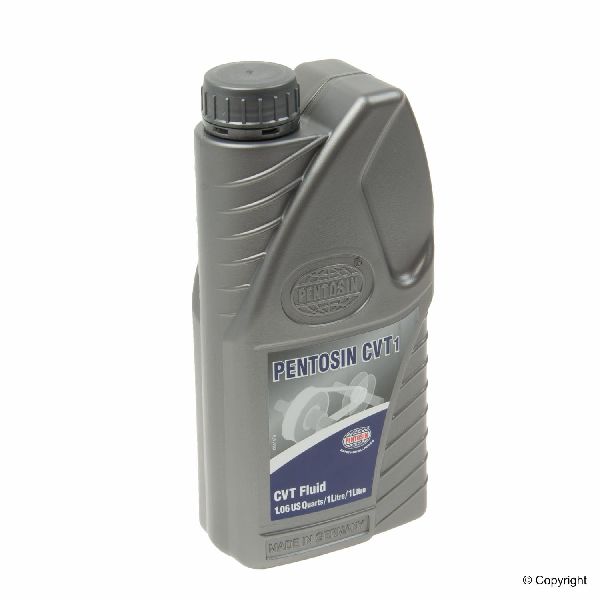
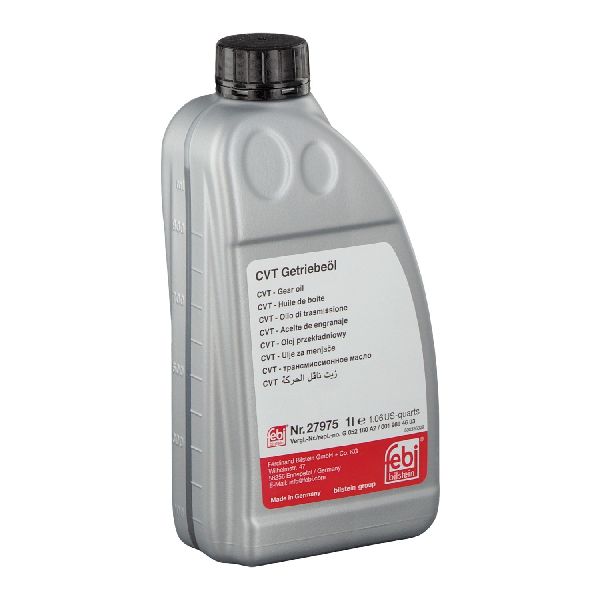
- Check the condition and level of the transmission fluid. For the CVT, use the specified fluid (e.g., Mopar CVTF+4). Dirty fluid can indicate other potential issues.
- Verify battery voltage is stable and correct (above 12V with engine off, ~14V with engine running) to rule out electrical system issues.
- If the sensor and wiring test good, the issue may be a misadjusted shift linkage or, in rare cases, a faulty PCM/TCM.
Parts You'll Likely Need
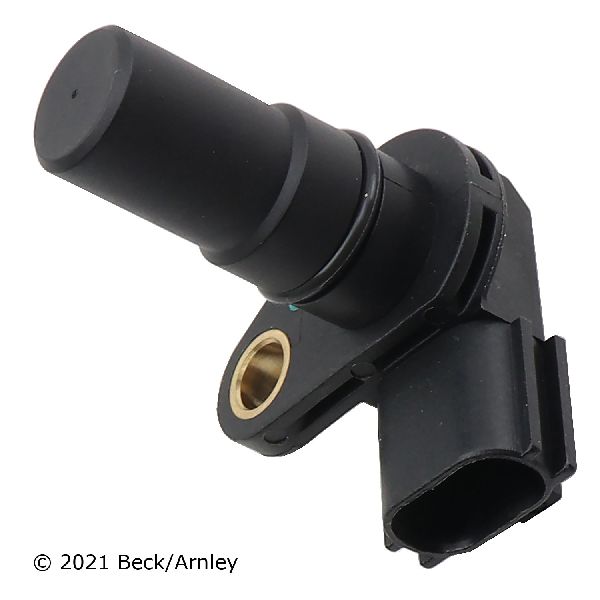
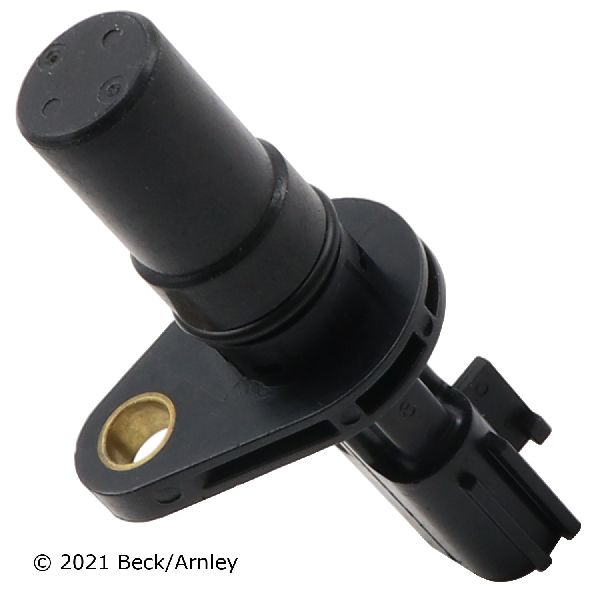
- Transmission Range Sensor
(OEM #For Jatco CVT models (approx. 2007-2013): 05189839AA. For 6F24 Automatic models (approx. 2014-2017): 68273120AA (replaces 68192769AA). Always verify with VIN.)— This is the most common component to fail and directly cause the P0706 code.
Trusted brands: Mopar, NTK, Dorman, Crown Automotive
OEM price range: $120-$200
Aftermarket price range: $50-$150
Related Codes That Often Appear With This One
- P0700 — P0700 is a generic code indicating that the Transmission Control Module (TCM) has stored a fault. It often appears alongside more specific transmission codes like P0706 to signal a transmission-related issue.
- P0705 — This code indicates a malfunction in the Transmission Range Sensor circuit itself (PRNDL input), which is very closely related to the P0706 performance issue.
- P0707 — Indicates the Transmission Range Sensor circuit input is low, pointing directly to a sensor or wiring problem.
- P0708 — Indicates the Transmission Range Sensor circuit input is high, also pointing directly to a sensor or wiring problem.
Technical Service Bulletins (TSBs) & Recalls
- While no TSB directly addresses P0706 for this specific model range, TSBs for newer models like 18-035-19 REV. D for the 2019 Compass involve PCM flashes to correct various DTCs. It's always worth checking for the latest software updates, as module logic can sometimes misinterpret sensor data.
Platform-Specific Known Issues
- Jatco JF011E CVT Specifics: The Jatco JF011E CVT used in early MK Compasses is known for several common issues, including range sensor failure. The sensor is located externally on the transmission case, making it accessible without dropping the transmission pan. A video by Weber State University on YouTube titled 'Jatco CVT Overhaul JF011E RE0F10a/b' clearly shows the sensor's location and function on the top/side of the transmission.
- Dash Gear Indicator (PRNDL) Failure: A hallmark symptom on this platform is when all the gear position indicator lights on the dashboard light up simultaneously, or are boxed in. This almost always points to a P0706 and a failed range sensor or its circuit, as the computer has lost track of the shifter's position.
Mechanic-Grade Diagnostic Values
- Transmission Range Sensor 'A' Voltage (Live Data) — expected: Park: ~0V, Reverse: ~5V, Neutral: ~2.5V, Drive: ~4V. The voltage should change smoothly between gears within a range of approximately 0.5V to 4.5V.. Failure: Readings that are stuck, jump erratically, or deviate more than ±0.5V from the expected value for a given gear indicate a problem with the sensor or its circuit.
- Transmission Range Sensor Resistance — expected: Resistance should vary smoothly as the gear selector is moved. Example values might be 100Ω in Park and 500Ω in Drive, but the service manual should be consulted for exact specifications.. Failure: An open circuit (infinite resistance) or a short (zero resistance) in positions where a value is expected, or values that do not change when shifting, points to a failed sensor.
- TRS Sense Circuit Resistance (T1, T3, T41, T42) — expected: A low resistance value (typically under 5.0 ohms) when measuring continuity from the transmission harness connector to the PCM connector breakout box (Miller tool #8815).. Failure: High or infinite resistance indicates an open circuit in the wiring between the TRS and the PCM.
Hidden / Shadow Codes Worth Checking
- Error Code 11 or OD-TOW/HALL STUCK OPEN: This is not a standard DTC but an error message displayed by the dealer scan tool during the 'Shift Lever Position Test'. It indicates a specific failure during the guided diagnostic routine. (see via Using a dealer-level scan tool (like Mopar's wiTECH) and running the specific 'Shift Lever Position Test' service function.)
Scan Tool Commands That Help
- wiTECH or equivalent professional scanner: Shift Lever Position Test — This is a guided test to verify the functionality of the entire TRS circuit. It systematically checks each gear position signal and is a primary diagnostic step at the dealer level to confirm a P0706 fault.
- wiTECH or equivalent professional scanner: PRNDL Fault Clearing Procedure — After a repair, this specific procedure is required to clear the fault from the TCM's memory. It involves a sequence of shifting through all gears while holding the brake, which allows the TCM to re-learn and verify the sensor's signals.
- Professional scanner with bidirectional controls: TCM-to-sensor handshake — To verify communication between the Transmission Control Module (TCM) and the sensor. A failure to receive a valid response can point towards a TCM input driver fault, helping to differentiate a bad sensor from a bad control module.
Wiring & Ground Locations
- TRS Connector (Jatco CVT) — Externally on the top or side of the transmission case, where the manual shift lever connects.. This is the primary connection point to inspect for corrosion (green crust), pushed-out pins, or harness damage on models up to ~2013.
- TRS Circuits (T1, T3, T41, T42) — These are the specific wire circuits running between the TRS connector and the Powertrain Control Module (PCM) connector.. A P0706 fault is often caused by an open or short in one of these specific wires. The 'T41' circuit is particularly critical for the start signal on 6F24 models. Testing continuity on these wires is a key diagnostic step.
- PCM/TCM Connector C4 (Green) — On many Mopar vehicles of this era, the PCM is located in the front driver's side wheel well, behind the splash shield. The C4 connector is typically green.. This is the termination point for the TRS wiring. Back-probing the pins here allows you to test the entire circuit and verify if the signal from the TRS is actually reaching the computer, which is crucial for diagnosing a potential PCM failure.
- Transmission Ground Strap — A braided metal strap typically connecting the transmission case directly to the vehicle's chassis or subframe.. A corroded or broken ground strap can cause all sorts of erratic electrical behavior and false codes, including P0706. Ensuring this connection is clean and tight is a fundamental step in any electrical diagnosis.
Real Owner Repair Stories
- YouTube channel 'Gary Ferraro' (2004 Chrysler Town & Country (similar Mopar electronics and logic)) — P0706 code, all PRNDL dash indicators lit up simultaneously, transmission in fail-safe mode.
❌ Tried (didn't work) Replacing the Transmission Range Sensor (TRS).
✅ What actually fixed it The Powertrain Control Module (PCM) was faulty. The technician verified the TRS and wiring were good by testing the signal with a voltmeter at the PCM connector. Since a good signal was entering the PCM but the fault persisted, the PCM itself was condemned and replaced, which solved the issue. - Reddit user in r/HondaElement (Honda Element (different vehicle, but identical failure pattern)) — Persistent P0706 code, cruise control not working.
❌ Tried (didn't work) Replacing the transmission range sensor twice (once with aftermarket, once with OEM).
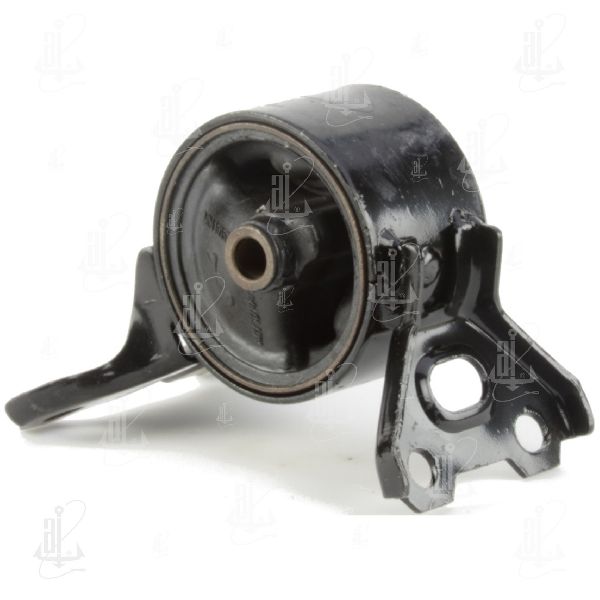
✅ What actually fixed it A broken wire in the short pigtail harness between the main wiring harness and the range sensor connector. Failed engine/transmission mounts had allowed excessive movement, straining and eventually breaking the wire. Repairing the broken wire fixed the code.
When the Usual Fixes Don't Work
- While the vast majority of P0706 codes on this platform are fixed by replacing the external Transmission Range Sensor, there are documented cases where the fault lies elsewhere. In one instance on a similar Mopar vehicle, after a new sensor failed to resolve the issue and wiring was confirmed to be intact, the ultimate cause was a failed Powertrain Control Module (PCM). The PCM was receiving the correct signal from the sensor but was unable to process it correctly. This highlights the importance of testing the signal all the way to the control module before committing to expensive repairs like a PCM replacement.
OEM Part Supersession History
68192769AA→68273120AA— Part revision or manufacturer change.
Heads up: The new part number (68273120AA) is the correct replacement for the original. Using old stock of the original part number is not advised.
Model Year Variations Within This Range
- 2007-2013 (approx.): These models primarily use the Jatco JF011E CVT. The Transmission Range Sensor (TRS) is an external component mounted on the side of the transmission case, making it a distinct, separately replaceable part (PN 05189839AA).
- 2014-2017 (approx.): These later models often use the Hyundai/Mopar 6F24 6-speed automatic transmission. On this transmission, the range sensor function is integrated into the valve body/solenoid assembly inside the transmission pan. While a sensor part is listed (PN 68273120AA), it is not an easily accessible external part like on the CVT. Diagnosis and replacement are more involved.
Diagnostic Flowchart
Used vs. New Parts: Buying Guide for This Vehicle
When a used part is the smart pick: For this repair, a used part is generally not recommended. The Transmission Range Sensor is an electronic component exposed to significant heat and vibration. Its failure is often due to internal wear and age, so a used part from a donor vehicle may have limited remaining life and carries a high risk of premature failure.
Donor-vehicle mileage cap: roughly under 60000 miles for the part to have meaningful remaining life.
What to inspect on the donor part:
- Inspect the connector pins for any signs of green or white corrosion.
- Check the plastic housing for cracks, especially around the mounting points.
- Ensure the electrical connector clicks securely into place.
- If possible, verify the donor vehicle did not have any transmission-related trouble codes.
OEM-only on this vehicle (don't cheap out):
- While not strictly OEM-only, using a Mopar-branded sensor or a known OE supplier like NTK is highly recommended for electronic components like the TRS to avoid compatibility issues and premature failure.
Aftermarket brands forum-validated for this vehicle:
- NTK
- Mopar (OEM)
Brands owners have reported issues with on this vehicle:
- Unbranded, 'white-box' parts from online marketplaces should be avoided. While brands like Dorman or Crown offer a budget alternative, some forums report mixed results with non-OEM electronic sensors on Chrysler/Jeep vehicles.
Real Owner Stories
Aggregated from forums and TSBs cited above. Mileages and costs reflect what owners reported in those sources.
2007-2017 Jeep Compass 2.4L
Symptoms: The check engine light was on, and all of the gear position indicator lights (PRNDL) on the dashboard were lit up or boxed in simultaneously.
What fixed it: The problem was a failed transmission range sensor or an issue in its electrical circuit.
Source hint: Vehicle Specific Issues section: 'Dash Gear Indicator (PRNDL) Failure'
Related OBD-II Codes
Frequently Asked Questions
Where is the Transmission Range Sensor located on my 2007-2017 Jeep Compass with the CVT?
All the gear indicator lights (PRNDL) on my dashboard are lit up at once. Is this related to code P0706?
My Compass won't start in Park but will start in Neutral. Is P0706 a likely cause?
Are there any recommended brands for a replacement Transmission Range Sensor?
Is this P0706 problem also common on the Jeep Patriot or Dodge Caliber?
Can a misadjusted shifter cable cause a P0706 code?
Is there a specific TSB from Jeep that addresses the P0706 code for this Compass?
We Have This Part in Stock

The information in this article is provided for general reference and educational purposes only. Vehicle specifications, procedures, and part compatibility can vary by production date, trim level, and region. Always consult your vehicle's factory service manual and verify part numbers before purchasing or performing repairs. Safety-critical components such as airbags, seat belts, and braking systems should be installed by a qualified professional.
- Jeep Compass:
- 🧭 Diagnostic Flowchart
- 🛍️ Shop This Part
- What's Unique About the 2007-2017 Jeep Compass
- Symptoms You May Notice
- Most Likely Causes
- Rare But Worth Checking
- Diagnosis Steps
- Parts You'll Likely Need
- Related Codes That Often Appear With This One
- Technical Service Bulletins (TSBs) & Recalls
- Platform-Specific Known Issues
- Mechanic-Grade Diagnostic Values
- Hidden / Shadow Codes Worth Checking
- Scan Tool Commands That Help
- Wiring & Ground Locations
- Real Owner Repair Stories
- When the Usual Fixes Don't Work
- OEM Part Supersession History
- Model Year Variations Within This Range
- Used vs. New Parts: Buying Guide for This Vehicle
- Real Owner Stories
- 2007-2017 Jeep Compass 2.4L
- Related OBD-II Codes
- Frequently Asked Questions
- 🎟️ Get 5% Off