

P0706 on 2011-2015 Kia Optima: Transmission Range Sensor Causes and Fixes
On a 2011-2015 Kia Optima, code P0706 almost always means the transmission range sensor (also called an inhibitor switch) is faulty. This can cause the car to not start, shift harshly, or have an incorrect gear display. Replacing the sensor is the most common fix.
- P0706 on a 2011-2015 Optima is most often caused by a bad transmission range sensor (inhibitor switch).
- Symptoms can be severe, including the car not starting or shifting erratically.
- Driving with this code is risky; you could get stranded or experience unpredictable transmission behavior.
- Before replacing the sensor, check its wiring and connector for damage, and ensure it is properly aligned.
- This is a known issue on Kia/Hyundai vehicles of this era, with service bulletins issued for similar problems on later models and a high failure rate on its sister vehicle, the Hyundai Sonata.
What's Unique About the 2011-2015 Kia Optima
The 2011-2015 Kia Optima (third generation, or TF) uses a specific inhibitor switch to communicate gear selection to the transmission control module. While this code is generic, Kia has a documented history of inhibitor switch issues on later Optima models, as shown in technical service bulletins for the following generation. This suggests a potential weakness in the part's design or longevity, making it a high-probability failure item when code P0706 appears. The issue is also extremely common on its platform-mate, the 2011-2015 Hyundai Sonata, which uses the same transmission and sensor.
Symptoms You May Notice
- Check Engine Light is on
- Vehicle will not start, or only starts in Neutral
- Harsh or delayed gear engagement
- Transmission may enter 'limp mode' (stuck in one gear, often 3rd or 4th)
- Gear indicator on the dashboard is incorrect or doesn't display
- Reverse lights do not turn on
- Shifter is stuck in Park or Neutral
- Decreased fuel efficiency
- Replacing the entire transmission when only the external range sensor is faulty.
- Replacing the starter motor when a no-start condition is actually caused by the inhibitor switch not sending the 'Park' or 'Neutral' signal.
Most Likely Causes
- Faulty Transmission Range Sensor (Inhibitor Switch) 🔴 High Probability → Shop Transmission Assembly This component is a well-documented failure point on Kia/Hyundai vehicles from this era. Internal wear, contamination, or corrosion of the circuit board leads to incorrect voltage signals. Similar issues were addressed in Kia TSB SA317A for later models, indicating a pattern of part failure.
How to confirm: A mechanic can use a scan tool to monitor the sensor's output data while moving the gear shifter. If the data is erratic, doesn't match the gear position, or is absent, the sensor is bad. The sensor is located on top of the transmission, under the battery and air intake assembly. 🎬 Watch: How to replace a transmission range sensor
Typical fix: Replace the inhibitor switch located on the outside of the transmission case. The new switch must be correctly aligned in the Neutral position during installation.
Est. part cost: $40-$100
Rare But Worth Checking
- Damaged Wiring or Connectors: The wiring harness to the inhibitor switch is exposed to the elements. Check for corrosion, loose pins, or physical damage before replacing the sensor itself.
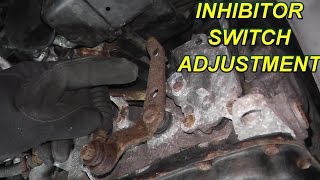
- Misaligned Inhibitor Switch: → Shop Transmission Park Inhibitor Switch If the switch was recently replaced or the shift linkage was serviced, it might simply be out of alignment. This can be adjusted without needing a new part. The switch body has alignment marks that should line up when the shifter is in Neutral. 🎬 See: How to adjust an inhibitor switch
- Contaminated Transmission Fluid: → Shop Transmission Assembly Very dirty or low transmission fluid can cause erratic behavior, though it's less likely to be the primary cause of a P0706 code.
- Faulty Transmission Control Module (TCM): → Shop Transmission Assembly This is very rare. The TCM should only be considered after the sensor, wiring, and alignment have all been confirmed to be good.
Diagnosis Steps
- Connect a professional OBD-II scanner to verify the P0706 code and check for any other related codes.
- Using the scanner's live data function, monitor the Transmission Range Sensor PID. The reading should change correctly as you move the shifter through P, R, N, D.
- If the reading is erratic or incorrect, perform a visual inspection of the inhibitor switch on the transmission, its connector, and its wiring harness for any signs of damage, corrosion, or looseness.
- To access the switch, you will likely need to remove the engine air intake assembly, the battery, and the battery tray.
- Check the alignment of the inhibitor switch. Ensure the markings on the switch align correctly when the transmission is in Neutral.
- If the wiring and alignment are good, but the signal is still incorrect, the inhibitor switch is the most likely culprit and should be replaced.
- If replacing the switch does not solve the issue, further diagnostics of the transmission control module (TCM) may be needed. 🎬 Watch: P0706 code causes and fixes explained
Parts You'll Likely Need
- Transmission Range Sensor / Inhibitor Switch
(OEM #42700-3B700)— This is the primary component that fails and causes the P0706 code on this vehicle. The original part number has been superseded.
Trusted brands: Kia (Genuine), Standard Motor Products, Beck/Arnley, Dorman
OEM price range: $50-$90
Aftermarket price range: $40-$80
Related Codes That Often Appear With This One
- P0705 — P0705 indicates a general circuit malfunction for the same sensor, while P0706 points to a performance or range issue. They are very closely related and often point to the same failed part, and are mentioned together in related TSBs.
- P0707 — Indicates the sensor circuit input is low, which can happen if the sensor fails internally or there is a wiring break.
- P0708 — Indicates the sensor circuit input is high, which can happen with an internal short in the sensor.
Technical Service Bulletins (TSBs) & Recalls
- SA317A: While this TSB for 2017 models addresses the inhibitor switch and code P0705, it provides strong contextual evidence of the part's potential for failure on the Optima platform. It lists symptoms like no-start, erratic shifting, and incorrect gear indication.
Platform-Specific Known Issues
- Kia issued a service action (SA317A) for the inhibitor switch on 2017 models, which can cause similar symptoms and related trouble codes like P0705. While not for the 2011-2015 range, this shows a history of issues with this part on the Optima platform.
- The 2011-2015 Hyundai Sonata, which shares the same A6MF1/2 transmission and chassis, suffers from the exact same high rate of inhibitor switch failure, further confirming this as a platform-wide weakness.
Mechanic-Grade Diagnostic Values
- Inhibitor Switch Output Voltage (Key On, Engine Off) — expected: Approximately 12V on the specific signal wire for the selected gear (Park, Reverse, Neutral, Drive) and 0V on the others.. Failure: No voltage, low voltage, or voltage present on multiple signal wires at once indicates a faulty switch or wiring issue.
Scan Tool Commands That Help
- Kia GDS (Global Diagnostic System) or equivalent professional scanner: Live Data Monitoring for 'Shift Lever Switch' or 'Transmission Range Sensor' — This is the primary diagnostic step. It allows the technician to see the gear position data the TCM is receiving in real-time. As the shifter is moved, the display should immediately and correctly reflect the selected gear (P, R, N, D). Erratic, delayed, or incorrect readings confirm a fault in the sensor's circuit.
Wiring & Ground Locations
- TCU Fuse #1 (Interior) — In the interior fuse box (driver's side footwell), identified as a 20A fuse labeled 'IG1'.. This fuse supplies power to the Transmission Control Unit (TCU). A blown fuse would cause a loss of communication and could potentially set various transmission-related codes, including P0706.
- TCU Fuse #2 (Engine Bay) — In the engine compartment fuse box, identified as a 20A fuse labeled 'TCU'.. This is another critical power supply fuse for the Transmission Control Unit. Loss of power here will disable the TCU.
- Transmission Ground Strap — Typically a braided strap connecting the transmission case to the vehicle's chassis or engine block.. A poor or missing ground connection for the transmission can cause a wide range of electrical issues, including erratic sensor readings. The TCM and its sensors rely on a solid ground reference. Voltage-based sensors like the inhibitor switch can send incorrect signals if the ground path is compromised, potentially triggering a P0706 code.
- Inhibitor Switch Connector — On top of the transmission, connected to the inhibitor switch itself. Access requires removing the battery and airbox.. This is the direct connection point for the sensor. It is exposed to heat and vibration, making it a potential point of failure due to corrosion, spread pins, or wire damage.
Real Owner Repair Stories
- YouTube - 'How to FIX Your Transmission Range Sensor (DIY Tutorial)' (2011 Kia Sorento (shares platform and components with Optima)) — Check engine light on, car in limp mode (stuck in one gear), gear indicator on dash showed 'N' when the shifter was in 'D'.
❌ Tried (didn't work) The previous person had already replaced the transmission range sensor, but the problem persisted.
✅ What actually fixed it The new sensor had been installed incorrectly and was out of alignment. The technician loosened the sensor mounting bolts, placed the transmission and the switch into the Neutral position, aligned the marks, and tightened it down. This corrected the signal and resolved the codes and symptoms.
OEM Part Supersession History
42700-3B700→42700-26700— Updated part design from the manufacturer to improve reliability.
Heads up: The new part number 42700-26700 is the correct and backward-compatible replacement for several older numbers including 42700-3B700, 42700-26500, and 42700-3B100.42700-26500→42700-26700— Part consolidation and design updates by Kia/Hyundai.
Heads up: This is another older part number that is fully replaced by 42700-26700.
Diagnostic Flowchart
Other Known Issues on This Vehicle
Issues unrelated to this code that are worth knowing about as an owner of this generation:
- Theta II Engine Failure 🔴 High — Widespread across 2.0L Turbo and 2.4L GDI engines. Can occur at any mileage. Caused by metallic debris from manufacturing restricting oil flow, leading to connecting rod bearing failure and engine seizure. (Ref: Multiple recalls (e.g., NHTSA 17V224000) and a class-action lawsuit led to extended warranties and engine replacements for affected VINs.)
- MDPS Steering Coupler Wear 🟠 Medium — Very common. Owners report a clicking or knocking noise from the steering column when turning the wheel, especially when stationary. Caused by the degradation of a small, flexible rubber coupler in the electronic power steering motor. (Ref: Kia Customer Satisfaction Program CS1604 extended the warranty for this part to 10 years/unlimited mileage.)
- Excessive Oil Consumption 🟠 Medium — Common on Theta II GDI engines, can lead to sludge and premature engine wear if not monitored closely. (Ref: Related to the broader engine issues, but also a standalone problem for many owners.)
- General Electrical Problems 🟡 Low — Some owners report issues with the infotainment screen failing, interior lights flickering, or unexplained battery drain.
Used vs. New Parts: Buying Guide for This Vehicle
When a used part is the smart pick: A used OEM inhibitor switch from a low-mileage donor vehicle can be a cost-effective option, as the failure is electronic/wear-based rather than a guaranteed defect from day one. Given the high failure rate, a new part is generally safer, but a used part is preferable to a questionable-quality new aftermarket part.
Donor-vehicle mileage cap: roughly under 60000 miles for the part to have meaningful remaining life.
What to inspect on the donor part:
- Check the connector pins for any signs of corrosion (green or white powder) or damage.
- Ensure the plastic housing is not cracked or showing signs of extreme heat stress.
- If possible, ask for the VIN of the donor car to verify it's from a similar year and model.
- Verify the part number on the used switch matches one of the known OEM numbers (e.g., 42700-3B700, 42700-26700).
OEM-only on this vehicle (don't cheap out):
- While not strictly OEM-only, using a genuine Kia/Hyundai part (42700-26700) is highly recommended for this repair due to the critical safety function of the switch and the known high failure rate of the original design. The OEM part is the most likely to have the latest revisions for durability.
Aftermarket brands forum-validated for this vehicle:
- Standard Motor Products (SMP)
- Beck/Arnley
Brands owners have reported issues with on this vehicle:
- Dorman is often cited in mechanic forums as having inconsistent quality for electronic parts, with some technicians preferring a used OEM part over a new Dorman part.
Real Owner Stories
Aggregated from forums and TSBs cited above. Mileages and costs reflect what owners reported in those sources.
2011 Hyundai Sonata (Platform-mate)
Symptoms: The vehicle threw a P0706 code and required the inhibitor switch to be replaced.
What fixed it: Replacement of the inhibitor switch located under the airbox.
Source hint: r/MechanicAdvice - '2011 Sonata Transmission Range Sensor'
2017 Kia Optima
Symptoms: No-start condition, erratic shifting, and incorrect gear indication on the dashboard.
What fixed it: Inhibitor switch replacement as addressed in Service Action SA317A.
Source hint: SA317A
Related OBD-II Codes
Frequently Asked Questions
Does the service action SA317A for the inhibitor switch apply to my 2011-2015 Kia Optima?
My Optima won't start unless I shift it into Neutral. Is this related to P0706?
Can I use a part from a Hyundai Sonata to fix my Kia Optima's P0706 code?
Is there a specific part number I should look for when replacing the inhibitor switch?
Where is the inhibitor switch located on the 2011-2015 Optima?
Could my Optima's 'limp mode' be caused by this sensor?
Helpful Videos




We Have This Part in Stock



The information in this article is provided for general reference and educational purposes only. Vehicle specifications, procedures, and part compatibility can vary by production date, trim level, and region. Always consult your vehicle's factory service manual and verify part numbers before purchasing or performing repairs. Safety-critical components such as airbags, seat belts, and braking systems should be installed by a qualified professional.
- Kia Optima:
- 🧭 Diagnostic Flowchart
- 🎬 Helpful Videos
- 🛍️ Shop This Part
- What's Unique About the 2011-2015 Kia Optima
- Symptoms You May Notice
- Most Likely Causes
- Rare But Worth Checking
- Diagnosis Steps
- Parts You'll Likely Need
- Related Codes That Often Appear With This One
- Technical Service Bulletins (TSBs) & Recalls
- Platform-Specific Known Issues
- Mechanic-Grade Diagnostic Values
- Scan Tool Commands That Help
- Wiring & Ground Locations
- Real Owner Repair Stories
- OEM Part Supersession History
- Other Known Issues on This Vehicle
- Used vs. New Parts: Buying Guide for This Vehicle
- Real Owner Stories
- 2011 Hyundai Sonata (Platform-mate)
- 2017 Kia Optima
- Related OBD-II Codes
- Frequently Asked Questions
- 🎟️ Get 5% Off