

P0706 on 2016-2017 Kia Optima: Transmission Range Sensor Causes and Fixes
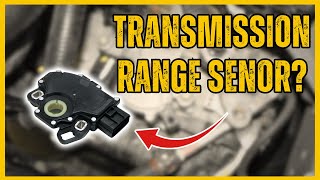
On a 2016-2017 Kia Optima, code P0706 is almost always caused by a faulty transmission range sensor, also known as an inhibitor switch. This is a known issue addressed by Kia Service Action SA317. Replacing the sensor costs around $50-$85 for the part and is a DIY-friendly repair that involves accessing the switch by removing the air filter housing and battery tray.
- For a 2016-2017 Optima, P0706 almost certainly means you need a new inhibitor switch (transmission range sensor).
- This is a known issue covered by Kia Service Action SA317; check with a dealer to see if your VIN is affected, especially if your car was built between July 2016 and February 2017.
- Symptoms can include a no-start condition (especially in Park), incorrect gear display, and harsh shifting.
- The repair is straightforward for a DIYer with basic tools and can be completed in 1-2 hours, saving significant labor costs.
- The most current OEM part number to look for is 42700-26700, which supersedes older versions.
What's Unique About the 2016-2017 Kia Optima
The 2016-2017 Kia Optima (JF generation) is known to have issues with its transmission range sensor, which Kia calls the 'inhibitor switch'. The problem was common enough that Kia issued a Technical Service Bulletin (TSB SA317) to address it on vehicles produced between July 4, 2016, and February 28, 2017. This bulletin acknowledges that a faulty inhibitor switch can cause a range of symptoms, including a no-start condition and erratic shifting, making this the most probable cause for a P0706 code on this specific vehicle, far more likely than other potential issues.
Symptoms You May Notice
- Check Engine Light is on
- Vehicle may not start, or only starts in Neutral instead of Park
- Harsh or erratic shifting between gears
- Gear position indicator on the dashboard is incorrect or blank
- Reverse lights do not turn on when in Reverse
- Vehicle enters 'limp mode' (stuck in one gear, often 3rd or 4th)
- Car does not register that it is in Park, preventing you from turning it off completely or removing the key
- A 'jiggle' of the gear shifter in Park is required to get the vehicle to start.
- Replacing the starter when the vehicle has a no-start condition, 🎬 See how to locate and replace the starter without first checking for transmission codes.
- Assuming a major internal transmission failure when the symptoms are caused by this relatively inexpensive external sensor.
- Replacing the battery when the car won't start, without noticing the 'no-start' is specific to being in Park.
Most Likely Causes
- Faulty Transmission Range Sensor (Inhibitor Switch) 🔴 High Probability → Shop Transmission Assembly This is a documented weak point for this vehicle, as confirmed by Kia's Service Action SA317, which covers certain 2016-2017 Optima models for this exact issue. The internal contacts of the switch wear out, leading to incorrect voltage readings.
How to confirm: Scan the vehicle for codes P0706 or the related P0705. Test if the car starts in Neutral but not Park (or vice-versa). With a multimeter, you can check the sensor's output voltage as you move the shifter; if the voltage jumps erratically or doesn't correspond to the specified values for each gear, the sensor is bad.
Typical fix: Replace the inhibitor switch. This part is located on the exterior of the transmission case, typically under the air filter housing and battery tray. The replacement involves removing these components for access, unbolting the switch, and installing the new one, ensuring it is aligned correctly in the Neutral position before tightening.
Est. part cost: $50-$85
Rare But Worth Checking
- Damaged Wiring or Connector: The wiring harness leading to the inhibitor switch can become corroded or damaged, causing an intermittent or poor signal. Always inspect the connector and nearby wires for damage before replacing the sensor itself. One owner reported a grounded wire in the harness was the true cause even after replacing the sensor.
- Misadjusted Shift Cable: If the shift cable is loose or has been improperly adjusted, the manual lever on the transmission may not be aligning perfectly with the detents for each gear. This can cause the range sensor to send a signal that is 'between gears,' triggering the code. This can be checked by ensuring the lever on the transmission moves to its distinct positions as the shifter is moved.
- Low or Dirty Transmission Fluid: → Shop Transmission Assembly While less common, extremely low or contaminated fluid can cause erratic shifting and pressure issues that might indirectly contribute to transmission-related codes.
- Faulty Transmission Control Module (TCM): → Shop Transmission Assembly In very rare cases, the TCM itself can fail to interpret the sensor's signal correctly. This should only be considered after the sensor, wiring, and shift linkage have been confirmed to be in good working order.
Diagnosis Steps
- Scan for Codes: Use an OBD-II scanner to confirm P0706 is present. 🎬 Watch: Causes and fixes for code P0706 Note any other codes, especially P0705, P0707, or P0708.
- Check for TSBs: Verify if your vehicle's VIN falls under Kia Service Action SA317 or its revisions. A Kia dealer can confirm this. The TSB applies to 2016-2017 Optimas built between July 4, 2016, and February 28, 2017.
- Perform a Functional Test: Try starting the car in both Park and Neutral. If it only starts in one, the inhibitor switch is highly suspect. Wiggle the shifter in Park and try to start it. Check if the reverse lights work when in Reverse.
- Inspect Wiring: Visually inspect the wiring harness and connector at the inhibitor switch on the transmission. Look for any signs of corrosion, damage, or loose pins. The connector is often a source of issues.
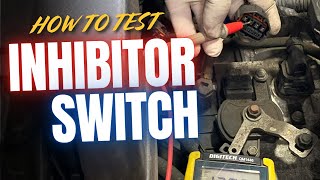
- Test the Sensor (Optional): Using a wiring diagram and a multimeter, back-probe the sensor's signal wire to monitor its voltage as you slowly move the gear selector. The voltage should change smoothly and predictably. Jumps or dead spots indicate a failed sensor.
- Check Shift Cable: Ensure the shift cable is properly attached and adjusted at the transmission lever.
- Replace the Inhibitor Switch: If the sensor is confirmed to be faulty, replace it. This is the most common resolution.
Parts You'll Likely Need
- Inhibitor Switch (Transmission Range Sensor)
(OEM #42700-26700 (Supersedes 42700-3B700, 42700-3B500))— This is the component identified by Kia as the primary failure point for these symptoms on this vehicle, as detailed in service bulletin SA317. Part number 42700-26700 is the latest revision for this part.
Trusted brands: Kia/Hyundai (Genuine OEM), Dorman, Standard Motor Products (SMP)
OEM price range: $65-$85
Aftermarket price range: $50-$70
Related Codes That Often Appear With This One
- P0705 — P0705 indicates a general malfunction in the transmission range sensor circuit, while P0706 points to a performance problem. They are often triggered by the same root cause—a failing sensor. Kia's TSB for this issue explicitly mentions P0705.
- P0707 — Indicates the transmission range sensor circuit input is low. This can occur with P0706 if there's an internal open circuit or wiring break.
- P0708 — Indicates the transmission range sensor circuit input is high. This can occur with P0706 if there's an internal short in the sensor.
Technical Service Bulletins (TSBs) & Recalls
- SA317 / SA317A / SA317B/C: Service Action for Inhibitor Switch Replacement. Addresses symptoms like MIL on with DTC P0705, intermittent no-start, and erratic shifting due to a faulty inhibitor switch on 2016-2017 Optima models.
Platform-Specific Known Issues
- Kia issued Service Action SA317 (and revisions SA317A, SA317B/C) to address faulty inhibitor switches on some 2016-2017 Optimas. This was a repair program performed by dealers, often during the warranty period, to replace the defective switch. The TSB specifically covers Optima (JF) models produced from July 4, 2016, through February 28, 2017.
Mechanic-Grade Diagnostic Values
- Inhibitor Switch Signal Voltage — expected: With the ignition on, the specific signal wire for the selected gear should show battery voltage (approx. 12V), while all other signal wires for other gears should show 0V.. Failure: No voltage on any wire, voltage on multiple wires at once, or a voltage reading that doesn't match the selected gear indicates a faulty switch or wiring issue.
Hidden / Shadow Codes Worth Checking
- C2243: A CAN (Controller Area Network) communication-related trouble code that can appear alongside P0705/P0706 on Optima Hybrid (HEV) and Plug-in Hybrid (PHEV) models. (see via A professional scan tool capable of reading manufacturer-specific and CAN bus codes, such as the Kia GDS.)
Scan Tool Commands That Help
- Kia GDS (Global Diagnostic System) or equivalent professional scanner: Live Data Monitoring of 'Shift Lever Switch' — This function is used to see exactly what gear position the TCM is receiving from the inhibitor switch in real-time. While slowly moving the shifter through P-R-N-D, the technician can verify if the displayed gear on the scan tool matches the physical shifter position. Any mismatch, lag, or invalid reading immediately points to a problem in the inhibitor switch circuit.
Wiring & Ground Locations
- TCU Fuse (Engine Bay) — In the main fuse box in the engine compartment, identified as a 20A fuse labeled 'TCU number one'.. This fuse supplies power to the Transmission Control Module. A blown fuse would cut power to the module, preventing it from receiving or interpreting signals from the inhibitor switch, potentially causing various transmission codes.
- TCU Fuse (Interior) — In the interior fuse box (driver's side footwell), identified as a 20A fuse labeled 'IG1'.. This fuse also provides power to the transmission control unit. Loss of power from this fuse will cause a loss of function.
- Transmission Ground Strap (91860-D5110) — A cable that connects the transmission case directly to the vehicle's chassis/body to provide a ground path.. A corroded, loose, or broken ground strap can cause erratic electrical behavior in all transmission sensors, including the inhibitor switch, leading to incorrect voltage readings and fault codes.
- Inhibitor Switch Connector — On the inhibitor switch itself, located on the exterior of the transmission case, under the battery and air filter housing.. This is the primary connection point. Corrosion, moisture intrusion, or bent/backed-out pins in this connector are a common cause of signal failure and should be inspected before replacing the sensor.
OEM Part Supersession History
42700-3B700, 42700-3B500, 42700-26000, 42700-26500, 42700-3B100, and others→42700-26700— The original inhibitor switches had a high failure rate, leading to the issuance of TSB SA317. The new part number represents a revised design to improve durability and prevent the contact failures that caused the P0706/P0705 codes.
Heads up: While older part numbers may physically fit, installing anything other than the latest revision (42700-26700) is not recommended, as you may be installing a part with the same original defect.
Model Year Variations Within This Range
- 2016-2017: Kia TSB SA317B/C specifically identifies 2016-2017 Optima (JF) models produced from July 4, 2016, through February 28, 2017, as being affected by the faulty inhibitor switch. The TSB also notes how to differentiate production plants by VIN: VINs starting with '5XX' are US-produced (JFa), while VINs starting with 'KNA' are Korean-produced (JF). Both were covered under the service action.
Diagnostic Flowchart
Other Known Issues on This Vehicle
Issues unrelated to this code that are worth knowing about as an owner of this generation:
- Theta II Engine Failure (Connecting Rod Bearing) 🔴 High — Widespread across multiple model years, leading to recalls (e.g., 17V224000, 21V844) and class-action lawsuits. Failure can occur at various mileages. (Ref: NHTSA Recall 21V844 / Kia SC218; Lifetime warranty extension for many affected vehicles.)
- Excessive Oil Consumption 🟠 Medium — Common complaint for the 2.4L GDI engine, can begin as early as 60,000 miles and may be related to the underlying engine design issues. (Ref: TSB ENG219 addresses a maintenance reminder feature, but the consumption issue itself is a known engine problem.)
- Steering Column Click/Clunk Noise 🟡 Low — Very common issue caused by the degradation of a small, flexible rubber coupler in the electronic power steering motor. (Ref: TSB CHA072 (and others) address this, though some are for earlier models, the same part fails on the 2016-2017 models. The part is 56315-2K000-FFF.)
Used vs. New Parts: Buying Guide for This Vehicle
When a used part is the smart pick: Never. A used inhibitor switch is a significant risk for this specific repair.
What to inspect on the donor part:
- This part is a known high-failure item with multiple superseded part numbers due to a design defect. A used part from a salvage yard likely has the same defect and unknown remaining life. The cost of a new part is low enough that the labor to potentially do the job twice negates any savings from buying used.
OEM-only on this vehicle (don't cheap out):
- Inhibitor Switch (Transmission Range Sensor) - While not strictly 'OEM-only', using the latest revision Genuine Kia/Hyundai part (42700-26700) is the most reliable path to a one-time fix.
Aftermarket brands forum-validated for this vehicle:
- Standard Motor Products (SMP)
- Dorman
- Beck Arnley
Brands owners have reported issues with on this vehicle:
- No-name, unbranded parts from online marketplaces should be avoided due to the critical safety function of this switch (preventing the car from starting in gear).
Real Owner Stories
Aggregated from forums and TSBs cited above. Mileages and costs reflect what owners reported in those sources.
2016-2017 Kia Optima (JF)
Symptoms: Malfunction Indicator Lamp (MIL) ON with DTC P0705, intermittent no crank/no start, erratic or harsh shifting, and 'Key OFF' message displayed after shifting to Park. The 'P' position was not indicated on the instrument cluster.
What fixed it: Replacement of the inhibitor switch (neutral safety switch) per Kia TSB SA317.
Source hint: NHTSA TSB ID #10130105 / Kia TSB #TSBTRA072A_R2
2017 Hyundai Sonata Hybrid
Symptoms: Car would not start and the gear position indicator on the dashboard was blank.
What fixed it: Towed to the dealer and replaced the inhibitor switch (part #42700-3B700).
Source hint: Hyundai Forums thread '2017 sonata hybrid wont start p0706 code'
2016 Hyundai Sonata Hybrid
Symptoms: Transmission range sensor failure symptoms; owner was quoted over $600 by a dealership for the repair.
What fixed it: DIY replacement of the inhibitor switch.
Source hint: Reddit r/Hyundai thread '2016 sonata hybrid transmission range sensor'
2016-2017 Kia Optima
Symptoms: Vehicle fails to start while in Park but starts fine when the shifter is moved to Neutral.
What fixed it: Replacing the inhibitor switch (neutral safety switch) resolved the P0705/P0706 codes.
Source hint: Kia-Forums.com thread 'Kia Optima P0705, won't start in park'
Related OBD-II Codes
Frequently Asked Questions
Does Kia Service Action SA317 apply to my 2016-2017 Optima?
Why won't my Optima let me turn the car off completely or remove the key?
My car only starts if I jiggle the shifter or put it in Neutral. Is this related to P0706?
What is the specific part number needed to fix the blank gear indicator and no-start issue?
Is the P0706 code related to the Theta II engine recalls on the Optima?
Where is the inhibitor switch located if I want to replace it myself?
Helpful Videos



We Have This Part in Stock



The information in this article is provided for general reference and educational purposes only. Vehicle specifications, procedures, and part compatibility can vary by production date, trim level, and region. Always consult your vehicle's factory service manual and verify part numbers before purchasing or performing repairs. Safety-critical components such as airbags, seat belts, and braking systems should be installed by a qualified professional.
- Kia Optima:
- 🧭 Diagnostic Flowchart
- 🎬 Helpful Videos
- 🛍️ Shop This Part
- What's Unique About the 2016-2017 Kia Optima
- Symptoms You May Notice
- Most Likely Causes
- Rare But Worth Checking
- Diagnosis Steps
- Parts You'll Likely Need
- Related Codes That Often Appear With This One
- Technical Service Bulletins (TSBs) & Recalls
- Platform-Specific Known Issues
- Mechanic-Grade Diagnostic Values
- Hidden / Shadow Codes Worth Checking
- Scan Tool Commands That Help
- Wiring & Ground Locations
- OEM Part Supersession History
- Model Year Variations Within This Range
- Other Known Issues on This Vehicle
- Used vs. New Parts: Buying Guide for This Vehicle
- Real Owner Stories
- 2016-2017 Kia Optima (JF)
- 2017 Hyundai Sonata Hybrid
- 2016 Hyundai Sonata Hybrid
- 2016-2017 Kia Optima
- Related OBD-II Codes
- Frequently Asked Questions
- 🎟️ Get 5% Off