

P0706 on 2011-2015 Kia Sorento: Transmission Range Sensor Causes and Fixes
On a 2011-2015 Kia Sorento, code P0706 almost always points to a faulty Transmission Range Sensor, also known as an inhibitor switch. This part tells the car's computer which gear is selected. Expect to pay between $50 for an aftermarket part and $85 for an OEM part, with DIY replacement being moderately difficult.
- P0706 on a 2011-2015 Sorento is a strong indicator of a failed Transmission Range Sensor (part # 42700-3B700).
- Symptoms include a Check Engine Light, limp mode, harsh shifting, and potential no-start issues, especially the car only starting in Neutral.
- The fix is usually replacing the sensor, which is located under the battery tray on top of the transmission.
- While DIY is possible for those with basic mechanical skills, it requires removing the battery and tray. Proper alignment of the new sensor using a 5mm pin in the Neutral position is critical for the repair to succeed.
What's Unique About the 2011-2015 Kia Sorento
The 2011-2015 Kia Sorento (second generation, XM) commonly experiences this issue due to the failure of the externally-mounted Transmission Range Sensor. Unlike some vehicles where the sensor is inside the transmission, the Sorento's sensor is on top of the transmission case, under the battery and battery tray. While this makes it more exposed to the elements, it also makes it significantly easier to access and replace without major transmission work, making it a common DIY repair.
Generation note: This guide covers the second generation (XM) Kia Sorento. A significant facelift occurred for the 2014 model year, but the 6-speed automatic transmission and the common causes for P0706 remained largely the same. The part number for the sensor is consistent across the entire 2011-2015 range. This issue is also prevalent on platform-mate vehicles like the Hyundai Santa Fe and was common enough on 2017 models to warrant a Service Action (SA317A).
Symptoms You May Notice
- Check Engine Light is on
- Vehicle enters 'limp mode' (stuck in a single gear, often 3rd or 4th).
- Harsh or delayed gear engagement.
- Inability to shift out of Park
- Engine only starts in Neutral, not Park (or vice-versa).
- Engine does not start at all.
- Incorrect gear position displayed on the dashboard (e.g., shows 'N' when in 'D').
- Reverse lights do not illuminate when in Reverse
- Replacing the transmission valve body
- Replacing the entire transmission
- Assuming an internal transmission failure without checking the external sensor first
- Replacing the starter motor due to a no-start condition
Most Likely Causes
- Faulty Transmission Range Sensor (Inhibitor Switch) 🔴 High Probability → Shop Transmission Assembly The sensor is a well-documented failure point on many Hyundai and Kia models from this era, including the Sorento. It is an electro-mechanical switch exposed to engine bay heat and vibration, leading to internal wear and erratic signal output over time. A Technical Service Bulletin (TSB: TRA 055) was issued for this issue on 2011 and newer models.
How to confirm: After confirming no wiring issues, testing the sensor is the next step. Using a scan tool with live data capabilities, monitor the 'Shift Lever Switch' parameter while moving the shifter. If the displayed gear position does not match the physical shifter position, the sensor is faulty. Alternatively, use a multimeter to check for continuity between specific pins for each gear position as outlined in the service manual. For example, on some models, Park might show continuity between pins 3 and 4, while Reverse is between 3 and 5.
Typical fix: Replace the Transmission Range Sensor. This involves removing the air intake, battery, and battery tray to access the sensor on top of the transmission. The new sensor must be correctly aligned in the Neutral position before tightening.
Est. part cost: $50-$85 - Damaged Wiring or Connector 🟡 Medium Probability The wiring harness to the sensor is located in the engine bay and can be susceptible to damage from heat, vibration, or corrosion, especially at the connector where moisture can intrude.
How to confirm: Visually inspect the wiring harness and the connector going to the Transmission Range Sensor for any signs of cracking, fraying, melting, or green-tinged corrosion on the pins. Perform a continuity test on the wires between the sensor connector and the TCM if a visual inspection is inconclusive.
Typical fix: Repair the damaged section of wire or replace the connector pigtail. Clean any corrosion from the connector pins using an electrical contact cleaner.
Est. part cost: $10-$30 - Misaligned Transmission Range Sensor ⚪ Low Probability → Shop Transmission Assembly This typically only occurs if the sensor has been recently replaced or disturbed. The sensor's position is adjustable and must be correctly aligned during installation to send the correct signal for each gear.
How to confirm: Ensure the transmission is in Neutral. The sensor has an alignment hole that should line up with a corresponding hole on the transmission case. A 5mm drill bit or a special guide pin (SST P/N 09480 A3800) can be inserted to lock it in the correct position before tightening the mounting bolts.
Typical fix: Loosen the sensor's mounting bolts, correctly align it according to the service procedure (often using a pin or drill bit in the Neutral position), and retighten.
Est. part cost: $0
Rare But Worth Checking
- Faulty Transmission Control Module (TCM): → Shop Transmission Assembly This is extremely rare and should only be considered a last resort. The TCM should only be suspected after the sensor, wiring, and alignment have been exhaustively tested and ruled out. Hyundai/Kia TSBs recommend checking all other possibilities before replacing the control module.
- Low or Dirty Transmission Fluid: → Shop Transmission Assembly While less common for causing a specific range/performance code, very low or contaminated fluid can cause erratic transmission behavior that might be misdiagnosed. It's a good practice to check fluid level and condition as part of the diagnosis.
Diagnosis Steps
- Scan the vehicle for all stored trouble codes. Note if P0700, P0705, P0707, or P0708 are present with P0706.
- Clear the codes and test drive the vehicle to see if the code returns immediately. This helps confirm it's a hard fault.
- Using a scan tool (like Kia's GDS), access the transmission live data and monitor the 'Shift Lever Switch' parameter. Move the shifter through P, R, N, D and check if the data on the scanner matches the shifter position. If it doesn't, the sensor is the primary suspect.
- If a scan tool isn't available, perform a safety check: try to start the engine in 'R' or 'D'. If it starts, the neutral safety switch function has failed, pointing to the sensor.
- Locate the Transmission Range Sensor on top of the transmission case. You will need to remove the air intake snorkel, battery, and battery tray to gain access.
- Visually inspect the sensor's connector and wiring harness for any obvious damage, corrosion (green crust), or loose connections.
- If wiring appears okay, use a multimeter to test the sensor. Disconnect the connector and check for continuity between specific pins as you move the selector lever. The exact pins vary, but a service manual or online video can provide the correct combination for each gear.
- Check for 12V power supply to the switch at the correct pin with the ignition on. If power is missing, check the relevant fuses and wiring.
- If replacing the sensor, ensure the transmission is in Neutral and use a 5mm pin or drill bit to align the new sensor correctly before tightening the mounting bolts.
- After repair, clear all codes, perform a road test through all gears, and re-scan to confirm the fix.
Parts You'll Likely Need
- Transmission Range Sensor / Inhibitor Switch
(OEM #42700-3B700)— This is the most common failure component for code P0706 on this vehicle. This part is shared with many other Hyundai and Kia models. Note: An older part number, 42700-3B010, may also be referenced but 42700-3B700 is the typical replacement.
Trusted brands: Kia (OEM), Hyundai (OEM), Dorman, Standard Motor Products
OEM price range: $65-$85
Aftermarket price range: $45-$60
Related Codes That Often Appear With This One
- P0705 — P0705 indicates a malfunction in the entire sensor circuit, while P0706 points to a performance or range issue. They are very closely related and often appear together if the sensor's signal is erratic. Hyundai/Kia TSBs group them together for diagnosis.
- P0700 — P0700 is a generic code indicating the Transmission Control Module (TCM) has stored a fault. It acts as a 'heads-up' that a more specific transmission code, like P0706, is present.
- P0707 — This code indicates a low circuit input from the range sensor. It can appear with P0706 if there's an intermittent wiring break or internal sensor failure.
- P0708 — This code indicates a high circuit input from the range sensor. It can appear with P0706 due to an internal short in the sensor or wiring.
Technical Service Bulletins (TSBs) & Recalls
- Hyundai TSB 17-AT-005: While for Hyundai, this TSB is highly relevant as it covers the diagnosis for codes P0705, P0706, P0707, and P0708 on shared platforms. It provides detailed diagnostic steps, including checking live data, fuses, and ground locations, and outlines the replacement and alignment procedure for the inhibitor switch.
- Kia TSB TRA 055: Issued in October 2014 for 2011 and newer models, this TSB addresses intermittent no-start, erratic shifting, and MIL on with P0705. It provides a diagnostic flowchart that includes checking for codes, adjusting the inhibitor switch, and checking the rear combination lamp harness ground bolt.
- Kia Service Action SA317A: While specifically for 2017 models, this service action to replace the inhibitor switch (P/N 42700-3B700QQK) for the same symptoms (no-start, harsh shifting, P0705) shows the prevalence of this part's failure across the brand.
Platform-Specific Known Issues
- The location of the sensor under the battery tray makes it a bit labor-intensive to access for a simple sensor swap, but it is a very common DIY repair for this vehicle, well-documented in online videos.
- Owners on forums frequently report the classic symptom of the car refusing to start in Park but starting perfectly fine once the shifter is moved to Neutral, which is a tell-tale sign of this specific sensor failing.
Mechanic-Grade Diagnostic Values
- Inhibitor Switch Power Supply Voltage — expected: Battery Voltage (approx. 12V). Failure: No voltage indicates a wiring or fuse issue before the switch.
- Inhibitor Switch Continuity Test — expected: Continuity should exist between a power input pin and a specific output pin for each gear position (e.g., Pin 3 to Pin 4 for Park).. Failure: No continuity or continuity on the wrong pins for a given gear selection indicates a faulty switch.
- Generic Sensor Signal Voltage (Live Data) — expected: Distinct voltage levels for each gear, such as Park ≈ 0V, Reverse ≈ 5V, Neutral ≈ 2.5V, Drive ≈ 4V. Note: These are general estimates and not specific to Kia.. Failure: Deviations beyond ±0.5V from the expected value for a selected gear.
Scan Tool Commands That Help
- Kia GDS (Global Diagnostic System): Live Data Monitoring (Current Data) — Use this function to view the 'Shift Lever Switch' or similar parameter in the transmission control module data list. As you move the physical shifter, the value on the scan tool should update instantly and correctly to P, R, N, D. A mismatch confirms a fault in the sensor, wiring, or alignment.
- Kia GDS (Global Diagnostic System): DTC Guide / Fault Code Diagnosis Guide — After retrieving code P0706, the GDS software contains a specific, step-by-step diagnostic procedure for that code, including component locations, wiring diagrams, and expected values, which is more precise than generic repair info.
Wiring & Ground Locations
- Inhibitor Switch Connector — On top of the transmission housing, below the battery and battery tray.. This is the primary connection point for the sensor. It is exposed to engine bay heat and moisture, making it a common point for corrosion (green crust) or wiring damage that directly causes the P0706 code.
- Rear Combination Lamp Harness Ground — In the rear of the vehicle, likely in the trunk area near the tail light assemblies.. Kia TSB TRA 055 specifically lists 'Check and retighten the rear combination lamp harness ground bolt' as a diagnostic step for P0705/P0706-related symptoms. A poor ground here can cause electrical feedback or voltage issues that the TCM may misinterpret as a range sensor fault.
Real Owner Repair Stories
- Reddit user in /r/KiaSorento (2021 Kia Sorento SX with 70,000 miles) — Check engine light for P0705, gear indicator (P,R,N,D) flashing on the dash, occasional hard shifts, and intermittent loss of gear while driving.
❌ Tried (didn't work) Replaced the range sensor (inhibitor switch)., Replaced the range sensor a second time., Replaced the transmission PCM/ECU., Performed a software update for the new module.
✅ What actually fixed it The issue was unresolved at the time of posting. The dealer was unable to replicate the fault despite video evidence and planned to try re-updating software. This story highlights a scenario where the common fixes (sensor, wiring, PCM) did not resolve the symptoms, suggesting a more complex, intermittent internal harness or connector issue.
OEM Part Supersession History
42700-3B010 (and 42700-3B000)→42700-3B700— Likely an updated design to improve reliability, as evidenced by multiple TSBs and service actions related to the switch's failure.42700-3B700→42700-26700— Further part consolidation and design updates by Kia/Hyundai.
Heads up: The physical appearance may differ, but it is a direct functional replacement. Always verify the latest part number with a dealer using your VIN.
Diagnostic Flowchart
Other Known Issues on This Vehicle
Issues unrelated to this code that are worth knowing about as an owner of this generation:
- Catastrophic Engine Failure (Theta II GDI) 🔴 High — Widespread across 2.0L Turbo and 2.4L GDI engines. Can occur at various mileages, often before 100,000 miles. Led to class-action lawsuits and massive recalls. (Ref: NHTSA Recalls 17V-224, 20V-750, and others. Kia also launched a lifetime engine warranty extension for affected vehicles.)
- Engine Compartment Fire Risk (HECU) 🔴 High — Affects a large number of vehicles. The Hydraulic Electronic Control Unit (HECU) can short circuit, causing a fire while parked or driving. (Ref: NHTSA Recalls 20V-519, 21V-331, and others.)
- Exterior Door Handles Failing 🟠 Medium — Very common complaint for the 2011 model year in particular. The exterior door latch mechanism breaks, preventing the door from being opened from the outside.
- Peeling White Paint 🟡 Low — Common on vehicles with 'Snow White Pearl' paint. The paint delaminates and peels off in large sheets, often starting on the roof or hood.
- Faulty Airbag Clock Spring 🟠 Medium — Common failure item leading to an illuminated airbag warning light and loss of steering wheel controls. A recall was issued, but some VINs may not be covered despite having the issue. (Ref: NHTSA Recall 17V-432 (though some owners report VIN exclusion))
- Brake-Shift Interlock Failure 🟠 Medium — The mechanism can crack, allowing the shifter to be moved out of Park without depressing the brake pedal. (Ref: NHTSA Recall 15V-736 covers 2011-2013 models.)
Used vs. New Parts: Buying Guide for This Vehicle
When a used part is the smart pick: Given the high failure rate of this specific part, documented in TSBs, buying a used inhibitor switch is generally not recommended. The cost of a new aftermarket part is low enough that the risk of getting a used part near the end of its life outweighs the potential savings. The labor to access the part is significant enough that you don't want to do the job twice.
Donor-vehicle mileage cap: roughly under 30000 miles for the part to have meaningful remaining life.
What to inspect on the donor part:
- Check the connector pins for any signs of green or white corrosion.
- Ensure the plastic housing is not cracked or showing signs of heat damage.
- If possible, perform a bench continuity test as shown in diagnostic videos before purchasing.
OEM-only on this vehicle (don't cheap out):
- For this repair, a quality aftermarket part is a viable option, so OEM-only is not a strict requirement.
Aftermarket brands forum-validated for this vehicle:
- Standard Motor Products (SMP)
- Rostra
- Beck Arnley
Brands owners have reported issues with on this vehicle:
- Unbranded, no-name parts from online marketplaces may have questionable quality control and are a gamble given the labor involved in the replacement.
Real Owner Stories
Aggregated from forums and TSBs cited above. Mileages and costs reflect what owners reported in those sources.
2011-2015 Kia Sorento
Symptoms: The car would not start in Park but would start perfectly fine once the shifter was moved to Neutral.
What fixed it: Replacement of the inhibitor switch (Transmission Range Sensor).
Source hint: vehicle_specific_issues
2011-2015 Kia Sorento
Symptoms: Check engine light on with P0706, vehicle in limp mode (stuck in a single gear), and incorrect gear position displayed on the dashboard (showing 'N' when in 'D').
What fixed it: Replacing the inhibitor switch (part # 42700-3B700).
Source hint: Kia Forums (kia-forums.com)
2010-2015 Kia Sorento/Hyundai Santa Fe V6
Symptoms: Erratic signal output from the transmission range sensor due to heat and vibration exposure in the engine bay.
What fixed it: Replacement of the inhibitor switch after removing the air intake, battery, and battery tray for access.
Source hint: YouTube - "2010-2015 Kia Sorento/Hyundai Santa Fe Transmission Range/inhibitor Switch Replacement(v6)" by Jl's Auto Solution
Related OBD-II Codes
Frequently Asked Questions
Does Kia TSB TRA 055 apply to my 2011-2015 Sorento regarding the P0706 code?
Why does my Sorento start in Neutral but refuse to start when the shifter is in Park?
What specific part number do I need to fix the P0706 code on my Kia Sorento?
Is there a special tool required to align the new sensor during installation?
Can a bad ground cause P0706 symptoms on this vehicle?
Why is my Sorento stuck in 3rd or 4th gear and shifting harshly?
Helpful Videos

We Have This Part in Stock

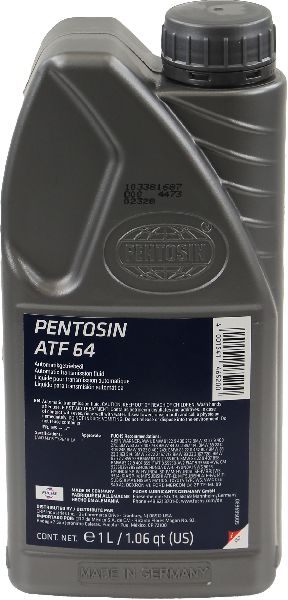

The information in this article is provided for general reference and educational purposes only. Vehicle specifications, procedures, and part compatibility can vary by production date, trim level, and region. Always consult your vehicle's factory service manual and verify part numbers before purchasing or performing repairs. Safety-critical components such as airbags, seat belts, and braking systems should be installed by a qualified professional.
- Kia Sorento:
- 🧭 Diagnostic Flowchart
- 🎬 Helpful Videos
- 🛍️ Shop This Part
- What's Unique About the 2011-2015 Kia Sorento
- Symptoms You May Notice
- Most Likely Causes
- Rare But Worth Checking
- Diagnosis Steps
- Parts You'll Likely Need
- Related Codes That Often Appear With This One
- Technical Service Bulletins (TSBs) & Recalls
- Platform-Specific Known Issues
- Mechanic-Grade Diagnostic Values
- Scan Tool Commands That Help
- Wiring & Ground Locations
- Real Owner Repair Stories
- OEM Part Supersession History
- Other Known Issues on This Vehicle
- Used vs. New Parts: Buying Guide for This Vehicle
- Real Owner Stories
- 2011-2015 Kia Sorento
- 2011-2015 Kia Sorento
- 2010-2015 Kia Sorento/Hyundai Santa Fe V6
- Related OBD-II Codes
- Frequently Asked Questions
- 🎟️ Get 5% Off