

P0706 on 2004-2014 Nissan Maxima: Transmission Range Sensor Causes and Fixes
On a 2004-2014 Nissan Maxima, code P0706 is most often caused by a faulty transmission range sensor, also known as an inhibitor switch. This part tells the car's computer which gear is selected. When it fails, it can cause a no-start condition, erratic shifting, or the vehicle entering 'limp mode'. Replacing the sensor is the most common fix, with the part costing between $40 and $150.
- P0706 on a Nissan Maxima almost always points to a problem with the transmission range sensor or its wiring.
- Symptoms often include a no-start condition, incorrect gear display, or the car being stuck in limp mode.
- The most likely fix is replacing the transmission range sensor, which is a moderately difficult DIY job.
- Before replacing any parts, check the sensor's wiring and connector for corrosion or damage, as this is a common and cheaper fix.
- Always confirm the part number for your specific year and transmission type (conventional auto vs. CVT) before ordering.
What's Unique About the 2004-2014 Nissan Maxima
The 2004-2014 Nissan Maxima spans two generations, the 6th (2004-2008) and 7th (2009-2014). The 6th generation offered both a conventional 4-speed/5-speed automatic and a Continuously Variable Transmission (CVT), while the 7th generation used a CVT exclusively. While the P0706 code points to the same component on both transmission types—the range sensor—its physical location and integration can differ. On the conventional automatics (early 6th gen), the sensor is typically an external, bolt-on part on the driver's side of the transmission case. On the later CVT models, the sensor may be more integrated with the valve body, making replacement more complex.
Generation note: This guide covers the 6th generation (A34, 2004-2008) and 7th generation (A35, 2009-2014) Maxima. The fundamental cause of P0706, the range sensor, is the same for both. However, the specific part number for the sensor and its location will differ. For the 6th gen with a conventional automatic, it's an external switch (e.g., OEM part 31918-8Y000). For the 7th gen with a CVT, the sensor is often integrated differently and may have a different part number (e.g., 31918-1XF00). Always verify the part with your vehicle's VIN.
Symptoms You May Notice
- Check Engine Light is on
- Vehicle will not start, or only starts in Neutral instead of Park.
- Gear indicator on the dashboard is incorrect or does not light up
- Transmission shifts harshly or erratically.
- Vehicle enters 'limp mode,' getting stuck in a single gear.
- Inability to shift the lever out of Park
- Delayed engagement when shifting from Park to Drive or Reverse
- Poor acceleration.
- Replacing the entire valve body when only the externally-mounted range sensor is at fault (common on 6th gen).
- Replacing the Transmission Control Module (TCM) before thoroughly testing the sensor and its wiring.
- Replacing the transmission itself when the issue is a simple, inexpensive external sensor or wiring problem.
Most Likely Causes
- Faulty Transmission Range Sensor (Inhibitor Switch) 🔴 High Probability → Shop Transmission Assembly The sensor is an electronic component mounted on the transmission, exposed to heat, vibration, and moisture, which leads to internal wear, corrosion, and failure over time. On some models, it's a known failure point.
How to confirm: Use a scan tool to monitor the sensor's output data while moving the shifter through each gear. The reading should change cleanly for P, R, N, D, etc. If the signal is erratic, drops out, or shows an invalid state, the sensor is likely bad. A multimeter can also be used to check for continuity across the switch terminals for each gear position as per the factory service manual.
Typical fix: Replace the transmission range sensor. On most 6th-gen Maximas, this sensor is mounted externally on the transmission case and can be accessed from under the vehicle after removing a splash shield. The key is to ensure the new sensor is properly aligned with the neutral position before tightening the bolts.
Est. part cost: $40-$150 - Damaged Wiring or Corroded Connector 🟡 Medium Probability The sensor's wiring harness is located under the car, where it is exposed to road salt, water, and physical damage, leading to corrosion on the pins (often seen as green or white powder) or broken wires.
How to confirm: Visually inspect the wiring harness and connector going to the range sensor. Look for green/white corrosion on the pins, chafed or broken wires, or a loose connection. Wiggle the connector while monitoring the live data on a scan tool to see if the signal changes. Perform a continuity test on the wires between the sensor and the TCM if visual inspection is inconclusive.
Typical fix: Clean the connector terminals with an electrical contact cleaner or a small wire brush. If wires are broken, they will need to be repaired or the pigtail connector replaced. Apply dielectric grease to the connector before reassembly to prevent future moisture intrusion.
Est. part cost: $5-$100 - Misadjusted Sensor or Shift Linkage ⚪ Low Probability
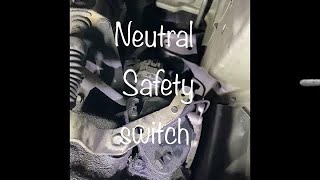
How to confirm: This usually occurs after a transmission repair or sensor replacement. Check if the physical position of the gear shifter aligns perfectly with the gear displayed on the dashboard and read by the scan tool. If not, the sensor or the shift cable may need adjustment. 🎬 Watch: How to adjust the neutral safety switch on a Maxima
Typical fix: Loosen the mounting bolts for the range sensor and rotate it slightly until the scan tool confirms it is perfectly aligned in the Neutral or Park position. There are often alignment marks on the sensor and transmission body. Then, tighten the bolts and verify the correct gear is read in all positions.
Est. part cost: $0
Rare But Worth Checking
- Faulty Transmission Control Module (TCM) or Powertrain Control Module (PCM): → Shop Transmission Assembly This is rare and should only be considered after the sensor and wiring have been proven to be good. A faulty computer can misinterpret a perfectly good signal from the sensor.
- Low or Dirty Transmission Fluid: → Shop Transmission Assembly While less common for this specific code, extremely low or contaminated fluid can cause a variety of erratic transmission behaviors and codes, sometimes affecting the operation of internal components like the valve body which can indirectly trigger range faults. It's always a good practice to check the fluid level and condition early in the diagnosis.
- Defective Transmission Valve Body: → Shop Transmission Valve Body In some cases, particularly on CVT models, the issue may not be the sensor itself but the valve body it communicates with or is a part of. This is a more complex and expensive repair.
Diagnosis Steps
- Scan the TCM for any stored trouble codes. Note P0706 and any other codes like P0705 or P0700.
- With the key on and engine off, use a scan tool to monitor the live data from the transmission range sensor.
- Slowly move the gear selector through all positions (P, R, N, D, L). Verify that the scan tool shows the correct gear position for each selection.
- If the reading is erratic, incorrect, or doesn't change, proceed to inspect the sensor.
- Raise the vehicle safely. Locate the transmission range sensor on the side of the transmission where the shift cable attaches. On the 6th gen, this is typically on the driver's side of the case.
- Visually inspect the sensor's electrical connector and wiring for any signs of corrosion, damage, or loose connections. Pay close attention to the pins inside the connector.
- If the wiring looks good, test the sensor itself. This involves using a multimeter to check for continuity between specific pins for each gear position, as outlined in the vehicle's service manual.
- If the sensor and wiring test good, check the adjustment of the shift cable and the sensor's alignment. Ensure the sensor is properly aligned in Neutral before tightening.
- Check the transmission fluid level and condition. Burnt or very dirty fluid could indicate a more severe internal transmission problem.
- If all other possibilities are exhausted, the issue may lie with the Transmission Control Module (TCM), though this is uncommon.
Parts You'll Likely Need
- Transmission Range Sensor / Inhibitor Switch
(OEM #31918-8Y000 (for 2004-2006 models with 4/5-spd Auto); 31918-1XF00 (Commonly used on CVT models, verify with VIN))— This is the most frequent point of failure for the P0706 code due to its electronic nature and exposure to the elements.
Trusted brands: Hitachi, Bosch, NTK, ACDelco
OEM price range: $100-$200
Aftermarket price range: $40-$150
Related Codes That Often Appear With This One
- P0705 — P0705 indicates a general malfunction in the same Transmission Range Sensor circuit, and often appears alongside P0706 as they point to the same component.
- P0700 — This is a generic code indicating that the Transmission Control Module (TCM) has stored a fault code. It acts as a 'check engine light' for the transmission system and will be present anytime a specific transmission code like P0706 is stored.
Technical Service Bulletins (TSBs) & Recalls
- While no TSBs appear to directly address the P0706 code specifically, Nissan has issued numerous bulletins for the CVT transmissions in these vehicles for issues like judder (NTB17-039L) and other control valve/TCM issues (NTB12-052f) that involve transmission electronics. A P0706 code could potentially be an early symptom related to broader transmission electronic problems.
Platform-Specific Known Issues
- { "title": "6th Gen (2004-2008) External Sensor", "description": "For the earlier models in this range with conventional 4 or 5-speed automatic transmissions, the inhibitor switch is almost always an external component bolted to the transmission case. This makes it relatively easy to access and replace for a DIY mechanic. A common part number is 31918-8Y000." }
- { "title": "7th Gen (2009-2014) CVT Integration", "description": "On the 7th generation, which exclusively uses a CVT, the range sensor (often part number 31918-1XF00) can be more integrated with the transmission's valve body. This can make replacement a more involved job that may require partial disassembly of the transmission, making it less DIY-friendly than the older models." }
Mechanic-Grade Diagnostic Values
- Transmission Range Sensor Signal Voltage — expected: A varying voltage between approximately 0.5V and 4.5V as the shifter is moved through the gears. Some sources suggest specific voltages for each gear, such as Park ≈ 0V, Reverse ≈ 5V, Neutral ≈ 2.5V, Drive ≈ 4V.. Failure: Voltage that is stuck, does not change, deviates by more than ±0.5V from the expected value for a given gear, or is outside the 0.5-4.5V range.
- Transmission Range Sensor Power Supply Voltage — expected: With the key on, the power supply pin at the sensor connector should show battery voltage (approximately 12V) or a 5V reference, depending on the specific system design.. Failure: No voltage or significantly low voltage indicates a problem with the wiring or the TCM's power supply to the sensor.
- Transmission Range Sensor Continuity/Resistance — expected: The resistance between the signal terminal and ground should change predictably as the gear selector is moved. Specific Ohm values are found in the factory service manual, but a general test is to look for a smooth change rather than open circuits (infinite resistance) or shorts (0 ohms) in positions where there shouldn't be.. Failure: An open circuit or very high resistance where there should be continuity, or readings that do not change when the gear is shifted, points to a faulty sensor.
Wiring & Ground Locations
- Transmission Range Sensor (Inhibitor Switch) — On 6th generation (2004-2008) models with a conventional automatic transmission, the sensor is mounted on the outside of the transmission case, on the driver's side. The shift cable lever attaches directly to it.. This is the primary component for the P0706 code. Its location on the exterior of the transmission makes it vulnerable to corrosion and damage from road debris and moisture, but also makes it easier to access for testing and replacement.
- Range Sensor Connector — The electrical connector plugs directly into the range sensor on the side of the transmission.. This connector is a common failure point. The pins can corrode (appearing green or white) due to moisture intrusion, leading to poor signal quality and triggering the P0706 code. Checking this connector is a critical first step in diagnosis.
Real Owner Repair Stories
- Maxima.org forum user (2009 Nissan Maxima (7th Gen)) — Car would not start, gear position indicator on the dash was not lit up, P0706 code stored.
❌ Tried (didn't work) Initial diagnosis pointed to the range sensor.
✅ What actually fixed it The user reported that the final fix was replacing the transmission valve body. On this CVT model, the range sensor is integrated with the valve body, and the entire assembly had to be replaced to resolve the issue.
OEM Part Supersession History
31918-8Y000→N/A - Still in use for specified models— This part is specific to the 4 and 5-speed automatic transmissions used in the 2004-2006 Maxima and 2004-2009 Quest.
Heads up: This part is not compatible with the CVT transmissions found in later models.31918-1XF00→N/A - Still in use for specified models— This is the common part number for the range sensor used in many Nissan CVT applications, including the 7th generation Maxima.
Heads up: This part is designed for CVT transmissions and is often integrated with the valve body. It is not a direct replacement for the external switch on older automatic models.
Model Year Variations Within This Range
- 2004-2008 (6th Gen with 4/5-speed Automatic): The transmission range sensor is an external, bolt-on component (PN 31918-8Y000) that is relatively simple to access and replace. Diagnosis and replacement are straightforward DIY tasks.
- 2007-2014 (Models with CVT): The transmission range sensor function is often integrated into the transmission valve body assembly. A P0706 code on these models is more likely to require a more complex and expensive repair, potentially involving valve body replacement and TCM reprogramming, rather than just a simple external sensor swap.
Diagnostic Flowchart
Other Known Issues on This Vehicle
Issues unrelated to this code that are worth knowing about as an owner of this generation:
- Premature Timing Chain Guide Failure 🔴 High — Common on VQ35DE engines, especially in 6th gen (2004-2008). Noise (rattle on startup) can begin around 80k-120k miles.
- CVT Failure / Judder / Overheating 🔴 High — Widespread across all years with CVTs, but particularly noted in the 7th generation. Problems can range from judder/shaking to complete failure, sometimes before 100k miles. (Ref: Multiple TSBs (e.g., NTB17-039L) and warranty extensions have been issued.)
- Electronic Steering Column Lock (ESCL) Failure 🔴 High — Very common on 2009-2010 models. Leads to a no-start condition where the steering wheel remains locked. (Ref: Nissan issued a service campaign to replace defective units.)
- Camshaft/Crankshaft Position Sensor Failure 🟠 Medium — Common on the 6th generation (2004-2008). Can cause stalling, rough running, and no-start conditions. Often leaks oil through the sensor itself.
- Exploding/Rattling Sunroof 🟠 Medium — Affects both 6th and 7th generation models. The large panoramic sunroof can develop rattles or, in some reported cases, shatter spontaneously. (Ref: Subject of class-action lawsuits.)
- Leaking AC Hoses 🟡 Low — Common across both generations. The crimped connections on the AC lines are prone to leaking refrigerant, causing the AC to blow warm air.
Used vs. New Parts: Buying Guide for This Vehicle
When a used part is the smart pick: For 6th generation models (2004-2008) with the external, bolt-on sensor, a used part from a low-mileage donor vehicle can be a cost-effective option. The part is easy to replace, so the labor investment is low if the used part fails prematurely.
Donor-vehicle mileage cap: roughly under 80000 miles for the part to have meaningful remaining life.
What to inspect on the donor part:
- Check the electrical connector pins for any signs of green or white corrosion.
- Inspect the plastic housing for cracks, especially around the mounting holes.
- Ensure the selector arm moves smoothly without binding.
- If possible, ask for the donor vehicle's mileage and avoid parts from high-mileage cars.
OEM-only on this vehicle (don't cheap out):
- For 7th generation models with a CVT, if the sensor is integrated into the valve body, using a complete, tested, low-mileage used valve body can be an option, but it's risky. A new OEM or remanufactured OEM valve body is strongly recommended due to the complexity and high labor cost of the job.
Aftermarket brands forum-validated for this vehicle:
- Hitachi (often the OEM supplier)
- NTK
- Bosch
Brands owners have reported issues with on this vehicle:
- Unnamed, 'white-box' brands from online marketplaces should be avoided, as their internal components may not meet the precise resistance and voltage specifications, leading to a quick return of the P0706 code.
Real Owner Stories
Aggregated from forums and TSBs cited above. Mileages and costs reflect what owners reported in those sources.
2007 Nissan Maxima V6
Symptoms: The primary symptom was the car would not start when the shifter was in Park, but it would start in Neutral.
What fixed it: Replacing the transmission range sensor (inhibitor switch) resolved the issue.
Source hint: maxima.org: Multiple threads on this forum corroborate that the transmission range sensor (inhibitor switch) is the primary cause for P0706 and related starting/shifting issues on both 6th and 7th generation Maximas. A thread titled 'Timing Chain Issue?? HELP!!' from 2020 discusses startup noises that can be confused with other issues, but many P0706 threads focus on the 'no start in Park' symptom.
Related OBD-II Codes
Frequently Asked Questions
Is it harder to replace the range sensor on my 2010 Maxima compared to an older 2005 model?
My 2007 Maxima won't start in Park but it will in Neutral. Is this a symptom of a P0706 code?
What is the most likely part I need to fix a P0706 code on my Nissan Maxima?
Are there any official Nissan TSBs that specifically address the P0706 code?
I need to replace the range sensor on my 2006 Maxima. Is there a common part number I can use?
I found green powder on the sensor's electrical connector. What does that mean?
Helpful Videos
We Have This Part in Stock




The information in this article is provided for general reference and educational purposes only. Vehicle specifications, procedures, and part compatibility can vary by production date, trim level, and region. Always consult your vehicle's factory service manual and verify part numbers before purchasing or performing repairs. Safety-critical components such as airbags, seat belts, and braking systems should be installed by a qualified professional.
- Nissan Maxima:
- 🧭 Diagnostic Flowchart
- 🎬 Helpful Videos
- 🛍️ Shop This Part
- What's Unique About the 2004-2014 Nissan Maxima
- Symptoms You May Notice
- Most Likely Causes
- Rare But Worth Checking
- Diagnosis Steps
- Parts You'll Likely Need
- Related Codes That Often Appear With This One
- Technical Service Bulletins (TSBs) & Recalls
- Platform-Specific Known Issues
- Mechanic-Grade Diagnostic Values
- Wiring & Ground Locations
- Real Owner Repair Stories
- OEM Part Supersession History
- Model Year Variations Within This Range
- Other Known Issues on This Vehicle
- Used vs. New Parts: Buying Guide for This Vehicle
- Real Owner Stories
- 2007 Nissan Maxima V6
- Related OBD-II Codes
- Frequently Asked Questions
- 🎟️ Get 5% Off