

P0706 on 2004-2014 Toyota Corolla: Transmission Range Sensor Causes and Fixes
On a 2004-2014 Toyota Corolla, code P0706 usually means the Transmission Range Sensor (also called a Neutral Safety Switch) is failing. This can cause a no-start condition, erratic shifting, or getting stuck in gear. The most common fix is replacing the sensor itself, which is part number 84540-46010.
- P0706 on your Corolla points to a problem with the Transmission Range Sensor, which tells the car what gear it's in.
- The most common symptoms are a no-start condition, erratic shifting, and an illuminated Check Engine Light.
- The most frequent fix is replacing the sensor (OEM Part #84540-46010) and ensuring the new one is properly adjusted.
- This is a serious issue that can leave you stranded or create a safety risk; driving is not recommended.
- The Toyota Matrix and Pontiac Vibe share this exact component and problem.
What's Unique About the 2004-2014 Toyota Corolla
For the 9th (2003-2008) and 10th (2009-2013) generation Corollas, this code is a straightforward issue. There are no widespread, unique design flaws that make this platform more susceptible to P0706 than other vehicles of the era. The problem is almost always related to the sensor itself wearing out, its connector corroding, or its adjustment being knocked out of alignment. Unlike some vehicles where wiring or the control module are primary suspects, on the Corolla, the sensor is the most common point of failure.
Generation note: This guide covers the 9th generation (2004-2008) and 10th generation (2009-2014) Toyota Corolla. The causes and repair procedures for code P0706 are very similar across both generations as they use a similar automatic transmission design and the same Transmission Range Sensor (part number 84540-46010).
Symptoms You May Notice
- Check Engine Light is on
- TRAC OFF light may be illuminated
- Engine will not crank or start, or only starts in Neutral
- Ability to start the engine in a gear other than Park or Neutral
- Shifter is difficult to move out of Park
- Harsh or delayed gear engagement
- Vehicle may feel like it's in 'limp mode' with limited power and stuck in one gear
- Cruise control may be disabled
- Reverse lights may not work or work intermittently
- Gear position indicator on the dashboard is blank, incorrect, or all positions are lit up at once
- Replacing the transmission valve body. The P0706 code specifically points to the external range sensor circuit, not internal transmission components.
- Replacing the shifter assembly inside the car. The shifter is just a lever; the sensor doing the electrical work is on the transmission itself.
Most Likely Causes
- Faulty Transmission Range Sensor (Neutral Safety Switch) 🔴 High Probability → Shop Transmission Assembly This is a common wear-and-tear item. Internal contacts within the switch wear down over time from thousands of shifts, leading to poor electrical connections and erratic signals. Water intrusion can also cause internal corrosion.
How to confirm: Use a scan tool to monitor the gear position data live. If the data is erratic or doesn't match the physical shifter position, the sensor is likely bad. You can also test the sensor's electrical pins for correct resistance values according to the factory service manual.
Typical fix: Replace the Transmission Range Sensor. The sensor is located on the outside of the transmission case where the shift linkage connects.
Est. part cost: $50-$150 - Improperly Adjusted Transmission Range Sensor 🟡 Medium Probability → Shop Transmission Assembly The sensor is held in place by bolts in slotted holes, allowing for adjustment. Vibrations or previous repair work can cause it to shift out of alignment. This is a common issue after a transmission or sensor replacement if not performed correctly.
How to confirm: Check if the vehicle starts only in Park and Neutral. If it starts in another gear, or if the reverse lights only come on when the shifter is wiggled, the sensor is likely misaligned.
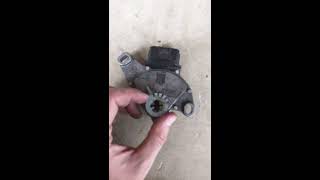
Typical fix: Loosen the two mounting bolts, set the shifter to the Neutral position, and align the groove on the sensor with the neutral basic line on the sensor body. 🎬 Watch this DIY tutorial on adjusting and fixing the sensor Hold it in place and tighten the bolts to the specified torque (5.5 Nm / 49 in-lbs).
Est. part cost: $0 - Damaged Wiring or Corroded Connector ⚪ Low Probability The sensor is located on the transmission, exposed to road grime, moisture, and heat, which can degrade the wiring or connector over many years. The pins inside the connector can corrode and break off.
How to confirm: Visually inspect the wiring harness and connector going to the Transmission Range Sensor for any signs of cracking, fraying, or green corrosion on the pins. 🎬 See how to diagnose a tricky Corolla wiring problem Unplug the connector and check for bent or broken pins inside.
Typical fix: Repair the damaged section of wire or clean the connector terminals. If the connector is severely damaged or pins are broken, it may need to be replaced.
Est. part cost: $10-$50
Rare But Worth Checking
- Worn or Damaged Shift Linkage: While less common, worn bushings in the shift cable can create slack, causing a mismatch between the shifter's position and the sensor's reading. This can mimic a faulty sensor.
- Faulty Transmission Control Module (TCM) or Engine Control Module (ECM): → Shop Transmission Assembly This is extremely rare. The control module should only be considered after all other possibilities have been thoroughly ruled out. A diagnostic video for a P0706 on a different vehicle showed a confirmed bad PCM after the sensor and wiring tested good, demonstrating that it is a possible, though unlikely, failure point.
Diagnosis Steps
- Connect an OBD-II scanner and confirm that P0706 is the primary code. Note any other codes present.
- Check the transmission fluid level and condition. Burnt or low fluid can cause a host of transmission issues, though it's not a direct cause of P0706.
- With the key on and engine off, move the shifter through all gears (P, R, N, D, L). Ensure the gear indicator on the instrument cluster matches the shifter position.
- Attempt to start the engine in each gear. The vehicle should only crank in Park and Neutral. If it cranks in any other gear, the sensor is misadjusted or faulty.
- Visually inspect the Transmission Range Sensor, its connector, and the wiring harness for any obvious damage, corrosion, or loose connections. Pay close attention to the pins inside the connector.
- If you have a scan tool with live data, monitor the parameter for the Transmission Range Sensor. As you move the shifter, the reading should change cleanly and correspond to the correct gear without glitches or dropouts.
- If the sensor is suspected to be faulty, test the resistance across its terminals as specified in a repair manual to confirm internal failure before replacing.
- If the sensor tests good, check the adjustment. Loosen the mounting bolts, place the shifter in Neutral, and rotate the sensor until the alignment marks (groove and line) match up perfectly, then retighten.
Parts You'll Likely Need
- Transmission Range Sensor / Neutral Safety Switch
(OEM #84540-46010)— This is the component that fails most often, causing the P0706 code. This part number fits both 9th and 10th generation Corollas.
Trusted brands: Toyota (Genuine OEM), Aisin, Denso, Standard Motor Products
OEM price range: $100-$180
Aftermarket price range: $50-$90
Related Codes That Often Appear With This One
- P0705 — P0705 indicates a general malfunction in the same sensor circuit, while P0706 points specifically to a range/performance problem. They often appear together because they relate to the same component.
Platform-Specific Known Issues
- Real-World Repair Story: Corroded and Broken Sensor Pins: A user on the IH8MUD forum with a similar Toyota platform experienced a P0706 code. After replacing the sensor didn't fix the issue, a closer inspection of the wiring harness connector revealed that the male pins from the old sensor had corroded and broken off, remaining stuck inside the female side of the connector. The fix required carefully extracting the broken pin fragments from the harness connector before the new sensor could make a proper connection.
- DIY Success Story on ToyotaNation Forum: A 2005 Corolla owner on ToyotaNation reported a no-start condition and a P0706 code. Following advice from the forum, they replaced the Neutral Safety Switch (Part #84540-46010). The user described the replacement as relatively simple, involving removing the air filter box for access, unplugging the connector, removing two bolts, and swapping the switch. They confirmed that proper adjustment was key and that the new switch resolved all symptoms.
Mechanic-Grade Diagnostic Values
- Transmission Range Sensor Continuity Test — expected: With the sensor connector disconnected, there should be continuity (near-zero resistance) between specific pins for each gear position. For example, in 'Park', there might be continuity between pins 2 and 3, while in 'Reverse', it's between pins 4 and 5. The exact pinout must be referenced from the vehicle's specific service manual.. Failure: If continuity does not exist on the specified pins for a selected gear, or if continuity exists on pins where it shouldn't, the sensor is internally faulty.
Scan Tool Commands That Help
- Toyota Techstream: Live Data Monitoring (Data List) — This is the primary software diagnostic step. A technician can view the 'Shift Range' or 'Lever Position' parameter in the transmission data list. While moving the physical shifter, the technician verifies that the ECM is receiving the correct corresponding signal (P, R, N, D, etc.). An incorrect, lagging, or glitchy reading points directly to a fault in the sensor or its circuit.
Wiring & Ground Locations
- Transmission Range Sensor Connector — Located on the top or side of the U341E automatic transmission case, where the shift cable linkage attaches. Access typically requires removing the air cleaner assembly.. This is the primary point for electrical testing and visual inspection. Corrosion, bent pins, or broken-off pins from the old sensor stuck in the harness side are common failure points.
- ECM (Engine Control Module) — For the 2009-2013 Corolla, the ECM is located behind the glove box in the passenger compartment.. This is the destination for the signals from the range sensor. If the sensor and wiring test good, a technician may need to test for signal presence at the ECM connector pins to rule out a rare module failure.
- Chassis Ground Points — Key ground points for the engine and transmission harness are typically located on the fender aprons, shock towers, and directly on the transmission case.. A poor or corroded ground connection for the transmission or ECM can cause floating voltages and erratic signals, mimicking a sensor failure. Verifying clean and tight grounds is a critical step in diagnosing electrical faults.
OEM Part Supersession History
84540-46010→84540-46010 (current)— This part number has remained stable for the specified vehicle range.
Heads up: An alternate part number, 88973596, is listed by some aftermarket suppliers as an interchange, but sticking to the OEM 84540-46010 is recommended for guaranteed compatibility.
Model Year Variations Within This Range
- 2004-2013: These model years primarily used the U341E 4-speed automatic transmission, for which this guide is highly relevant.
- 2014: The 2014 model year was a transition year. While some base 'L' models may have retained a 4-speed automatic, most trims (LE, S, LE Eco) switched to a Continuously Variable Transmission (CVT). While the P0706 code can still occur on a CVT, the range sensor part number and diagnostic procedure may differ from the 4-speed automatic. This guide is most accurate for the 4-speed automatic models.
Diagnostic Flowchart
Other Known Issues on This Vehicle
Issues unrelated to this code that are worth knowing about as an owner of this generation:
- Excessive Oil Consumption (1ZZ-FE Engine) 🔴 High — Common on 2004-2005 models. Caused by a design flaw in the pistons and oil control rings. Toyota revised the piston design in July 2005, significantly reducing the issue on 2006-2008 models. (Ref: Toyota addressed this with an extended warranty program, but it has since expired. No official recall was issued.)
- Water Pump Failure (2ZR-FE Engine) 🟠 Medium — A known weakness on the 10th generation Corolla (2009-2014). The pump can develop leaks, leading to coolant loss and potential overheating if not addressed. (Ref: A Technical Service Bulletin (T-SB-0087-09) was issued for a related VVT gear rattle, but water pump failures are primarily addressed as individual repairs.)
- Cold Start VVT Rattle (2ZR-FE Engine) 🟡 Low — Some 2009-2010 models may exhibit a brief rattling or screeching noise for 1-2 seconds on a cold start. This is typically caused by a faulty intake VVT cam gear. While annoying, it does not usually lead to catastrophic engine failure. (Ref: T-SB-0087-09 describes this issue and the fix, which involves replacing the camshaft timing gear assembly.)
- Intake Manifold Gasket Leak (1ZZ-FE Engine) 🟡 Low — The intake manifold gasket can shrink and degrade over time, causing a vacuum leak. This typically results in a lean condition, triggering codes like P0171, and a rough idle.
Used vs. New Parts: Buying Guide for This Vehicle
When a used part is the smart pick: A used Transmission Range Sensor from a junkyard is a viable option for this repair, especially if on a tight budget. Since it's an external electronic component and not a complex mechanical part, a functional used sensor can provide significant savings. It is critical to source it from a vehicle with reasonably low mileage.
Donor-vehicle mileage cap: roughly under 80000 miles for the part to have meaningful remaining life.
What to inspect on the donor part:
- Inspect the connector pins on the used sensor; they should be straight, clean, and free of any green or white corrosion.
- Avoid parts from vehicles that show signs of flood damage or have been in a major front-end collision that could have impacted the transmission case.
- If possible, check the donor vehicle's mileage. A sensor from a car with under 80,000 miles is preferable.
- Ensure the plastic housing is not cracked or damaged.
OEM-only on this vehicle (don't cheap out):
- Engine Control Module (ECM) / Transmission Control Module (TCM)
Aftermarket brands forum-validated for this vehicle:
- Aisin: As a major OEM supplier for Toyota, Aisin parts are considered equivalent to genuine Toyota parts in quality and reliability.
- Denso: Another primary OEM supplier for Toyota, known for high-quality electronics.
- Standard Motor Products (SMP): A generally well-regarded aftermarket brand for sensors and switches.
Brands owners have reported issues with on this vehicle:
- No-name, unbranded parts from online marketplaces should be avoided. While the price is tempting, these often have high failure rates, poor internal contacts, and may not be properly sealed against moisture, leading to a repeat failure.
Real Owner Stories
Aggregated from forums and TSBs cited above. Mileages and costs reflect what owners reported in those sources.
2005 Toyota Corolla
Symptoms: No-start condition and a P0706 code. The owner followed forum advice to access the switch by removing the air filter box.
What fixed it: Replaced the Neutral Safety Switch (Part #84540-46010) and ensured proper alignment of the new switch.
Source hint: ToyotaNation Forums
2013 Toyota Corolla
Symptoms: Hard shifting and disabled cruise control.
What fixed it: Adjusting the Transmission Range Sensor.
Source hint: r/MechanicAdvice on Reddit
Toyota Platform (Similar to Corolla)
Symptoms: P0706 code persisted even after replacing the sensor. Inspection showed male pins from the old sensor had broken off inside the harness connector.
What fixed it: Carefully extracting the broken pin fragments from the female side of the wiring harness connector to allow the new sensor to make contact.
Source hint: IH8MUD Forum
Related OBD-II Codes
Frequently Asked Questions
What is the specific part number for the Neutral Safety Switch on my 2005 Toyota Corolla?
Where is the Transmission Range Sensor located on the 2004-2014 Corolla?
Can I adjust the sensor myself if my Corolla only starts in Neutral?
Why is my TRAC OFF light on along with the P0706 code?
Is there a TSB for the cold start rattle on my 2009 Corolla?
Will a bad sensor prevent my Corolla from starting?
Helpful Videos


We Have This Part in Stock

The information in this article is provided for general reference and educational purposes only. Vehicle specifications, procedures, and part compatibility can vary by production date, trim level, and region. Always consult your vehicle's factory service manual and verify part numbers before purchasing or performing repairs. Safety-critical components such as airbags, seat belts, and braking systems should be installed by a qualified professional.
- Toyota Corolla:
- 🧭 Diagnostic Flowchart
- 🎬 Helpful Videos
- 🛍️ Shop This Part
- What's Unique About the 2004-2014 Toyota Corolla
- Symptoms You May Notice
- Most Likely Causes
- Rare But Worth Checking
- Diagnosis Steps
- Parts You'll Likely Need
- Related Codes That Often Appear With This One
- Platform-Specific Known Issues
- Mechanic-Grade Diagnostic Values
- Scan Tool Commands That Help
- Wiring & Ground Locations
- OEM Part Supersession History
- Model Year Variations Within This Range
- Other Known Issues on This Vehicle
- Used vs. New Parts: Buying Guide for This Vehicle
- Real Owner Stories
- 2005 Toyota Corolla
- 2013 Toyota Corolla
- Toyota Platform (Similar to Corolla)
- Related OBD-II Codes
- Frequently Asked Questions
- 🎟️ Get 5% Off