

P0707 on 2006-2018 Dodge Charger: Transmission Range Sensor Circuit Low Causes and Fixes
The P0707 code on a Dodge Charger indicates a low voltage signal from the Transmission Range Sensor (TRS). This often results in the engine not starting, harsh shifting, or being stuck in 'limp mode'. For models with the 5-speed NAG1 transmission, the cause is almost always a faulty internal conductor plate or fluid leaking from the 13-pin connector and wicking up the wiring. For later models with the 8-speed, it's more likely a faulty external sensor. Replacing the conductor plate and connector
- P0707 on a Dodge Charger means the transmission range sensor signal is too low, which is a serious issue that can prevent the car from starting or cause unsafe driving conditions.
- The most likely cause is a failed Transmission Range Sensor (TRS), but always inspect the wiring connector for corrosion or damage first, as this is a known weak point on this platform.
- Do not drive the vehicle. You risk getting stranded if it won't restart or causing an accident due to unpredictable shifting.
- A DIY replacement of the sensor is possible for those with moderate experience, but proper alignment is crucial for it to work correctly.
What's Unique About the 2006-2018 Dodge Charger
For the many Dodge Chargers equipped with the Mercedes-designed NAG1 (W5A580) 5-speed automatic, the P0707 code is most famously caused by a failure of the transmission conductor plate, which houses the range sensor internally. A closely related and extremely common issue is a leak from the 13-pin electrical connector's O-rings. This leak allows transmission fluid to seep into the connector and, through capillary action, travel up the wiring harness, sometimes reaching the TCM itself. This fluid contamination shorts the circuit, causing the low voltage signal of P0707 long before the conductor plate itself may have failed. Later models with the ZF 8-speed transmission have a more conventional external range sensor.
Generation note: This guide covers the Dodge Charger LX (2006-2010) and LD (2011-2018) generations. The key difference is the transmission. Most V6 and V8 models up to 2014 used the 5-speed NAG1 (W5A580), where the TRS is part of the internal conductor plate. From 2012 onwards, and standard on all models by 2015, the ZF 8-speed (845RE/8HP70) became prevalent, which uses a separate, externally mounted TRS. The underlying causes differ significantly between these two systems.
Symptoms You May Notice
- Check Engine Light is on
- Transmission stuck in "limp mode" (usually 2nd gear).
- Engine will not start, or only starts in Neutral.
- Harsh, erratic, or delayed gear shifting.
- Reverse lights may not illuminate.
- Gear indicator on the dashboard is blank or incorrect.
- Vehicle may stall when shifting from Park to Drive or Reverse.
- Replacing the entire transmission when the issue is a relatively inexpensive conductor plate or connector leak.
- Replacing the starter motor because the engine won't crank, without first checking for transmission-related codes like P0707 that inhibit starting.
- Replacing the TCM when the actual problem is transmission fluid that has wicked up the wiring harness and contaminated the TCM's connector.
Most Likely Causes
- Faulty Transmission Conductor Plate (NAG1 Models) 🔴 High Probability → Shop Transmission Assembly The conductor plate is a plastic circuit board living in hot transmission fluid. Over time, the plastic becomes brittle, and the integrated speed and range sensors fail. This is a very common failure point on the NAG1 transmission.
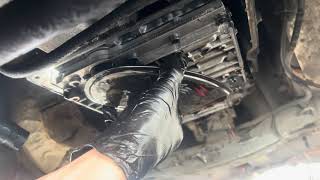
How to confirm: Scan for codes. P0707 accompanied by speed sensor codes almost always points to the conductor plate. The part is internal, so direct testing requires removing the transmission pan and valve body. 🎬 Watch: How to remove the conductor plate to fix sensor codes.
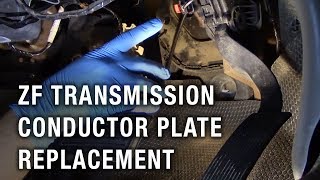
Typical fix: Replace the conductor plate, along with the 13-pin connector, filter, and fluid. This is often sold as a kit. The valve body must be dropped to access it. 🎬 Watch: Step-by-step guide to replacing the NAG1 conductor plate. No reprogramming is required.
Est. part cost: $120-$250 for a conductor plate kit - Leaking 13-Pin Connector & Contaminated Wiring (NAG1 Models) 🔴 High Probability The O-rings on the 13-pin electrical connector that plugs into the transmission frequently fail, allowing ATF to wick up the wiring harness. This contamination shorts the pins, causing a low voltage signal and triggering P0707.
How to confirm: Disconnect the 13-pin connector at the transmission (passenger side, near the front). If there is any sign of reddish transmission fluid inside the connector, this is the likely cause. Inspect the harness for fluid saturation.
Typical fix: Replace the 13-pin connector housing (which includes new O-rings). Clean the harness-side connector thoroughly with electrical contact cleaner. If the conductor plate isn't also being replaced, it's wise to do so as fluid may have damaged it.
Est. part cost: $15-$50 for the connector plug - Faulty Transmission Range Sensor (8-Speed Models) 🟡 Medium Probability → Shop Transmission Assembly On later models with the ZF 8-speed, the sensor is a more conventional external unit that is exposed to heat and vibration, leading to eventual electronic failure.
How to confirm: Use a scan tool to monitor the TRS voltage in live data while moving the shifter. The voltage should change smoothly. A multimeter can also be used to test the signal wire for low or no voltage.
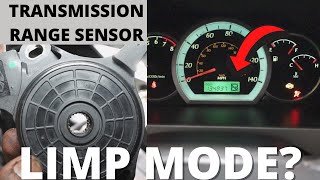
Typical fix: Replace the external Transmission Range Sensor. Ensure it is correctly aligned with the shift linkage during installation. 🎬 See how to replace the external range sensor without special tools.
Est. part cost: $70-$140
Rare But Worth Checking
- Misadjusted Transmission Shift Linkage: → Shop Transmission Assembly If the sensor or transmission has been recently serviced, the linkage connecting the shifter to the transmission may be misaligned. This can cause the sensor to report a signal that doesn't match the actual gear detent, triggering the code.
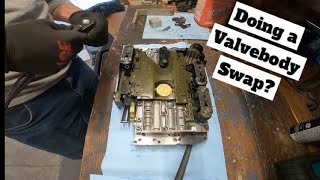
- Faulty Transmission Valve Body: → Shop Transmission Valve Body In some NAG1 cases, if replacing the conductor plate and connector does not solve the issue, the valve body itself may have internal issues or sticking solenoids that contribute to the problem. This is a more complex and expensive repair.
- Faulty Powertrain Control Module (PCM) or Transmission Control Module (TCM): → Shop Transmission Assembly This is a very rare cause. Before condemning the control module, all other possibilities, including the conductor plate/sensor, wiring, connector, and fluid, must be exhaustively ruled out.
Diagnosis Steps
- Scan the vehicle for all OBD-II codes. Note any other transmission codes, especially speed sensor codes (like P0715), as this points to the conductor plate on NAG1 models.
- Identify the transmission: NAG1 5-speed or ZF 8-speed. This is the most critical step.
- For NAG1: Inspect the 13-pin electrical connector on the passenger side of the transmission. Disconnect it and check for any trace of red transmission fluid. If fluid is present, the connector O-rings have failed.
- For all models: Use a scan tool with live data to monitor the TRS voltage/position as you move the gear selector. The reading should change smoothly and logically for each gear position.
- If wiring and connectors are clean and the signal is still bad, the next step depends on the transmission.
- For NAG1: The conductor plate is the primary suspect. The repair involves draining the fluid, dropping the pan, removing the valve body, and replacing the conductor plate on top of it.
- For 8-Speed: The external range sensor is the primary suspect. Use a multimeter to test for correct voltage and ground at the sensor connector. If power is present but the signal is low, replace the sensor.
- After any repair, clear the codes and perform a test drive to ensure the problem is resolved. For NAG1 conductor plate replacement, no special relearn procedure is typically needed, just a code clear.
Parts You'll Likely Need
- Transmission Conductor Plate Kit (NAG1)
(OEM #52108308AC)— For the common 5-speed NAG1 transmission, the range sensor is integrated into this plate, which is the most common point of failure for P0707.
Trusted brands: Mopar, Vaico, SKP
OEM price range: $180-$250
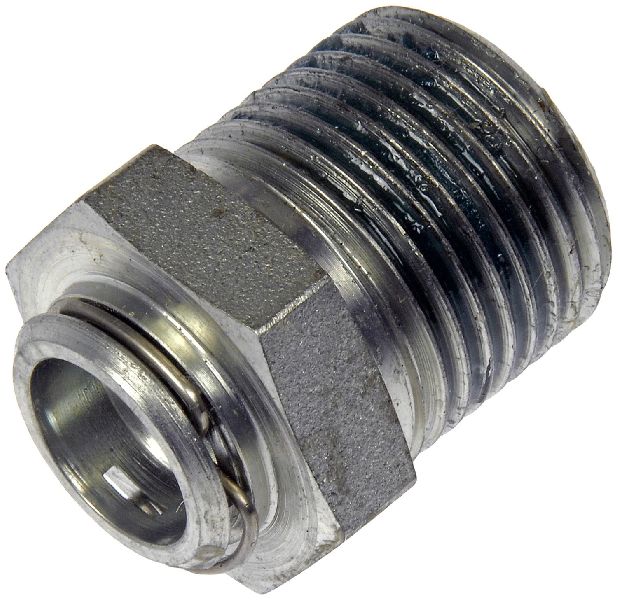
Aftermarket price range: $120-$180 - Transmission Electrical Connector (NAG1)
(OEM #A2035400253)— The O-rings on this connector fail, causing fluid leaks that short out the circuit. It should ALWAYS be replaced when servicing the conductor plate.
Trusted brands: Mopar, Bosch, Dorman
OEM price range: $25-$40
Aftermarket price range: $15-$25 - Transmission Range Sensor (8-Speed)
(OEM #68273120AA)— For later models with the ZF 8-speed transmission, this external sensor is the component that fails.
Trusted brands: Mopar, Standard Motor Products (SMP)
Related Codes That Often Appear With This One
- P0705 — P0705 indicates a general malfunction in the TRS circuit, while P0707 specifically points to a low voltage condition. They often appear together when the sensor/conductor plate is failing.
- P0706 — This code indicates the sensor signal is irrational or 'out of range,' often due to a misadjustment or internal failure, which can accompany a low-signal failure (P0707).
- P0708 — This is the opposite of P0707, indicating a high voltage signal. Seeing P0707 and P0708 intermittently can strongly suggest a short in the wiring harness.
- P0715 — Input Speed Sensor Circuit Malfunction. On NAG1 transmissions, this sensor is integrated into the conductor plate. Its failure is a very common companion code to P0707 and strongly points to a bad conductor plate.
Technical Service Bulletins (TSBs) & Recalls
- TSB 21-013-08: While not directly for P0707, this TSB addresses harsh shifts and other issues on NAG1 transmissions and sometimes involves software updates or inspection of the electrical connector that is a known cause of P0707.
- 18-047-16: While not directly for P0707, this TSB for 2015 models with the 6.2L engine involves a PCM/TCM software update to address other powertrain DTCs. It's important to ensure control modules have the latest software before replacing hardware.
Platform-Specific Known Issues
- On NAG1-equipped Chargers, the transmission fluid leak at the 13-pin connector is a hallmark failure. The fluid can wick all the way up the harness to the Transmission Control Module (TCM), which is often located in the passenger footwell or engine bay, causing damage to the module itself if not caught early.
Mechanic-Grade Diagnostic Values
- Transmission Range Sensor 'A' Circuit Voltage (Live Data) — expected: A distinct voltage for each gear position (e.g., Park: 3.1V, Reverse: 2.7V, etc.).. Failure: Voltage is stuck below 0.5V, confirming a low input condition.
- NAG1 Sensor Supply Voltage (at TCM) — expected: 4.8 to 7.2 volts.. Failure: Voltage outside of this range will set a fault code.
- NAG1 System Voltage (at TCM) — expected: Above 9.0 volts.. Failure: A reading below 8.5 volts will trigger a temporary limp mode.
- NAG1 Solenoid Resistance (from TCM connector) — expected: Approx. 2.7 - 5.5 ohms, depending on the solenoid. Pin 38 is common.. Failure: An open (infinite resistance) or shorted (zero resistance) reading on a specific solenoid pin indicates a wiring or solenoid fault.
Scan Tool Commands That Help
- wiTECH or equivalent professional scanner: Input Circuit Test (TRS 'A' Channel) — To isolate a fault within the TCM itself. The tool applies a known voltage and reads the module's response. A discrepancy points to an internal TCM fault after wiring and the sensor have been verified as good.
- wiTECH: Re-flash Powertrain Control Module (PCM) — After replacing the Transmission Control Module (TCM) on a NAG1 transmission if the new TCM is not recognized. In some cases, the TCM update is bundled with the PCM flash and this is the only way to complete the programming.
Wiring & Ground Locations
- TCM (Transmission Control Module) — For NAG1 models, the TCM is located under the driver's side of the instrument panel, accessible by removing the lower kick panel.. This is the final destination for the TRS signal. It's also a critical inspection point for fluid contamination that has wicked up the wiring harness from the 13-pin connector.
- 13-Pin Transmission Connector — On the passenger side of the NAG1 transmission case, near the front.. This is the most common source of fluid leaks that cause shorts and low voltage signals, triggering P0707. The connector itself and the harness side should be inspected for ATF.
- TCM Ground Circuits (Z910, Z912) — Located in the harness connector for the TCM (C1 connector).. A poor ground can cause a floating voltage reference, leading to an incorrect low voltage reading from the TRS and triggering P0707. Verifying ground integrity is a key step before condemning the TCM.
- TCM Connector Pins (NAG1) — At the TCM harness connector under the dash.. Allows for remote testing of conductor plate solenoids without dropping the pan. For example, Pin 38 is common, and can be tested against pins 14, 15, 16, 17, and 36 to check solenoid resistance.
Real Owner Repair Stories
- YouTube user 'Rep repository' (Dodge Charger with 5-speed NAG1 transmission) — Transmission went into limp mode, lost input speed sensor signal.
✅ What actually fixed it The user replaced the transmission conductor plate, 13-pin connector, filter, and fluid. A post-repair test drive confirmed the fix, with the car shifting normally and no codes returning. - YouTube user 'mercedessource' (Mercedes with 722.6 (NAG1) transmission (mechanically identical components to the Charger's NAG1)) — Car got stuck in second gear (limp mode), but no transmission code was present initially. Later developed running issues.
❌ Tried (didn't work) Initial diagnosis pointed away from the transmission.
✅ What actually fixed it The user performed a conductor plate replacement. However, the ultimate running issue was found to be an unmetered air leak from a loose intake boot after the MAF sensor, which also caused a limp-mode-like symptom. This highlights that while the conductor plate is the common cause for P0707, other engine issues can create similar limp-mode symptoms that can be misdiagnosed.
OEM Part Supersession History
52108308AB→52108308AC— Revision and improvement of the conductor plate assembly.
Heads up: The new part number (52108308AC) is a direct replacement for the old one and is fully compatible.
Model Year Variations Within This Range
- 2012-2014: This was a transition period. The 8-speed automatic (ZF 845RE) was introduced on V6 models in 2012. Through 2014, a Charger could have either the 5-speed NAG1 or the 8-speed ZF, depending on engine (3.6L, 5.7L, 6.4L) and drivetrain (RWD/AWD). By 2015, the 8-speed became nearly standard. It is critical for owners of these model years to visually verify their transmission type before ordering parts for a P0707 code.
Diagnostic Flowchart
Other Known Issues on This Vehicle
Issues unrelated to this code that are worth knowing about as an owner of this generation:
- Shifter Stuck in Park ('Pink Thingy' Failure) 🔴 High — Very common on 2005-2007 models with the NAG1 5-speed. The small plastic park interlock lever inside the shifter assembly breaks, immobilizing the vehicle.
- The 'Hemi Tick' 🔴 High — A widely discussed issue affecting 5.7L and other Hemi V8s. It can be a benign exhaust manifold bolt leak or a catastrophic failure of the camshaft and lifters, often related to the MDS (Multi-Displacement System).
- Alternator Failure 🔴 High — Common on 2011-2014 models, particularly with the 3.6L engine. The alternator can fail suddenly, causing the vehicle to stall while driving. (Ref: NHTSA Recalls: 14V-634 (P60), 17V-435 (T36))
- Premature Water Pump Failure 🟠 Medium — Water pumps, especially on Hemi V8 models, have been known to fail at relatively low mileage (30,000-50,000 miles), leading to coolant leaks and potential overheating.
- Front Suspension Clunks and Worn Tie Rods 🟠 Medium — Early models (especially 2006) were prone to premature wear of front tie rod ends and rear cradle bushings, causing clunking noises and alignment issues.
Used vs. New Parts: Buying Guide for This Vehicle
When a used part is the smart pick: A used wiring harness from a reputable salvage yard can be a cost-effective option if the original is damaged beyond repair, provided it is thoroughly inspected. A complete valve body from a verified low-mileage vehicle might be considered if the original is physically damaged, but this is a high-risk purchase.
Donor-vehicle mileage cap: roughly under 75000 miles for the part to have meaningful remaining life.
What to inspect on the donor part:
- For wiring harnesses, check for intact insulation, no brittleness, and perfectly clean connector pins with no corrosion.
- For any used part, verify the donor vehicle was not in a flood or fire.
- If considering a used valve body, look for clean fluid passages and no signs of heavy sludge or metal debris.
OEM-only on this vehicle (don't cheap out):
- Transmission Conductor Plate (NAG1): Due to the high labor cost of the repair, using a cheap, unproven aftermarket plate is a significant risk. Mopar or a reputable OES brand (like Vaico) is strongly recommended to avoid premature failure.
- 13-Pin Electrical Connector (NAG1): This part is inexpensive and critical for preventing fluid leaks. There is little reason to use anything other than an OEM or OES (Bosch, Mopar) part.
Aftermarket brands forum-validated for this vehicle:
- Vaico
- SKP
- Dorman (for connector and sometimes conductor plate)
Brands owners have reported issues with on this vehicle:
- Unbranded, 'white-box' conductor plates from online marketplaces should be avoided. The potential for early failure and having to repeat the labor-intensive repair is too high.
Real Owner Stories
Aggregated from forums and TSBs cited above. Mileages and costs reflect what owners reported in those sources.
2007 Dodge Charger (NAG1 Transmission)
Symptoms: The car went into limp mode, stuck in second gear, and the Check Engine Light came on with code P0707.
What fixed it: The consensus repair was the replacement of the transmission conductor plate and the 13-pin connector as a kit.
Source hint: chargerforums.com
2006 Dodge Charger (NAG1 Transmission)
Symptoms: Vehicle would not start unless the shifter was in Neutral and the gear indicator on the dash was blank.
What fixed it: The problem was a faulty conductor plate, which contains the transmission range sensor.
Source hint: Reddit r/Dodge and r/Charger
2009 Dodge Charger (NAG1 Transmission)
Symptoms: Harsh shifting and a P0707 code. Upon inspection, found transmission fluid leaking from and contaminating the 13-pin electrical connector.
What fixed it: Fixed by replacing the leaking 13-pin connector and the conductor plate, which was likely damaged by the fluid intrusion.
Source hint: lxforums.com
Related OBD-II Codes
Frequently Asked Questions
My 2008 Charger with the NAG1 transmission is stuck in limp mode with code P0707. What's the most likely cause?
I found red transmission fluid inside the 13-pin connector on my Charger. Is just replacing the connector enough to fix P0707?
My Charger won't start, or only starts in Neutral, and has a P0707 code. What should I check first?
Does TSB 21-013-08 apply to the P0707 code on my Dodge Charger?
My newer Charger has the 8-speed transmission. Is the conductor plate still the likely cause for P0707?
If I replace the conductor plate on my NAG1 transmission, does the TCM need to be reprogrammed?
Helpful Videos

We Have This Part in Stock


The information in this article is provided for general reference and educational purposes only. Vehicle specifications, procedures, and part compatibility can vary by production date, trim level, and region. Always consult your vehicle's factory service manual and verify part numbers before purchasing or performing repairs. Safety-critical components such as airbags, seat belts, and braking systems should be installed by a qualified professional.
- Dodge Charger:
- 🧭 Diagnostic Flowchart
- 🎬 Helpful Videos
- 🛍️ Shop This Part
- What's Unique About the 2006-2018 Dodge Charger
- Symptoms You May Notice
- Most Likely Causes
- Rare But Worth Checking
- Diagnosis Steps
- Parts You'll Likely Need
- Related Codes That Often Appear With This One
- Technical Service Bulletins (TSBs) & Recalls
- Platform-Specific Known Issues
- Mechanic-Grade Diagnostic Values
- Scan Tool Commands That Help
- Wiring & Ground Locations
- Real Owner Repair Stories
- OEM Part Supersession History
- Model Year Variations Within This Range
- Other Known Issues on This Vehicle
- Used vs. New Parts: Buying Guide for This Vehicle
- Real Owner Stories
- 2007 Dodge Charger (NAG1 Transmission)
- 2006 Dodge Charger (NAG1 Transmission)
- 2009 Dodge Charger (NAG1 Transmission)
- Related OBD-II Codes
- Frequently Asked Questions
- 🎟️ Get 5% Off