

P0707 on 2013-2019 Ford Escape: Transmission Range Sensor Fixes
P0707 on a 2013-2019 Ford Escape most often means the internal Transmission Range Sensor has failed, which can prevent the vehicle from starting. Because the sensor is inside the 6F35 transmission, replacement is complex and costly, typically running from $450 to $800+ at a repair shop.
- P0707 on a 2013-2019 Escape is a serious code that will likely prevent your car from starting.
- The cause is almost always the Transmission Range Sensor (TRS), which is located *inside* the 6F35 transmission.
- Due to the sensor's internal location, this is not a simple or cheap repair. Expect shop costs to be in the $450-$800 range.
- Do not mistake the no-start symptom for a bad starter or battery; always scan for codes first.
- This repair is not recommended for DIY beginners due to its complexity and the potential need for special tools.
What's Unique About the 2013-2019 Ford Escape
On the 2013-2019 Ford Escape, which is equipped with the 6F35 automatic transmission, the Transmission Range Sensor is located inside the transmission housing. This is a critical distinction from many other vehicles where the sensor is an inexpensive part bolted to the outside of the transmission. This internal placement means replacement requires draining the transmission fluid and removing the main control cover (side pan), making it a significantly more labor-intensive and expensive repair.
Symptoms You May Notice
- Engine will not crank or start.
- Check Engine Light is on.
- Gear selector indicator on the dashboard is blank or incorrect.
- Transmission may shift erratically or go into 'limp mode'.
- Reverse lights may not work.
- Engine only starts in Neutral, not Park.
- Replacing the battery or starter motor when a no-start condition is present, without first checking for diagnostic trouble codes. The P0707 code directly points to 🎬 Watch: Understanding P0707 causes and fixes the transmission system as the reason the starter is disabled.
Most Likely Causes
- Failed Internal Transmission Range Sensor (TRS) 🔴 High Probability → Shop Transmission Assembly The internal placement of the sensor subjects it to constant heat and immersion in transmission fluid, which can lead to electronic failure over time. The 6F35 transmission is also known for its fluid breaking down relatively quickly, which can contaminate internal electronics.
How to confirm: A professional scan tool can read the live data from the TRS. If the voltage reads below the specified minimum (often <0.5V) or doesn't change when the shifter is moved, the sensor is likely faulty. This is the most common point of failure when P0707 and P0706 are present together.
Typical fix: Replace the Transmission Range Sensor. This requires draining the transmission fluid, removing the main control cover, disconnecting the selector lever cable, and replacing the sensor inside the transmission.
Est. part cost: $70-$120 - Damaged Wiring or Corroded Connector 🟡 Medium Probability The wiring harness leading to the transmission can be exposed to road debris, moisture, and heat, potentially causing chafing, breaks, or corrosion in the connector pins. While less common than internal sensor failure for this specific vehicle, it should always be checked.
How to confirm: Visually inspect the wiring harness leading to the transmission for any signs of damage. Use a multimeter to check for continuity and proper voltage at the transmission connector pins according to a factory wiring diagram.
Typical fix: Repair the damaged section of the wiring harness or clean/replace the corroded connector.
Est. part cost: $10-$50
Rare But Worth Checking
- Faulty Powertrain Control Module (PCM) or Transmission Control Module (TCM): → Shop Transmission Assembly This is uncommon. Before condemning the control module, all other possibilities, especially the sensor and wiring, must be exhaustively ruled out. A module failure may also be accompanied by other communication-related trouble codes, such as U0401.
Diagnosis Steps
- Connect a professional OBD-II scanner to confirm the presence of P0707 and any other related codes like P0706.
- Use the scanner to view the live data stream for the Transmission Range Sensor. Check if the voltage reading is very low (typically below 0.5V) and if the gear position displayed on the scanner matches the physical position of the gear shifter.
- If the data is incorrect or static, perform a thorough visual inspection of the transmission wiring harness and the main connector for any signs of damage, chafing, or corrosion.
- If the wiring appears intact, the next step is to test the circuit. This involves accessing the transmission connector, which can be difficult, and using a multimeter to verify power, ground, and signal voltage according to the vehicle's service manual.
- If the external wiring and connector test good, the fault is almost certainly the internal Transmission Range Sensor itself.
- Replacement of the internal sensor is an advanced repair that requires draining the transmission fluid and removing the side cover/valve body cover.
Parts You'll Likely Need
- Transmission Range Sensor
(OEM #GN1Z-7H557-C)— This is the most common failure point for the P0707 code on this vehicle, due to its location inside the transmission. This part number supersedes 9L8Z-7H557-B and 9L8Z-7H557-D.
Trusted brands: Motorcraft
OEM price range: $90-$120
Aftermarket price range: $70-$100 - Transmission Fluid
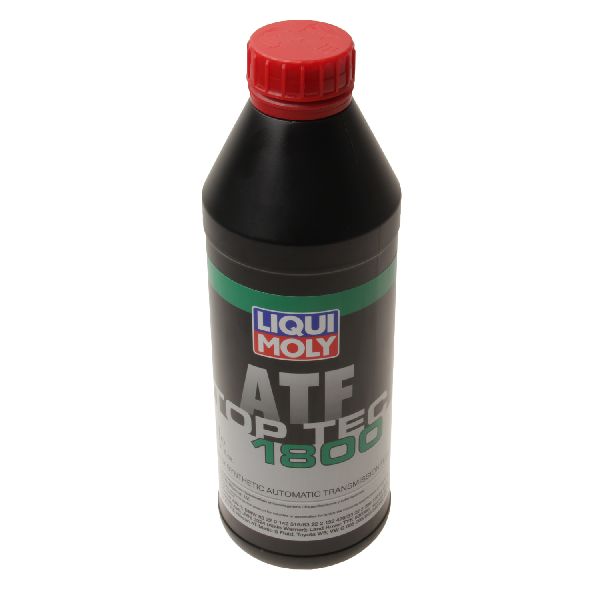
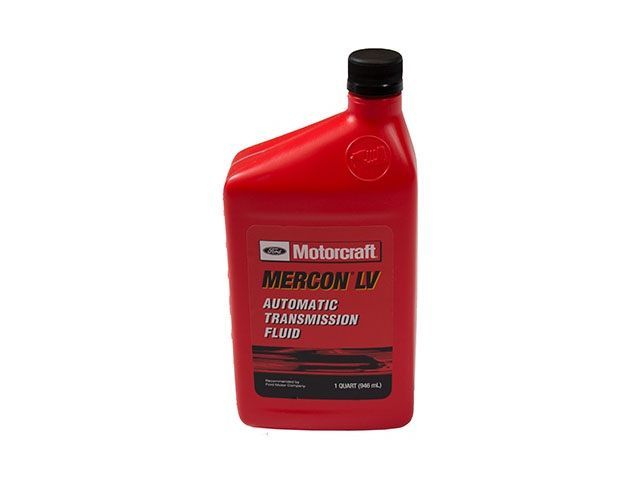
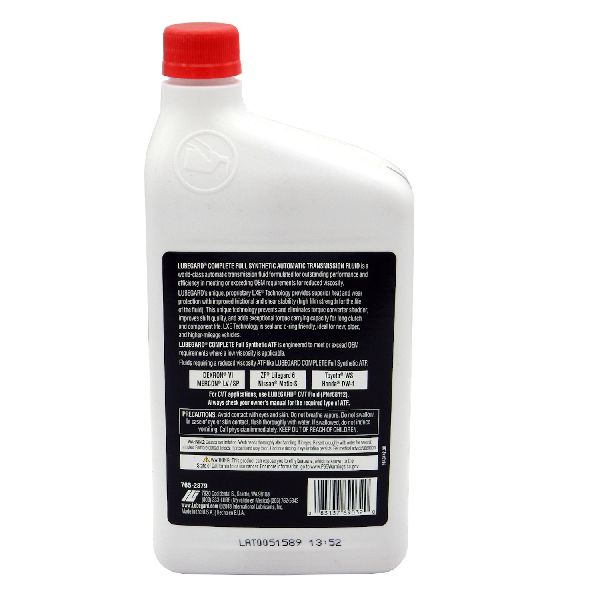
(OEM #XT-10-QLVC)— The transmission must be drained to access the internal sensor, requiring a fluid refill. A typical drain and fill requires 5.5-6.0 quarts. Always use fluid that meets Ford's specific MERCON LV specification.
Trusted brands: Motorcraft, Valvoline, Castrol
OEM price range: $8-$12 per quart
Aftermarket price range: $7-$10 per quart
Related Codes That Often Appear With This One
- P0706 — This code for 'Transmission Range Sensor 'A' Circuit Range/Performance' is very common to see alongside P0707, as both indicate a problem with the sensor's signal. Forum posts for the Escape frequently mention both codes appearing together for a no-start condition.
- U0401 — This code for 'Invalid Data Received from ECM/PCM' can sometimes appear as a side effect of the primary range sensor fault, as the incorrect gear position data confuses other modules.
- P1705 — This Ford-specific code indicates the Transmission Range Sensor circuit did not indicate Park or Neutral during a self-test, which directly supports a P0707 fault.
- P2802 — This code for 'Transmission Range Sensor 'B' Circuit Low' often appears with P0707, indicating a comprehensive failure of the sensor's internal circuits.
- P1702 — An owner reported this code alongside P0707, noting that a slight movement or wiggle of the shifter could trigger the fault (NHTSA ODI #11476584).
- P1921 — This code for transmission range signal issues is frequently documented in Ford manufacturer reports alongside P0707 (NHTSA ODI #11715240).
Platform-Specific Known Issues
- A user on 2CarPros.com reported being stuck on removing the roll pin that secures the manual shaft, highlighting 🎬 See: Installing the range sensor without special tools the need for proper tools and procedure for this specific step of the internal sensor replacement.
Mechanic-Grade Diagnostic Values
- Transmission Range Sensor 'A' Circuit Voltage (Live Data) — expected: Varies by gear, typically between 0.5V and 4.5V.. Failure: A persistent voltage reading below 0.5V for more than a few seconds will trigger P0707.
- TRS Connector to TCM Wiring Continuity — expected: Less than 5 ohms.. Failure: High resistance (or an open circuit, OL) indicates a break in the wiring harness between the transmission and the control module.
Scan Tool Commands That Help
- Ford IDS / FORScan: Reset Transmission Adaptive Tables — This is 🎬 Watch: 6F35 transmission replacement and programming guide a required step after replacing the internal transmission range sensor or the entire transmission. Failing to clear the old learned shift strategies can cause erratic shifting or prevent the new sensor from being recognized properly.
Wiring & Ground Locations
- G104 — Top rear of the transmission case.. This is a primary ground point for transmission-related sensors. A loose or corroded connection here can cause erratic sensor readings and trigger low voltage codes like P0707.
- Starter Motor Ground Cable — Attached to one of the starter motor's lower mounting bolts, which threads into the transmission bellhousing.. This ground is often forgotten or left loose after major engine or transmission work. Since it grounds directly to the transmission case, a poor connection can affect the entire transmission's electrical system.
- C1520A — The main electrical bulk connector for the 6F35 transmission.. This is the primary connector where the wiring harness attaches to the transmission. All signals from the internal TRS pass through this connector. It should be inspected for corrosion, moisture intrusion, or pushed-out pins before condemning the internal sensor.
Real Owner Repair Stories
- YouTube - The Art of Automotive (2005 Ford Escape (Note: Older generation, but demonstrates a critical diagnostic principle)) — Intermittent P0707, jerking when shifting into reverse, occasional no-start.
❌ Tried (didn't work) The owner had other mechanics look at it who could not solve the issue., The mechanic in the video first performed standard electrical checks (power, ground) which all tested good.
✅ What actually fixed it The mechanic found that the wiring harness was rubbing against a metal bracket near the transmission. The insulation on the green signal wire for the TRS had worn through, causing it to intermittently short to ground. Repairing the damaged wire resolved all symptoms and the P0707 code. - 2CarPros.com Forum User (2015 Ford Escape 2.0L Turbo, 70,000 miles) — No crank, no start condition with codes P0707 and P0706 present. Gear shift indicator on the dashboard was blank. This occurred immediately after an engine swap.
❌ Tried (didn't work) Visual inspection of wiring showed no obvious breaks or unplugged connectors.
✅ What actually fixed it A technician on the forum confirmed that these symptoms point directly to a failed internal Transmission Range Sensor. The problem was likely caused by damage to the sensor or its wiring during the engine swap procedure, or it was a pre-existing failure. The confirmed fix was the replacement of the internal TRS. - NHTSA ODI #11724949 — An owner of a Ford vehicle reported that the transmission felt like it was searching for a gear or jerking unexpectedly. Scanning the vehicle revealed P0706, P0707, and P1921, all related to the Transmission Range Sensor signal.
- NHTSA ODI #11650215 — A driver reported a "wrench" icon popping up on the dashboard during downshifts. A dealership diagnosis confirmed codes P0706, P0707, P1702, and P1921, leading to a recommendation to replace the molded lead frame, main control, gaskets, and transmission filter.
- NHTSA ODI #11650497 — In a severe case, an owner reported a major accident while crossing lanes of oncoming traffic; subsequent diagnosis found codes P0706, P0707, and P1702, requiring a new Transmission Control Assembly and screen assembly.
OEM Part Supersession History
9L8Z-7H557-B, 9L8Z-7H557-D→GN1Z-7H557-C— Part revision and consolidation by Ford.
Model Year Variations Within This Range
- 2017-2019: The 6F35 transmission in later models received some internal updates. A Ford technician noted improved trans case bushings for the LH axle seal (reducing leaks) and some changes to the valve body design and control software. While these changes don't directly affect the TRS, they indicate that not all 6F35 transmissions from 2013-2019 are identical internally.
Diagnostic Flowchart
Other Known Issues on This Vehicle
Issues unrelated to this code that are worth knowing about as an owner of this generation:
- Engine Coolant Intrusion (1.5L & 1.6L EcoBoost) 🔴 High — Commonly occurs between 60,000 and 100,000 miles. A design flaw in the engine block can cause coolant to leak into the cylinders, leading to misfires, white smoke, and eventual catastrophic engine failure. (Ref: TSB 19-2375, TSB 19-2346)
- Overheating & Fire Risk (1.6L EcoBoost) 🔴 High — Affects early models, particularly 2013-2014. Multiple recalls were issued to address issues that could cause engine overheating, cracked cylinder heads, and engine fires. (Ref: Recalls 13S12, 12S39, 13V583)
- Faulty Door Latches 🟠 Medium — Widespread issue affecting 2013-2015 models. A component within the door latch can break, preventing the door from closing properly or causing it to open while driving. (Ref: Recall 16S30)
- General 6F35 Transmission Problems 🟠 Medium → Shop Transmission Assembly — Throughout the generation, owners report issues like shuddering, rough shifting, delayed engagement, and occasional complete failure, often linked to premature fluid breakdown.
Used vs. New Parts: Buying Guide for This Vehicle
When a used part is the smart pick: For this specific repair, using a salvaged part is NOT recommended. The Transmission Range Sensor is an electronic component that lives inside the transmission, subjected to constant heat and potentially contaminated fluid. The failure rate is high, and a used part carries a significant risk of being near the end of its service life.
Donor-vehicle mileage cap: roughly under 40000 miles for the part to have meaningful remaining life.
What to inspect on the donor part:
- If sourcing a complete used transmission, verify the donor vehicle's mileage is as low as possible.
- Ask for any available service history; a transmission with regular fluid changes is a better bet.
- Avoid transmissions from vehicles that show signs of a major front-end collision, which could have damaged internal components.
OEM-only on this vehicle (don't cheap out):
- Transmission Range Sensor (TRS)
Aftermarket brands forum-validated for this vehicle:
- For this internal electronic part, sticking with the OEM Motorcraft brand (GN1Z-7H557-C) is the safest choice to ensure compatibility and longevity.
Brands owners have reported issues with on this vehicle:
- Unnamed, low-cost online marketplace brands should be avoided due to the high labor cost of this repair. A cheap part failing prematurely would require repeating the entire expensive job.
Real Owner Stories
Aggregated from forums and TSBs cited above. Mileages and costs reflect what owners reported in those sources.
2014 Ford Escape
Symptoms: Check engine light on, 'engine fault' on gauge cluster, and the car was not starting. Also threw code P0706 and U0401.
What fixed it: Replace the gear range sensor located inside the transmission, which involves removing the transmission pan and selector shaft.
Source hint: 2CarPros - '2014 Ford Escape Codes P0707 and P0706, Does Not Start'
2015 Ford Escape
Symptoms: After an engine swap, the car would not crank or start. The gear shift display on the dashboard did not indicate the selected gear, and it was throwing codes P0707 and P0706.
What fixed it: Technical procedure for replacing the TR (transmission range) sensor.
Source hint: 2CarPros - '2015 Ford Escape After Swapping Engines There Is No Crank, No Start and Codes P0707...'
Ford Owner Report (NHTSA ODI #11715240)
Symptoms: Erratic and harsh shifting while driving on the highway. Diagnostic scanning revealed PCM processor faults (P0606, P0607) alongside Transmission Range Sensor issues (P0706, P0707) and intermittent circuit faults (P1702, P1921).
Related OBD-II Codes
Frequently Asked Questions
Why won't my 2014 Ford Escape start even though the battery seems fine?
Is there a specific part of the repair that is difficult on the Escape's 6F35 transmission?
Can I use a used Transmission Range Sensor to save money on my Ford Escape?
Does the 2013-2014 Ford Escape have any other major engine risks I should know about while fixing this code?
Why is the gear indicator on my dashboard blank or showing the wrong gear?
Helpful Videos
We Have This Part in Stock


The information in this article is provided for general reference and educational purposes only. Vehicle specifications, procedures, and part compatibility can vary by production date, trim level, and region. Always consult your vehicle's factory service manual and verify part numbers before purchasing or performing repairs. Safety-critical components such as airbags, seat belts, and braking systems should be installed by a qualified professional.
- Ford Escape:
- 🧭 Diagnostic Flowchart
- 🎬 Helpful Videos
- 🛍️ Shop This Part
- What's Unique About the 2013-2019 Ford Escape
- Symptoms You May Notice
- Most Likely Causes
- Rare But Worth Checking
- Diagnosis Steps
- Parts You'll Likely Need
- Related Codes That Often Appear With This One
- Platform-Specific Known Issues
- Mechanic-Grade Diagnostic Values
- Scan Tool Commands That Help
- Wiring & Ground Locations
- Real Owner Repair Stories
- OEM Part Supersession History
- Model Year Variations Within This Range
- Other Known Issues on This Vehicle
- Used vs. New Parts: Buying Guide for This Vehicle
- Real Owner Stories
- 2014 Ford Escape
- 2015 Ford Escape
- Ford Owner Report (NHTSA ODI #11715240)
- Related OBD-II Codes
- Frequently Asked Questions
- 🎟️ Get 5% Off