

P0707 on 2009-2014 Ford F-150: Transmission Range Sensor Circuit Low Causes and Fixes
P0707 on a 2009-2014 F-150 typically indicates a problem with the Transmission Range Sensor (TRS) or its wiring, preventing the truck from knowing which gear it's in. This often results in a no-start condition or erratic shifting. The fix is usually replacing the sensor itself, which is a moderately difficult DIY job. On some models, especially later in this generation with the 6R80 transmission, the sensor is part of the internal lead frame, making the repair more complex.
- P0707 on a 2009-2014 F-150 almost always points to a bad Transmission Range Sensor (TRS) or its wiring.
- The most common symptom is a no-start condition, where the truck acts as if it's not in Park or Neutral.
- On trucks with the 6R80 transmission (most common), the sensor is part of the internal molded lead frame, a more complex and expensive repair.
- Before replacing parts, always check the wiring harness for damage and ensure the battery is fully charged, as low voltage can cause similar issues.
- This is a safety-critical part; a faulty sensor can lead to unpredictable shifting or prevent the vehicle from starting, so it should be addressed promptly.
What's Unique About the 2009-2014 Ford F-150
For the 2009-2014 F-150, the location and repair complexity of the Transmission Range Sensor depends on the specific transmission. On older 4-speed models, the sensor is an external, easily replaceable part on the side of the transmission case. However, most F-150s in this generation are equipped with the 6-speed 6R80 automatic transmission. On these models, the TRS is integrated into a component called the molded lead frame, which is located inside the transmission on top of the valve body. This makes the repair significantly more involved, requiring removal of the transmission pan and valve body. This internal lead frame is a known failure point.
Symptoms You May Notice
- Check Engine Light is on
- Wrench light may be illuminated
- Engine will not start, or only starts in Neutral.
- No gear indicator light (e.g., 'P', 'R', 'N', 'D') on the dashboard.
- Inability to shift out of Park
- Erratic or harsh shifting between gears
- Reverse lights do not turn on
- Transmission enters 'limp mode' (stuck in one gear).
- Decreased fuel economy.
- Replacing the starter motor when the vehicle won't crank, without first checking for transmission-related codes.
- Assuming an internal transmission failure without diagnosing the external sensor and wiring first.
- Replacing the battery due to a no-start condition without addressing the underlying P0707 code that is preventing the starter from engaging.
Most Likely Causes
- Faulty Transmission Range Sensor (TRS) / Molded Lead Frame 🔴 High Probability → Shop Transmission Valve Body On 6R80-equipped trucks, the TRS is part of the internal molded lead frame, which is a common failure item. The internal electronics can fail, leading to low or no signal. On externally mounted sensors, exposure to the elements, moisture, and road salt makes it susceptible to corrosion and internal failure over time.
How to confirm: Test the sensor's voltage output at the electrical connector with a multimeter while an assistant moves the gear shifter. The voltage should change consistently with each gear position. A reading that is consistently low or absent indicates a failed sensor. For internal sensors, this test is performed at the main transmission harness connector.
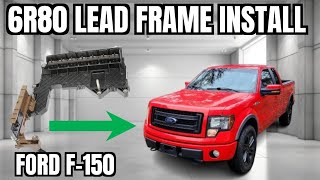
Typical fix: For external sensors, replace the sensor. For internal sensors (6R80 transmission), replace the entire molded lead frame assembly inside the transmission. 🎬 Watch: Step-by-step 6R80 lead frame replacement tutorial
Est. part cost: $40-$90 (External), $150-$300 (Internal Lead Frame) - Wiring or Connector Issues 🟡 Medium Probability The wiring harness leading to the transmission can be damaged by road debris, heat from the exhaust, or corrosion at the connector pins. Rodent damage to the harness has also been reported by owners.
How to confirm: Visually inspect the wiring harness for any signs of chafing, breaks, or corrosion, particularly where it runs near the exhaust or suspension components. Perform a continuity test on the wires between the sensor connector and the PCM/TCM.
Typical fix: Repair the damaged section of wire or replace the connector pigtail.
Est. part cost: $15-$50 - Misadjusted Transmission Range Sensor or Shift Linkage ⚪ Low Probability → Shop Transmission Assembly This primarily applies to externally mounted sensors. The linkage can become loose or the sensor can be knocked out of alignment, causing it to send incorrect signals. This is less common for the internal lead frame sensors.
How to confirm: Check the mechanical linkage from the shifter to the transmission for excessive play. When installing a new external sensor, ensure the alignment marks on the sensor and the transmission housing line up correctly when the transmission is in Neutral.
Typical fix: Adjust the shift linkage or properly align and tighten the Transmission Range Sensor.
Est. part cost: $0
Rare But Worth Checking
- Faulty Powertrain Control Module (PCM) or Transmission Control Module (TCM): → Shop Transmission Assembly This is very rare and should only be considered after all other possibilities (sensor, wiring, alignment) have been exhaustively ruled out. A low battery can also cause communication errors with modules, so ensure the battery is fully charged and healthy.
Diagnosis Steps
- Scan for Codes: Use an OBD-II scanner to confirm P0707 is the primary code. Note any other transmission-related codes like P0706 or P1702.
- Check Battery Voltage: Ensure the vehicle's battery is fully charged (12.4V+). Low voltage can cause various electronic modules to set erroneous codes.
- Check Fluid: Ensure the transmission fluid is at the correct level and in good condition. Low or dirty fluid can sometimes cause shifting issues, though it's less likely to cause this specific code.
- Inspect Wiring: Visually inspect the wiring harness and connector going to the transmission. On 6R80 models, this is a large round connector on the passenger side. Look for corrosion, damage, or loose connections. Pay close attention to where the harness may rub against the frame or exhaust.
- Test Sensor Voltage: With the key on and engine off, use a multimeter to back-probe the signal wire at the main transmission connector. Have a helper slowly move the gear selector through all positions. The voltage should change smoothly and correspond to each gear. A constant low or zero reading points to a bad sensor/lead frame or a wiring issue.
- Check for Proper Alignment (External Sensors Only): If the sensor has been replaced previously, ensure it is correctly aligned. There are typically alignment marks that must line up when the transmission is in Neutral.
- Test at the PCM/TCM: If the sensor and wiring appear good, the final step is to test the signal wire for continuity between the sensor connector and the Powertrain Control Module to rule out a break in the wire.
Parts You'll Likely Need
- Transmission Range Sensor / Molded Lead Frame
(OEM #XS4Z-7F293-AB (External Sensor example, may vary), Motorcraft SW-5713 (External Sensor example))— This is the most common component to fail, triggering the P0707 code due to internal wear, moisture intrusion, or electronic failure within the lead frame assembly.
Trusted brands: Motorcraft, Dorman, Standard Motor Products (SMP)
OEM price range: $70-$250
Aftermarket price range: $40-$180
Related Codes That Often Appear With This One
- P0706 — This code indicates 'Transmission Range Sensor Circuit Range/Performance'. It often appears with P0707 because the erratic or low signal can also be interpreted as a performance issue.
- P0708 — This code for 'Transmission Range Sensor Circuit High' can appear intermittently if the sensor or wiring has a short that causes voltage to spike, in addition to the low voltage condition of P0707.
- P1702 — Indicates a fault with the Transmission Range Sensor circuit, often logged alongside P0706 and P0707, 🎬 See: How to fix these common Ford transmission codes pointing towards a lead frame or wiring issue.
Technical Service Bulletins (TSBs) & Recalls
- While no specific TSB for P0707 was found, Ford has issued multiple recalls and TSBs for the 6R80 transmission related to the lead frame and output speed sensor, which can cause similar symptoms like unexpected downshifts. Examples include NHTSA Campaign 19V-075 (19S07) for 2011-2013 models and 24V-444 (24S37) for 2014 models.
Platform-Specific Known Issues
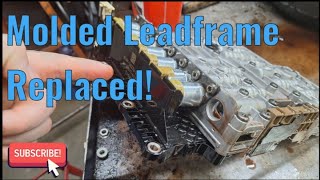
- 6R80 Molded Lead Frame Failure: → Shop Transmission Valve Body For trucks with the 6R80 6-speed automatic, the Transmission Range Sensor is integrated into the molded lead frame assembly inside the transmission. These lead frames are a known point of failure, 🎬 Watch: Molded leadframe replacement walkthrough causing P0707 and other related codes. The repair requires dropping the transmission pan and valve body. There have been recalls and extended warranty programs for similar issues on these transmissions.
Mechanic-Grade Diagnostic Values
- TR Sensor Power Supply Voltage at Transmission Connector C1575, Pin 12 (VT/GN wire) — expected: Greater than 9.5 volts with key on. Failure: Voltage less than 9.5 volts indicates an open in the power supply circuit from the PCM.
- TR Sensor Signal Voltage at Transmission Connector C1575, Pin 4 (VT wire) — expected: Less than 4.8 volts with key on. Failure: Voltage greater than 4.8 volts suggests a short to power.
- Transmission Range (TR) Sensor PWM Duty Cycle (Scan Tool PID: TR_DC) — expected: Park: 8.0-25.8%, Reverse: 30.5-39.31%, Neutral: 40.54-52.49%, Drive: 54.35-71.15%. Failure: A duty cycle percentage that is stuck low, does not match the selected gear, or is erratic.
- Lead Frame to Valve Body Bolt Torque — expected: 6 Nm (53 lb-in). Failure: N/A
- Valve Body to Transmission Case Bolt Torque — expected: 71 in-lbs (approx. 8 Nm). Failure: N/A
Scan Tool Commands That Help
- Ford IDS (or equivalent high-level scanner): Solenoid Body Strategy Data Download / Relearn — After replacing the molded lead frame, a relearn procedure is often required to ensure the transmission control module recognizes the new component and performs optimal shifting. Failure to do this can result in harsh shifting even with a new part.
- Ford IDS (or equivalent high-level scanner): Live Data PID Monitoring (TR_DC, TR_FREQ) — This is a primary diagnostic step. Observing the Transmission Range Duty Cycle (TR_DC) and Frequency (TR_FREQ) PIDs while moving the shifter can confirm if the sensor is sending a valid, changing signal to the PCM, or if it's stuck in a low state.
Wiring & Ground Locations
- C1575 — The main external transmission vehicle harness connector, a large round connector on the passenger side of the 6R80 transmission case.. This is the primary test point for all signals going to and from the internal lead frame. Testing for power, ground, and signal voltage here can determine if the fault is internal to the transmission (bad lead frame) or external (wiring harness, PCM).
- Pin 12 (Circuit LE111, VT/GN wire) at C1575 — At the main transmission harness connector.. This is the power supply from the PCM to the TR sensor. A voltage reading below 9.5V here points to a wiring issue between the PCM and the transmission, not a faulty lead frame.
- Pin 4 (Circuit VET32, VT wire) at C1575 — At the main transmission harness connector.. This is one of the signal wires from the TR sensor back to the PCM. Checking for shorts or opens on this circuit is a key diagnostic step.
- Pin 11 (Circuit RET24, BN/BU wire) at C1575 — At the main transmission harness connector.. This is the ground/return circuit for the TR sensor. High resistance or an open on this wire can cause low voltage readings.
Real Owner Repair Stories
- f150forum.com (2016 Ford F-150 5.0L with 54,000 miles) — No-start condition, no gear indicator on the dash, yellow wrench light, codes P0706 & P0707 appeared instantly after clearing.
❌ Tried (didn't work) Clearing codes with a scanner., Disconnecting the battery for 30 minutes.
✅ What actually fixed it The dealership initially diagnosed a bad wiring harness. After further inspection, they determined the issue was the external harness connector that attaches to the lead frame, not the internal lead frame itself. This suggests a connection issue can mimic a complete lead frame failure.
OEM Part Supersession History
AL3Z-7G276-A, AL3Z-7G276-B→AL3Z-7G276-D— Updated design to improve reliability and address common failure points of the integrated sensors.
Heads up: While the lead frame for a 2012 may physically fit a 2015 model, there could be programming or compatibility differences. It is critical to use the correct part number for the specific model year and have it programmed if required.
Model Year Variations Within This Range
- 2009-2010 (approx.): Some early models in this generation, particularly those with the 4-speed 4R75E transmission, used an external Transmission Range Sensor mounted on the outside of the transmission case. This is a much simpler and cheaper repair than the internal lead frame.
- 2011-2014: Most trucks in these years use the 6-speed 6R80 transmission, where the TRS is integrated into the internal molded lead frame. This is a known high-failure part requiring removal of the valve body for replacement.
Diagnostic Flowchart
Other Known Issues on This Vehicle
Issues unrelated to this code that are worth knowing about as an owner of this generation:
- Ford 5.4L 3-Valve Cam Phaser Rattle 🔴 High — Very common on 2009-2010 models with the 5.4L engine, typically appearing after 70,000 miles. Caused by worn phasers or low oil pressure from failing timing chain tensioner seals.
- 3.5L EcoBoost Stretched Timing Chain 🔴 High — Common on 2011-2014 3.5L EcoBoost engines, often presenting as a rattling noise on cold starts. Can occur as early as 70,000-80,000 miles. Can trigger code P0016. (Ref: Ford issued TSBs for this issue.)
- Electronic Throttle Body Failure 🟠 Medium — Affects multiple engines in this generation, causing the truck to suddenly lose power and enter 'limp mode'. Often triggers code P2112.
- 6R80 Transmission Lead Frame Failure 🔴 High → Shop Transmission Assembly — Common on 2011-2014 models, causing erratic shifting, getting stuck in one gear, or an unexpected downshift to 1st gear. This is a separate issue from the range sensor but involves the same component. (Ref: Multiple recalls and customer satisfaction programs have been issued (e.g., 19S07).)
- 5.0L V8 Engine Knock / Cylinder Distortion 🔴 High — A number of early 5.0L engines (2011-2012) had issues with out-of-round cylinders, leading to a knocking noise and potential engine replacement.
- Cracked Exhaust Manifold / Broken Studs 🟠 Medium — Common on the 4.6L and 5.4L V8 engines, causing a ticking noise that is most noticeable when the engine is cold.
- Integrated Wheel End (IWE) 4WD Actuator Failure 🟠 Medium — A vacuum leak in the IWE system can cause the front hubs to partially engage, creating a grinding noise while driving in 2WD.
Used vs. New Parts: Buying Guide for This Vehicle
When a used part is the smart pick: Due to the extremely high failure rate of the original molded lead frames, purchasing a used one from a junkyard is highly discouraged. The risk of receiving a part that has already failed or is near the end of its service life is significant. A used part should only be considered as a last resort if new parts are on backorder and the vehicle is inoperable.
Donor-vehicle mileage cap: roughly under 40000 miles for the part to have meaningful remaining life.
What to inspect on the donor part:
- Verify the donor vehicle's mileage is as low as possible.
- Inspect the connector pins for any signs of corrosion or damage.
- Ask for any available service history on the donor vehicle's transmission.
OEM-only on this vehicle (don't cheap out):
- Molded Lead Frame
Aftermarket brands forum-validated for this vehicle:
- Motorcraft (OEM)
Brands owners have reported issues with on this vehicle:
- Dorman: While some users have had success with Dorman lead frames out of necessity when OEM parts were unavailable, professional technicians and forum members express caution. Some have reported premature failures or out-of-box issues. It is generally considered a higher-risk alternative to the OEM part.
Real Owner Stories
Aggregated from forums and TSBs cited above. Mileages and costs reflect what owners reported in those sources.
2011-2013 Ford F-150
Symptoms: Unexpected downshifts to 1st gear and erratic shifting behavior.
What fixed it: Replacement of the molded lead frame under NHTSA Campaign 19V-075 (19S07).
Source hint: TSB/Recall section citing NHTSA Campaign 19V-075
2014 Ford F-150
Symptoms: Transmission issues leading to a recall for the lead frame and output speed sensor.
What fixed it: Service performed under NHTSA Campaign 24V-444 (24S37).
Source hint: TSB/Recall section citing NHTSA Campaign 24V-444
2010-2014 Ford F-150 6R80
Symptoms: P0706 and P0707 faults causing a no-start condition; gear indicator light missing from dashboard.
What fixed it: Replacement of the internal molded lead frame assembly.
Source hint: f150forum.com thread titled 'P0706-P0707 faults causing no start'
1997 Ford F-150
Symptoms: P0707 code accompanied by starter issues and a no-start condition.
What fixed it: Replacement of the transmission range sensor.
Source hint: Ford Truck Enthusiasts Forums thread 'p0707-and-starter-issues'
Related OBD-II Codes
Frequently Asked Questions
My 2012 F-150 is downshifting unexpectedly to 1st gear; is there a recall for this related to the P0707 code?
I have a 2013 F-150 with the 6R80 transmission. Is the Transmission Range Sensor external or internal?
Why won't my F-150 start unless I shift it into Neutral?
How much should I expect to pay for parts to fix a P0707 on a 6R80 transmission?
Can a bad battery cause a P0707 code on my 2014 F-150?
Is the P0707 code related to the rattling noise I hear on cold starts in my 3.5L EcoBoost?
Helpful Videos

We Have This Part in Stock

The information in this article is provided for general reference and educational purposes only. Vehicle specifications, procedures, and part compatibility can vary by production date, trim level, and region. Always consult your vehicle's factory service manual and verify part numbers before purchasing or performing repairs. Safety-critical components such as airbags, seat belts, and braking systems should be installed by a qualified professional.
- Ford F-150:
- 🧭 Diagnostic Flowchart
- 🎬 Helpful Videos
- 🛍️ Shop This Part
- What's Unique About the 2009-2014 Ford F-150
- Symptoms You May Notice
- Most Likely Causes
- Rare But Worth Checking
- Diagnosis Steps
- Parts You'll Likely Need
- Related Codes That Often Appear With This One
- Technical Service Bulletins (TSBs) & Recalls
- Platform-Specific Known Issues
- Mechanic-Grade Diagnostic Values
- Scan Tool Commands That Help
- Wiring & Ground Locations
- Real Owner Repair Stories
- OEM Part Supersession History
- Model Year Variations Within This Range
- Other Known Issues on This Vehicle
- Used vs. New Parts: Buying Guide for This Vehicle
- Real Owner Stories
- 2011-2013 Ford F-150
- 2014 Ford F-150
- 2010-2014 Ford F-150 6R80
- 1997 Ford F-150
- Related OBD-II Codes
- Frequently Asked Questions
- 🎟️ Get 5% Off