

P0707 on 2011-2018 Ford Focus: Transmission Range Sensor and TCM Guide
On a 2011-2018 Ford Focus, code P0707 is most often caused by a faulty Transmission Control Module (TCM) or a bad Transmission Range Sensor (TRS). The most common symptom is the car refusing to start. A replacement TRS is inexpensive (~$30-$75), while a TCM is a more significant repair, though often covered by an extended warranty from Ford.
- P0707 on a 2011-2018 Focus will most likely cause a no-start condition.
- The root cause is very often a faulty Transmission Control Module (TCM), a known weak point on this vehicle, rather than just the sensor itself.
- Before buying parts, perform a simple voltage test at the range sensor connector; lack of a 5V signal points directly to a bad TCM.
- Check with a Ford dealer for any open warranty extensions or recalls related to the TCM for your specific VIN.
- If replacing the TCM, using a module from the same model year may help avoid the need for reprogramming.
What's Unique About the 2011-2018 Ford Focus
The 2011-2018 Ford Focus uses the DPS6 PowerShift, a dry dual-clutch automatic transmission with a well-documented history of issues. Unlike many other vehicles where a P0707 code points directly to a simple sensor failure, on this specific platform, the code is very frequently a symptom of a failing Transmission Control Module (TCM). A former Ford transmission technician noted that the original TCMs were so fragile that simply disconnecting the battery could cause them to fail and trigger this code. The TCM failure is so common that it should be considered the primary suspect for P0707, especially if accompanied by other communication codes like U0101 or erratic behavior. Ford issued multiple, extensive warranty programs (like 14M02) to address these widespread problems.
Generation note: This issue applies to the entire third generation (Mk3) of the Ford Focus in North America (2011-2018) equipped with the 2.0L I4 engine and the DPS6 automatic transmission. Earlier and later models use different platforms and transmissions. The 2011-2015 Ford Fiesta with the same DPS6 transmission also shares this problem.
Symptoms You May Notice
- Engine will not crank / No-start condition
- Check Engine Light is on
- Transmission warning light on the dashboard
- Inability to shift out of Park
- Delayed or harsh gear engagement
- Incorrect gear indicator on the dashboard, possibly flickering between positions
- Sudden loss of power or inability to move after coming to a stop
- Replacing the starter motor when the vehicle doesn't start. The no-start is usually due to the TCM not recognizing the transmission is in Park or Neutral, which is a safety lockout, not a starter failure.
- Replacing the battery. While a weak battery can cause various electronic issues, it's rarely the root cause of a persistent P0707 code on this vehicle. However, a weak battery *can* be accompanied by code P0606 (TCM Internal Failure), so the battery should always be tested first.
- Assuming the Transmission Range Sensor is bad without first checking for the 5V reference from the TCM. Many owners replace the sensor only to find the problem lies with the module.
- Replacing the shift linkage. While a damaged linkage can cause this code, it is far less common than TCM or sensor failure.
Most Likely Causes
- Failing Transmission Control Module (TCM) 🔴 High Probability → Shop Transmission Assembly The original TCMs on the DPS6 transmission have a very high failure rate due to internal electrical circuit failures. Ford has issued multiple warranty extensions (14M02) and customer satisfaction programs for this part, extending coverage to 10 years or 150,000 miles. Failures can occur spontaneously or even after a battery disconnect.
How to confirm: Using a multimeter, check for a 5-volt reference signal on the specified wire at the Transmission Range Sensor connector. If there is no voltage, the TCM is not sending power and is almost certainly the cause of the fault. Also, check with a Ford dealer using the VIN to see if warranty program 14M02 is active, as diagnosis and replacement may be free.
Typical fix: Replace the Transmission Control Module. It is highly recommended to use an OEM Motorcraft part. The replacement part must be programmed by a dealer or a qualified shop with Ford's diagnostic software (IDS).
Est. part cost: $300-$700 - Faulty Transmission Range Sensor (TRS) 🟡 Medium Probability → Shop Transmission Assembly The sensor is an external electronic component exposed to heat, moisture, and vibration, making it a common failure point on any vehicle. While the TCM is a more likely culprit on this platform, the sensor itself can and does fail, sometimes due to water intrusion after a car wash or rain.
How to confirm: If a 5-volt reference is confirmed at the sensor connector, the sensor itself is the next likely point of failure. You can test the sensor's output signal, but given the low cost of the part, replacement is a common and cost-effective diagnostic step. The sensor is located on top of the transmission, held by two 8mm bolts.
Typical fix: Replace the Transmission Range Sensor. It is located on the top of the transmission and is held in place by two 8mm bolts.
Est. part cost: $30-$75 - Wiring Harness or Connector Issue ⚪ Low Probability The wiring harness can be damaged from engine vibration, heat, or improper service procedures. The connector to the TRS can also become corroded or have loose pins, especially from moisture. In some Ford vehicles, a slight movement or wiggle of the shifter can reveal intermittent connection issues in the range circuit, as noted in NHTSA ODI #11476584.
How to confirm: Visually inspect the wiring harness between the TCM and the TRS for any signs of chafing, melting, or breaks. Check the connector pins for corrosion or damage. Perform a continuity test on the signal, power, and ground wires between the TCM and TRS connectors.
Typical fix: Repair the damaged section of the wiring harness or clean/replace the connector.
Est. part cost: $10-$50
Diagnosis Steps
- Scan for Codes: Confirm P0707 is present and check for any other related transmission codes like P2802, P1705, or communication codes like U0101 and P0606.
- Check for No-Start: Attempt to start the vehicle. If it does not crank, this strongly points to the TRS circuit, as the safety interlock is not engaged.
- Check for Warranty Coverage: Before any repair, contact a Ford dealer with the vehicle's VIN. Inquire about Customer Satisfaction Program 14M02, which extended the TCM warranty to 10 years/150,000 miles. The repair might be free.
- Inspect Connectors: Visually inspect the electrical connectors at both the Transmission Range Sensor (on top of the transmission) and the Transmission Control Module (mounted on the side of the transmission). Look for corrosion, moisture, or pushed-out pins.
- Test for Voltage at the Sensor: Disconnect the TRS connector. With the key on, use a multimeter to check for a 5-volt reference signal at the specified pin (often a white/green wire).
- Analyze Voltage Test Results: If 5 volts are NOT present, the TCM is highly suspect as it is not providing the necessary power. Proceed with TCM replacement, ideally under warranty. If 5 volts ARE present, the problem is more likely the TRS itself or the wiring between the sensor and the TCM.
- Replace the Likely Component: Based on the voltage test, replace the most probable faulty part. If you lack a 5V signal, focus on the TCM. If 5V is present, the TRS is a logical and inexpensive part to replace first.
- Clear Codes and Perform Relearn: After replacing any parts, clear the diagnostic trouble codes. If the TCM was replaced, a clutch adaptive learning procedure is required using a capable scan tool like Ford's IDS.
Parts You'll Likely Need
- Transmission Control Module (TCM)
(OEM #AE8Z-7Z369-F)— This is the most common failure item for this code on the 2011-2018 Focus due to a known design flaw in the original units. It is often covered by Ford's extended warranty program 14M02.
Trusted brands: Motorcraft
OEM price range: $450-$700
Aftermarket price range: $300-$500 - Transmission Range Sensor (TRS)
(OEM #GN1Z-7H557-B)— This sensor provides the gear position signal. It can fail from heat and vibration and is the second most likely cause after the TCM.
Trusted brands: Motorcraft, Standard Motor Products (SMP), Dorman
OEM price range: $50-$75
Aftermarket price range: $30-$60
Related Codes That Often Appear With This One
- P2802 — This code is for 'Transmission Range Sensor B Circuit Low'. The TRS has multiple circuits ('A', 'B', etc.), and a failure in the sensor or TCM can often trigger faults on multiple circuits simultaneously.
- P1705 — This code means 'Transmission Range Circuit Not Indicating Park/Neutral During Self Test'. It is directly related to P0707, as the low voltage signal prevents the computer from confirming the P/N position.
- U0101 — This code indicates 'Lost Communication with TCM'. It often appears alongside P0707 when the TCM has failed completely or is failing intermittently.
- P0606 — This code for 'ECM/PCM Processor Fault' can be triggered alongside transmission codes when the TCM is failing, as it's a primary control module. Ford's TSB for the 14M02 program specifically mentions this code.
Technical Service Bulletins (TSBs) & Recalls
- Customer Satisfaction Program 14M02: Extended warranty coverage for the Transmission Control Module (TCM) to 10 years/150,000 miles. Symptoms covered include no-start, loss of power, and loss of transmission engagement.
- Customer Satisfaction Program 19N08: Extended warranty coverage for the DPS6 clutch assembly to 7 years/100,000 miles to address shudder issues.
- Safety Recall 18S32 / 19S22: Addresses a faulty Canister Purge Valve (CPV) that can stick open, deforming the fuel tank and causing stalling. Not directly related to P0707 but a critical issue for this platform.
Platform-Specific Known Issues
- Ford has several Customer Satisfaction Programs and extended warranties related to the DPS6 transmission. Owners should check with a Ford dealer using their VIN to see if their vehicle is covered. Program 14M02 specifically extends the TCM warranty to 10 years or 150,000 miles for intermittent loss of transmission engagement, loss of power, or no-start. The warranty was set to expire in June 2025.
Mechanic-Grade Diagnostic Values
- 5V Reference Voltage at TRS Connector — expected: Approximately 5 volts. Failure: No voltage or significantly less than 5 volts indicates a faulty TCM or wiring harness.
- TRS Circuit Voltage (Live Data) — expected: Varies with gear selection, but should not be below 0.5V.. Failure: A consistent reading below 0.5 volts on the 'TRS A Voltage' PID confirms the low circuit condition that sets P0707.
Scan Tool Commands That Help
- Ford IDS (Integrated Diagnostic System): TCM Adaptive Learning — This must be performed after replacing the TCM or the Transmission Range Sensor. It includes several sub-routines.
- Ford IDS (Integrated Diagnostic System): TR Sensor Adaptive Learn — Specifically used after replacing the TRS or TCM. The tool prompts the user to shift through each gear (P, R, N, D, S) to allow the module to learn the voltage values for each position.
- Ford IDS (Integrated Diagnostic System): Clutch Adaptive Learn — Required after TCM replacement. This procedure allows the TCM to learn the clutch touch points and friction characteristics. Failure to perform this can result in poor shifting.
- FORScan: TCM Module Programming/Calibration — Advanced users can use FORScan with a specific license to flash different calibration files to the TCM. This is sometimes used to load a known-good configuration onto a used module, but carries a risk of 'bricking' the module if done incorrectly.
Wiring & Ground Locations
- TRS Connector Pin 3 (Power) — At the Transmission Range Sensor, which is on top of the transmission case, held by two 8mm bolts.. This pin, on a white wire with a green tracer, should have a 5V reference from the TCM. Lack of voltage here is a primary indicator of TCM failure.
- TRS Connector Pin 2 (Ground) — At the Transmission Range Sensor connector.. This is the ground return for the sensor circuit. A good ground is necessary for an accurate signal. You can test the full circuit by measuring voltage between Pin 3 and Pin 2.
- TCM Connectors (C1750A, C1750B) — The TCM is mounted to the driver's side of the transmission case, below the air filter box. It has two large multi-pin connectors.. These are the main interface to the TCM. Corrosion or pushed-out pins in these connectors can cause P0707 and other communication codes. The TRS wiring runs through these connectors.
- Battery Area Grounds — On the chassis near the battery tray.. Poor grounds in this area are a known issue on the Focus and can cause a variety of electrical problems, including TCM faults like P0606 which often accompanies P0707. Cleaning these grounds is a critical first step in diagnosis.
Real Owner Repair Stories
- Youcanic video based on a 2015 Ford Focus (2015 Ford Focus, 2.0L engine) — Transmission light came on, vehicle would not drive forward or reverse. After shutting off, it would not crank or start.
❌ Tried (didn't work) Initial diagnosis pointed to the TRS due to the no-start condition and multiple range sensor codes.
✅ What actually fixed it The video demonstrates the replacement of the Transmission Range Sensor (TRS), which resolved the P0707, P1705, and P2802 codes and fixed the no-start condition. - YouTube user 8bit-Flashback (2012-2018 Ford Focus) — Implied symptoms leading to TCM replacement, including poor shifting.
❌ Tried (didn't work) The user notes that their first replacement TCM failed during the adaptive learning procedure, highlighting the potential for faulty parts even when new or remanufactured.
✅ What actually fixed it A second replacement TCM was installed and successfully programmed using the Ford IDS software, specifically performing the 'TR sensor' and 'Clutch' adaptive learning procedures. This fixed the car.
OEM Part Supersession History
AE8Z-7Z369-B, AE8Z-7Z369-D, AE8Z-7Z369-E→AE8Z-7Z369-F— The original TCMs had a high failure rate. The -F revision is the most current and presumably most reliable OEM version.
Heads up: While all are for the DPS6, installing an older revision part is not recommended. A former Ford technician also notes to look for a 'K05' marking on used TCMs, as this indicates the latest hardware revision which they have found to be very reliable.
Diagnostic Flowchart
Other Known Issues on This Vehicle
Issues unrelated to this code that are worth knowing about as an owner of this generation:
- DPS6 PowerShift Transmission Shudder/Failure 🔴 High → Shop Transmission Assembly — Extremely common, especially in 2011-2016 models. Often appears as shuddering, jerking, or hesitation from a stop. (Ref: Customer Satisfaction Program 19N08 (Clutch Warranty Extension), 14M02 (TCM Warranty Extension))
- Faulty Canister Purge Valve (CPV) 🔴 High — Widespread, affecting 2012-2018 models. A stuck-open valve can cause engine stalling, rough idle, and difficulty starting after refueling. (Ref: Safety Recall 18S32 / 19S22; Customer Satisfaction Program 24N07)
- Prematurely Worn Engine Mounts 🟠 Medium — Very common across all Mk3 models. The passenger-side hydraulic mount is the most frequent failure point, leading to excessive vibration at idle and clunking noises.
- Failing Door Latch Assembly 🟠 Medium — Common problem where door latches fail, causing a 'door ajar' warning light to stay on or preventing doors from latching securely. (Ref: Ford issued recalls for some model years, but the problem is reported across the generation.)
- Parasitic Battery Drain / Electrical Faults 🟡 Low — Owners report intermittent issues with battery drain, often traced to the Body Control Module (BCM) or other electrical components not going to 'sleep'.
Used vs. New Parts: Buying Guide for This Vehicle
When a used part is the smart pick: For the Transmission Range Sensor (TRS), a used part is a reasonable, low-cost diagnostic step. For the Transmission Control Module (TCM), a used part can be a smart buy ONLY if you can source the latest hardware revision (marked 'K05') from a donor vehicle of the same year range. This can provide an updated, reliable part for much less than a new one.
Donor-vehicle mileage cap: roughly under 100000 miles for the part to have meaningful remaining life.
What to inspect on the donor part:
- For a used TCM, look for a sticker that says 'K05' or a shiny sticker without the Continental logo; these indicate a later, more reliable hardware version.
- Ensure the donor vehicle is the same model year or within a close range (e.g., 2012-2014) to ensure the base programming is compatible before any adaptive learning.
- Inspect the connectors on the used part for any bent pins, corrosion, or physical damage.
- Ask for a warranty, even from a junkyard, as these parts have a known failure history.
OEM-only on this vehicle (don't cheap out):
- Transmission Control Module (TCM) - While some aftermarket companies 'recondition' these, the most reliable path is a new OEM Motorcraft part or a verified late-revision used OEM part. Some aftermarket rebuilds may not have the same longevity.
Aftermarket brands forum-validated for this vehicle:
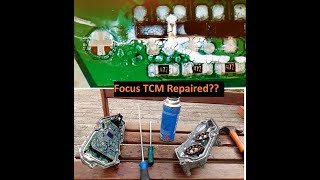
- Dorman (for reconditioned TCM) - Some users report that Dorman reconditioned units fix a key flaw by soldering internal connections that were originally press-fit, potentially making them more durable than the original OEM design.
Brands owners have reported issues with on this vehicle:
- Unbranded TCMs from eBay/Amazon - Many users report these are often just used OEM parts of the original faulty design, and they may fail quickly. One user reported failure in just 5 days.
Real Owner Stories
Aggregated from forums and TSBs cited above. Mileages and costs reflect what owners reported in those sources.
2011-2018 Ford Focus 2.0L I4
Symptoms: A user reported codes P0707 and P2802 appearing specifically after a transmission replacement, identifying them as range sensor codes linked to TCM or sensor issues.
What fixed it: The source identifies these as range sensor codes often linked to TCM or sensor issues on this platform, requiring diagnosis of the TCM or TRS.
Source hint: Reddit r/FordFocus
2016 Ford Focus 2.0L I4
Symptoms: The car ran and shifted fine, but the P0707 code appeared after other electrical work was performed, indicating a low voltage condition in the TRS circuit.
What fixed it: The code indicates a low voltage condition in the TRS circuit that needs to be addressed, though the vehicle remained drivable.
Source hint: Reddit r/AskMechanics
2011-2018 Ford Focus 2.0L I4 — 22000 miles
Symptoms: Excessive vibration issues noted on a Mk3 Focus.
What fixed it: Replacement of poor quality engine/gearbox mounts.
Source hint: FordOwnersClub Forum
Documented NHTSA Reports
Ford Transmission Range Sensor Failure
Symptoms: An owner reported that their vehicle became very unsafe and unstable to drive at 130,000 miles. A code reader identified P0707 as a Transmission Range Sensor 'A' Circuit Low fault with a severity level of 2 (NHTSA ODI #11725706).
Erratic Shifting and Processor Faults
Symptoms: A report describes erratic and harsh shifting while on the highway. Diagnostic scans revealed P0707 and P0706 range sensor issues alongside P0606 and P0607 PCM processor faults (NHTSA ODI #11715240).
Sudden Downshift and Dashboard Alerts
Symptoms: An owner experienced dashboard alerts appearing immediately after a downshift occurred. A dealership diagnosis found codes P0706, P0707, P1702, and P1921 (NHTSA ODI #11650215).
Transmission Control Assembly Replacement
Symptoms: Following a dangerous incident while crossing oncoming traffic, a vehicle was diagnosed with DTCP0706, P0707, and P1702. The recommended repair involved replacing the Transmission Control Assembly and screen assembly (NHTSA ODI #11650497).
Related OBD-II Codes
Frequently Asked Questions
Is the P0707 code on my 2011-2018 Ford Focus covered under a special warranty?
My Focus won't crank and has a P0707 code; could this be the TCM or the Range Sensor?
Does the 14M02 warranty extension for the TCM expire soon?
If I replace the TCM myself to fix the P0707 code, what else is required?
Can a car wash cause the P0707 code on a Ford Focus?
Are there other transmission-related warranties I should know about for my DPS6 Focus?
Helpful Videos


We Have This Part in Stock


The information in this article is provided for general reference and educational purposes only. Vehicle specifications, procedures, and part compatibility can vary by production date, trim level, and region. Always consult your vehicle's factory service manual and verify part numbers before purchasing or performing repairs. Safety-critical components such as airbags, seat belts, and braking systems should be installed by a qualified professional.
- Ford Focus:
- 🧭 Diagnostic Flowchart
- 🎬 Helpful Videos
- 🛍️ Shop This Part
- What's Unique About the 2011-2018 Ford Focus
- Symptoms You May Notice
- Most Likely Causes
- Diagnosis Steps
- Parts You'll Likely Need
- Related Codes That Often Appear With This One
- Technical Service Bulletins (TSBs) & Recalls
- Platform-Specific Known Issues
- Mechanic-Grade Diagnostic Values
- Scan Tool Commands That Help
- Wiring & Ground Locations
- Real Owner Repair Stories
- OEM Part Supersession History
- Other Known Issues on This Vehicle
- Used vs. New Parts: Buying Guide for This Vehicle
- Real Owner Stories
- 2011-2018 Ford Focus 2.0L I4
- 2016 Ford Focus 2.0L I4
- 2011-2018 Ford Focus 2.0L I4 — 22000 miles
- Documented NHTSA Reports
- Ford Transmission Range Sensor Failure
- Erratic Shifting and Processor Faults
- Sudden Downshift and Dashboard Alerts
- Transmission Control Assembly Replacement
- Related OBD-II Codes
- Frequently Asked Questions
- 🎟️ Get 5% Off