

P0707 on 2003-2013 Honda Civic: Transmission Range Sensor Fixes
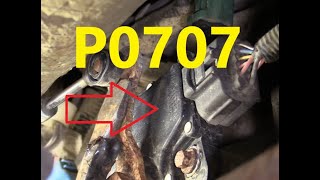
P0707 on a 2003-2013 Honda Civic almost always indicates a faulty Transmission Range Sensor (also called a Neutral Safety Switch). This can cause a no-start condition or erratic shifting. Replacing the sensor is the most common fix, with parts costing between $35 and $150.
- P0707 on a 2003-2013 Civic points directly to an issue with the Transmission Range Sensor circuit, usually a failed sensor.
- Key symptoms are a no-start condition (or starting only in Neutral) and a flashing 'D' light on the dash.
- Before replacing parts, always check the transmission fluid and inspect the sensor's wiring and connector for damage.
- Replacement is a manageable DIY job for those comfortable with basic tools, but proper alignment of the new sensor is critical to avoid new problems.
What's Unique About the 2003-2013 Honda Civic
Across the 7th, 8th, and 9th generations of the Honda Civic covered in this range, the automatic transmission design is sensitive to the proper functioning of the Transmission Range Sensor. While the part itself is a common failure point across many vehicles, on these Civics it is a frequent cause for no-start or shifting issues that can be misdiagnosed as a more severe transmission failure. The sensor is located on the outside of the transmission case, making it susceptible to moisture and road debris, which can lead to premature failure of the switch or corrosion in its connector.
Generation note: This range covers three generations of the Honda Civic: the 7th (2001-2005), 8th (2006-2011), and 9th (2012-2015). The function and common failure of the Transmission Range Sensor are consistent across these generations, though the specific part number varies. The diagnostic and replacement procedures are very similar. The 7th generation is particularly known for automatic transmission issues in general.
Symptoms You May Notice
- Check Engine Light is on
- Vehicle will not start, or only starts in Neutral but not Park
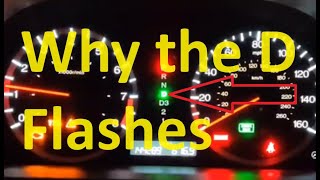
- Flashing 'D' (Drive) indicator light on the instrument cluster
- Transmission shifts harshly or erratically
- Incorrect gear position displayed on the dashboard
- Vehicle may enter 'limp mode,' limiting available gears
- Delayed or sluggish gear engagement when shifting from Park
- Replacing the starter when the vehicle won't crank, without first checking for transmission-related codes.
- Assuming an internal transmission failure due to harsh shifting, when the issue is only a faulty sensor.
Most Likely Causes
- Faulty Transmission Range Sensor (Neutral Safety Switch) 🔴 High Probability → Shop Transmission Assembly The sensor is exposed to the elements on the exterior of the transmission, making it vulnerable to moisture intrusion and internal corrosion over time. Internal wear of the potentiometer or Hall-effect element can also cause the low voltage reading.
How to confirm: Test the sensor's voltage output at the connector with a multimeter while shifting through the gears. The voltage should change according to the manufacturer's specifications. A reading that is consistently low (below 0.5V) or absent indicates a failed sensor.
Typical fix: Replace the Transmission Range Sensor.
Est. part cost: $35-$150 - Damaged Wiring or Corroded Connector 🟡 Medium Probability The wiring harness leading to the sensor is located underneath the vehicle and can be damaged by road debris, heat, or moisture, leading to corrosion in the connector pins. This can cause a high-resistance or open circuit, resulting in a low voltage signal at the PCM.
How to confirm: Visually inspect the wiring harness and connector for any signs of damage, chafing, or green/white corrosion. Perform a continuity test on the wires between the sensor and the PCM.
Typical fix: Repair the damaged section of wiring or clean/replace the connector.
Est. part cost: $5-$50 - Misadjusted Transmission Range Sensor ⚪ Low Probability → Shop Transmission Assembly This typically only occurs after the sensor has been replaced or the transmission has been serviced. If not aligned correctly, it will send incorrect signals. For the 7th generation, a 2.0 mm (0.08 inch) feeler gauge is specified for proper alignment in the Neutral position.
How to confirm: Ensure the shifter is in Neutral. There are alignment marks or a slot on the sensor that must be lined up correctly during installation. A feeler gauge is required for precise alignment on 7th generation models.
Typical fix: Loosen the sensor mounting bolts and adjust its position until it is correctly aligned, then retighten.
Est. part cost: $0
Rare But Worth Checking
- Low or Dirty Transmission Fluid: → Shop Transmission Assembly While not a direct cause of the electrical circuit code, very low or contaminated fluid can cause erratic transmission behavior that may be confused with sensor issues. It's a simple and important first check. Using non-Honda ATF can also cause issues.
- Faulty Powertrain Control Module (PCM): This is extremely rare. The PCM is the last item to suspect after all other possibilities, including the sensor and its entire circuit, have been thoroughly tested and ruled out.
Diagnosis Steps
- Check the transmission fluid level and condition. Top off or replace if necessary with Honda Genuine ATF-DW1 fluid.
- Connect an OBD-II scanner and confirm P0707 is the active code. Note any other transmission codes. A professional scanner can view live data from the sensor.
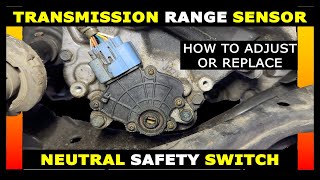
- Visually inspect the Transmission Range Sensor, its connector, and wiring harness for any obvious signs of damage, corrosion, or loose connections. The sensor is located on the outside of the transmission case, typically behind the driver's side front wheel.
- Using a multimeter, back-probe the sensor's connector to check for proper voltage and ground signals from the PCM.
- Test the sensor's output signal wire while an assistant moves the gear selector through each position (P, R, N, D). The voltage should change predictably for each gear. A constant low or zero voltage reading points to a bad sensor.
- If the sensor's output is correct at the sensor connector, perform a continuity test on the wiring between the sensor and the PCM to rule out an open or shorted wire.
- If the sensor and wiring are confirmed to be good, check the adjustment of the sensor, especially if it has been recently serviced.
- If all other possibilities are exhausted, the issue may be with the PCM, but this is highly unlikely.
Parts You'll Likely Need
- Transmission Range Sensor / Neutral Safety Switch
(OEM #28900-PLX-023 (7th Gen), 28900-RPC-013 (8th/9th Gen), 28900-RJ2-003 (some 9th Gen))— This sensor is the most common cause of the P0707 code due to its electronic components failing over time or from exposure to the elements.
Trusted brands: Honda (Genuine OEM), Standard Motor Products, WVE, Beck/Arnley, Duralast
OEM price range: $100-$180
Aftermarket price range: $35-$90
Related Codes That Often Appear With This One
- P0705 — P0705 indicates a general malfunction in the transmission range sensor circuit, while P0707 specifically points to a low voltage condition. They can appear together if the sensor is failing intermittently.
- P0706 — This code indicates a range/performance problem with the sensor circuit, often appearing with P0707 if the signal is erratic and not just consistently low.
- P0708 — This is the opposite of P0707, indicating a high voltage signal. Seeing both could suggest a very erratic sensor or wiring short.
Platform-Specific Known Issues
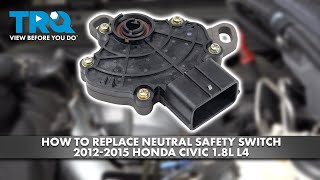
- Owner Experience on 8thCivic.com: A user on the 8thCivic.com forum described a no-start condition and a flashing 'D' light. After replacing the transmission range sensor (part number 28900-RPC-013), the issue was completely resolved. The user noted the part was difficult to access without removing the intake. 🎬 See how to replace the neutral safety switch on 9th Gen Civics
- DIY Repair on 7th Gen Civic: A YouTube video for a 2004 Honda Civic clearly shows the replacement process. The mechanic emphasizes the importance of aligning the new sensor in the Neutral position using a feeler gauge to prevent shifting issues after installation. The OEM part number cited is 28900-PLX-023. 🎬 Watch: 2001-2005 Civic range sensor replacement and alignment walkthrough
Diagnostic Flowchart
Other Known Issues on This Vehicle
Issues unrelated to this code that are worth knowing about as an owner of this generation:
- Cracked Engine Block (8th Gen) 🔴 High — Affects 2006-early 2009 models with the R18A1 engine. A manufacturing defect can cause a coolant leak from a crack in the block, leading to overheating. (Ref: Honda TSB 10-048 extended the warranty to 10 years with no mileage limit, but this has now expired.)
- Defective Rear Upper Control Arms (8th Gen) 🟠 Medium — Common on 2006-2008 models. Incorrect factory suspension geometry causes rapid and uneven rear tire wear, often leading to loud road noise. (Ref: Honda TSB 08-001 and 13-047 addressed the issue by providing redesigned control arms.)
- Failing Clear Coat / Peeling Paint 🟡 Low — Widespread across multiple generations, particularly the 8th and 9th. The clear coat fails, leading to large patches of peeling and fading paint, especially on horizontal surfaces like the roof and hood. (Ref: Multiple TSBs were issued and warranty extensions offered for specific colors and years, but it remains a common out-of-pocket expense for many owners.)
- Automatic Transmission Failure (7th Gen) 🔴 High → Shop Transmission Assembly — Very common on 2001-2005 models. The automatic transmissions were prone to premature failure, often before 100,000 miles, due to issues with the torque converter and internal clutches.
Real Owner Stories
Aggregated from forums and TSBs cited above. Mileages and costs reflect what owners reported in those sources.
2006-2011 Honda Civic (8th Gen)
Symptoms: The vehicle experienced a no-start condition accompanied by a flashing 'D' (Drive) light on the instrument cluster.
What fixed it: Replacement of the transmission range sensor (part number 28900-RPC-013). The owner noted the part was hard to reach without removing the intake.
Source hint: Owner Experience on 8thCivic.com
2004 Honda Civic (7th Gen)
Symptoms: Shifting issues and P0707 code after transmission service.
What fixed it: Replacing the sensor (OEM part 28900-PLX-023) and ensuring precise alignment in the Neutral position using a feeler gauge.
Source hint: DIY Repair on 7th Gen Civic (YouTube)
Related OBD-II Codes
Frequently Asked Questions
What is the specific part number for the Transmission Range Sensor on an 8th Generation Honda Civic?
I have a 2004 Honda Civic; is there a specific part number and installation requirement for the range sensor?
Why is my 8th Gen Civic's 'D' indicator flashing and the car won't start?
Is the P0707 code related to the 8th Gen Civic's cracked engine block TSB?
Can I replace the sensor myself on an 8th Gen Civic, or is it too difficult to reach?
Where is the Transmission Range Sensor located on these models?
Helpful Videos
We Have This Part in Stock

The information in this article is provided for general reference and educational purposes only. Vehicle specifications, procedures, and part compatibility can vary by production date, trim level, and region. Always consult your vehicle's factory service manual and verify part numbers before purchasing or performing repairs. Safety-critical components such as airbags, seat belts, and braking systems should be installed by a qualified professional.
- Honda Civic:
- 🧭 Diagnostic Flowchart
- 🎬 Helpful Videos
- 🛍️ Shop This Part
- What's Unique About the 2003-2013 Honda Civic
- Symptoms You May Notice
- Most Likely Causes
- Rare But Worth Checking
- Diagnosis Steps
- Parts You'll Likely Need
- Related Codes That Often Appear With This One
- Platform-Specific Known Issues
- Other Known Issues on This Vehicle
- Real Owner Stories
- 2006-2011 Honda Civic (8th Gen)
- 2004 Honda Civic (7th Gen)
- Related OBD-II Codes
- Frequently Asked Questions
- 🎟️ Get 5% Off