

P0707 on 2003-2013 Honda CR-V: Transmission Range Sensor Circuit Low Causes and Fixes
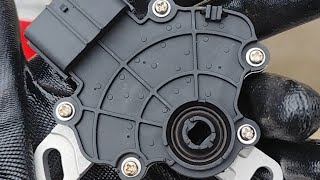
P0707 on a 2003-2013 Honda CR-V almost always indicates a faulty Transmission Range Sensor, also known as a Neutral Safety Switch. This can cause a no-start condition or erratic shifting. Expect to pay $40-$100 for an aftermarket part, with a DIY difficulty of 3/5 due to potentially tight access.
- P0707 on a 2003-2013 Honda CR-V points directly to a problem with the Transmission Range Sensor (TRS) or its electrical circuit.
- The most common symptoms are severe: the engine may not start, or the transmission may shift erratically.
- The most probable fix is replacing the Transmission Range Sensor itself, which is mounted externally on the transmission.
- Before replacing the sensor, always perform a visual inspection of the wiring and connector for obvious damage or corrosion.
- Do not drive the vehicle with this code, as it can be unsafe and leave you stranded.
What's Unique About the 2003-2013 Honda CR-V
On Honda CR-Vs of this era, the Transmission Range Sensor (also called a Neutral Safety Switch) is an external component mounted on the transmission case. Its location can expose it to road spray and engine heat, which may contribute to premature failure over time. The issue is common enough on Hondas from this period that it's a well-documented failure point, with the sensor itself being the most frequent culprit. This issue is also extremely common on its direct platform mate, the Honda Element.
Generation note: This range covers the second (2002-2006), third (2007-2011), and early fourth (2012-2013) generations of the CR-V. The fundamental cause, a faulty Transmission Range Sensor, is a common issue across these generations. However, 2nd gen models (2003-2006) use a 4-speed automatic while 3rd/4th gen models (2007-2013) use a 5-speed automatic. The specific TRS part number is different for each transmission type, so verifying the correct part for your year is essential.
Symptoms You May Notice
- Check Engine Light is on
- Vehicle will not start, or only starts in Neutral
- Flashing 'D' (Drive) indicator light on the dashboard
- Harsh or jerky shifting
- Transmission enters 'limp mode' (stuck in one gear)
- Incorrect gear displayed on the instrument panel
- Reverse lights may not work
- Delayed or sluggish gear engagement when shifting from Park
- Increased fuel consumption
- Replacing the starter motor due to a no-start symptom, when the issue is the range sensor preventing the starter from engaging.
- Condemning the entire transmission when the problem is only a relatively inexpensive external sensor.
Most Likely Causes
- Faulty Transmission Range Sensor (Neutral Safety Switch) 🔴 High Probability → Shop Transmission Assembly The sensor's location on the outside of the transmission case exposes it to heat, moisture, and road grime, which can lead to internal short circuits or wear over time.
How to confirm: Use a scan tool to monitor the sensor's live data while moving the shifter. If the displayed gear position doesn't match the actual gear, the sensor is likely bad. You can also test the sensor's resistance and voltage outputs with a multimeter against the specifications in a service manual. A voltage reading below 0.5V on the signal wire often confirms the fault.
Typical fix: Replace the Transmission Range Sensor. Ensure the new sensor is properly aligned in the Neutral position before tightening the mounting bolts. 🎬 Watch: How to replace and align a transmission range sensor
Est. part cost: $40 - $150 - Damaged Wiring or Corroded Connector 🟡 Medium Probability The wiring harness leading to the sensor is located under the vehicle and is susceptible to damage from road debris, moisture, and corrosion. Wires can also break internally near the connector from years of vibration and heat cycles.
How to confirm: Visually inspect the wiring harness and the connector at the sensor for any signs of chafing, breaks, corrosion (green tinge), or loose pins. Perform a continuity test on the wires between the sensor and the PCM. Wiggle the harness while testing to expose intermittent breaks.
Typical fix: Repair the damaged section of wire or clean the connector terminals with electrical contact cleaner and apply dielectric grease. In some cases, the connector pigtail may need to be replaced.
Est. part cost: $5 - $50 - Misadjusted Transmission Range Sensor or Shift Linkage ⚪ Low Probability → Shop Transmission Assembly While less common, physical damage or loosening of the shift linkage can cause the sensor to be improperly aligned with the transmission's manual valve shaft. This can also occur if the sensor was replaced previously but not aligned correctly.
How to confirm: Check that the shift linkage is secure and not bent. When installing a new sensor, there are typically alignment marks or a specific procedure (e.g., aligning in Neutral) that must be followed per the service manual.
Typical fix: Adjust or replace the shift linkage and/or properly align the sensor.
Est. part cost: $20 - $100
Rare But Worth Checking
- Faulty Powertrain Control Module (PCM) or Transmission Control Module (TCM): → Shop Transmission Assembly This is extremely rare. Before suspecting the PCM/TCM, all other possibilities, including the sensor, wiring, and connections, must be exhaustively tested and ruled out. A failure of the internal circuit that reads the sensor voltage can mimic a sensor or wiring fault.
Diagnosis Steps
- Check the transmission fluid level and condition. Low or dirty fluid can sometimes cause erratic behavior, though it's less likely to cause this specific electrical code.
- Connect an OBD-II scanner and confirm P0707 is present. Check for any other transmission-related codes.
- Use the scanner's live data function to observe the Transmission Range Sensor input as you move the gear selector through P, R, N, D, etc. The reading should match the shifter position.
- If the data is incorrect or does not change, locate the sensor on the transmission case. It is typically mounted where the shift cable connects to the transmission.
- Visually inspect the sensor's electrical connector and wiring for any signs of corrosion, damage, or loose connections. Look for green crust on the pins or burnt-looking terminals.
- If the wiring looks good, use a multimeter to test for proper voltage and ground at the connector according to your vehicle's service manual. You should find a reference voltage (often 5V or 12V) and a good ground.
- Test the signal wire. If the reference voltage and ground are present, but the signal voltage is below the specified minimum (e.g., <0.5V), the sensor is highly suspect.
- If the circuit has correct power and ground, the Transmission Range Sensor itself is the most likely cause of the problem and should be replaced.
Parts You'll Likely Need
- Transmission Range Sensor / Neutral Safety Switch
(OEM #28900-PPV-013, 28900-RPC-013)— This sensor is the most common failure point for the P0707 code on this vehicle due to its electronic nature and exposure to the elements. Note that 28900-RPC-013 is a newer part number that supersedes 28900-PPV-013 and several others for many applications, including the 5-speed automatic models.
Trusted brands: Honda (Genuine), Beck/Arnley, Duralast, Standard Motor Products, WVE
OEM price range: $120-$200
Aftermarket price range: $40-$100
Related Codes That Often Appear With This One
- P0705 — This code indicates a general circuit malfunction for the same sensor, and can appear if the sensor is failing intermittently. 🎬 See: Honda and Acura range switch replacement guide
- P0706 — This code indicates a range/performance problem, suggesting the sensor's signal is erratic, not just low. This can be caused by the same root issues like a failing sensor or bad wiring.
- P0708 — This is the opposite of P0707, indicating a high voltage signal. Seeing both codes could point to a short in the wiring or a complete internal failure of the sensor.
Platform-Specific Known Issues
- Owner Experience: A user on CRVownersclub.com with a 2005 CR-V reported a no-start condition and a flashing 'D' light. After replacing the Transmission Range Sensor (Neutral Safety Switch), the problem was completely resolved. The owner noted that accessing the sensor was tight but manageable with basic tools.
- Repair Story: On a popular forum, a 2008 CR-V owner experienced harsh shifting into limp mode. The mechanic first checked the wiring harness and found no visible damage. Testing with a scan tool showed the gear position was stuck in one reading regardless of shifter position. Replacing the TRS and performing the alignment procedure fixed the issue.
Diagnostic Flowchart
Other Known Issues on This Vehicle
Issues unrelated to this code that are worth knowing about as an owner of this generation:
- A/C Compressor Catastrophic Failure ('Black Death') 🔴 High — Very common on 2002-2009 models, typically occurring between 70,000 and 90,000 miles. The compressor fails internally, sending metal shavings throughout the entire A/C system, requiring a costly replacement of multiple components.
- VTC Actuator Rattle on Cold Start 🟠 Medium — Common on 2.4L K24 engines, especially in 2012-2014 models. A loud, brief rattle or grind occurs for 1-2 seconds on a cold start due to a faulty VTC actuator. If ignored, it can lead to a stretched timing chain. (Ref: TSB 09-010, TSB 16-012)
- Faulty Door Lock Actuators 🟠 Medium — Extremely common on the third generation (2007-2011). Actuators fail, causing doors to not lock/unlock, or to cycle repeatedly while driving. Often, when one fails, the others are soon to follow. (Ref: TSB 14-083, TSB 14-084 (Related to a class-action lawsuit and subsequent warranty extension, which has since expired).)
- Excessive Oil Consumption 🟠 Medium — Reported in some 2003-2008 and 2010-2011 models, with oil levels dropping significantly between changes. Can lead to severe engine damage if not monitored closely.
- Rear Differential Groaning Noise 🟡 Low — Common across multiple generations. A groaning or growling noise is heard from the rear when making slow turns. This is typically caused by a breakdown of the specialized fluid in the rear differential. (Ref: A Honda TSB recommends replacing the fluid and burnishing the clutches to resolve the issue.)
Real Owner Stories
Aggregated from forums and TSBs cited above. Mileages and costs reflect what owners reported in those sources.
2005 Honda CR-V
Symptoms: Vehicle experienced a no-start condition and a flashing 'D' light on the dashboard.
What fixed it: Replacing the Transmission Range Sensor (Neutral Safety Switch).
Source hint: CRVownersclub.com - Multiple threads discuss the P0707 code
2008 Honda CR-V
Symptoms: Harsh shifting and the transmission entering limp mode. Scan tool showed the gear position was stuck in one reading regardless of shifter movement.
What fixed it: Replacing the TRS (Transmission Range Sensor) and performing the alignment procedure.
Source hint: vehicle_specific_issues - Repair Story from a popular forum
Related OBD-II Codes
Frequently Asked Questions
Why does my 2003-2013 Honda CR-V only start when the shifter is in Neutral?
My dashboard 'D' light is flashing and the car feels stuck in one gear. Is this related to P0707?
Where is the Transmission Range Sensor located on my CR-V, and why does it fail?
Can I just clean the connector to fix P0707 on my 2008 CR-V?
Is there a specific alignment procedure for the new sensor on a Honda 5-speed transmission?
Does the VTC actuator rattle TSB 09-010 relate to my transmission code P0707?
Helpful Videos

We Have This Part in Stock

The information in this article is provided for general reference and educational purposes only. Vehicle specifications, procedures, and part compatibility can vary by production date, trim level, and region. Always consult your vehicle's factory service manual and verify part numbers before purchasing or performing repairs. Safety-critical components such as airbags, seat belts, and braking systems should be installed by a qualified professional.
- Honda CR-V:
- 🧭 Diagnostic Flowchart
- 🎬 Helpful Videos
- 🛍️ Shop This Part
- What's Unique About the 2003-2013 Honda CR-V
- Symptoms You May Notice
- Most Likely Causes
- Rare But Worth Checking
- Diagnosis Steps
- Parts You'll Likely Need
- Related Codes That Often Appear With This One
- Platform-Specific Known Issues
- Other Known Issues on This Vehicle
- Real Owner Stories
- 2005 Honda CR-V
- 2008 Honda CR-V
- Related OBD-II Codes
- Frequently Asked Questions
- 🎟️ Get 5% Off