

P0707 on 2003-2013 Honda Pilot: Transmission Range Sensor Fixes
P0707 on a 2003-2013 Honda Pilot almost always indicates a faulty Transmission Range Sensor (also called a Neutral Safety Switch). This can cause a no-start condition or harsh shifting. Replacing the externally-mounted sensor is the most common fix, with aftermarket parts costing between $55 and $180.
- P0707 on a Honda Pilot is a serious code that should be addressed immediately to avoid being stranded or causing further transmission damage.
- The most common cause is a failed Transmission Range Sensor, which is located on the outside of the transmission.
- Key symptoms include a flashing 'D' light, a no-start condition, and harsh or erratic shifting.
- Before replacing any parts, always inspect the wiring and connector for corrosion or damage.
What's Unique About the 2003-2013 Honda Pilot
On the 2003-2013 Honda Pilot, the Transmission Range Sensor is mounted externally on the transmission case. This placement makes it susceptible to heat, moisture, and road debris, which can lead to premature failure. Unlike some vehicles where the sensor is inside the transmission oil pan, the Pilot's external placement makes replacement a more accessible DIY job for those comfortable working in the engine bay, often just requiring removal of the airbox or battery tray for access.
Generation note: This guide covers two generations of the Honda Pilot: - 1st Generation (2003-2008): Uses a 5-speed automatic transmission. - 2nd Generation (2009-2013): Uses a 5-speed automatic transmission. (A 6-speed was introduced in 2016). While the P0707 code has the same meaning for both, the specific part number for the Transmission Range Sensor differs. Always verify the part number for your specific model year before purchasing.
Symptoms You May Notice
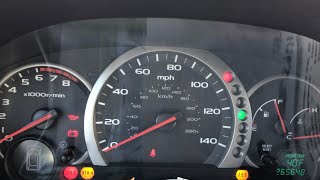
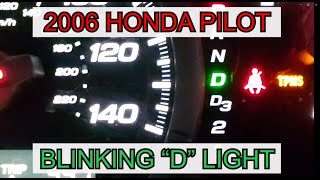
- Flashing 'D' (Drive) indicator light on the dashboard
- Engine will not start or crank
- Vehicle enters 'limp mode,' often stuck in 2nd or 3rd gear
- Harsh, erratic, or delayed shifting
- Check Engine Light is on
- Reduced fuel economy
- Inability to shift out of Park
- Backup/reverse lights do not work
- Replacing transmission fluid pressure switches. While these are also common failure points on Honda transmissions and can cause a flashing 'D' light, they will set different codes (e.g., P0847, P0872). 🎬 See: Troubleshooting a blinking D light on a 2006 Pilot
- Condemning the entire transmission. The P0707 code is an electronic circuit fault, not typically an internal mechanical failure. A full transmission replacement is almost never the correct fix for this specific code.
Most Likely Causes
- Faulty Transmission Range Sensor (Neutral Safety Switch) 🔴 High Probability → Shop Transmission Assembly The sensor is mounted externally on the transmission, exposing it to heat, moisture, and road spray which can cause internal corrosion and failure. Water intrusion after heavy rain or a car wash is a known trigger for intermittent issues.
How to confirm: With the vehicle in a specific gear (e.g., Neutral), use a multimeter to test the voltage output on the signal wire at the sensor's connector. A reading below 0.5V when it should be higher points to a bad sensor. A detailed DIY testing procedure is available on forums and YouTube, involving back-probing the connector.
Typical fix: Replace the Transmission Range Sensor. This requires careful alignment of the new sensor in the Neutral position during installation, which is a critical step detailed in service procedures.
Est. part cost: $55-$240 - Damaged Wiring or Corroded Connector 🟡 Medium Probability The wiring harness leading to the sensor is in the engine bay and can be damaged by heat, vibration, or road debris. The connector pins can also corrode from moisture intrusion, appearing green or white.
How to confirm: Visually inspect the wiring harness for any signs of chafing, breaks, or melting. Unplug the connector and check for corrosion on the pins. Perform a continuity test on the wires between the sensor and the PCM.
Typical fix: Repair the damaged section of wire or clean the connector terminals with an electrical contact cleaner. If corrosion is severe, the connector pigtail may need to be replaced.
Est. part cost: $10-$50 - Misadjusted Transmission Range Sensor ⚪ Low Probability → Shop Transmission Assembly This typically only occurs after a recent repair or replacement if the sensor was not properly aligned with the transmission's manual shaft when it was installed.
How to confirm: Check if the vehicle starts in Neutral but not in Park, or vice-versa. The alignment marks on the sensor and the transmission case may be visibly out of sync.
Typical fix: Loosen the sensor's mounting bolts and rotate it slightly until the alignment marks line up perfectly with the transmission in the Neutral position, then retighten the bolts.
Est. part cost: $0
Rare But Worth Checking
- Faulty Powertrain Control Module (PCM): This is very rare. Before condemning the PCM, all other possibilities, including the sensor, wiring, and connections, must be exhaustively tested. A PCM failure can sometimes cause internal circuit issues that prevent it from correctly reading the sensor's voltage.
- Weak Vehicle Battery or Poor Ground: A failing battery or a corroded main engine ground can lower the entire electrical system's voltage, causing the PCM to incorrectly flag a P0707 on a healthy sensor. If other electrical-related codes are present, address the battery and grounds first.
Diagnosis Steps
- Check the transmission fluid level and condition. Low or burnt fluid can cause a variety of transmission issues, though it's not a direct cause of P0707.
- Use a scan tool to confirm P0707 is the primary code. Note any other transmission-related codes.
- Attempt to start the vehicle in both Park and Neutral. If it starts in one but not the other, this points strongly to a misadjusted or faulty range sensor.
- Locate the Transmission Range Sensor on the outside of the transmission case. You may need to remove the battery and battery tray for access.
- Inspect the sensor's electrical connector and wiring harness for any visible damage, corrosion, or loose connections.
- With the key on and engine off, use a multimeter to back-probe the sensor's connector and measure the voltage on the signal wire as you move the shifter through each gear. A consistent reading below 0.5V in all positions indicates a faulty sensor or a wiring short to ground.
- If wiring is suspected, perform a continuity test between the sensor connector and the PCM connector to rule out an open or shorted wire.
- If the sensor and wiring test good, check the vehicle's main battery and ground connections for corrosion or weakness.
- If all other possibilities are exhausted, the issue may be with the PCM, but this is extremely unlikely and should be confirmed by a professional.
Parts You'll Likely Need
- Transmission Range Sensor (Neutral Safety Switch)
(OEM #28900-RYF-023 (2009-2013 models), 28900-RJB-043 (2006-2008 models), 28900-P7W-013 (2003-2005 models). Always verify.)— This is the component that fails in the vast majority of P0707 cases on this vehicle due to its location and function.
Trusted brands: Honda (Genuine OEM), Standard Motor Products, Rostra, Dorman
OEM price range: $160-$240
Aftermarket price range: $55-$180
Related Codes That Often Appear With This One
- P0705 — P0705 indicates a general circuit malfunction for the range sensor, while P0707 specifically points to a low voltage condition. They can appear together if the sensor is failing intermittently or has multiple internal faults.
- P0706 — This code indicates a range/performance problem, suggesting the signal is erratic or irrational (e.g., between gears). It can appear with P0707 if the sensor's signal is fluctuating wildly before failing completely to a low voltage state.
- P0708 — P0708 indicates a high voltage signal, the opposite of P0707. Seeing both codes intermittently strongly suggests a wiring issue where a signal wire is shorting to both ground and a power source.
Platform-Specific Known Issues
- Owner Experiences with Water Intrusion: Multiple owners on forums report that P0707 symptoms appear immediately after heavy rain or going through a car wash. The external location of the sensor makes it vulnerable, and once moisture gets inside, it can short the internal contacts, causing the low voltage reading. The issue may even be intermittent, disappearing after the sensor dries out, only to return with the next exposure to water.
Mechanic-Grade Diagnostic Values
- Transmission Range Sensor 'A' Circuit Voltage — expected: A stable voltage reading that changes with each gear position, typically between 0.5V and 5.0V.. Failure: A voltage reading that is consistently below 0.5V in all gear positions confirms the 'Circuit Low' condition of code P0707.
Scan Tool Commands That Help
- Honda Diagnostic System (HDS) or equivalent professional scan tool: Live Data / Data List - Transmission Parameters — To monitor the transmission range switch input signal in real-time. As the physical gear selector is moved, the gear position displayed on the scan tool should change instantly to match. A frozen, lagging, or incorrect reading on the scanner while the shifter is moved confirms a fault in the sensor or its circuit without needing to perform manual electrical tests first.
Wiring & Ground Locations
- G101 — Located on the top front of the engine.. This is a primary ground point for the engine and transmission controls, including the Powertrain Control Module (PCM). A corroded or loose G101 ground can cause numerous erratic electrical issues and sensor faults, including P0707, due to an unstable ground reference for the sensor circuits.
Real Owner Repair Stories
- Odyclub.com forum user (platform mate with same powertrain) (2011 Honda Odyssey (shares platform and transmission with 2nd Gen Pilot)) — Vehicle would not start, 'D' (Drive) indicator light was flashing on the dashboard.
❌ Tried (didn't work) The user went straight to diagnosis of the likely cause.
✅ What actually fixed it Replacing the transmission range sensor (part # 28900-R9L-003 for that specific vehicle) resolved all symptoms completely.
OEM Part Supersession History
28900-RYF-013→28900-RYF-023— Standard part revision by the manufacturer, likely for improved durability or material changes.
Heads up: The new part number (28900-RYF-023) is a direct replacement for the original and is fully compatible.
Model Year Variations Within This Range
- 2003-2005, 2006-2008, 2009-2013: The OEM part number for the Transmission Range Sensor is different for each of these year groupings within the 2003-2013 range. While the function is identical, there are physical or electrical differences that require using the correct part for the specific year of the vehicle.
Diagnostic Flowchart
Other Known Issues on This Vehicle
Issues unrelated to this code that are worth knowing about as an owner of this generation:
- Transmission Cooler Failure ('Strawberry Milkshake') 🔴 High → Shop Transmission Assembly — Common on first-generation (2003-2008) models over 100,000 miles. The internal transmission cooler within the radiator can fail, mixing coolant and transmission fluid. This contamination quickly destroys the transmission.
- Variable Cylinder Management (VCM) Issues 🟠 Medium — Affects second-generation models (2009-2013). The VCM system can cause issues like excessive oil consumption, fouled spark plugs, and engine vibrations from sticking rocker arms. Many owners install a 'VCM Muzzler' to disable the system. (Ref: TSB #11-033)
- Failing Front Lower Control Arm Compliance Bushings 🟠 Medium — A notorious problem across both generations. The fluid-filled rubber bushings crack and leak, causing clunking noises, steering play, and uneven tire wear. Failure can occur as early as 40,000-60,000 miles. (Ref: Honda Service Bulletin 15-044 extended the warranty for this part on 2009-2010 models.)
- Early Transmission Failure (2003-2005) 🔴 High → Shop Transmission Assembly — The 2003-2005 model years are particularly known for premature transmission failure, often before 100,000 miles, separate from the cooler issue. Symptoms include gear slippage and shuddering.
Used vs. New Parts: Buying Guide for This Vehicle
When a used part is the smart pick: A used Transmission Range Sensor can be a cost-effective option if sourced from a reputable auto recycler, especially for an older, higher-mileage vehicle where the cost of a new OEM part is a significant portion of the car's value. Since it's an external electronic part, it's relatively easy to access and replace if the used part fails prematurely.
Donor-vehicle mileage cap: roughly under 80000 miles for the part to have meaningful remaining life.
What to inspect on the donor part:
- Check for a clean, corrosion-free electrical connector. Avoid parts with any green or white crust on the pins.
- Ensure the plastic housing is not cracked, melted, or showing signs of extreme heat stress.
- Verify the part comes from a vehicle that was not involved in a flood or front-end collision that could have damaged the transmission case or sensor.
- Ask for the donor vehicle's mileage to ensure it's reasonably low.
OEM-only on this vehicle (don't cheap out):
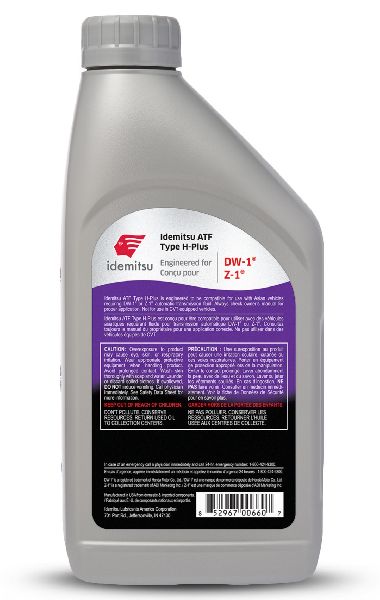
- While the sensor itself can be aftermarket, it is critical to use only Honda Genuine ATF-DW1 (or the older ATF-Z1 for top-offs) transmission fluid. Using universal or incorrect fluid is a known cause of poor shifting and long-term damage in these transmissions.
Aftermarket brands forum-validated for this vehicle:
- Standard Motor Products (SMP)
- Dorman
- Rostra
Brands owners have reported issues with on this vehicle:
- No-name, unbranded parts sold on online marketplaces at exceptionally low prices often have higher failure rates and may not be properly calibrated.
Real Owner Stories
Aggregated from forums and TSBs cited above. Mileages and costs reflect what owners reported in those sources.
2004 Honda Pilot
Symptoms: No-start condition and flashing 'D' light.
What fixed it: Replacing the neutral safety switch (part #28900-P7W-013).
Source hint: HondaSUV Forums
2003-2013 Honda Pilot
Symptoms: P0707 symptoms appear immediately after heavy rain or going through a car wash; issue may be intermittent and disappear after the sensor dries out.
What fixed it: Replacing the externally mounted Transmission Range Sensor due to moisture intrusion shorting internal contacts.
Source hint: Owner Experiences with Water Intrusion
2003-2007 Honda Accord V6
Symptoms: Flashing 'D' light and P0707/P0705/P0708 codes on the 5-speed automatic transmission.
What fixed it: Replacement of the external transmission range sensor.
Source hint: DriveAccord.net
Related OBD-II Codes
Frequently Asked Questions
Why does my Honda Pilot's 'D' light flash and the car won't start after I go through a car wash?
Is there a specific part number I should look for to fix the P0707 code on my 2004 Pilot?
My 2010 Pilot is vibrating and consuming excessive oil; is this related to the P0707 code?
Can I just clean the sensor, or do I need to buy a new one?
Is there a special procedure for installing a new range sensor on the Pilot?
Does the P0707 code mean my transmission is failing like the 'Strawberry Milkshake' issue?
Helpful Videos
We Have This Part in Stock

The information in this article is provided for general reference and educational purposes only. Vehicle specifications, procedures, and part compatibility can vary by production date, trim level, and region. Always consult your vehicle's factory service manual and verify part numbers before purchasing or performing repairs. Safety-critical components such as airbags, seat belts, and braking systems should be installed by a qualified professional.
- Honda Pilot:
- 🧭 Diagnostic Flowchart
- 🎬 Helpful Videos
- 🛍️ Shop This Part
- What's Unique About the 2003-2013 Honda Pilot
- Symptoms You May Notice
- Most Likely Causes
- Rare But Worth Checking
- Diagnosis Steps
- Parts You'll Likely Need
- Related Codes That Often Appear With This One
- Platform-Specific Known Issues
- Mechanic-Grade Diagnostic Values
- Scan Tool Commands That Help
- Wiring & Ground Locations
- Real Owner Repair Stories
- OEM Part Supersession History
- Model Year Variations Within This Range
- Other Known Issues on This Vehicle
- Used vs. New Parts: Buying Guide for This Vehicle
- Real Owner Stories
- 2004 Honda Pilot
- 2003-2013 Honda Pilot
- 2003-2007 Honda Accord V6
- Related OBD-II Codes
- Frequently Asked Questions
- 🎟️ Get 5% Off