

P0707 on 2012-2019 Hyundai Accent: Transmission Range Sensor Circuit Low Causes and Fixes
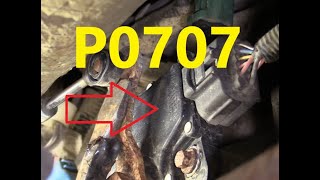
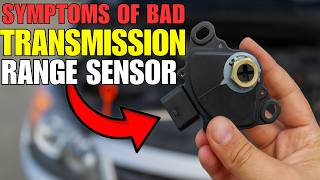
P0707 on a 2012-2019 Hyundai Accent most often means the transmission range sensor (also called an inhibitor switch) has failed. This part tells the car's computer which gear is selected. When the computer receives a voltage signal below the expected threshold (often under 0.5V) or no signal at all, it triggers this code. Replacing the sensor is the usual fix, costing around $30-$90 for the part and 1-2 hours of labor.
- P0707 on your Accent points directly to a problem with the transmission range sensor (inhibitor switch) or its circuit.
- Symptoms often include a no-start condition or being stuck in 'limp mode'.
- The cause is most often the switch itself failing due to its exposed location, but wiring and adjustment should always be checked.
- Replacement is a feasible DIY job for those comfortable with removing the battery and tray, but careful adjustment of the new part is critical.
What's Unique About the 2012-2019 Hyundai ACCENT
For this generation of Hyundai Accent, the P0707 code is very commonly associated with the externally-mounted inhibitor switch. Unlike some vehicles where the sensor is inside the transmission, the Accent's switch is on the outside of the transmission case, typically under the air filter housing and battery tray. This location makes it more susceptible to moisture, road salt, and debris but also significantly easier to access for diagnosis and replacement than an internal sensor.
Diagnostic Flowchart
Tap your situation to follow the diagnostic path that matches what you're seeing on this vehicle.
Generation note: This range covers the end of the fourth generation (RB, 2012-2017) and the beginning of the fifth generation (YC, 2018-2019). Both generations use a similar 6-speed automatic transmission and inhibitor switch design, with part numbers like 42700-26500 and its successor 42700-26700 being applicable across these years, making the diagnosis and repair process consistent.
Symptoms You May Notice
- Check Engine Light is on.
- Vehicle will not start, or only starts in Neutral instead of Park.
- Sometimes requires jiggling the shifter to make a connection and start.
- Transmission is stuck in one gear (limp mode, often 3rd or 4th gear).
- Harsh or delayed shifting between gears.
- Incorrect or no gear position displayed on the instrument panel.
- Reverse lights do not illuminate when in Reverse.
- Issue may appear intermittently, especially after a car wash or heavy rain.
- Replacing the transmission valve body or the entire transmission without first testing the inexpensive external inhibitor switch and its wiring.
- Replacing the starter motor when a no-start condition is caused by the inhibitor switch not sending the correct 'Park' or 'Neutral' signal to the computer.
Most Likely Causes
- Failed Transmission Range Sensor (Inhibitor Switch) 🔴 High Probability → Shop Transmission Assembly The sensor is mounted externally on the transmission, exposing it to heat, vibration, and moisture. Water intrusion is a common failure mode, leading to internal corrosion and short circuits that cause the low voltage reading.
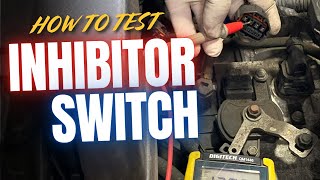
How to confirm: Test the sensor's output signals with a multimeter while an assistant shifts through the gears. Each gear position (P, R, N, D) should send voltage on a specific wire. For example, you might see 12V on the 'Park' signal wire only when in Park. If the voltages are incorrect, absent, or present on multiple wires at once, the sensor has failed. A scan tool can also show the gear position the TCM is seeing in real-time.
Typical fix: Replace the inhibitor switch and ensure the new one is properly aligned. This often requires removing the battery and battery tray for access.
Est. part cost: $30-$90 - Corroded or Damaged Wiring/Connector 🟡 Medium Probability The location of the sensor and its wiring harness under the vehicle makes them vulnerable to road salt, water, and physical damage. The connector pins can develop green or white corrosion, and wires can chafe against the chassis or other components.
How to confirm: Visually inspect the wiring harness and the connector pins for any signs of corrosion, chafing, or broken wires. Disconnect the connector and check for moisture or burnt-looking terminals. Perform a continuity test on the wires between the sensor connector and the TCM connector to find any open circuits.
Typical fix: Clean the connector terminals with an electrical contact cleaner and a small brush, then apply dielectric grease. Repair or replace the damaged section of the wiring harness if breaks are found.
Est. part cost: $5-$50 - Misadjusted Inhibitor Switch or Shift Cable ⚪ Low Probability → Shop Transmission Park Inhibitor Switch
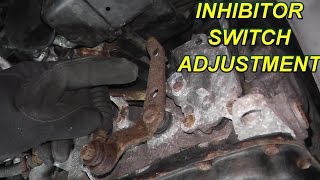
How to confirm: If the car only starts in Neutral, or if you have to jiggle the shifter to get it to start, the switch or the shift cable may be out of alignment. The switch has slotted mounting holes allowing for adjustment. A common check is to see if the alignment hole on the switch body lines up with the hole on the manual control lever when the transmission is in Neutral.
Typical fix: Loosen the switch's mounting bolts and rotate it slightly to align it correctly. The standard procedure involves placing the shifter in 'N', inserting a 5mm bolt or alignment pin through the switch and lever holes, and then tightening the mounting bolts.
Est. part cost: $0
Rare But Worth Checking
- Faulty Powertrain Control Module (PCM) or Transmission Control Module (TCM): → Shop Transmission Assembly This is very rare and should only be considered after the sensor, wiring, and adjustment have all been thoroughly checked and confirmed to be good. Hyundai TSBs note that if the DTC returns after replacing the switch and verifying the wiring, the ECU may be the cause.
Diagnosis Steps
- Confirm P0707 is the primary code using an OBD-II scanner. Check live data to see what gear position the TCM is reporting as you move the shifter.
- Visually inspect the inhibitor switch on the top/front of the transmission case. Access may require removing the air intake duct, battery, and battery tray. Look for physical damage, corrosion, or loose connections at the electrical connector.
- Inspect the wiring harness leading to the switch for any signs of chafing, melting, or breaks.
- Check for proper adjustment. See if the vehicle starts in both Park and Neutral. If it only starts in Neutral or requires wiggling the shifter, an adjustment is likely needed.
- Using a multimeter and a wiring diagram, back-probe the connector to test the output signals from the sensor. With the key on, have a helper shift the transmission through P, R, N, D. You should see 12V appear on a different signal wire for each gear position. If signals are incorrect or absent and the power supply wire has 12V, the inhibitor switch is faulty.
- If the sensor tests good, check for power (12V) and ground at the connector. If power is missing, trace the circuit back to the fuse box (check TCU fuses). If ground is missing, check the chassis ground connections.
- If the sensor and wiring test good, the final possibility is a fault in the Powertrain Control Module (PCM), though this is rare.
Parts You'll Likely Need
- Inhibitor Switch (Transmission Range Sensor)
(OEM #42700-26500, 42700-26700 (superseded))— This sensor is the most common point of failure for the P0707 code on this vehicle. The part number 42700-26700 often supersedes the older 42700-26500.
Trusted brands: Hyundai (Genuine), Kia (Genuine), Duralast, Standard Motor Products
OEM price range: $65-$110
Aftermarket price range: $30-$60
Related Codes That Often Appear With This One
- P0705 — This code indicates a general circuit malfunction for the same sensor, often set alongside P0707.
- P0706 — This code indicates a range/performance issue with the sensor, suggesting erratic signals rather than a complete open circuit.
- P0708 — This code is the opposite of P0707, indicating a high circuit input (short to power), which can be caused by the same failing component.
Technical Service Bulletins (TSBs) & Recalls
- 19-AT-024H: Lists P0707 as 'Range switch - open circuit' and provides comprehensive diagnostic and replacement procedures for a wide range of Hyundai vehicles, including the Accent (RB/HC).
- 17-AT-005: An older, superseded version of the TSB that also covers this issue and provides similar diagnostic steps.
- 5NP-V3F8T-09: Also lists P0707 as 'Range switch - open circuit' and points to diagnostic procedures.
Platform-Specific Known Issues
- Hyundai has issued Technical Service Bulletin #19-AT-024H, which supersedes earlier versions and covers the 2012-2019 Accent. It provides detailed diagnostic steps for P0707, confirming it's a well-documented issue. The TSB outlines checking live data, inspecting fuses, and the procedure for replacing and adjusting the switch.
- Owners on forums frequently report this issue occurring after periods of heavy rain or after a car wash, pointing to moisture intrusion as a primary catalyst for failure.
- Accessing the switch typically requires removing the air cleaner assembly, the battery, and the battery tray, which can make a seemingly simple replacement more time-consuming for a DIYer.
Mechanic-Grade Diagnostic Values
- Transmission Range Sensor 'A' Circuit Voltage (Live Data) — expected: Above 0.5V. Failure: A reading below 0.5V confirms a low circuit condition.
- Inhibitor Switch Power Supply (at connector pin 3) — expected: Battery Voltage (approx. 12V) with ignition ON. Failure: No voltage indicates a wiring or fuse issue upstream of the sensor.
- Inhibitor Switch Signal Wire Voltage (back-probed at connector) — expected: Approx. 12V on the specific wire for the selected gear (e.g., Pin 8 for Park), and 0V on the others.. Failure: 0V on all wires, or voltage on incorrect wires, points to a faulty switch.
- Rear Combination Lamp Ground Voltage Drop — expected: Less than 0.2V. Failure: Voltage greater than 0.2V indicates a poor ground connection that needs to be cleaned and tightened.
Scan Tool Commands That Help
- Hyundai GDS (Global Diagnostic System): Current Data -> Shift Lever Switch — This function is used to monitor the gear position being reported by the inhibitor switch in real-time as the shifter is moved. It's the first step in diagnosis to see if the computer's reading matches the physical gear selection. An incorrect display points towards a sensor, wiring, or adjustment issue.
Wiring & Ground Locations
- Primary Engine/Transmission Ground — The main battery ground cable attaches directly to the transmission case.. While not a common cause for P0707 specifically, a poor primary ground at the transmission can cause a variety of electrical issues, including erratic sensor readings. Verifying this connection is tight and corrosion-free is a fundamental step.
- Inhibitor Switch Connector — On the top/front of the transmission, under the battery and air cleaner assembly.. This is the primary connection point for testing. Pin 3 is the power supply, and other pins (e.g., Pin 8, brown wire for Park) are the signal outputs for each gear.
- E/R Fuse & Relay Box — Located on the left side of the engine compartment.. This box contains the TCU (Transmission Control Unit) fuses that supply power to the inhibitor switch circuit. A blown fuse here would result in no power at the switch connector.
Real Owner Repair Stories
- YouTube user comment on a P0707 diagnostic video (Hyundai Accent (year not specified, but relevant to the video's topic)) — Car would not start, check engine light on with code P0707.
❌ Tried (didn't work) Initially suspected a bad starter or battery.
✅ What actually fixed it The inhibitor switch was misaligned. The user loosened the switch bolts, put the car in Neutral, aligned the holes on the switch and lever, and tightened it back down. This resolved the no-start condition and cleared the code. - Hyundai-Forums.com user (2004 Hyundai Accent) — Check engine light with P0707, initially only when hot, then became constant. No other driveability issues were noted at first.
❌ Tried (didn't work) Clearing the code daily.
✅ What actually fixed it The community advised that the ultimate fix is typically replacing the inhibitor switch, but to first check the adjustment. A misadjusted switch can cause a no-crank condition or erratic transmission behavior, and adjustment should be verified before replacing the part.
OEM Part Supersession History
42700-26000→42700-26500— Part revision and improvement by the manufacturer.
Heads up: The newer part (42700-26500) is a direct replacement for the older one.42700-26500→42700-26700— Further part revision by the manufacturer.
Heads up: 42700-26700 is the latest known direct replacement for 42700-26500 and is backward compatible.
Helpful Videos

We Have This Part in Stock

The information in this article is provided for general reference and educational purposes only. Vehicle specifications, procedures, and part compatibility can vary by production date, trim level, and region. Always consult your vehicle's factory service manual and verify part numbers before purchasing or performing repairs. Safety-critical components such as airbags, seat belts, and braking systems should be installed by a qualified professional.
- Hyundai ACCENT:
- 🧭 Diagnostic Flowchart
- 🎬 Helpful Videos
- 🛍️ Shop This Part
- What's Unique About the 2012-2019 Hyundai ACCENT
- Symptoms You May Notice
- Most Likely Causes
- Rare But Worth Checking
- Diagnosis Steps
- Parts You'll Likely Need
- Related Codes That Often Appear With This One
- Technical Service Bulletins (TSBs) & Recalls
- Platform-Specific Known Issues
- Mechanic-Grade Diagnostic Values
- Scan Tool Commands That Help
- Wiring & Ground Locations
- Real Owner Repair Stories
- OEM Part Supersession History
- 🎟️ Get 5% Off