

P0707 on 2011-2017 Hyundai Azera: Range Switch Open Circuit Causes and Fixes
On a 2011-2017 Hyundai Azera, code P0707 almost always points to a faulty Transmission Range Sensor, also called an Inhibitor Switch. This part tells the car's computer what gear you've selected. Expect to pay $80-$125 for a genuine OEM part (Part No. 42700-3B700), with DIY replacement being moderately easy (2/5 difficulty). Failure to fix it can lead to a no-start condition or the transmission entering a fail-safe mode.
- P0707 on your Azera points directly to a problem with the Transmission Range Sensor (Inhibitor Switch) or its wiring.
- The most common symptoms are a Check Engine Light and an intermittent no-start condition, especially when the car is warm.
- The correct OEM part number is likely 42700-3B700, and it is a known failure item across many Hyundai/Kia vehicles.
- DIY replacement is possible for those with moderate skills, but proper alignment of the new sensor is absolutely critical for it to work correctly.
What's Unique About the 2011-2017 Hyundai AZERA
The Transmission Range Sensor (Inhibitor Switch) is a well-documented failure point across many Hyundai and Kia models from this era that share the A6-family 6-speed automatic transmission, including the Azera. The issue is common enough that Hyundai has released multiple Technical Service Bulletins (TSBs) over the years to help technicians diagnose it. The sensor is mounted externally on the transmission, making it susceptible to moisture and corrosion, but also making it relatively easy to access and replace compared to internal transmission components. The failure often manifests after a heat soak (a long drive), especially in warmer climates.
Diagnostic Flowchart
Tap your situation to follow the diagnostic path that matches what you're seeing on this vehicle.
Generation note: The 2011-2017 range covers two Azera generations: the end of the fourth generation (TG, 2011) and the entire fifth generation (HG, 2012-2017). The issue with the Transmission Range Sensor and the P0707 code is common to both generations, as confirmed by Hyundai TSBs that list applicability for both. The same inhibitor switch part number is often used across both generations.
Symptoms You May Notice
- Check Engine Light (Malfunction Indicator Light) is on.
- Engine may not crank or start, especially when in Park or Neutral (intermittent no-start).
- Incorrect gear position displayed on the instrument cluster, or no gear indicated at all.
- Transmission may shift harshly or get stuck in one gear (fail-safe or 'limp mode'), often 4th gear.
- Reverse lights may not work.
- Vehicle may stall when shifting into gear.
- Slight engine stumble when shifting into Park after a long drive.
- Replacing the starter motor when a no-start condition is present.
- Replacing the transmission valve body or the entire transmission without first testing the inexpensive range sensor and its wiring.
- Assuming a dead battery is the cause 🎬 Watch this before you buy a new inhibitor switch. of an intermittent no-start without checking for transmission codes.
Most Likely Causes
- Faulty Transmission Range Sensor (Inhibitor Switch) 🔴 High Probability → Shop Transmission Assembly This is a known high-failure part for this platform, as evidenced by multiple TSBs like 17-AT-005. The sensor is exposed to the elements on the side of the transmission, making it vulnerable to water intrusion and internal corrosion.
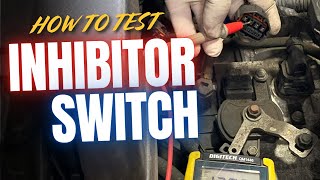
How to confirm: After confirming wiring is intact, test the sensor's output voltages for each gear position with a multimeter. The TCM expects to see a specific voltage (e.g., 12V) for each gear selection; an open circuit means a signal is missing. Compare readings to the specifications in the factory service manual. If they don't match, the sensor is bad.
Typical fix: Replace the Transmission Range Sensor and ensure the new part is correctly aligned.
Est. part cost: $80-$125 - Damaged Wiring or Corroded Connector 🟡 Medium Probability The sensor's location on the transmission case makes its wiring harness and connector vulnerable to road debris, moisture, and heat, which can lead to corrosion (often appearing as a green tinge on the pins) or breaks in the wires.
How to confirm: Visually inspect the wiring harness and connector for any signs of damage, green/white corrosion, or loose/bent pins. Perform a continuity test on each wire between the sensor connector and the TCM connector to check for opens or shorts.
Typical fix: Repair the damaged section of wire or clean the connector terminals with electrical contact cleaner. If corrosion is severe, the connector may need to be replaced.
Est. part cost: $5-$50 - Misadjusted Transmission Range Sensor ⚪ Low Probability → Shop Transmission Assembly
How to confirm: Check if the sensor's alignment marks line up correctly when the transmission is in Neutral. An improperly adjusted sensor can send the wrong signal, mimicking a failed part. TSBs provide a specific procedure for alignment, often involving a 5mm guide pin.
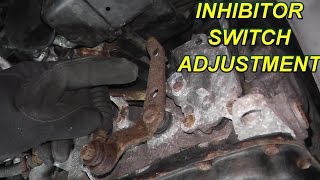
Typical fix: Loosen the sensor's mounting bolts, place the shifter in Neutral, rotate the sensor until the alignment holes line up 🎬 See how to properly align and adjust the inhibitor switch., insert a guide pin, and then retighten the bolts to specification.
Est. part cost: $0
Rare But Worth Checking
- Faulty Powertrain Control Module (PCM) or Transmission Control Module (TCM): → Shop Transmission Assembly This is extremely rare and should only be considered after the sensor, wiring, and adjustment have been definitively ruled out. A failed TCM will typically present with multiple other codes and more severe symptoms. TSBs recommend this as the final diagnostic step if all else fails.
Diagnosis Steps
- Connect an OBD-II scanner and confirm P0707 is the active code. Note any other transmission-related codes (P0705, P0706, P0708 are common companions).
- Visually inspect the Transmission Range Sensor (Inhibitor Switch), its connector, and the wiring harness for obvious signs of damage, corrosion, or loose connections. The sensor is located on the outside of the transmission where the shift linkage connects.
- Place the vehicle in the ON position (engine off). Shift through the gears and observe the gear indicator on the dashboard. If it's blank, doesn't match the shifter position, or flickers, the sensor or its circuit is the likely culprit.
- Using a multimeter and the vehicle's service manual, back-probe the sensor's connector to test for correct voltage and ground signals from the TCM.
- Test the sensor's output signals. The voltage should change predictably as you move the shifter through each gear. An 'open circuit' (P0707) means you will likely find a specific signal wire with no voltage when there should be.
- If the wiring tests good but the sensor output is incorrect, the sensor itself has failed and needs to be replaced.
- Before replacing, check the sensor's adjustment. With the shifter in Neutral, the alignment holes on the sensor body and lever should line up. If not, adjustment may solve the issue.
- If a new sensor is installed, it MUST be properly aligned in the Neutral position before tightening the mounting bolts.
- If both the sensor and wiring test good, the problem may lie with the TCM, but this is highly unlikely and requires professional diagnosis.
Parts You'll Likely Need
- Transmission Range Sensor / Inhibitor Switch
(OEM #42700-3B700)— This is the component that fails most frequently to cause a P0707 code. It is a known issue for this vehicle platform, confirmed by multiple TSBs and owner reports.
Trusted brands: Hyundai Genuine, Kia Genuine, Standard Motor Products
OEM price range: $80-$125
Aftermarket price range: $40-$70
Related Codes That Often Appear With This One
- P0705 — Relates to a general circuit malfunction in the Transmission Range Sensor.
- P0706 — Indicates a range/performance issue with the sensor, suggesting it's sending an illogical signal.
- P0708 — Indicates the sensor circuit is shorted or has multiple inputs, the opposite of P0707's open circuit.
Technical Service Bulletins (TSBs) & Recalls
- 19-AT-024H: AUTOMATIC TRANSAXLE DIAGNOSIS (6-SPEED) INHIBITOR/RANGE SWITCH DTC P0705, P0706, P0707 & P0708.
- 17-AT-005: A TSB that supersedes 15-AT-001, providing updated procedures for diagnosing these same inhibitor switch codes across a wide range of Hyundai vehicles, including the Azera.
- 15-AT-001: Addresses intermittent no-start conditions related to the range sensor switch or circuit.
- 09-AT-013: An older TSB also covering diagnosis for P0705, P0707, and P0708, showing the long history of this issue.
Platform-Specific Known Issues
- Hyundai has issued multiple Technical Service Bulletins related to this sensor, including TSB 19-AT-024H, 17-AT-005, and 15-AT-001, which specifically address diagnosing codes P0705, P0706, P0707, and P0708 due to issues with the inhibitor switch.
- A common owner experience described in forums is the car failing to start after it has been driven for a while and is hot, but then starting normally after it cools down. This intermittent failure is a classic sign of the inhibitor switch beginning to fail due to heat soak.
Mechanic-Grade Diagnostic Values
- Inhibitor Switch Signal Voltage (Key On, Engine Off) — expected: Approximately 12V (battery voltage) on the specific signal pin for the selected gear, 0V on the others.. Failure: For P0707 (open circuit), a specific signal pin will show 0V when it should show 12V. For example, the 'Drive' signal pin has no voltage when the shifter is in Drive.
- Ground Voltage Drop at Rear Combination Lamp — expected: Less than 0.2V. Failure: Voltage greater than 0.2V indicates a poor ground connection, which can cause various electrical issues. TSB 17-AT-005 directs technicians to check this as a preliminary step.
Scan Tool Commands That Help
- Hyundai GDS (Global Diagnostic System): Current Data -> Shift Lever Switch — This function allows a technician to see in real-time what gear position the TCM is receiving from the inhibitor switch. While shifting through the gears, the display should match the lever's position. If it doesn't, it confirms a fault in the switch or its circuit, as outlined in TSB 12-AT-022-1.
- Hyundai GDS (Global Diagnostic System): Vehicle S/W Management -> Resetting adaptive values — While not always required for a simple P0707 fix, this function is used to reset the transmission's learned shift patterns. It can be useful after replacing a major component or to address certain shift quality complaints that may accompany a range sensor issue.
Wiring & Ground Locations
- Inhibitor Switch Connector — On the top/side of the transmission case, where the manual shift lever connects. Access typically requires removing the air cleaner box and battery tray.. This is the primary connector to inspect for corrosion, damage, or loose pins and where a technician will back-probe pins to test for voltage signals from the switch.
- GE05 — Ground point located on the left rear of the engine compartment.. This is a major engine bay ground. While not directly for the inhibitor switch, a poor connection here can introduce electrical noise and voltage issues to various engine and transmission sensors.
- Glg01 — Ground point located on the left front of the engine.. This is another key engine ground. Ensuring it is clean and tight is a fundamental step in diagnosing any electrical fault code in the powertrain system.
- TCM (Transmission Control Module) — The specific location can vary, but wiring diagrams show it connects to various components throughout the vehicle, with connectors often found under the dash or in the engine bay.. This is the module that receives the signal from the inhibitor switch. In rare cases, the fault can be at the TCM connector or within the module itself. Knowing its general location is the final step in tracing wiring for continuity.
Real Owner Repair Stories
- YouTube user 'carsntoys' (Hyundai Elantra (similar platform/issue)) — Intermittent no-start condition. The car would sometimes start and sometimes not.
❌ Tried (didn't work) The video focuses on the direct fix, but implies the owner was experiencing the common 'try to start in Park, fails, then starts in Neutral' symptom.
✅ What actually fixed it Replacing the inhibitor switch (neutral safety switch) solved the intermittent starting problem. The video shows the location under the airbox and the process of swapping the part.
OEM Part Supersession History
42700-3B100→42700-3B700— Part revision and improvement by the manufacturer.
Heads up: 42700-3B700 is the correct and current part for the specified Azera. Using the older -3B100 part is not recommended. Some aftermarket cross-references also list 42700-3B500 as a compatible number.
Helpful Videos

We Have This Part in Stock


The information in this article is provided for general reference and educational purposes only. Vehicle specifications, procedures, and part compatibility can vary by production date, trim level, and region. Always consult your vehicle's factory service manual and verify part numbers before purchasing or performing repairs. Safety-critical components such as airbags, seat belts, and braking systems should be installed by a qualified professional.
- Hyundai AZERA:
- 🧭 Diagnostic Flowchart
- 🎬 Helpful Videos
- 🛍️ Shop This Part
- What's Unique About the 2011-2017 Hyundai AZERA
- Symptoms You May Notice
- Most Likely Causes
- Rare But Worth Checking
- Diagnosis Steps
- Parts You'll Likely Need
- Related Codes That Often Appear With This One
- Technical Service Bulletins (TSBs) & Recalls
- Platform-Specific Known Issues
- Mechanic-Grade Diagnostic Values
- Scan Tool Commands That Help
- Wiring & Ground Locations
- Real Owner Repair Stories
- OEM Part Supersession History
- 🎟️ Get 5% Off