

P0707 on 2014-2023 Jeep Cherokee: Transmission Range Sensor Circuit Low Fixes
On a 2014-2023 Jeep Cherokee, code P0707 is most often caused by a faulty transmission range sensor or a damaged wiring harness. Given this platform's history of transmission electrical issues, including a specific recall for faulty wire harness crimps (S55 / NHTSA 16V-529), inspecting the wiring is critical before replacing the sensor. Expect to pay $300-$450 for an OEM sensor.
- P0707 on a Jeep Cherokee indicates a low voltage signal from the transmission range sensor.
- Do not drive the vehicle, as it may fail to start or shift into neutral unexpectedly.
- Due to a history of electrical issues and a specific recall (S55) for faulty wiring harness crimps on 2014-2015 models, thoroughly inspect the wiring before replacing the transmission range sensor.
- The most likely parts needed are a new transmission range sensor (OEM part # 68197333AA) or a wiring harness repair.
- This repair is best left to a professional due to the complexity of transmission electronics.
What's Unique About the 2014-2023 Jeep Cherokee
The 2014-2023 Jeep Cherokee (KL generation) uses a ZF 9-speed automatic transmission (also known as the 948TE) that has a documented history of electrical issues, particularly in the earlier 2014-2016 models. While P0707 is not an exceptionally common code on this platform, the vehicle's known vulnerability to wiring harness problems makes a wiring fault a higher-than-usual suspect. A major recall (NHTSA ID: 16V-529, Mopar ID: S55) was issued for 2014-2015 models because insufficient crimps in the transmission wire harness could cause the vehicle to unexpectedly shift to neutral, a symptom which directly overlaps with a P0707 fault. The fix involved a software update to prevent the shift-to-neutral condition and, if necessary, replacement of the transaxle range sensor wire harness.
Symptoms You May Notice
- Check Engine Light is on
- Vehicle will not start
- Shifter is difficult to move out of Park
- Transmission may be stuck in one gear (limp mode)
- Incorrect gear selection displayed on the instrument cluster
- Harsh or delayed gear engagement
- Unexpectedly shifts into Neutral
- Increased fuel consumption
- Replacing the transmission range sensor without first thoroughly inspecting the wiring harness. Given the vehicle's history and recall S55 for faulty wire crimps, a wiring fault is a very likely cause.
Most Likely Causes
- Damaged or Corroded Transmission Wiring Harness or Connectors 🔴 High Probability → Shop Transmission Assembly The KL Cherokee platform, especially 2014-2015 models, was subject to recall S55 (NHTSA 16V-529) for insufficient wire terminal crimps on the transaxle range sensor harness, which could cause high resistance and lead to a loss of motive power. This history makes wiring a prime suspect.
How to confirm: Visually inspect the wiring harness leading to the transmission range sensor for any signs of chafing, corrosion, loose pins, or damage from road debris or heat. Use a multimeter to check for continuity and resistance between the sensor connector and the TCM connector, comparing values to the service manual.
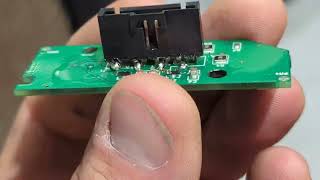
Typical fix: Repair the damaged section of the wiring or replace the entire transaxle range sensor wire harness 🎬 See how to repair the shifter wiring harness if the damage is extensive or related to the recall.
Est. part cost: $50-$500 - Failed Transmission Range Sensor (TRS) 🟡 Medium Probability → Shop Transmission Assembly
How to confirm: After confirming the wiring is intact, use a multimeter to test the sensor's voltage output as the shifter is moved through the gears. Compare the readings to the specifications in the service manual. A reading below the specified voltage (typically <0.5V) indicates a faulty sensor. A professional scan tool can also read the live data from the sensor to check for erratic or incorrect readings.
Typical fix: Replace the transmission range sensor.
Est. part cost: $250-$450 - Low or Contaminated Transmission Fluid ⚪ Low Probability → Shop Transmission Assembly
How to confirm: Check the transmission fluid level and condition according to the manufacturer's procedure. The ZF 9-speed has a specific, complex process that must be followed precisely.
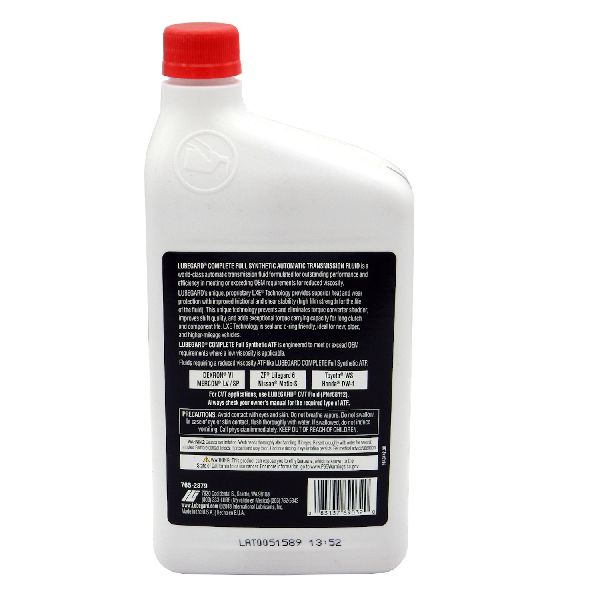
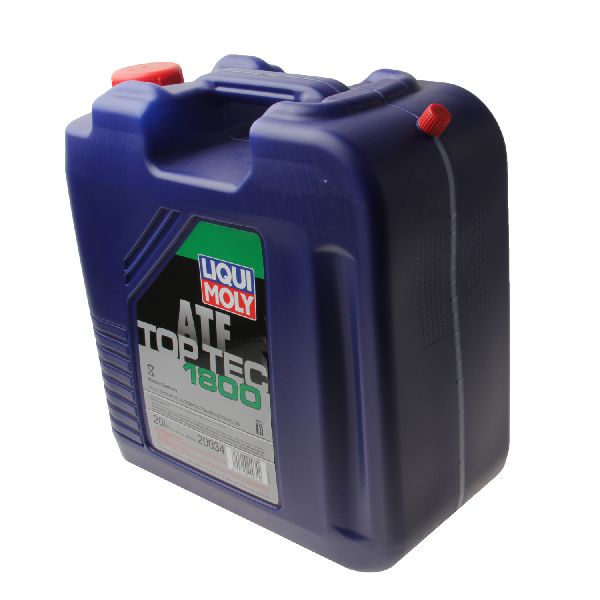
Typical fix: Top off or replace the transmission fluid with the correct Mopar-specified fluid (ZF LifeguardFluid 9).
Est. part cost: $100-$300
Rare But Worth Checking
- Faulty Powertrain Control Module (PCM) or Transmission Control Module (TCM): → Shop Transmission Assembly This is rare and should only be considered after all other possibilities, including wiring and the sensor itself, have been definitively ruled out. A faulty input circuit within the TCM can mimic sensor or wiring failure.
- Misadjusted Transmission Shift Linkage: → Shop Transmission Assembly If the shift linkage is loose or misadjusted, the manual valve on the transmission may not align correctly with the position of the range sensor, causing an incorrect reading.
Diagnosis Steps
- Scan the vehicle for any other stored trouble codes.
- Check for any open recalls, especially recall S55 / NHTSA 16V-529 for the transmission wiring harness on 2014-2015 models.
- Check the transmission fluid level and condition. Ensure it is clean and filled to the proper level using the correct procedure for the ZF 9-speed.
- Perform a thorough visual inspection of the transmission range sensor's wiring harness and connector. Look for any signs of damage, corrosion, or loose connections. Pay close attention to the crimps if the vehicle falls under the recall.
- If the wiring appears okay, use a scan tool to view the live data from the transmission range sensor while moving the gear selector. Check if the computer's reading matches the selected gear.
- If the scan tool data is incorrect or erratic, use a multimeter to back-probe the sensor's connector and test the voltage signal directly. A consistent low voltage reading (below 0.5V) points to a faulty sensor or a wiring issue.
- Test the wiring harness for continuity and resistance between the sensor and the TCM to rule out an open or short circuit.
- If the sensor and wiring test good, the issue may be with the Transmission Control Module (TCM) or its circuitry, which requires more advanced diagnostics.
Parts You'll Likely Need
- Transmission Range Sensor
(OEM #68197333AA)— This sensor is the primary component that sends the gear position signal to the computer. Internal failure can cause the low voltage reading that triggers P0707.
Trusted brands: Mopar
OEM price range: $320-$460
Aftermarket price range: $150-$250
Technical Service Bulletins (TSBs) & Recalls
- Recall S55 / NHTSA 16V-529: Addresses insufficient wire terminal crimps on the transaxle range sensor wire harness which can cause a loss of motive power. The remedy involves a software update and potential harness replacement.
- TSB Bulletin #0814123: Notes that a P0707 - Transmission Range Sensor A Circuit Low fault can occur alongside other transmission circuit codes, potentially causing the vehicle to enter limp-home mode.
Platform-Specific Known Issues
- Recall S55 / NHTSA 16V-529: Affecting 2014-2015 models, this recall was for a transaxle range sensor wire harness that may have been built with insufficient wire terminal crimps, leading to high electrical resistance and a potential loss of power by shifting to neutral.
- The ZF 9-speed transmission used in early KL Cherokees (2014-2015) was subject to numerous software updates and recalls for harsh shifting and unexpectedly shifting into neutral, highlighting the sensitivity of the transmission's electronic control systems.
Mechanic-Grade Diagnostic Values
- Transmission Range Sensor (TRS) Signal Voltage — expected: Varies by gear, but should be a stable voltage above 0.5V.. Failure: A consistent voltage reading below 0.5V, or a complete loss of signal, will trigger the P0707 code.
- TRS Harness Voltage (Sensor Unplugged) — expected: Approximately 5V (Reference Voltage from TCM).. Failure: If the harness voltage remains low (near 0V) with the sensor unplugged, it indicates the signal wire is shorted to ground. If the voltage jumps to the reference voltage (e.g., 5V), it confirms the sensor itself is internally shorted.
Scan Tool Commands That Help
- wiTECH (Chrysler/Jeep Dealer Tool): TCM Reprogramming/Flash — This is a critical step, especially on 2014-2016 models, as numerous Technical Service Bulletins were issued to fix erroneous fault codes and improve shift quality via software updates. This should be checked before replacing the TCM.
- wiTECH: PROXI Configuration Alignment — This routine is required after reprogramming or replacing modules like the TCM to ensure all vehicle control units are properly communicating and configured with each other.
- Professional Scan Tool: Clear Adaptive Memory / TRS Relearn — After replacing the Transmission Range Sensor, clearing the transmission's adaptive memory and performing a relearn procedure allows the TCM to recognize the new sensor's exact voltage outputs for each gear position.
Wiring & Ground Locations
- Transmission Range Sensor (TRS) — Mounted on the side of the transmission housing, near the shift linkage, typically on the passenger side.. This is the primary component. Its location exposes its connector and wiring to road debris, heat, and moisture, making it a common point of failure.
- Transmission Control Module (TCM) — Mounted directly on the right side of the transmission assembly.. The TCM receives the signal from the TRS. Its location on the transmission means its connectors are subject to significant vibration and heat, which can lead to connection failures over time.
- TCM Ground (G904A) — For 2014 models, this ground point is located on the lower left rear of the engine for the 3.2L V6, or the left front of the engine for the 2.4L.. A poor or corroded ground connection can cause a floating ground or voltage drop, leading the TCM to incorrectly interpret the TRS signal as low voltage, triggering a P0707 even if the sensor and signal wire are good.
Real Owner Repair Stories
- YouTube channel 'Big Ben's Cars and Cycles' (Jeep Cherokee (KL generation)) — Vehicle would not start and would not go into Park.
❌ Tried (didn't work) Initial inspection focused on external components.
✅ What actually fixed it The problem was traced to smashed/damaged wires on the internal transmission harness after the valve body had been serviced. The range sensor itself also appeared to be damaged as a result. The final fix was replacing the damaged internal transmission wiring harness.
OEM Part Supersession History
68197333AA→No common supersession found.— This appears to be the consistent part number for the specified model years.
Model Year Variations Within This Range
- 2014-2016: These early model years were the subject of numerous recalls and TSBs related to the ZF 9-speed transmission's electronic controls and software. Issues like faulty wire crimps (Recall S55) and software glitches causing erratic behavior are much more prevalent. A TCM software update should be one of the first diagnostic steps for these years.
- 2019-2023: The 2019 model year received a significant refresh, which included substantial updates to the transmission software. An FCA spokesman noted that these changes resulted in about half as many powertrain problem reports compared to earlier models. While hardware can still fail, these later models are less likely to have a software-induced fault code.
Diagnostic Flowchart
Other Known Issues on This Vehicle
Issues unrelated to this code that are worth knowing about as an owner of this generation:
- Excessive Oil Consumption (2.4L Tigershark Engine) 🔴 High — Widespread issue, particularly in 2014-2019 models. Can lead to engine stalling and catastrophic failure. Subject of class-action lawsuits. (Ref: Customer Satisfaction Notifications (W20, W80, W84) issued for software updates and oil consumption tests.)
- Power Transfer Unit (PTU) Failure 🔴 High — Common across multiple model years, leading to sudden loss of power and/or rollaway when in Park. Multiple recalls have been issued. (Ref: Recalls issued for 2014-2017 and 2019-2023 models (e.g., NHTSA 20V-343, 23V-302).)
- Electronic Parking Brake Malfunction 🔴 High — Affects 2014-2020 models. Water intrusion into the EPB module can cause the parking brake to engage while driving, causing the vehicle to stall. Subject of an NHTSA investigation. (Ref: NHTSA Preliminary Evaluation PE22-010.)
- Harsh/Erratic Shifting (ZF 9-Speed Transmission) 🟠 Medium — Very common in early (2014-2016) models. Symptoms include rough shifts, hesitation, and gear hunting. Numerous software updates were released to address the issue. (Ref: Multiple software updates and recalls (e.g., V69) were issued to improve shift quality.)
- 'Death Wobble' or Severe Front End Vibration 🟠 Medium — While more famous on solid-axle Jeeps, some Cherokee owners report a violent shaking of the front end after hitting a bump at speed. Often caused by worn steering or suspension components like track bar bushings or ball joints.
Used vs. New Parts: Buying Guide for This Vehicle
When a used part is the smart pick: A complete external wiring harness from a low-mileage, non-recalled donor vehicle could be a cost-effective solution if the original is physically damaged (e.g., from road debris or heat).
Donor-vehicle mileage cap: roughly under 60000 miles for the part to have meaningful remaining life.
What to inspect on the donor part:
- Check for any signs of corrosion on connector pins.
- Ensure there is no brittleness or cracking in the plastic loom.
- Verify the donor vehicle's VIN does not fall under the S55 wiring harness recall.
- Inspect for any previous, unprofessional wire repairs (e.g., tape, butt connectors).
OEM-only on this vehicle (don't cheap out):
- Transmission Range Sensor (TRS)
- Transmission Control Module (TCM)
Brands owners have reported issues with on this vehicle:
- Unnamed, no-brand sensors from online marketplaces are a gamble due to the sensitivity of the transmission's electronics.
Real Owner Stories
Aggregated from forums and TSBs cited above. Mileages and costs reflect what owners reported in those sources.
2014 Jeep Cherokee
Symptoms: The vehicle unexpectedly shifted into Neutral while driving, resulting in a loss of motive power. The transaxle range sensor harness was found to have high electrical resistance.
What fixed it: Implementation of Recall S55 / NHTSA 16V-529, which involved a software update and replacement of the transaxle range sensor wire harness due to insufficient terminal crimps.
Source hint: Recall S55 / NHTSA 16V-529
2015 Jeep Cherokee
Symptoms: Owner experienced rough shifts, hesitation, and gear hunting. The transmission felt erratic during gear selection.
What fixed it: Performed software updates and recall V69 to improve shift quality and address electronic control sensitivities.
Source hint: Recall V69 / Vehicle Specific Issues
Related OBD-II Codes
Frequently Asked Questions
My 2015 Jeep Cherokee suddenly shifted into neutral while driving. Is there a recall for this?
What is the specific transmission fluid required for the Jeep Cherokee's 9-speed transmission to avoid P0707 issues?
Can a bad battery cause the 'harsh shifting' often associated with early KL Cherokees?
I have a 2017 Jeep Compass with the same transmission; could I have the same wiring harness issue as the Cherokee?
Is the Transmission Range Sensor something I can replace with a used part to save money?
Helpful Videos
We Have This Part in Stock

The information in this article is provided for general reference and educational purposes only. Vehicle specifications, procedures, and part compatibility can vary by production date, trim level, and region. Always consult your vehicle's factory service manual and verify part numbers before purchasing or performing repairs. Safety-critical components such as airbags, seat belts, and braking systems should be installed by a qualified professional.
- Jeep Cherokee:
- 🧭 Diagnostic Flowchart
- 🎬 Helpful Videos
- 🛍️ Shop This Part
- What's Unique About the 2014-2023 Jeep Cherokee
- Symptoms You May Notice
- Most Likely Causes
- Rare But Worth Checking
- Diagnosis Steps
- Parts You'll Likely Need
- Technical Service Bulletins (TSBs) & Recalls
- Platform-Specific Known Issues
- Mechanic-Grade Diagnostic Values
- Scan Tool Commands That Help
- Wiring & Ground Locations
- Real Owner Repair Stories
- OEM Part Supersession History
- Model Year Variations Within This Range
- Other Known Issues on This Vehicle
- Used vs. New Parts: Buying Guide for This Vehicle
- Real Owner Stories
- 2014 Jeep Cherokee
- 2015 Jeep Cherokee
- Related OBD-II Codes
- Frequently Asked Questions
- 🎟️ Get 5% Off