

P0707 on 2013-2016 Mazda CX-5: Transmission Range Sensor Fixes
P0707 on a 2013-2016 Mazda CX-5 indicates a low voltage signal from the Transmission Range Sensor (TRS), also known as the neutral safety switch. This often results in a no-start condition or erratic shifting. The most common fix is replacing the TRS itself, which is a moderately difficult DIY job due to its location under the battery tray.
- P0707 on your CX-5 points directly to a problem with the Transmission Range Sensor circuit, most often the sensor itself.
- Key symptoms are a no-start condition, the AT warning light, and the transmission being stuck in limp mode.
- The sensor is located on top of the transmission, and accessing it requires removing the battery and its tray.
- While DIY is possible for those with mechanical experience, professional service is recommended due to the access and potential need for adjustment.
- Do not ignore this code, as it can leave you stranded and can cause further transmission wear if driven in limp mode.
What's Unique About the 2013-2016 Mazda CX-5
For the first-generation Mazda CX-5, the Transmission Range Sensor is an external component mounted on top of the transmission, typically under the battery and battery tray. While not unique in design, its location makes replacement more involved than on vehicles where it's more accessible. Additionally, these models feature a 'NOT-P Position Switch' within the center console shifter assembly that can wear out and cause similar no-start or power-off issues, which can sometimes be confused with a primary TRS failure. Mazda issued a TSB (05-004/16) for this shifter switch issue on 2013-2014 CX-5s.
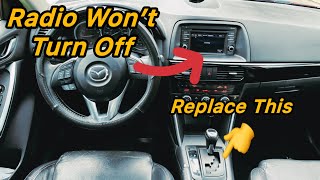
🎬 See how to replace the shifter switch yourselfSymptoms You May Notice
- Engine will not start, especially when in Park or Neutral.
- Check Engine Light and/or AT (Automatic Transmission) warning light is on.
- Vehicle enters 'limp mode,' getting stuck in a single gear.
- Harsh or delayed gear engagement.
- Incorrect gear displayed on the instrument panel.
- Reverse lights do not illuminate.
- Engine may only start in Neutral, but not Park.
- Increased fuel consumption.
- Replacing the battery when a no-start condition is the primary symptom, without checking for diagnostic trouble codes first.
- Condemning the entire transmission when the issue is a relatively inexpensive external sensor or wiring fault.
- Replacing the TRS sensor when the actual fault is the 'NOT-P Position Switch' inside the shifter console, which causes similar no-start or won't-shut-off symptoms.
Most Likely Causes
- Failed Transmission Range Sensor (TRS) 🔴 High Probability → Shop Transmission Assembly The sensor is exposed to heat and environmental factors under the hood, which can lead to internal failure or corrosion over time. Water ingress into the sensor housing or connector is a common failure mode.
How to confirm: After gaining access to the sensor, test the voltage and resistance across the terminals with a multimeter while shifting through the gears. Compare the readings to the manufacturer's specifications. A reading below the expected voltage range (often < 0.5V) points to a faulty sensor.
Typical fix: Replace the Transmission Range Sensor.
Est. part cost: $50-$150 - Corroded or Damaged Wiring/Connector 🟡 Medium Probability The sensor's location can expose its wiring and connector to moisture and road grime, leading to corrosion, frayed wires, or physical damage.
How to confirm: Visually inspect the wiring harness and connector leading to the TRS for any signs of corrosion, frayed wires, or loose pins. Perform a continuity test on the wiring between the sensor and the TCM/PCM to check for an open or short circuit.
Typical fix: Clean the connector terminals with electrical contact cleaner or repair/replace the damaged section of the wiring harness.
Est. part cost: $10-$100 - Misadjusted Transmission Range Sensor or Shift Linkage ⚪ Low Probability → Shop Transmission Assembly
How to confirm: Ensure the shift linkage is not loose or damaged. When installing a new TRS, it must be properly aligned. Some sensors have alignment marks or require a specific procedure to ensure the computer receives the correct signal for each gear position.
Typical fix: Adjust the sensor or the shift linkage according to the service manual procedure.
Est. part cost: $0
Rare But Worth Checking
- Faulty Powertrain Control Module (PCM) or Transmission Control Module (TCM): → Shop Transmission Assembly This is very rare. Before condemning the control module, all other possibilities, including the sensor, wiring, and connections, must be exhaustively ruled out.
- Worn 'NOT-P Position Switch' in Shifter Assembly: A worn switch inside the center console shifter assembly can prevent the vehicle from recognizing it's in Park, leading to a no-start or failure to power down completely. Mazda TSB 05-004/16 addresses this for 2013-2014 models, noting the ignition may stay in accessory mode. While this may not set a P0707 code directly, its symptoms can overlap and cause confusion during diagnosis.
Diagnosis Steps
- Connect an OBD-II scanner to confirm the P0707 code and check for any other related transmission codes.
- Check the transmission fluid level and condition. Low or contaminated fluid can sometimes cause shifting issues, though it's less likely to be the direct cause of a P0707.
- Disconnect the battery.
- Remove the air intake snorkel, battery, and battery tray to gain access to the Transmission Range Sensor located on top of the transmission housing.
- Visually inspect the sensor's electrical connector and wiring harness for any signs of corrosion, damage, or loose connections.
- If the wiring appears intact, use a multimeter to test the sensor's output voltage and resistance as you manually move the shift lever on the transmission through each gear position. Compare these readings to the specifications in a factory service manual.
- If the sensor tests bad or provides readings below specification, replace it.
- If the sensor tests good, perform a continuity test on the wiring between the sensor connector and the PCM/TCM to rule out an open or short circuit.
- After replacement or repair, ensure the new sensor is correctly aligned before tightening the mounting bolts.
- Reassemble all components, reconnect the battery, clear the trouble codes with the scanner, and perform a test drive to ensure the issue is resolved.
Parts You'll Likely Need
- Transmission Range Sensor (Neutral Safety Switch)
(OEM #FN02-21-444)— This sensor is the most frequent point of failure for a P0707 code, as its internal contacts wear out or become compromised over time.
Trusted brands: Mazda OE, Hitachi, Standard Motor Products, Dorman
OEM price range: $100-$180
Aftermarket price range: $50-$120
Related Codes That Often Appear With This One
- P0705 — This code indicates a general malfunction in the Transmission Range Sensor circuit and often appears alongside more specific circuit codes like P0707.
- P0706 — This code indicates a range/performance issue with the TRS circuit, suggesting the signal is erratic or not what the computer expects, which can be related to the low input of P0707.
Technical Service Bulletins (TSBs) & Recalls
- TSB 05-004/16: Addresses an issue on 2013-2014 CX-5s where the ignition does not turn off when pressing the start/stop button due to a worn switch unit in the gate-type AT shifter.
Platform-Specific Known Issues
- A known issue on 2013-2014 models is a worn switch in the shifter assembly that prevents the car from turning off completely, leaving it in accessory mode. This is covered by TSB 05-004/16 and can be confused with a TRS issue.
Mechanic-Grade Diagnostic Values
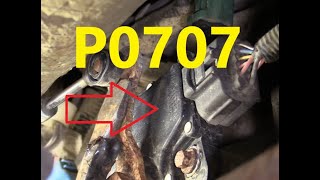
- Transmission Range Sensor (TRS) 'A' Circuit Voltage — expected: Varies by gear, but should be above 0.5V. Specific values for each gear require a factory service manual.. Failure: A consistent voltage reading below 0.5V at the PCM/TCM will trigger code P0707. 🎬 Watch: Diagnosing and fixing P0707 circuit codes
Scan Tool Commands That Help
- Manual Procedure (No Scan Tool Required): Transmission Initial Learning Procedure (Shift Adapt Reset) — After replacing the transmission, internal components, or sometimes just to resolve harsh shifting or hesitation that the transmission has 'learned' over time. This forces the TCM to relearn clutch values and shift points.
Wiring & Ground Locations
- Main Chassis Ground — In the engine compartment, under or near the battery tray. There are several large ground cables bolted directly to the chassis in this area.. A loose or corroded main ground in this area can cause a variety of electrical issues, including low voltage signals and erratic sensor behavior. One owner of a 2014 CX-5 found a dangling ground wire below the battery tray after previous work had been done.
Diagnostic Flowchart
Other Known Issues on This Vehicle
Issues unrelated to this code that are worth knowing about as an owner of this generation:
- Leaking Drive Belt Tensioner 🟠 Medium — Common issue across 2013-2019 models. TSB 01-019/19 was issued for this problem. (Ref: TSB 01-019/19)
- Failing LED Daytime Running Lights (DRL) 🟠 Medium — Primarily affects the 2016 model year. Caused by corrosion from sealing gaskets. Requires full headlight assembly replacement. (Ref: Recall 4320A / NHTSA 20V063000)
- Premature Rear Brake Wear / Dragging 🟡 Low — Some 2016 models may experience rear brake dragging due to the electric parking brake (EPB) not fully releasing, causing noise and premature pad wear. (Ref: TSB 04-005/17)
- Worn Shifter Switch Causing Ignition to Stay On 🟠 Medium — Affects 2013-2014 models. A worn switch in the shifter assembly prevents the vehicle from fully powering off. (Ref: TSB 05-004/16)
Used vs. New Parts: Buying Guide for This Vehicle
When a used part is the smart pick: A used Transmission Range Sensor (TRS) from a reputable salvage yard is a reasonable choice for this repair. It is an external, bolt-on electronic component, not a complex mechanical part. It's a good way to save money, especially if you can source one from a low-mileage, rear-ended vehicle.
Donor-vehicle mileage cap: roughly under 80000 miles for the part to have meaningful remaining life.
What to inspect on the donor part:
- Check for any physical damage to the sensor housing or cracks around the mounting points.
- Inspect the electrical connector pins for corrosion, bending, or green residue.
- Ensure the lever arm moves smoothly without binding.
- Ask for the donor vehicle's mileage and try to get a part from a vehicle with under 80,000 miles.
OEM-only on this vehicle (don't cheap out):
- Transmission Control Module (TCM) - Due to programming and VIN-locking, a new or professionally refurbished and programmed module is required if this rare failure occurs.
Aftermarket brands forum-validated for this vehicle:
- Hitachi
- Standard Motor Products (SMP)
- Dorman
Brands owners have reported issues with on this vehicle:
- No-name, unbranded sensors from online marketplaces often have higher failure rates and may not be properly calibrated, leading to persistent codes or shifting issues.
Real Owner Stories
Aggregated from forums and TSBs cited above. Mileages and costs reflect what owners reported in those sources.
2014 Mazda CX-5 2.5L
Symptoms: The car would not turn off completely and stayed in accessory mode after pressing the start/stop button.
What fixed it: Replacement of the switch unit in the gate-type AT shifter as per TSB 05-004/16.
Source hint: Mazdas247.com threads discussing TSB 05-004/16
2015 Mazda CX-5 2.5L
Symptoms: Vehicle experienced a no-start condition and entered limp mode; the owner noted the difficulty of reaching the part located under the battery tray.
What fixed it: Replacement of the neutral safety switch (Transmission Range Sensor).
Source hint: CX5Forums.com owner experiences with P0707
Related OBD-II Codes
Frequently Asked Questions
My 2013 CX-5 won't turn off completely when I press the start button; is this related to the P0707 code?
Where is the Transmission Range Sensor located on the 2.5L SKYACTIV-G engine?
Can I use a used TRS from a Mazda6 to fix my CX-5?
Why does my CX-5 only start when I shift it into Neutral but not in Park?
Is there a specific TSB for the LED lights or brakes that I should check while fixing the P0707 code?
What voltage should I see when testing the TRS on my CX-5?
Helpful Videos

We Have This Part in Stock

The information in this article is provided for general reference and educational purposes only. Vehicle specifications, procedures, and part compatibility can vary by production date, trim level, and region. Always consult your vehicle's factory service manual and verify part numbers before purchasing or performing repairs. Safety-critical components such as airbags, seat belts, and braking systems should be installed by a qualified professional.
- Mazda CX-5:
- 🧭 Diagnostic Flowchart
- 🎬 Helpful Videos
- 🛍️ Shop This Part
- What's Unique About the 2013-2016 Mazda CX-5
- Symptoms You May Notice
- Most Likely Causes
- Rare But Worth Checking
- Diagnosis Steps
- Parts You'll Likely Need
- Related Codes That Often Appear With This One
- Technical Service Bulletins (TSBs) & Recalls
- Platform-Specific Known Issues
- Mechanic-Grade Diagnostic Values
- Scan Tool Commands That Help
- Wiring & Ground Locations
- Other Known Issues on This Vehicle
- Used vs. New Parts: Buying Guide for This Vehicle
- Real Owner Stories
- 2014 Mazda CX-5 2.5L
- 2015 Mazda CX-5 2.5L
- Related OBD-II Codes
- Frequently Asked Questions
- 🎟️ Get 5% Off