

P0707 on 2007-2016 Nissan Murano: Transmission Range Sensor Failure Causes and Fixes
P0707 on a Nissan Murano most often means the transmission range sensor (or inhibitor switch) has failed or its wiring is corroded. This can prevent the car from starting, cause erratic shifting, or lock the shifter in Park. Expect to pay between $150 and $350 for a professional repair, which typically involves replacing the sensor.
- P0707 on a 2007-2016 Murano almost always points to a bad transmission range sensor or its wiring.
- Symptoms are severe, often preventing the car from starting or causing dangerous shifting behavior.
- The sensor's location makes it vulnerable to corrosion from road salt and moisture.
- Diagnosis involves checking wiring and testing the sensor with a multimeter; it's not just a 'code read and replace' job.
- Using the correct, updated OEM part number (31918-3VX0C) is recommended for the best results.
What's Unique About the 2007-2016 Nissan Murano
On the Nissan Murano, which uses a Continuously Variable Transmission (CVT) across this entire year range, the P0707 code is particularly critical. A faulty signal from the range sensor can confuse the CVT's control module, potentially leading to a 'limp mode,' erratic shifting, or even a sudden loss of propulsion while driving. The sensor and its connector are located on the side of the transmission, mounted to the selector shaft, leaving them exposed to road salt and moisture. This exposure frequently leads to corrosion and signal failure on these vehicles, especially in regions that use road salt in winter.
Generation note: The 2007-2016 range covers the end of the 1st gen (Z50, through 2007), the full 2nd gen (Z51, 2009-2014), and the start of the 3rd gen (Z52, 2015-on). While all use a 3.5L VQ35DE V6 and a CVT, the specific transmission range sensor part number may differ. The part was updated several times, with 31918-3VX0C superseding previous versions like 31918-29X0A. The underlying causes and diagnostic principles remain the same across generations.
Symptoms You May Notice
- Check Engine Light is on
- Engine will not start, or only starts in Neutral but not Park
- Inability to shift the gear lever out of Park
- Harsh or delayed gear engagement
- Reverse lights do not turn on when in Reverse
- Vehicle enters 'limp mode' with reduced power
- Gear indicator on the dashboard is incorrect or does not light up
- Engine may stall when shifting into gear.
- Replacing the battery or starter when the vehicle won't start, without first checking for transmission-related trouble codes.
- Replacing the entire transmission when the issue is only a relatively inexpensive external sensor or its wiring.
- Replacing the shift interlock solenoid when the shifter is stuck in Park, as the P0707 fault is the root cause of the lockout.
Most Likely Causes
- Faulty Transmission Range Sensor (Inhibitor Switch) 🔴 High Probability → Shop Transmission Assembly The sensor is a common failure point due to internal wear and tear or water intrusion, which shorts the internal contacts.
How to confirm: After confirming wiring is intact, test the sensor's resistance and voltage outputs for each gear position using a multimeter. Compare the readings to the factory service manual specifications. If they are out of range or inconsistent, the sensor is bad.
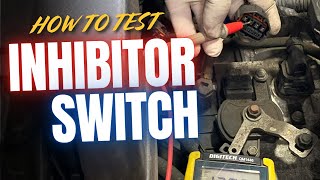
Typical fix: Replace the transmission range sensor and perform an alignment procedure to ensure it matches 🎬 Watch: Step-by-step guide to replacing the inhibitor switch the shifter position.
Est. part cost: $80-$140 - Corroded or Damaged Wiring/Connector 🔴 High Probability The sensor and its connector are mounted on the transmission case, exposing them to road spray, salt, and debris. This causes corrosion (often a green crust on the pins) or physical wire damage, leading to a short-to-ground or an open circuit.
How to confirm: Visually inspect the wiring harness and connector for the transmission range sensor. Look for green/white corrosion, frayed wires, or loose pins. Perform a continuity test on the wiring between the sensor and the TCM.
Typical fix: Clean the connector terminals with an electrical contact cleaner and a small brush, then apply dielectric grease to prevent future 🎬 See why you should check the connector before buying parts moisture intrusion. If the wiring or connector is badly damaged, it will need to be repaired with a new pigtail or section of harness.
Est. part cost: $5-$50 - Low or Contaminated CVT Fluid ⚪ Low Probability While a less direct cause, very old, burnt, or low fluid can cause erratic internal transmission behavior that might be misdiagnosed or contribute to other electrical faults. Nissan CVTs are known to be sensitive to fluid condition and level.
How to confirm: Check the level and condition of the CVT fluid according to the manufacturer's procedure. The fluid should be at the correct level and not appear dark, burnt, or contain debris.
Typical fix: Perform a CVT fluid drain and fill using the correct Nissan-specified fluid (e.g., NS-2 or NS-3 depending on the year). This is unlikely to fix P0707 on its own but is good preventative maintenance.
Est. part cost: $100-$200
Rare But Worth Checking
- Misadjusted Shift Linkage or Sensor: If the sensor was recently replaced or the shift cable was serviced, it might not be properly aligned. The sensor's position must correspond exactly to the gear selector's position. A loose or stretched cable can also cause this.
- Faulty Transmission Control Module (TCM): → Shop Transmission Assembly This is rare and should only be considered after the sensor and wiring have been proven to be good. A failed TCM can misinterpret a correct signal from the sensor or have an internal short on the input circuit.
Diagnosis Steps
- Scan for Codes: Use an OBD-II scanner to confirm P0707 is present and check for any other related codes like P0705 or U1000.
- Inspect Fluid: Check the level and condition of the CVT fluid. Burnt or low fluid can indicate larger transmission problems that need to be addressed.
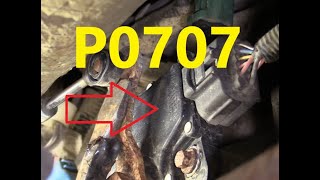
- Visual Inspection: Raise the vehicle safely and locate the transmission range sensor on the side of the transmission where the shift cable attaches. Visually inspect the sensor, its connector, and the wiring harness for any signs of corrosion, moisture intrusion, or physical damage.
- Check Connector: Disconnect the sensor and inspect the pins in both the sensor and the harness connector for corrosion (green/white powder) or damage. Clean as necessary with electrical contact cleaner.
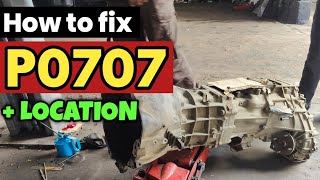
- Test Voltage: With the key on and engine off, use a multimeter to check for the correct reference voltage being supplied to the sensor. Check the signal wire voltage while an assistant moves the shifter through each gear (P, R, N, D). The voltage should change predictably. A constant low or zero voltage points to a problem. 🎬 Watch: Understanding P0707 causes and how to fix them
- Test Sensor Resistance: With the sensor disconnected, measure the resistance across the sensor's terminals for each gear position. Compare these readings to the specifications in a service manual. If the resistance is out of spec or shows an open/short, the sensor has failed.
- Check Wiring Continuity: If the sensor tests good, check for continuity and shorts in the wiring harness between the sensor connector and the TCM connector. Repair any open or shorted wires.
- Final Verification: If a part is replaced, clear the codes, perform the sensor alignment procedure if required, and test drive the vehicle to ensure the problem is resolved and the gear indicator is accurate.
Parts You'll Likely Need
- Transmission Range Sensor / Inhibitor Switch
(OEM #31918-3VX0C (supersedes 31918-3VX0B, 31918-3VX0A, 31918-29X0A))— This is the most common component to fail, causing the P0707 code.
Trusted brands: Nissan (OEM), Hitachi, Dorman, WVE/NTK
OEM price range: $130-$200
Aftermarket price range: $60-$100
Related Codes That Often Appear With This One
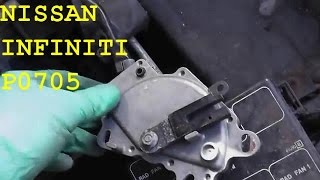
- P0705 — P0705 is a general 'Transmission Range Sensor Circuit Malfunction'. If the circuit has a low voltage problem, it can trigger the more specific P0707, but sometimes the general fault is also stored.
- P0708 — This code means 'Transmission Range Sensor Circuit High Input'. Seeing it intermittently with P0707 could point to a severe wiring issue where the signal wire is shorting to both ground and power at different times.
- U1000 — This is a CAN communication circuit failure code. On some Nissans, a faulty external sensor like the range sensor can disrupt the communication network, causing this code to appear alongside the primary fault.
Technical Service Bulletins (TSBs) & Recalls
- While no TSB is directly for P0707 on this specific Murano range, Nissan has issued related bulletins for CVT issues. For example, NTB13-095 for other models addresses slow acceleration and DTC P1778, which sometimes involves replacing the control valve body, showing the complexity of diagnosing CVT faults. Always check for the latest TSBs with a dealer.
Platform-Specific Known Issues
- Owner Experience: No-Start Fixed by Sensor Replacement: A user on the NissanMurano.org forums with a 2009 Murano reported a no-start condition along with the P0707 code. After verifying the battery and starter were good, they replaced the inhibitor switch (transmission range sensor). The repair resolved the issue, allowing the car to start normally. The owner noted the most difficult part was accessing the sensor on the side of the transmission.
- Repair Story: Intermittent Stalling and Limp Mode: A 2011 Murano owner experienced intermittent stalling when shifting from Park and the vehicle would sometimes enter limp mode. The dealer diagnosed a faulty transmission range sensor based on the P0707 code. The replacement of the sensor and cleaning of the harness connector fixed the stalling and shifting problems.
Mechanic-Grade Diagnostic Values
- Transmission Range Sensor Signal Voltage — expected: On many Nissan systems, the sensor uses multiple signal wires. The TCM expects to see ~12V on one specific signal wire for each gear position (e.g., Signal 1 = Park, Signal 2 = Reverse) and 0V on the others.. Failure: A P0707 is set when the voltage is persistently below the specified threshold, often < 0.5V, on a circuit where voltage is expected.
- Transmission Range Sensor Ground Circuit Voltage Drop — expected: Less than 0.1V (100mV) with the key on.. Failure: A reading higher than 0.1V indicates excessive resistance in the ground circuit, which can cause a low signal voltage.
- Transmission Range Sensor Internal Resistance (Analog Type) — expected: Varies by gear position and must be compared to a service manual. Example values could be ~1,100 Ohms in Park and ~3,500 Ohms in Drive.. Failure: Readings that are out of specification, or show an open (infinite resistance) or short (zero resistance), indicate a failed sensor.
Scan Tool Commands That Help
- Advanced OBD-II Scanner / Nissan CONSULT: Live Data Monitoring for 'Transmission Range (TR) Switch' or 'Shift Lever Switch' PID. — Use this to see exactly what gear position the TCM is registering. As the shifter is moved, the display should update accordingly. A mismatch between the physical shifter position and the scan tool data confirms a problem in the sensor, wiring, or adjustment.
Wiring & Ground Locations
- TCM (Transmission Control Module) - Gen 1 — For 2003-2007 (Z50) models, the TCM is a separate module located behind the passenger side glove box.. This is the destination for the range sensor's signals. Technicians need to access its connector to test wiring continuity from the sensor.
- BCM (Body Control Module) - Gen 2/3 — For 2009-2016 (Z51, Z52) models, the TCM functions are often integrated into the BCM, which is located on the driver's side, under or behind the dash.. The diagnostic endpoint for wiring tests changes significantly from Gen 1. Key connectors include M76 and M79 on the left side of the dash.
- Inhibitor Switch Connector — On the side of the CVT assembly, where the manual shift cable attaches.. This is the primary point of failure due to corrosion and water intrusion. All voltage and resistance tests on the sensor itself begin here.
OEM Part Supersession History
31918-29X0A, 31918-3VX0A, 31918-3VX0B→31918-3VX0C— Part revision and improvement by the manufacturer.
Heads up: No programming is required when replacing the sensor with the updated part. It is a direct-fit replacement.
Model Year Variations Within This Range
- 2007 (Gen 1, Z50): The Transmission Control Module (TCM) is a distinct unit located behind the passenger-side glove box, making it the diagnostic endpoint for wiring checks.
- 2009-2016 (Gen 2/3, Z51/Z52): The TCM's functions are integrated into the Body Control Module (BCM), located on the driver's side of the vehicle, typically under the dashboard. This changes the connector location for circuit testing.
Diagnostic Flowchart
Other Known Issues on This Vehicle
Issues unrelated to this code that are worth knowing about as an owner of this generation:
- Premature CVT Failure / Shudder 🔴 High — Widespread across many model years, particularly 2003-2010 and 2015-2019 models. Can occur before 100,000 miles. (Ref: Multiple TSBs (e.g., NTB19-116a) and a class-action lawsuit settlement have addressed CVT issues over the years, often involving TCM reprogramming or full replacement.)
- Rear Subframe Corrosion/Failure 🔴 High — Common on 1st and 2nd generation Muranos (Z50/Z51), especially in 'salt belt' regions. Can lead to catastrophic failure where the subframe rusts through and breaks. (Ref: No official recall for the Murano, but Nissan issued a service campaign and warranty extension for the same issue on 2002-2005 Altimas and 2004-2005 Maximas, which share a similar design.)
- Power Steering Hose Leak 🟠 Medium — Affects many Murano models, particularly the 2013-2014 model years. The high-pressure hose can leak, causing loss of power steering assist. (Ref: Recall 17V-184 was issued for 2013-2014 Muranos to replace the power steering hose kit due to a fire risk if fluid leaks onto hot exhaust components.)
- Brake Problems (Soft Pedal / ABS Actuator Failure) 🔴 High — Particularly noted on the 2009 model year, where owners report a soft brake pedal that goes to the floor. The issue is often traced to a faulty ABS actuator. (Ref: A recall was issued for the ABS actuator on 2015-2018 models due to an internal fluid leak that could cause an electrical short and fire risk.)
- Driver's Seat Frame Failure 🟡 Low — Reported on various model years, where the seat frame breaks or welds fail, causing the seat to rock or move unexpectedly.
Used vs. New Parts: Buying Guide for This Vehicle
When a used part is the smart pick: A used sensor from a junkyard is a high-risk option and only makes sense if the part is extremely inexpensive and the labor for a potential second replacement is not a concern. Failure is often due to internal wear or moisture damage, which is impossible to see.
Donor-vehicle mileage cap: roughly under 50000 miles for the part to have meaningful remaining life.
What to inspect on the donor part:
- Inspect the connector pins for any signs of green or white corrosion.
- Ensure the plastic housing is not cracked or showing signs of heat damage.
- Ask for the donor vehicle's mileage; lower is always better.
- If possible, test the resistance across the pins before purchase, though this is rarely feasible.
Aftermarket brands forum-validated for this vehicle:
- Hitachi (often the OEM supplier)
- NTK
- Dorman
Brands owners have reported issues with on this vehicle:
- No-name, unbranded parts from online marketplaces should be avoided as their internal components may not meet OEM specifications for resistance and durability, leading to premature failure.
Real Owner Stories
Aggregated from forums and TSBs cited above. Mileages and costs reflect what owners reported in those sources.
2009 Murano
Symptoms: A no-start condition along with the P0707 code, after verifying the battery and starter were good.
What fixed it: The owner replaced the inhibitor switch (transmission range sensor), which resolved the issue and allowed the car to start normally.
Source hint: Owner Experience: No-Start Fixed by Sensor Replacement
2011 Murano
Symptoms: Intermittent stalling when shifting from Park and the vehicle would sometimes enter limp mode.
What fixed it: The dealer diagnosed and replaced the faulty transmission range sensor and cleaned the harness connector.
Source hint: Repair Story: Intermittent Stalling and Limp Mode
Related OBD-II Codes
Frequently Asked Questions
My 2009 Murano won't start and is showing a P0707 code. Is this a common problem?
I have code P0707. Should I be worried about my entire CVT failing?
Where is the transmission range sensor located on my Murano?
My reverse lights stopped working and the check engine light is on with code P0707. Are these related?
I found green corrosion on the sensor connector. Could this be the cause of my P0707 code?
Is it worth checking my CVT fluid for a P0707 code?
Helpful Videos
We Have This Part in Stock

The information in this article is provided for general reference and educational purposes only. Vehicle specifications, procedures, and part compatibility can vary by production date, trim level, and region. Always consult your vehicle's factory service manual and verify part numbers before purchasing or performing repairs. Safety-critical components such as airbags, seat belts, and braking systems should be installed by a qualified professional.
- Nissan Murano:
- 🧭 Diagnostic Flowchart
- 🎬 Helpful Videos
- 🛍️ Shop This Part
- What's Unique About the 2007-2016 Nissan Murano
- Symptoms You May Notice
- Most Likely Causes
- Rare But Worth Checking
- Diagnosis Steps
- Parts You'll Likely Need
- Related Codes That Often Appear With This One
- Technical Service Bulletins (TSBs) & Recalls
- Platform-Specific Known Issues
- Mechanic-Grade Diagnostic Values
- Scan Tool Commands That Help
- Wiring & Ground Locations
- OEM Part Supersession History
- Model Year Variations Within This Range
- Other Known Issues on This Vehicle
- Used vs. New Parts: Buying Guide for This Vehicle
- Real Owner Stories
- 2009 Murano
- 2011 Murano
- Related OBD-II Codes
- Frequently Asked Questions
- 🎟️ Get 5% Off