

P0707 on 2006-2012 Toyota RAV4 3.5L V6: Transmission Range Sensor Fixes
This code indicates a low voltage signal from the Transmission Range Sensor, also known as the Neutral Safety Switch. The most common fix is replacing the sensor itself, which can cause a no-start condition or erratic shifting. Expect to pay $130-$190 for an OEM sensor.
- P0707 on your RAV4 means the Transmission Range Sensor is sending a low voltage signal, which most often means the sensor itself has failed.
- Primary symptoms are a no-start condition or erratic transmission shifting.
- The most probable fix is replacing the Transmission Range Sensor (Part No. 84540-42010).
- While DIY replacement is possible, professional installation is recommended to ensure correct alignment, which is critical for safety and proper function.
- Before buying parts, check the sensor's wiring and connector for obvious damage or corrosion, as this can be a cheaper fix.
What's Unique About the 2006-2012 Toyota RAV4
For the third-generation RAV4 with the 2GR-FE V6, the Transmission Range Sensor (TRS) is a common failure point that can cause frustrating no-start or shifting problems. Unlike some vehicles where this is an intermittent electrical gremlin, on this platform, the sensor itself is the most frequent culprit. Owners often find that replacing the sensor is a direct and permanent fix.
Symptoms You May Notice
- Check Engine Light is on
- Vehicle will not start
- Transmission shifts erratically or harshly
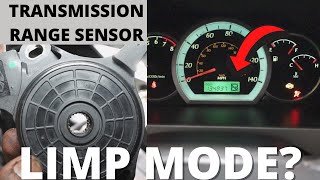
- Transmission may be stuck in 'limp mode' (a single gear)
- Gear indicator on the dashboard is incorrect or does not display
- Delayed engagement when shifting into Drive or Reverse
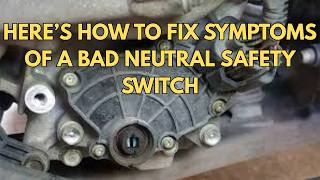
- Reverse lights do not illuminate. 🎬 Watch: Symptoms of a bad neutral safety switch explained
- Replacing the transmission fluid. While old fluid can cause many issues, it will not cause a P0707 code.
- Replacing the entire transmission. This is an expensive and unnecessary repair unless there are other severe internal transmission failures accompanied by other codes.
Most Likely Causes
- Failed Transmission Range Sensor (Neutral Safety Switch) 🔴 High Probability → Shop Transmission Assembly The sensor is an electronic/mechanical switch exposed to heat and vibration on the transmission case, causing internal components to wear out or fail over time. This is a common failure part across many Toyota models using this transmission series.
How to confirm: Use a scan tool to monitor the live data for the transmission gear position. If the displayed gear does not match the physical position of the shifter, the sensor is likely faulty. A voltage reading for 'TRS A' that is below 0.5V also strongly points to a failed sensor or circuit.
Typical fix: Replace the Transmission Range Sensor. This involves accessing the sensor on the transmission, disconnecting the wiring and shift linkage, removing the mounting bolts, and installing and aligning the new sensor.
Est. part cost: $40-$90 - Damaged Wiring or Corroded Connector 🟡 Medium Probability The wiring harness leading to the transmission is exposed to road debris, moisture, and heat. Water intrusion, particularly after heavy rain or car washes, can cause a temporary short to ground, corrosion in the connector pins, or breaks in the wires.
How to confirm: Visually inspect the entire wiring harness from the sensor to the control module for any signs of chafing, breaks, or green/white corrosion on the connector pins. Perform a continuity test with a multimeter to check for an open or short circuit in the signal wire.
Typical fix: Clean the connector pins with electrical contact cleaner or repair the damaged section of the wiring harness. In severe cases, the connector pigtail may need to be replaced.
Est. part cost: $10-$50 - Misadjusted Transmission Range Sensor ⚪ Low Probability → Shop Transmission Assembly This typically only occurs after the transmission has been serviced or the sensor has been replaced without proper alignment.
How to confirm: Ensure the vehicle is in Neutral. There are alignment marks on the sensor and its mounting point that must line up perfectly. If they are out of alignment, the sensor will send incorrect signals.
Typical fix: Loosen the sensor's mounting bolts and rotate it until the alignment marks match. Tighten the bolts and verify correct operation.
Est. part cost: $0
Rare But Worth Checking
- Faulty Powertrain Control Module (PCM) or Transmission Control Module (TCM): → Shop Transmission Assembly This is very uncommon. Before condemning the control module, all other possibilities (sensor, wiring, adjustment) must be exhaustively ruled out. A professional diagnosis is required to confirm a faulty module.
Diagnosis Steps
- Connect an OBD-II scanner and confirm P0707 is present. Note any other codes, especially P0705 or P0706. 🎬 Watch: Diagnosing a P0705 range sensor code on a RAV4
- Using the scanner's live data function, monitor the 'Transmission Range' or 'PRNDL' status. Shift through all gears (P, R, N, D, L) and verify that the data on the scanner matches the gear selector's physical position.
- If the data is incorrect or doesn't change, perform a visual inspection of the Transmission Range Sensor, its connector, and the wiring harness. Look for loose connections, corrosion, or physical damage.
- If the wiring appears intact, check for proper sensor alignment. Place the transmission in Neutral and check if the alignment marks on the sensor and its housing are lined up.
- If alignment is correct, test the circuit. With the key on and engine off, use a scan tool to view live data for 'TRS A Voltage'. A reading below 0.5V confirms the 'low input' condition. Alternatively, you can backprobe the sensor's signal wire with a multimeter to check for voltage.
- If the sensor and wiring test good, the final, least likely possibility is a fault within the Powertrain Control Module (PCM). This step should be performed by a professional.
Parts You'll Likely Need
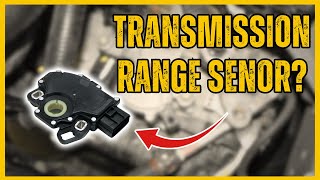
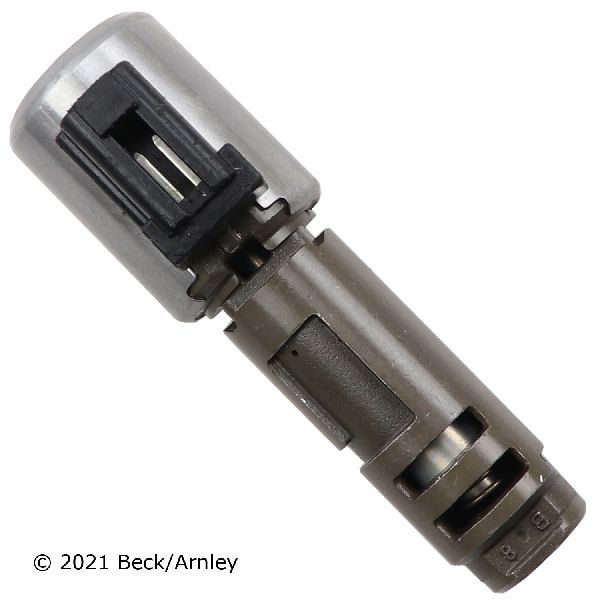
- Transmission Range Sensor / Neutral Safety Switch
(OEM #84540-42010)— This is the primary component that fails and directly causes the P0707 code by sending a low voltage signal.
Trusted brands: Toyota (Genuine), ACDelco, Beck/Arnley, Duralast
OEM price range: $130-$190
Aftermarket price range: $40-$90
Related Codes That Often Appear With This One
- P0705 — P0705 indicates a general circuit malfunction for the same sensor, while P0707 specifically points to a low voltage condition. They often appear together as they relate to the same component's failure.
- P0706 — This code indicates a 'Range/Performance' issue with the sensor, meaning the signal is erratic or not what the computer expects. It can be triggered by the same root causes as P0707.
Technical Service Bulletins (TSBs) & Recalls
- T-SB-0318-08: Addresses a 'clunk, pop, or knock-type noise' from the steering system on 2006-2008 RAV4s, caused by a faulty intermediate steering shaft.
- Limited Service Campaign (LSC) for VVT-i Oil Line: A campaign announced by Toyota in 2010 for certain 2006-2009 V6 models to replace a rubber oil line that could rupture with an improved all-metal version.
Platform-Specific Known Issues
- While a specific, detailed forum thread for a 2006-2012 RAV4 V6 with P0707 is not readily available, the repair is well-documented on platform mates. For example, an owner of a Toyota Sienna with the same 2GR-FE engine experienced a no-start condition. After verifying the battery and starter were functional, the Neutral Safety Switch (TRS) was diagnosed as the culprit. Replacing the sensor, located on the exterior of the transmission housing, resolved the no-start issue and cleared the trouble code. This experience is typical for the fault.
Mechanic-Grade Diagnostic Values
- Continuity check at Transmission Range Sensor connector — expected: In 'P' (Park) or 'N' (Neutral), continuity should exist between terminals 5 and 6. In 'R' (Reverse), continuity should exist between terminals 1 and 9.. Failure: No continuity (an open circuit) between the specified terminals for a given gear position indicates a faulty switch.
- Voltage check at ECM connector terminals (e.g., NSW, P, R, D) — expected: Approximately 9-14 volts between the specific gear position terminal and ground (E1) ONLY when that gear is selected.. Failure: Voltage is below 1.5 volts when the gear is selected, or above 1.5 volts when other gears are selected.
- Live Data Scan Tool Reading for 'TRS A Voltage' — expected: A stable voltage between 0.5V and 5V, changing predictably as the gear selector is moved.. Failure: A voltage reading below 0.5V confirms the 'low input' condition for P0707.
Scan Tool Commands That Help
- Toyota Techstream: DATA LIST — Use the Data List to monitor the switch, sensor, and actuator values in real-time without removing parts. This is a crucial first step to see if the ECM is receiving the correct gear position signals from the sensor.
- Professional Scan Tool: Input Circuit Test — Some advanced scan tools can perform an 'input circuit test' on the TRS 'A' channel. The tool applies a known voltage and reads the TCM's response. A discrepancy points towards an internal TCM fault, but this should only be used after the sensor and wiring have been confirmed as good.
Wiring & Ground Locations
- E1 (Left Kick Panel) — Located in the driver's side footwell, behind the kick panel.. This is a primary ground distribution point for numerous components, including circuits related to the ECM. A poor connection here can cause various electrical issues.
- ECM Connectors (A9, B30) — The Engine Control Module (ECM) is located in the engine compartment, on the left side.. These are the main connectors for the ECM where signals from the Transmission Range Sensor are received. Technicians backprobe these connectors to test voltage directly at the module, bypassing the vehicle's wiring to isolate the fault. For a 2006 model, terminal B30-81 is a key ground (E1).
- Park/Neutral Position Switch Connector (B26) — On the transmission housing where the shift linkage connects.. This is the main electrical connector for the Transmission Range Sensor. It's the primary point for visual inspection of corrosion and for performing continuity and voltage tests on the sensor itself.
Real Owner Repair Stories
- YouTube user 'All Tsab' (Toyota RAV4 (within 2006-2012 range)) — Check Engine Light, VSC, and other warning lights were on. The gear indicator on the dashboard was showing both 'R' and 'D' at the same time, and the code was P0705 (a related code). The car had a hard time starting.
❌ Tried (didn't work) The user did not report trying other fixes first; they went straight to diagnosing the sensor.
✅ What actually fixed it Replacing the Transmission Range Sensor (Neutral Safety Switch) fixed the incorrect gear display, cleared the P0705 code, and resolved the starting issues.
OEM Part Supersession History
84540-42010→84540-42010 (current)— This part number appears to be stable for the specified vehicle range without major supersessions, though it fits a wide variety of Toyota and Scion models.
Heads up: Some parts listings specify fitment 'From 01/08', suggesting a possible minor change for the 2009 model year refresh, but the part number itself remains the same for the entire 2006-2012 range.
Model Year Variations Within This Range
- 2006-2008 vs 2009-2012: The RAV4 received a facelift for the 2009 model year. While the 2GR-FE V6 engine and its 5-speed automatic transmission remained, there were updates to the electronics and wiring. The 2.4L 4-cylinder was replaced by a more reliable 2.5L (2AR-FE). For the P0707 code, this means while the sensor part number is the same, wiring diagrams and connector locations should be verified specifically for pre- or post-facelift models.
Diagnostic Flowchart
Other Known Issues on This Vehicle
Issues unrelated to this code that are worth knowing about as an owner of this generation:
- Rupturing VVT-i Oil Line 🔴 High — Common on 2006-2009 models with the original rubber hose. Failure can be sudden and cause catastrophic engine failure due to complete oil loss. (Ref: Toyota Limited Service Campaign (LSC) announced in 2010 to replace the rubber line with an all-metal part (15772-31030).)
- Clunking Intermediate Steering Shaft 🟠 Medium — A widely reported issue on 2006-2008 models, causing a clunk or knock noise when turning the steering wheel at low speeds. (Ref: T-SB-0318-08 was issued, detailing the replacement of the faulty shaft with an updated part (e.g., 45260-42090).)
- Premature Water Pump Failure 🟠 Medium — Common across the generation, often failing around 60,000-80,000 miles. Symptoms include a grinding/bearing noise from the engine bay and visible pink/dried coolant leaks.
Used vs. New Parts: Buying Guide for This Vehicle
When a used part is the smart pick: A used Transmission Range Sensor is generally not recommended. It is an electronic/mechanical part with internal contacts that wear out, and it's a known common failure item. The labor to install it is significant enough that saving a small amount on a used part with unknown life remaining is a poor value proposition. A used part should only be considered as a last resort or for temporary diagnostic purposes.
Donor-vehicle mileage cap: roughly under 50000 miles for the part to have meaningful remaining life.
What to inspect on the donor part:
- Verify the donor vehicle was not in a flood.
- Inspect the connector pins for any signs of corrosion, bending, or damage.
- Ensure the plastic housing is not cracked or showing signs of extreme heat exposure.
- If possible, ask for the donor vehicle's mileage; lower is always better for this part.
OEM-only on this vehicle (don't cheap out):
- While not strictly 'OEM-only', using a Genuine Toyota sensor (part # 84540-42010) is highly recommended for fitment, alignment, and longevity. The price difference between OEM and a quality aftermarket brand is often not large enough to justify the risk of premature failure.
Aftermarket brands forum-validated for this vehicle:
- Beck/Arnley
- ACDelco Professional
Brands owners have reported issues with on this vehicle:
- Unbranded, 'white-box' parts from online marketplaces should be avoided, as their internal components may not meet the required specifications, leading to repeat failures.
Real Owner Stories
Aggregated from forums and TSBs cited above. Mileages and costs reflect what owners reported in those sources.
2007-2016 Toyota Sienna 3.5L V6 (2GR-FE)
Symptoms: The vehicle experienced a no-start condition. The owner verified the battery and starter were functional, but the car would not crank.
What fixed it: Replacing the Neutral Safety Switch (TRS), located on the exterior of the transmission housing, resolved the no-start issue and cleared the trouble code.
Source hint: vehicle_specific_issues
Related OBD-II Codes
Frequently Asked Questions
My 2007 RAV4 V6 has a clunking noise when I turn the steering wheel; is this related to the P0707 code?
I heard about a rubber oil line that can rupture on the 2GR-FE engine. Should I be worried about this while fixing my transmission sensor?
Can I use a used Neutral Safety Switch from a salvage yard to save money on my 2010 RAV4 V6?
My RAV4 won't start and the gear indicator on the dash is blank. Is there a way to confirm the sensor is bad without a multimeter?
Is the water pump failure mentioned on Reddit related to the P0707 transmission code?
Helpful Videos

We Have This Part in Stock

The information in this article is provided for general reference and educational purposes only. Vehicle specifications, procedures, and part compatibility can vary by production date, trim level, and region. Always consult your vehicle's factory service manual and verify part numbers before purchasing or performing repairs. Safety-critical components such as airbags, seat belts, and braking systems should be installed by a qualified professional.
- Toyota RAV4:
- 🧭 Diagnostic Flowchart
- 🎬 Helpful Videos
- 🛍️ Shop This Part
- What's Unique About the 2006-2012 Toyota RAV4
- Symptoms You May Notice
- Most Likely Causes
- Rare But Worth Checking
- Diagnosis Steps
- Parts You'll Likely Need
- Related Codes That Often Appear With This One
- Technical Service Bulletins (TSBs) & Recalls
- Platform-Specific Known Issues
- Mechanic-Grade Diagnostic Values
- Scan Tool Commands That Help
- Wiring & Ground Locations
- Real Owner Repair Stories
- OEM Part Supersession History
- Model Year Variations Within This Range
- Other Known Issues on This Vehicle
- Used vs. New Parts: Buying Guide for This Vehicle
- Real Owner Stories
- 2007-2016 Toyota Sienna 3.5L V6 (2GR-FE)
- Related OBD-II Codes
- Frequently Asked Questions
- 🎟️ Get 5% Off