

P0708 on 2011-2017 Hyundai Azera: Transmission Range Sensor Circuit High Explained
This code almost always points to a faulty Transmission Range Sensor, also known as an Inhibitor Switch. This part tells the car's computer which gear is selected. Replacing it is the most common fix, with the part costing between $50 and $125. The PCM detects conflicting gear position signals for more than 30 seconds, triggering the code.
- P0708 on a 2011-2017 Azera is a specific code pointing to a high voltage signal from the Transmission Range Sensor (Inhibitor Switch).
- The most likely cause is a failed sensor, which is a common problem on Hyundai vehicles of this era.
- Symptoms are serious and include the Check Engine Light, the transmission being stuck in one gear, and possible no-start conditions.
- Before replacing the sensor, always check its electrical connector and wiring for damage or corrosion.
- The correct OEM part number for the 2012-2017 model is likely 42700-3B700.
What's Unique About the 2011-2017 Hyundai AZERA
The 2011-2017 Hyundai Azera spans two generations (2011 is the 4th gen 'TG', 2012-2017 is the 5th gen 'HG'). However, the P0708 code and its primary cause, the inhibitor switch, are a common issue across a wide range of Hyundai and Kia models from this era that share the 6-speed automatic transmission, not just the Azera. Manufacturer technical service bulletins (TSBs) confirm this problem, indicating a known weakness in the sensor or its related circuitry across the product line.
Diagnostic Flowchart
Tap your situation to follow the diagnostic path that matches what you're seeing on this vehicle.
Generation note: This range covers the end of the fourth generation (2011, model TG) and the full run of the fifth generation (2012-2017, model HG). While the specific part number for the inhibitor switch may differ slightly, the function, symptoms, and diagnostic process for code P0708 are virtually identical for both generations, as confirmed by TSBs covering both.
Symptoms You May Notice
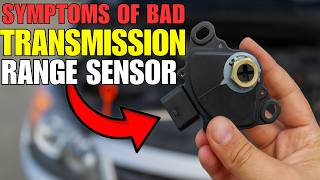
- Check Engine Light (Malfunction Indicator Light) is on.
- Transmission is stuck in a single gear (fail-safe mode, often 3rd or 4th).
- Gear indicator on the dashboard may be blank, incorrect, or flash.
- Vehicle may not start, or only starts in Neutral.
- Harsh, erratic, or delayed shifting between gears.
- Backup lights may not work when in Reverse.
- Reduced fuel economy.
- Inability to shift out of Park. 🎬 Watch: 9 symptoms of a bad transmission range sensor
- Replacing the entire transmission valve body when only the external inhibitor switch is faulty.
- Replacing the PCM/TCM without first thoroughly testing the sensor and its wiring.
- Replacing the sensor without checking for a misadjusted shift cable first. 🎬 See why you should check the cable before replacing parts
Most Likely Causes
- Faulty Transmission Range Sensor (Inhibitor Switch) 🔴 High Probability → Shop Transmission Assembly This is a widely documented failure part across many Hyundai/Kia models from this period, as confirmed by multiple TSBs. Internal components of the switch wear out, get contaminated by moisture or dirt, or short circuit, causing the high voltage or multiple signal reading.
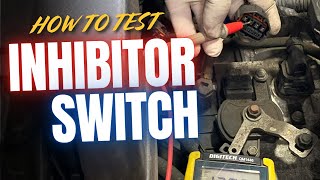
How to confirm: A scan tool can monitor the live data from the sensor. As the gear selector is moved, the data should show a single, corresponding gear. If it shows multiple inputs, erratic data, or an invalid signal, the switch is bad. A multimeter can also be used to test for correct voltage/resistance across the switch's pins for each gear position according to the service manual.
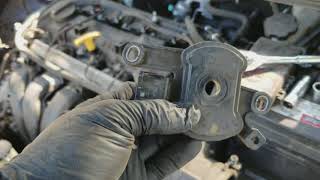
Typical fix: Replace the inhibitor switch. This part is located on the outside of the transmission case where the shift linkage connects. The repair involves removing the air cleaner assembly and battery/tray for access, disconnecting the linkage, and then unbolting the switch.
Est. part cost: $50 - $125 - Damaged Wiring or Corroded Connector 🟡 Medium Probability The sensor is located on the transmission, exposed to weather, road debris, and heat, which can degrade the wiring harness and connector pins over time. Coolant from a leaking thermostat housing can also drip directly onto the sensor and its connector, causing failure.
How to confirm: Visually inspect the wiring harness leading to the inhibitor switch for any signs of fraying, melting, or breaks. Unplug the connector and check for corrosion (green tinge), moisture, or bent pins. A voltage drop test can confirm the integrity of the ground circuit.
Typical fix: Clean the connector terminals with electrical contact cleaner or repair/replace the damaged section of the wiring harness.
Est. part cost: $5 - $50 - Misadjusted Shift Cable or Inhibitor Switch ⚪ Low Probability → Shop Transmission Park Inhibitor Switch While less common than outright failure, a stretched shift cable or a switch that has been incorrectly installed or has loosened over time can cause a misalignment between the shifter's position and the sensor's reading.
How to confirm: Check if the gear selected by the driver matches the gear indicated on the transmission lever itself. The inhibitor switch has slotted mounting holes allowing for slight rotational adjustment. TSBs provide a procedure for alignment, which often involves inserting a 5mm bolt or special tool (SST 09480-A3800) through an alignment hole when the shifter is in Neutral.
Typical fix: Adjust the shift linkage cable or properly align and tighten the inhibitor switch.
Est. part cost: $0
Rare But Worth Checking
- Faulty Powertrain or Transmission Control Module (PCM/TCM): → Shop Transmission Assembly This is very rare. The control module is the last thing to suspect. Before condemning the PCM/TCM, all other possibilities (sensor, wiring, adjustment) must be exhaustively ruled out. A faulty module will usually be accompanied by other trouble codes and should only be considered after wiring between the switch and module has been confirmed to be intact.
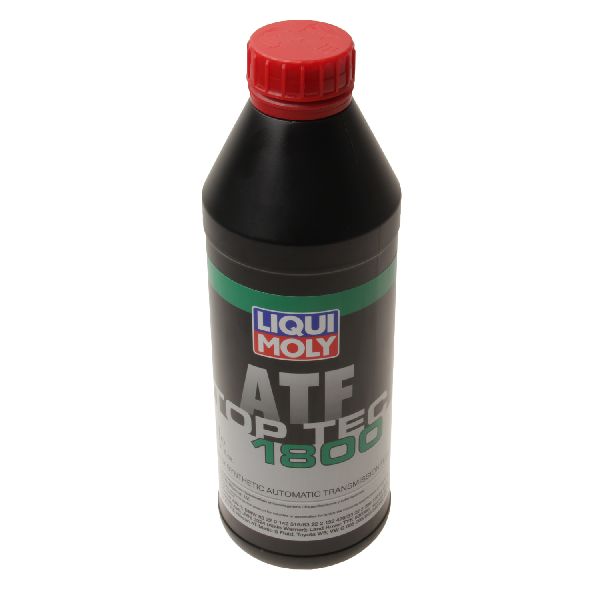
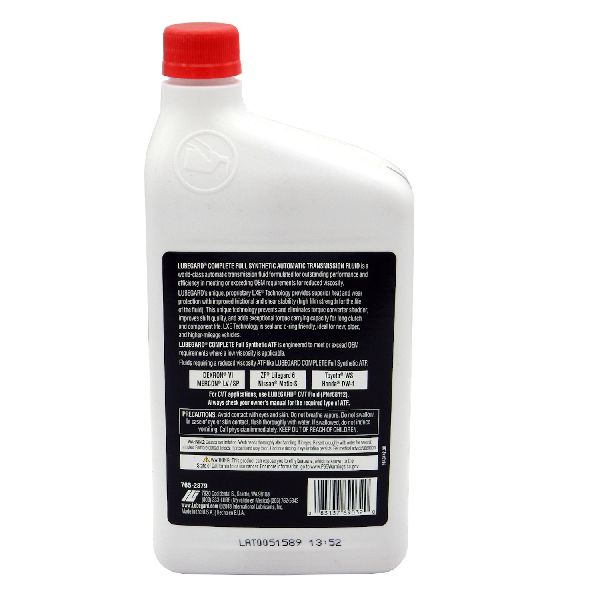
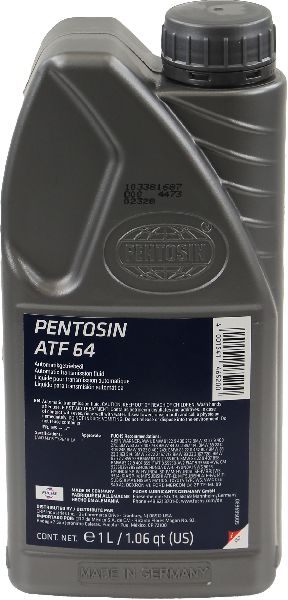
- Low or Dirty Transmission Fluid: → Shop Transmission Assembly Extremely contaminated fluid can potentially affect hydraulic passages related to the manual valve, which is physically connected to the range sensor. This is an unlikely cause for P0708 specifically but is worth noting if other transmission performance issues are present.
Diagnosis Steps
- Connect an OBD-II scanner to confirm P0708 is present and check for any other related codes (like P0705, P0706, P0707).
- Using the scanner's live data function, monitor the Transmission Range Sensor parameter (may be listed as 'Shift Lever Switch'). Move the gear shifter through all positions (P, R, N, D). The display should show one clean, corresponding input for each position.
- If the scanner shows multiple gears selected at once, an 'invalid' signal, or the displayed gear doesn't match the shifter, the sensor circuit is faulty.
- Visually inspect the inhibitor switch connector and wiring harness for any signs of damage, corrosion, or moisture. Pay close attention to the area below the thermostat housing. Clean and repair as necessary.
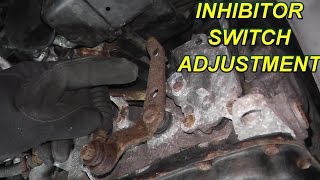
- If the wiring appears okay, check the adjustment of the inhibitor switch. Place the transmission in Neutral, loosen the switch mounting bolts, and rotate it until the alignment holes line up. A 5mm bolt or a special tool (09480-A3800) can be used as a guide pin. Tighten the bolts and re-check. 🎬 Watch this guide on how to adjust an inhibitor switch
- If the signal is still incorrect after verifying wiring and adjustment, the inhibitor switch is faulty and should be replaced.
- After replacement, clear the trouble codes, reset A/T adaptive values if required by the service manual, and perform two drive cycles (key-on to key-off) to ensure the issue is resolved.
Parts You'll Likely Need
- Inhibitor Switch (Transmission Range Sensor)
(OEM #42700-3B700)— This is the primary cause of P0708 on this vehicle. It is a known failure item confirmed by TSBs and extensive owner experience.
Trusted brands: Hyundai (Genuine), Dorman, Standard Motor Products (SMP)
OEM price range: $80 - $125
Aftermarket price range: $50 - $90
Related Codes That Often Appear With This One
- P0705 — P0705 indicates a general circuit malfunction for the range sensor. P0708 is a more specific 'circuit high' fault. They are listed together in Hyundai TSBs and point to the same root cause: a failing inhibitor switch.
- P0706 — P0706 indicates a range/performance issue with the sensor, meaning the signal is illogical or out of expected parameters. It is frequently caused by a failing or misadjusted inhibitor switch.
- P0707 — P0707 indicates a 'circuit low' input, the opposite of P0708. Seeing both could suggest an intermittent short or a very erratic sensor. It is also listed in the same TSBs as P0708.
Technical Service Bulletins (TSBs) & Recalls
- 19-AT-024H: Notes P0708 as 'Range switch - short circuit or multiple inputs' with symptoms including MIL on, 4th gear fail-safe, no gear indication, and intermittent no-start. Supersedes TSB 17-AT-005.
- 5NP-V3F8T-09: Also lists P0708 for 'Range switch - short circuit or multiple inputs' with identical symptoms and is dated 2017-08-03.
Platform-Specific Known Issues
- Hyundai issued Technical Service Bulletin 19-AT-024H which lists P0708 as a known code related to the range switch, causing symptoms like MIL illumination and 4th gear fail-safe mode.
- An earlier TSB, 12-AT-022-1, also documents the same code and symptoms for the Azera (HG) and other models, providing detailed diagnostic steps.
- Owner forums frequently discuss this issue. One user on Hyundai-Forums noted their 2013 Azera had the P0708 code, was stuck in limp mode, and the fix was replacing the inhibitor switch. They confirmed the part number was 42700-3B700.
- A video for a similar Hyundai model shows how coolant leaking from above can drench the sensor, leading to failure, which is a plausible scenario given the engine bay layout.
Mechanic-Grade Diagnostic Values
- Continuity test of inhibitor switch pins — expected: Should show continuity (near 0 Ohms) between specific pins for each gear position as per the service manual. For example, in Park, there should be continuity between two designated 'Park' pins.. Failure: No continuity (Open Line or infinite resistance) when a gear is selected, or continuity across multiple gear circuits at once.
- Voltage drop at rear combination lamp ground — expected: Less than 0.2 Volts. Failure: Voltage greater than 0.2V indicates a poor ground connection that needs to be cleaned and tightened.
- Inhibitor switch power supply voltage — expected: Battery voltage (approx. 12V) should be present at the power supply pin (often pin 3) of the sensor connector with the ignition on.. Failure: No voltage or significantly low voltage indicates a problem with the wiring or fuse supplying power to the switch.
Scan Tool Commands That Help
- Hyundai GDS (Global Diagnostic System): Resetting Auto T/A Values — This function should be used after replacing the inhibitor switch, PCM/TCM, or the entire transaxle to clear learned shift adaptations and ensure optimal shift quality. It is found under the 'Option Treatment' menu in the A/T section.
- Hyundai GDS (Global Diagnostic System): Relearn Adaptive Values — After resetting the adaptive values, a specific drive cycle must be performed to allow the TCM to relearn shift points. This involves accelerating steadily through all gears multiple times while monitoring the Throttle Position Sensor (TPS) on the GDS.
Wiring & Ground Locations
- Rear Combination Lamp Ground — Located in the trunk area, where the rear tail light assemblies are grounded to the chassis.. Hyundai TSB 17-AT-005 specifically calls out checking the tightness and voltage drop of this ground. A poor ground here can cause electrical feedback and unusual voltage readings on shared circuits, potentially contributing to a P0708 code.
- Transmission Ground Strap — A braided metal strap connecting the transmission case to the vehicle's chassis or engine block to ensure a good ground path.. While not a direct cause, a loose or corroded main transmission ground can cause a host of shifting problems and erratic sensor behavior. Ensuring it is clean and tight is a fundamental step in diagnosing any transmission electrical fault. Part number 91860-3L310 is listed as a 'Wiring Assembly-Transmission Ground' for the Azera.
Real Owner Repair Stories
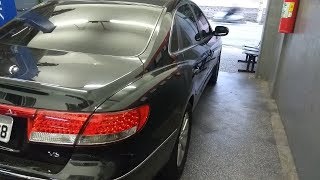
- YouTube video from 'DANSA TRANS. (Hyundai Azera (year not specified, but consistent with the 2011-2017 body style)) — Car would only engage Reverse, gear indicator on dash was stuck on 'R', and code P0708 was present.
❌ Tried (didn't work) Replacing the inhibitor switch did not solve the problem initially, indicating the issue was not the part itself.
✅ What actually fixed it The technician traced the wiring and discovered a blown 10-amp fuse related to the circuit. The root cause was a separate, unrelated repair (a sensor in the rearview mirror) where an electrical short likely occurred, blowing the fuse that powered the transmission range circuit. Replacing the fuse resolved all symptoms.
OEM Part Supersession History
42700-3B100→42700-3B500, then 42700-3B700— Standard part revision and improvement by the manufacturer.
Heads up: The earlier part numbers have been superseded and may no longer be available. 42700-3B700 is the correct replacement for this vehicle range.
Model Year Variations Within This Range
- 2011 (TG) vs 2012-2017 (HG): While the function is identical, TSB 17-AT-005 lists different part numbers for the TG Azera (2011) versus the HG Azera (2012+), though it redacts the full number. However, aftermarket and OEM parts sellers confirm that part number 42700-3B700 fits the 2012-2017 Azera. The diagnostic and adjustment procedures remain the same across both generations.
Helpful Videos

We Have This Part in Stock


The information in this article is provided for general reference and educational purposes only. Vehicle specifications, procedures, and part compatibility can vary by production date, trim level, and region. Always consult your vehicle's factory service manual and verify part numbers before purchasing or performing repairs. Safety-critical components such as airbags, seat belts, and braking systems should be installed by a qualified professional.
- Hyundai AZERA:
- 🧭 Diagnostic Flowchart
- 🎬 Helpful Videos
- 🛍️ Shop This Part
- What's Unique About the 2011-2017 Hyundai AZERA
- Symptoms You May Notice
- Most Likely Causes
- Rare But Worth Checking
- Diagnosis Steps
- Parts You'll Likely Need
- Related Codes That Often Appear With This One
- Technical Service Bulletins (TSBs) & Recalls
- Platform-Specific Known Issues
- Mechanic-Grade Diagnostic Values
- Scan Tool Commands That Help
- Wiring & Ground Locations
- Real Owner Repair Stories
- OEM Part Supersession History
- Model Year Variations Within This Range
- 🎟️ Get 5% Off