

P0708 on 2013-2017 Hyundai Elantra GT: Transmission Range Sensor Failure Causes and Fixes
On a 2013-2017 Elantra GT, code P0708 is almost always caused by a failed transmission range sensor, also called an inhibitor switch. This can cause the car to get stuck in one gear, fail to start, or have an erratic gear display. Replacing the sensor is the common fix, with the part costing between $45 and $100.
- P0708 on your Elantra GT almost certainly means the transmission inhibitor switch has failed.
- Symptoms are severe and can include a no-start condition or the transmission being stuck in gear.
- The fix is to replace the switch (part #42700-26700) and perform a critical alignment procedure.
- This is a very common failure on this and many other Hyundai/Kia vehicles.
What's Unique About the 2013-2017 Hyundai Elantra GT
This is a very common and well-documented issue across many Hyundai and Kia vehicles from this era that share the same 6-speed automatic transmission (A6GF1 family). The inhibitor switch is known to fail electronically, causing the conflicting signals that trigger the P0708 code. Hyundai has issued multiple technical service bulletins (TSBs), most recently TSB 19-AT-024H which superseded TSB 17-AT-005, that detail the diagnostic and repair process, confirming it's a known pattern failure. The failure is so common that for this specific vehicle and code, the inhibitor switch itself is the cause in the vast majority of cases.
Symptoms You May Notice
- Check Engine Light is on
- Transmission is stuck in one gear (fail-safe or 'limp' mode, typically 3rd or 4th gear)
- Poor acceleration from a stop
- Gear indicator on the dashboard is blank, incorrect, or flickers
- Vehicle will not crank or start, especially intermittently 🎬 Watch: How to fix an intermittent starting issue on your Elantra
- Harsh or erratic shifting
- Reverse lights do not work
- Replacing the transmission valve body
- Replacing the entire transmission
- Replacing the starter motor (due to the no-crank symptom)
Most Likely Causes
- Failed Transmission Range Sensor (Inhibitor Switch) 🔴 High Probability → Shop Transmission Assembly This is a widely documented failure point on many Hyundai/Kia models from this period due to internal electronic faults in the sensor, acknowledged by multiple TSBs.
How to confirm: Use a diagnostic scan tool to view live data for the 'Shift Lever Switch'. As you move the gear selector, check if the tool shows multiple gears selected simultaneously or an irrational position. This confirms faulty signals from the sensor.
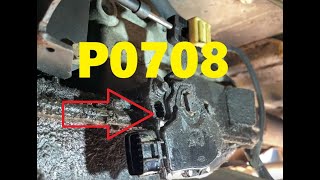
Typical fix: Replace the inhibitor switch located on top of the transmission. The new switch must be properly aligned in the Neutral position 🎬 See this walkthrough for replacing and aligning the inhibitor switch during installation.
Est. part cost: $45-$100 - Damaged Wiring or Connector ⚪ Low Probability The connector is located on top of the transmission, where it is exposed to engine bay heat and moisture, which can lead to corrosion or brittle wires over time.
How to confirm: Visually inspect the wiring harness and electrical connector going to the inhibitor switch. Look for any signs of corrosion, moisture, bent pins, or physical damage. TSB 17-AT-005 specifically calls for checking for bent pins as a primary step.
Typical fix: Repair the damaged section of wiring or clean/replace the connector.
Est. part cost: $5-$50
Rare But Worth Checking
- Misadjusted Shift Cable: If the cable connecting the gear shifter to the transmission is loose or out of adjustment, it can cause the range sensor's lever to be in an 'in-between' position, potentially confusing the computer. This is most likely to occur after other transmission work has been performed.
- Faulty Powertrain Control Module (PCM): → Shop Engine Control Module (ECM) This is extremely rare. The PCM should only be considered a possibility after the sensor and wiring have been definitively ruled out as the cause. A faulty PCM will typically cause multiple other trouble codes as well. TSB 17-AT-005 notes this as the final step if the code returns after all other repairs.
Diagnosis Steps
- Connect an OBD-II scanner and confirm P0708 is the primary code. Note any other codes 🎬 Watch: Understanding the causes and fixes for the P0708 code present (P0705, P0706, P0707 are common companions).
- Use the scanner's live data function to monitor the Transmission Range Sensor (may be listed as 'Inhibitor Switch' or 'Shift Lever Switch').
- With the engine on and foot on the brake, slowly move the gear selector through all positions (P, R, N, D).
- Observe the live data. The scanner should show only one gear selected at a time. If it shows multiple gears selected at once, or the reading is irrational, the inhibitor switch has failed and needs replacement.
- If the scan tool data is inconclusive, turn off the vehicle and disconnect the battery.
- Locate the inhibitor switch on top of the transmission. You will need to remove the engine cover, air intake assembly, and battery/battery tray for access.
- Disconnect the electrical connector from the switch. Inspect the connector and the switch's pins for corrosion, moisture, or damage. Clean and repair as needed.
- If no wiring issues are found, replace the inhibitor switch.
- CRITICAL: During installation, the new switch must be aligned. Place the transmission shift lever and the new switch in the Neutral position. Insert a 5mm bolt or alignment pin (SST 09480-A3800) through the hole on the switch body to lock it in place while you tighten the mounting bolts and lever nut.
- Reassemble all components, reconnect the battery, clear the trouble codes, and perform a test drive to confirm the fix.
Parts You'll Likely Need
- Transmission Inhibitor Switch (Neutral Safety Switch)
(OEM #42700-26000)— This sensor is the component that fails electronically, causing the conflicting gear position signals that trigger code P0708. Part number 42700-26700 is a newer, superseding part number that is also correct for this application and replaces the original.
Trusted brands: Hyundai (Genuine OE), Standard Motor Products, Dorman
OEM price range: $70-$120
Aftermarket price range: $45-$80
Related Codes That Often Appear With This One
- P0705 — P0705 indicates a general fault in the transmission range sensor circuit. P0708 is a more specific 'circuit high' fault. They are often caused by the same failing inhibitor switch, and Hyundai addresses them together in TSB 19-AT-024H.
- P0706 — Indicates a range/performance issue with the sensor. It can be triggered by the same underlying faults as P0708, such as a failing sensor that is sending erratic, but not necessarily 'high', signals.
- P0707 — This code for 'Circuit Low Input' is the opposite of P0708, but a sensor that is failing internally can potentially cause either code to appear at different times. All four codes (P0705-P0708) are addressed in the same TSB.
Technical Service Bulletins (TSBs) & Recalls
- TSB 19-AT-024H: This is the most current bulletin, superseding previous versions. It provides diagnostic procedures for DTCs P0705, P0706, P0707, & P0708 across a wide range of Hyundai vehicles, including the 2013-17 Elantra GT. It identifies symptoms like MIL on, 4th gear fail-safe, and intermittent no-start, and points to replacing the inhibitor switch as the primary repair. According to TSB Bulletin #19-AT-024H, P0708 specifically indicates a range switch short circuit or multiple inputs.
- TSB 17-AT-005: An earlier version of the bulletin with similar procedures, also confirming this is a long-standing known issue. It specifically instructs technicians to check for bent pins in the connector.
Platform-Specific Known Issues
- The failure of the inhibitor switch often begins as an intermittent problem. Owners report the symptoms (no-start, flickering gear display) may appear only in cold or damp weather initially, before progressing to a constant, hard failure.
Mechanic-Grade Diagnostic Values
- Voltage check at inhibitor switch connector — expected: With the key ON, the power supply pin (Pin 3, Pink wire) should show battery voltage. The four signal output pins (Pins 4, 7, 8, 9) should show battery voltage only when the corresponding gear is selected (e.g., Pin 9 for Drive).. Failure: A 'Circuit High' fault (P0708) is indicated if multiple signal pins show voltage simultaneously, or if voltage is present on a pin when its gear is not selected. No voltage at the power supply pin would indicate a fuse or wiring issue upstream.
- Ground voltage drop at rear combination lamp — expected: Less than 0.2V between the lamp wiring terminal and ground with the ignition and headlights on.. Failure: Voltage greater than 0.2V indicates a poor ground connection, which can cause various electrical issues. TSB 17-AT-005 recommends checking this as part of the diagnostic procedure.
Scan Tool Commands That Help
- Hyundai GDS (Global Diagnostic System): Current Data -> Select Lever Switch — This is the primary function for diagnosing P0708. It allows a technician to monitor the gear position signal being sent from the inhibitor switch to the PCM in real-time. A faulty switch will show irrational data, such as displaying 'D' and 'N' at the same time, confirming the internal failure before any parts are removed.
Wiring & Ground Locations
- Inhibitor Switch Connector — On top of the transmission, under the battery and battery tray.. This is the primary connection point to test for power, ground, and signal integrity from the switch. TSBs specifically mention checking for bent or corroded pins here.
- Rear Combination Lamp Ground — At the rear combination lamp assembly.. While not the primary cause, TSB 17-AT-005 includes a step to check this ground. A bad ground here can cause a variety of strange electrical issues on the vehicle, and it's a simple check to rule out a cascading electrical problem.
- GM01 — Left top dash panel.. This is a major interior ground point. While not directly linked to the inhibitor switch circuit in the provided diagrams, a faulty main ground can cause unpredictable behavior in various electronic modules, including the BCM and Instrument Cluster which display the gear position.
OEM Part Supersession History
42700-26000→42700-26500, then 42700-26700— The original part had a high failure rate. The superseding parts are updated designs for improved reliability.
Heads up: No known incompatibilities. The latest part, 42700-26700, is the correct direct replacement for all earlier versions for this vehicle.42700-3Bxxx series (e.g., 42700-3B100, 42700-3B500)→42700-26700— Part consolidation and design updates.
Heads up: The 42700-26700 part is listed as a replacement for several 3Bxxx series numbers, indicating it is the modern standard replacement for this application.
Model Year Variations Within This Range
- 2013-2017: No significant variations were found regarding the cause or fix for code P0708 within this model year range. The 2017 Elantra GT received a 2.0L engine with higher horsepower (173 hp vs. 148 hp in 2013), but it continued to use the same A6GF1 family 6-speed automatic transmission and the same failure-prone inhibitor switch.
Diagnostic Flowchart
Other Known Issues on This Vehicle
Issues unrelated to this code that are worth knowing about as an owner of this generation:
- Engine Ticking / Piston Slap (1.8L Nu Engine) 🔴 High — Common on 2011-2016 models with the 1.8L Nu engine, often starting as a cold-start tick that can progress to engine failure. (Ref: Subject of class-action lawsuit (Brown v. Hyundai) and subsequent warranty extension (10 years/120,000 miles) for the engine short block.)
- Steering Column Coupler Failure 🟠 Medium — Extremely common. Owners report a distinct 'clicking' or 'clunking' noise from the steering column when turning the wheel at low speeds or when stationary. (Ref: No official recall, but it is a widely known issue. The part is a small flexible rubber coupler (OEM part 56315-2K000-FFF) that deteriorates.)
- Excessive Oil Consumption 🔴 High — Widespread reports on models with 2.0L Nu GDI engines. Owners may experience rapid oil loss (e.g., 1-2 quarts per 1,000 miles) with no external leaks, potentially leading to engine damage if not monitored closely. (Ref: Subject of ongoing owner complaints and investigations. Hyundai has addressed some engine issues with warranty extensions and the KSDS (Knock Sensor Detection System) update, but oil consumption remains a prevalent concern.)
Used vs. New Parts: Buying Guide for This Vehicle
When a used part is the smart pick: A used inhibitor switch is NOT recommended for this repair. The part fails due to internal electronic breakdown and exposure to heat and moisture, not simple mechanical wear. A used part carries a very high risk of having the same intermittent fault or failing soon after installation.
Donor-vehicle mileage cap: roughly under 15000 miles for the part to have meaningful remaining life.
What to inspect on the donor part:
- If forced to use one, source it from the newest, lowest-mileage vehicle possible.
- Inspect the connector pins for any signs of green or white corrosion.
- Ensure the plastic housing is not cracked or showing signs of heat stress.
- Verify the manual lever moves smoothly without binding.
OEM-only on this vehicle (don't cheap out):
- Transmission Inhibitor Switch (Neutral Safety Switch)
Aftermarket brands forum-validated for this vehicle:
- While OEM (Genuine Hyundai) is strongly recommended due to the critical function and high failure rate of this part, brands like Standard Motor Products and Dorman are common aftermarket alternatives.
Brands owners have reported issues with on this vehicle:
- Avoid unbranded, no-name parts from online marketplaces, as their quality control is unknown and the risk of premature failure is high for this specific component.
Real Owner Stories
Aggregated from forums and TSBs cited above. Mileages and costs reflect what owners reported in those sources.
2013 Hyundai Elantra GT
Symptoms: The owner experienced an intermittent no-start condition and a flickering gear indicator on the dashboard, which triggered the P0708 code.
What fixed it: Replacing the inhibitor switch (part number 42700-26000) resolved all symptoms. The owner noted the repair was straightforward after removing the battery and battery tray for access.
Source hint: Hyundai-Forums thread titled '2013 Elantra GT P0708, intermittent no-start, flickering gear indicator'
Related OBD-II Codes
Frequently Asked Questions
My 2014 Elantra GT has a P0708 code and an intermittent no-start issue. Does Hyundai have a TSB for this?
Why does my Elantra GT only have trouble starting or show a flickering gear display when it's cold or damp?
I'm replacing the inhibitor switch myself. Is there anything special I need to know for the installation?
Along with the check engine light for P0708, I noticed my reverse lights stopped working. Are these issues related?
Can I save money by installing a used inhibitor switch from a junkyard Elantra GT?
Is this P0708 inhibitor switch problem common on other Hyundai or Kia models?
Helpful Videos


We Have This Part in Stock





The information in this article is provided for general reference and educational purposes only. Vehicle specifications, procedures, and part compatibility can vary by production date, trim level, and region. Always consult your vehicle's factory service manual and verify part numbers before purchasing or performing repairs. Safety-critical components such as airbags, seat belts, and braking systems should be installed by a qualified professional.
- Hyundai Elantra GT:
- 🧭 Diagnostic Flowchart
- 🎬 Helpful Videos
- 🛍️ Shop This Part
- What's Unique About the 2013-2017 Hyundai Elantra GT
- Symptoms You May Notice
- Most Likely Causes
- Rare But Worth Checking
- Diagnosis Steps
- Parts You'll Likely Need
- Related Codes That Often Appear With This One
- Technical Service Bulletins (TSBs) & Recalls
- Platform-Specific Known Issues
- Mechanic-Grade Diagnostic Values
- Scan Tool Commands That Help
- Wiring & Ground Locations
- OEM Part Supersession History
- Model Year Variations Within This Range
- Other Known Issues on This Vehicle
- Used vs. New Parts: Buying Guide for This Vehicle
- Real Owner Stories
- 2013 Hyundai Elantra GT
- Related OBD-II Codes
- Frequently Asked Questions
- 🎟️ Get 5% Off