

P0708 on 2010-2017 Hyundai Santa Fe: Transmission Range Sensor Failure Explained
On a 2010-2017 Hyundai Santa Fe, code P0708 almost always means the transmission range sensor (also called an inhibitor switch) has failed. This can cause a no-start, limp mode, or erratic gear display. The most common fix is replacing the sensor, which costs about $30-$120 for the part.
- P0708 on a 2010-2017 Santa Fe is a very common code pointing directly to a failed transmission range sensor (inhibitor switch).
- Symptoms are serious and include the transmission being stuck in one gear ('limp mode') and the engine failing to start, which can leave you stranded.
- The fix is almost always replacing the inhibitor switch, a part that costs between $30 and $120.
- While the part is affordable, the repair requires removing the battery and battery tray to access the switch, making it a moderately difficult DIY job.
- Always check the wiring and connector for damage before replacing the sensor to avoid a misdiagnosis.
What's Unique About the 2010-2017 Hyundai SANTA FE
The 2010-2017 Santa Fe spans two generations, the second (CM, 2010-2012) and third (DM/NC, 2013-2017), both of which use a 6-speed automatic transmission where this issue is prevalent. Hyundai has acknowledged the high failure rate of the inhibitor switch across many models from this era, including the Santa Fe, by issuing multiple Technical Service Bulletins (TSBs). 🎬 Watch: A quick overview of the inhibitor switch recall. TSB 19-AT-024H is the most comprehensive, covering a wide range of Hyundai vehicles and confirming that P0708 is a well-documented weak point for this platform, not a random or isolated fault.
Diagnostic Flowchart
Tap your situation to follow the diagnostic path that matches what you're seeing on this vehicle.
Generation note: This range covers the end of the second generation (CM, 2010-2012) and the beginning of the third generation (DM/NC, 2013-2017). Both generations use a 6-speed automatic transmission and suffer from the same inhibitor switch failure that causes code P0708. The repair procedure, including accessing the switch on top of the transmission and the need for alignment, is very similar for both.
Symptoms You May Notice
- Check Engine Light (Malfunction Indicator Light) is on.
- Transmission enters 'fail-safe' or 'limp' mode, often stuck in 3rd or 4th gear.
- Gear position indicator on the dashboard is blank, incorrect, or flashes.
- Vehicle will not crank or start intermittently.
- Vehicle may only start in Neutral, but not in Park.
- Harsh or erratic shifting.
- Reverse lights may not work.
- Slight engine stumble when shifting into Park after a long drive.
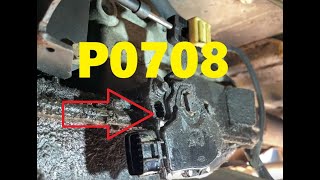
- Replacing the transmission itself. The symptoms of being stuck in gear can be alarming, but P0708 almost always points to an external sensor issue, not a catastrophic internal transmission failure. 🎬 Watch: Understanding the causes and fixes for the P0708 code.
- Replacing the starter. A no-start symptom caused by this code is because the computer doesn't see the car is in Park or Neutral and blocks the starter command as a safety measure.
- Replacing the battery. While a weak battery can cause various electrical issues, it will not typically isolate the fault to a single P0708 code.
Most Likely Causes
- Faulty Transmission Range Sensor (Inhibitor Switch) 🔴 High Probability → Shop Transmission Assembly This is a known high-failure part across many Hyundai models of this era, as confirmed by multiple TSBs like 19-AT-024H. The switch is mounted externally on the transmission, making it vulnerable to heat, vibration, and water intrusion from rain or engine washing, which can cause internal components to short-circuit.
How to confirm: Use a diagnostic scan tool to monitor the live data from the transmission range sensor while moving the gear shifter. If the display shows multiple gears selected at once, an invalid position, or doesn't match the shifter position, the sensor is bad.
Typical fix: Replace the inhibitor switch. This involves removing the airbox, battery, and battery tray to access the switch on top of the transmission. The new switch must be correctly aligned by inserting a 5mm pin or bolt into the alignment hole while the transmission is in Neutral before tightening the lever nut.
Est. part cost: $30-$120 - Damaged Wiring or Connector 🟡 Medium Probability The wiring harness connector sits on top of the transmission and is exposed to engine bay heat and moisture, which can lead to corrosion or damage over time. Wires can become brittle and break, or pins can corrode, causing high resistance or short circuits.
How to confirm: Visually inspect the inhibitor switch connector and nearby wiring for any signs of corrosion (green or white powder), bent pins, chafed wires, or loose connections. Perform a continuity and voltage drop test on the wiring harness with a multimeter, comparing the results to the specifications in the factory service manual.
Typical fix: Clean the connector terminals with an electrical contact cleaner and apply dielectric grease to prevent future moisture intrusion. If the wiring or connector is damaged, it will need to be repaired or replaced.
Est. part cost: $5-$50 - Misadjusted Inhibitor Switch or Shift Cable ⚪ Low Probability → Shop Transmission Park Inhibitor Switch This can happen after previous transmission work if the switch was not properly aligned during reinstallation, or if the shift cable has stretched or become loose.
How to confirm: Check if the vehicle starts in Neutral but not Park, or vice-versa. The alignment can be checked by ensuring the switch's position corresponds to the neutral gear selection before tightening its mounting bolts. The manual lever on the transmission should align with the 'N' position.
Typical fix: Loosen the switch's mounting bolts or the shift cable nut. Align the switch correctly with the transmission in the Neutral position, often using a 5mm pin or bolt as a guide, and retighten the bolts and nut to the manufacturer's torque specification.
Est. part cost: $0
Rare But Worth Checking
- Faulty Powertrain Control Module (PCM) or Transmission Control Module (TCM): → Shop Engine Control Module (ECM) This is very rare. The PCM/TCM should only be considered after the sensor, wiring, and adjustment have been thoroughly checked and ruled out. TSB 19-AT-024H and its predecessors list this as the final diagnostic step if the code persists after all other repairs.
Diagnosis Steps
- Connect an OBD-II scanner and confirm P0708 is the primary code. Note any other transmission-related codes (P0705, P0706, P0707 are common).
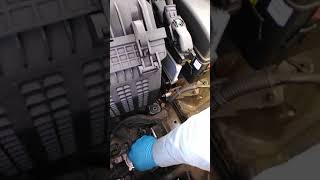
- Using a scan tool with live data capability (like Hyundai GDS), monitor the Transmission Range Sensor parameter. Shift the lever through P, R, N, D and observe the reading. If the reading is erratic, shows multiple gears at once, or doesn't match the shifter position, the sensor is likely faulty. 🎬 See this walkthrough on how to test and replace the switch.
- Turn off the vehicle. Locate the inhibitor switch on top of the transmission. You will need to remove the engine air intake duct, battery, and battery tray for access.
- Disconnect the inhibitor switch connector. Inspect the pins on both the switch and the harness side for corrosion, moisture, or damage. Clean and apply dielectric grease if necessary.
- If the connector looks good, test the switch itself. Using a multimeter, check for ~12V on the power supply pin (Pin 3). Then, check the signal pins for each gear (e.g., Pin 8 for Park, 4 for Reverse, 7 for Neutral, 9 for Drive). Only the pin for the selected gear should show ~12V; all others should be 0V. If multiple pins show voltage, the switch is shorted and has failed.
- If a new switch is installed, ensure it is properly aligned. Place the shifter and the transmission's manual shaft in the Neutral position. Insert a 5mm bolt or alignment pin through the alignment hole on the new switch and lever, then tighten the switch's mounting bolts (to 7.2-8.7 lb-ft) and lever nut to specification.
- Reassemble all components (battery tray, battery, air cleaner).
- Clear the trouble codes using a scan tool like the GDS, as disconnecting the battery may not clear them. Perform a test drive, shifting through all gears to confirm the repair. Check for proper reverse light operation and starting in both Park and Neutral.
Parts You'll Likely Need
- Transmission Range Sensor / Inhibitor Switch
(OEM #42700-3B700)— This is the component that fails internally, causing the P0708 code and its associated symptoms. It's a widely acknowledged failure point on this platform, used across a vast number of Hyundai and Kia vehicles.
Trusted brands: Hyundai (Genuine OEM), Dorman, Standard Motor Products (SMP), SKP
OEM price range: $80-$120
Aftermarket price range: $30-$75
Related Codes That Often Appear With This One
- P0705 — This code indicates a general circuit malfunction for the range sensor. P0708 is a more specific version of this fault, and they are often listed together in TSBs.
- P0706 — This code indicates a range/performance issue with the sensor, often appearing alongside P0708 as the sensor begins to fail and sends erratic signals.
- P0707 — This code indicates a low input (open circuit), which can happen intermittently as the same sensor fails, causing both high (P0708) and low input faults.
Technical Service Bulletins (TSBs) & Recalls
- 19-AT-024H: Supersedes earlier TSBs, addresses P0705-P0708, and lists symptoms like MIL on and 4th gear fail-safe. It provides a detailed diagnostic flow chart for a wide range of Hyundai models including the Santa Fe.
- 17-AT-005: Predecessor to 19-AT-024H, also identifying the faulty range switch as the cause for P0708 and related codes.
- 15-AT-001: An early bulletin covering intermittent no-start conditions related to the range sensor switch on 2010 and 2013 Santa Fe models, among others.
- 12-AT-022-1: An older TSB from 2012 that also details the diagnostic procedure for P0705-P0708 on the Santa Fe (CM), confirming this has been a long-standing documented issue.
Platform-Specific Known Issues
- Hyundai TSB 19-AT-024H: Hyundai has issued multiple Technical Service Bulletins related to inhibitor switch failures. The most current is 19-AT-024H, which supersedes earlier versions and explicitly lists P0708, symptoms like '4th gear fail-safe' and 'Intermittent no engine crank', and applies to the Santa Fe (CM/AN/NC) models.
- Owner Repair Story: Intermittent No-Start: On Hyundai-Forums, multiple owners of 2010-2012 Santa Fe models describe scenarios where the vehicle would intermittently fail to start in Park. After several attempts, or by shifting to Neutral, the vehicle would start. In nearly all cases, replacing the inhibitor switch (part 42700-3B700) resolved the issue permanently.
- Kia Service Action SA317A: The failure is common enough that a service action (SA317A) was issued for the related Kia Sorento and other 2017 Kia models to replace the inhibitor switch.
Mechanic-Grade Diagnostic Values
- Inhibitor Switch Signal Voltage (at connector) — expected: Approximately 12V on the single pin corresponding to the selected gear, and 0V on all other gear signal pins.. Failure: Voltage is present on multiple gear signal pins simultaneously, which triggers the P0708 code.
- Inhibitor Switch Power Supply Voltage (at connector) — expected: Approximately 12V (Battery Voltage) at Pin 3.. Failure: No voltage at the power supply pin indicates a problem with the fuse (TCU, TCU2) or wiring upstream of the sensor.
- Rear Combination Lamp Ground Voltage Drop — expected: Less than 0.2 Volts.. Failure: Voltage greater than 0.2V indicates a poor ground connection that can cause electrical feedback and contribute to the P0708 code. The ground point requires cleaning and tightening.
- Inhibitor Switch Continuity Test (bench test) — expected: Near 0 Ohms of resistance between the power pin and the specific output pin for each gear position as the switch is manually actuated.. Failure: Continuity exists between the power pin and multiple output pins at once, or there is no continuity (Open Line) for a selected gear.
Scan Tool Commands That Help
- Hyundai GDS (Global Diagnostic System): Live Data / Current Data: 'Shift Lever Switch' — This is the primary diagnostic step to confirm the fault. While an assistant moves the gear selector through P-R-N-D, the technician watches the live data stream. If the display on the GDS is erratic, shows an invalid position, or does not match the physical lever, it strongly indicates a faulty sensor or wiring.
- Hyundai GDS (Global Diagnostic System): DTCs > Erase — After completing the repair, Hyundai service information states that diagnostic trouble codes must be cleared using the GDS. Unlike some codes, they may not be cleared simply by disconnecting the battery.
Wiring & Ground Locations
- Inhibitor Switch Connector — On top of the transmission, located underneath the battery and battery tray assembly.. This 10-pin connector is the primary interface for the sensor. It is exposed to heat and moisture, making it a common point of failure due to corrosion or damaged pins, which can directly cause a P0708 code.
- Inhibitor Switch Connector Pinout (10-Pin) — Pin 3: Power (12V), Pin 8: Park Signal, Pin 4: Reverse Signal, Pin 7: Neutral Signal, Pin 9: Drive Signal.. Knowing the specific pin functions allows a technician to perform targeted voltage tests with a multimeter to confirm if the switch is internally shorted (sending voltage on multiple signal pins) or if power is missing.
- Fuses: TCU, TCU2 — Located in the engine compartment junction box (fuse box).. These fuses supply power to the transmission control circuits, including the inhibitor switch. While a blown fuse typically causes a 'no signal' or 'low input' code (P0707), an intermittent connection here could contribute to erratic signals.
- Rear Combination Lamp Ground — A ground point for the rear lighting assembly.. Hyundai TSB 17-AT-005 specifically instructs technicians to check this ground. A poor connection here can create electrical back-feeding in shared circuits, potentially causing the TCM to see anomalous high voltage from the inhibitor switch.
Real Owner Repair Stories
- Reddit user report (Hyundai Sonata (platform-mate with shared issue)) — Check engine light with code P0708 appeared.
✅ What actually fixed it The code appeared immediately after taking the car through a high-pressure car wash. This strongly suggests that water intrusion into the externally-mounted inhibitor switch or its connector caused the internal short-circuit, leading to the P0708 code.
OEM Part Supersession History
42700-3B100, 42700-3B600→42700-3B700— Part revision to improve durability and prevent premature failure.
Heads up: 42700-3B700 is the most current and widely accepted replacement for the 2010-2017 Santa Fe. Some catalogs may also show 42700-26700 as a successor, so always verify the part number with the vehicle's VIN before purchasing.
Helpful Videos

We Have This Part in Stock


The information in this article is provided for general reference and educational purposes only. Vehicle specifications, procedures, and part compatibility can vary by production date, trim level, and region. Always consult your vehicle's factory service manual and verify part numbers before purchasing or performing repairs. Safety-critical components such as airbags, seat belts, and braking systems should be installed by a qualified professional.
- Hyundai SANTA FE:
- 🧭 Diagnostic Flowchart
- 🎬 Helpful Videos
- 🛍️ Shop This Part
- What's Unique About the 2010-2017 Hyundai SANTA FE
- Symptoms You May Notice
- Most Likely Causes
- Rare But Worth Checking
- Diagnosis Steps
- Parts You'll Likely Need
- Related Codes That Often Appear With This One
- Technical Service Bulletins (TSBs) & Recalls
- Platform-Specific Known Issues
- Mechanic-Grade Diagnostic Values
- Scan Tool Commands That Help
- Wiring & Ground Locations
- Real Owner Repair Stories
- OEM Part Supersession History
- 🎟️ Get 5% Off