

P0708 on 2011-2018 Hyundai Sonata: Transmission Range Sensor Circuit High Input Fixes
On a 2011-2018 Sonata, code P0708 almost always points to a failed transmission range sensor, also known as an inhibitor switch. This is a widespread, well-documented issue across many Hyundai/Kia models, backed by TSB 19-AT-024H. Replacing the sensor (Part No. 42700-3B700) is the definitive fix, with parts costing between $40 and $200.
- P0708 on a 2011-2018 Sonata is a very common code that reliably points to a faulty transmission range sensor (inhibitor switch).
- Key symptoms are serious and affect drivability, including the transmission getting stuck in one gear and the possibility of the engine not starting.
- The fix is almost always replacing the sensor itself (OEM Part #42700-3B700), which is located on the outside of the transmission.
- Proper alignment of the new sensor is critical for the repair to be successful; the transmission must be in Neutral and a 5mm pin/bolt used for alignment.
- This is a known issue across many Hyundai and Kia vehicles that use the 6-speed automatic transmission, not just the Sonata.
What's Unique About the 2011-2018 Hyundai SONATA
This is a very common and well-documented issue on the Hyundai Sonata, particularly the 2011-2014 (YF) generation. The inhibitor switch (transmission range sensor) is a frequent failure point, leading Hyundai to release several Technical Service Bulletins (TSBs) that address this specific code and its related symptoms across a wide range of their vehicles, including the Sonata. This indicates a recognized pattern of failure for this component rather than a random fault. Owner forums are filled with accounts of this specific failure, confirming its prevalence.
Diagnostic Flowchart
Tap your situation to follow the diagnostic path that matches what you're seeing on this vehicle.
Generation note: This range covers the YF (2011-2014) and LF (2015-2018) Sonata generations. The inhibitor switch failure is especially common and well-documented on the YF generation, but the part can also fail on LF models as they use a similar transmission design and the same part. TSB 19-AT-024H covers Sonatas up to the 2019 model year.
Symptoms You May Notice
- Check Engine Light is on
- Transmission is stuck in a single gear (fail-safe or 'limp' mode).
- Gear indicator on the dashboard is blank, incorrect, or flickering.
- Vehicle will not start, or only starts in Neutral.
- Harsh or delayed shifting.
- Reduced engine power.
- Backup camera does not activate when shifting into Reverse.
- Replacing the entire transmission. This code is almost always caused by the inexpensive, externally-mounted range sensor, not an internal transmission failure.
Most Likely Causes
- Failed Transmission Range Sensor (Inhibitor Switch) 🔴 High Probability → Shop Transmission Assembly This component is a known high-failure item on this platform, as evidenced by multiple manufacturer TSBs and a high volume of owner complaints on forums. The sensor is exposed to the elements on the outside of the transmission, potentially leading to water intrusion or internal corrosion.
How to confirm: Use a scan tool to monitor the live data from the sensor while shifting through the gears. If the reading is stuck, erratic, or doesn't match the gear selector's position, the sensor is likely bad. A Reddit user noted that their issue occurred after going through a car wash, suggesting water intrusion can trigger the failure.
Typical fix: Replace the transmission range sensor. This part is located on the exterior of the transmission case, where the shift linkage connects. The OEM part number is 42700-3B700.
Est. part cost: $40-$200 - Damaged Wiring or Connector 🟡 Medium Probability The wiring harness to the sensor is located in the engine bay and can be exposed to heat, moisture, and vibration, leading to corrosion or damage over time. A loose or corroded connector can mimic a failed sensor.
How to confirm: Visually inspect the wiring harness and connector for signs of corrosion, breaks, or loose pins. Perform a continuity test with a multimeter to check for a short to power. One owner on Reddit found a wire had simply become unclipped and tucked under the battery.
Typical fix: Repair the damaged section of the wiring harness or clean/replace the connector.
Est. part cost: $5-$50 - Misadjusted Shift Cable or Sensor ⚪ Low Probability While less common than outright failure, the shift cable can stretch or the sensor's alignment can be knocked off, causing it to send incorrect signals. This is more likely after other transmission work has been performed.
How to confirm: Check the alignment of the sensor; Hyundai TSBs specify inserting a 5mm bolt or pin into the alignment hole when the transmission is in Neutral to verify and set the position. If it cannot be inserted, adjustment is needed.
Typical fix: Loosen the sensor mounting bolts and rotate it until it is properly aligned, then retighten. Adjust the shift cable linkage.
Est. part cost: $0
Rare But Worth Checking
- Faulty Powertrain/Transmission Control Module (PCM/TCM): → Shop Transmission Assembly This is extremely rare. The sensor and wiring should be exhaustively tested and ruled out before a control module is condemned. TSBs instruct to replace the PCM/TCM only after all other steps, including wiring repair, have failed to resolve the issue.
Diagnosis Steps
- Connect an OBD-II scanner and confirm P0708 is present. Note any other codes like P0705, P0706, or P0707.
- Using the scanner's live data function, monitor the Transmission Range Sensor PID. Shift the lever through P, R, N, and D, and verify that the scanner displays the correct position for each gear.
- If the data is incorrect or stuck, locate the sensor on the top/front of the transmission, under the air intake and battery tray.
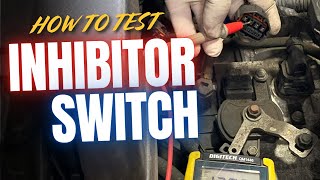
- Visually inspect its electrical connector and wiring for corrosion, damage, or loose connections. A Reddit user reported their issue was simply a disconnected wire. 🎬 Watch: Check these common wiring issues before replacing the switch.
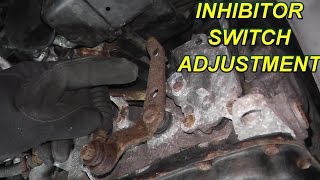
- If wiring appears okay, check the sensor's alignment. Place the transmission in Neutral and see if a 5mm bolt or pin can be inserted into the alignment hole on the sensor and its housing. If not, it requires adjustment. 🎬 See how to properly align and adjust the inhibitor switch.
- If the sensor is aligned and wiring is good, test the sensor's output signal directly. Back-probe the signal wire at the connector with a multimeter. A constant high voltage regardless of gear position points to a failed sensor.
- If the sensor itself tests good, the final step is to check the wiring harness for a short-to-power between the sensor and the control module. If the wiring is also good, the fault may lie with the TCM, though this is highly unlikely.
Parts You'll Likely Need
- Transmission Range Sensor / Inhibitor Switch
(OEM #42700-3B700)— This is the primary cause of code P0708 on this vehicle, as confirmed by owner reports and Hyundai's own service bulletins. This part is used across a wide variety of Hyundai and Kia vehicles. Note: Some parts catalogs show this number is superseded by 42700-26700.
Trusted brands: Genuine Hyundai, Dorman, Standard Motor Products (SMP)
OEM price range: $100-$200
Aftermarket price range: $40-$80
Related Codes That Often Appear With This One
- P0705 — Indicates a general fault in the transmission range sensor circuit.
- P0706 — Indicates a range/performance problem with the sensor, often due to misalignment.
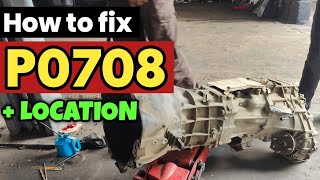
- P0707 — Indicates the sensor circuit is open (low voltage), the opposite of P0708. 🎬 Watch: Understanding the P0708 code and its common symptoms.
Technical Service Bulletins (TSBs) & Recalls
- 19-AT-024H: Supersedes previous TSBs, lists P0708 ('Range switch - short circuit or multiple inputs') and symptoms like '4th gear fail-safe' and 'No gear indication'. Crucially, it applies to a very wide range of Hyundai vehicles from 2011-2020, including the Sonata, Elantra, Santa Fe, Tucson, and Azera, confirming a fleet-wide issue with this part.
- 17-AT-005: An earlier version of the TSB which also details the diagnostic procedure, including checking wiring, sensor alignment with a 5mm pin, and finally replacing the sensor.
- 5NP-V3F8T-09: An even earlier TSB also defining P0708 and its symptoms for the 2011 Sonata, confirming the long-standing nature of this issue.
Platform-Specific Known Issues
- Hyundai has issued multiple Technical Service Bulletins (e.g., 19-AT-024H, 17-AT-005) that directly address P0708 and related codes, outlining the symptoms and replacement procedure for the inhibitor switch on the Sonata and many other models.
- A Reddit thread discusses a user whose P0708 code appeared after taking their car through a high-pressure car wash, suggesting water intrusion into the externally-mounted sensor can be a direct cause of failure.
Mechanic-Grade Diagnostic Values
- Inhibitor Switch Signal Voltage (at connector, back-probed) — expected: Approximately 12V (battery voltage) on the specific signal wire for the selected gear (P, R, N, D) and 0V on the others.. Failure: Voltage that is consistently high on multiple signal wires at once, or voltage that does not change when the gear is shifted.
- Inhibitor Switch Continuity Test — expected: Continuity should exist between specific pairs of terminals on the switch depending on the gear selected. For example, on some models, terminals 3 and 4 have continuity in Park, while terminals 3 and 5 have continuity in Reverse.. Failure: No continuity in the specified gear position, or continuity in an incorrect position, indicates a failed switch.
- Rear Combination Lamp Ground Voltage Drop — expected: Less than 0.2V.. Failure: Voltage greater than 0.2V indicates a poor ground, which can cause electrical issues. The TSB suggests cleaning the terminal and bolt threads and retightening.
Scan Tool Commands That Help
- Hyundai GDS (Global Diagnostic System): Current Data / Data Stream — Use this function to monitor the 'Current Gear Shift Lever Switch' status in real-time. As you move the shifter, the GDS should display the corresponding position (P, R, N, D). This is the primary method to confirm if the TCM is receiving the correct signal from the inhibitor switch.
Wiring & Ground Locations
- Inhibitor Switch Connector — On top of the transmission, underneath the battery and battery tray. Access requires removing the air duct, air cleaner, and battery.. This is the main connection point for the sensor. It is susceptible to corrosion and damage from the elements or fluid leaks (e.g., coolant), which can cause the high input signal of P0708.
- Rear Combination Lamp Ground — In the trunk area, near the tail light assemblies.. TSB 17-AT-005 specifically instructs technicians to check the tightness and voltage drop of this ground as part of the diagnostic procedure for P070x codes, indicating it can be a source of electrical noise or voltage issues that affect the transmission control system.
Real Owner Repair Stories
- Reddit r/MechanicAdvice (2011 Hyundai Sonata, 134k miles) — P0706 code (related to P0708), gear indicator on the dash went blank.
❌ Tried (didn't work) Initial speculation about internal transmission slipping.
✅ What actually fixed it A user identified the issue as the ATM Inhibitor Switch (P/N starting with 42700) located on top of the transmission. The fix was to replace the switch and, critically, to align it properly using the alignment hole on the base of the part and the shift lever before tightening the final nut.
OEM Part Supersession History
42700-3B700→42700-26700— Part consolidation and potential design revision by Hyundai/Kia.
Heads up: Part 42700-26700 is listed as a direct replacement for 42700-3B700 and several other numbers (42700-26000, 42700-26500, 42700-3B100, etc.). No incompatibility issues are noted; it is a cross-compatible part for a wide range of Hyundai and Kia vehicles.
Helpful Videos
We Have This Part in Stock




The information in this article is provided for general reference and educational purposes only. Vehicle specifications, procedures, and part compatibility can vary by production date, trim level, and region. Always consult your vehicle's factory service manual and verify part numbers before purchasing or performing repairs. Safety-critical components such as airbags, seat belts, and braking systems should be installed by a qualified professional.
- Hyundai SONATA:
- 🧭 Diagnostic Flowchart
- 🎬 Helpful Videos
- 🛍️ Shop This Part
- What's Unique About the 2011-2018 Hyundai SONATA
- Symptoms You May Notice
- Most Likely Causes
- Rare But Worth Checking
- Diagnosis Steps
- Parts You'll Likely Need
- Related Codes That Often Appear With This One
- Technical Service Bulletins (TSBs) & Recalls
- Platform-Specific Known Issues
- Mechanic-Grade Diagnostic Values
- Scan Tool Commands That Help
- Wiring & Ground Locations
- Real Owner Repair Stories
- OEM Part Supersession History
- 🎟️ Get 5% Off