

P0708 on 2016-2021 Hyundai Tucson 2.0L: Transmission Range Sensor Failure Causes and Fixes
On a 2016-2021 Tucson, P0708 is almost always caused by a faulty Transmission Range Sensor, also known as an Inhibitor Switch. This can cause a no-start condition or lock the transmission in a single gear. The fix is replacing the sensor, which costs about $45-$125 for the part. The updated OEM part number is often cited as 42700-26700.
- P0708 on your Tucson means the transmission range sensor (inhibitor switch) is failing.
- Symptoms are serious and include the transmission getting stuck in one gear or the engine refusing to start.
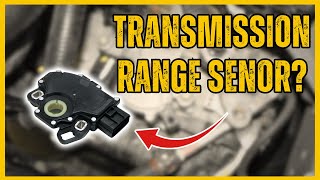
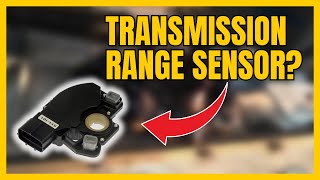
- The most reliable fix is to replace the inhibitor switch, which is located on top of the transmission.
- This is a known issue on Hyundai vehicles, and while DIY is possible, it requires removing the battery and airbox for access.
- Do not mistake this for a major transmission failure; it's a common and replaceable external sensor.
What's Unique About the 2016-2021 Hyundai Tucson
For this generation of Hyundai Tucson, the P0708 code is a very well-documented issue. The root cause is almost always the failure of the transmission range sensor (inhibitor switch) itself, which is mounted externally on top of the transmission. While some vehicles have this sensor inside the transmission, the Tucson's external placement makes it accessible for replacement without major transmission disassembly, though it is located under the battery and airbox. Hyundai has issued multiple technical service bulletins that cover this exact code and its symptoms, confirming it as a known pattern failure across many of its models.
Generation note: The 2016-2021 year range covers the third generation (TL). The P0708 issue related to the inhibitor switch is extremely common on these models equipped with the 6-speed automatic transmission. The same issue and part are shared with the previous (LM) generation and other Hyundai/Kia models from the same era.
Symptoms You May Notice
- Check Engine Light is on
- Transmission is stuck in a single gear (fail-safe or 'limp' mode), often 3rd or 4th gear.
- Vehicle will not start, or will only start when the shifter is in Neutral.
- Gear position indicator on the dashboard is blank, incorrect, or all positions are lit up simultaneously.
- Harsh, erratic, or delayed shifting.
- Reverse lights do not illuminate when in Reverse.
- Intermittent starting issues, especially in cold or damp weather.
- Replacing the entire transmission. This code points to a specific, external sensor, not an internal transmission failure.
- Replacing the TCM/PCM. This is almost never the cause and is a very expensive and unnecessary repair for a P0708 code.
- Replacing the starter motor, when the no-start is caused by the inhibitor switch not sending the 'Park' or 'Neutral' signal.
Most Likely Causes
- Faulty Transmission Range Sensor (Inhibitor Switch) 🔴 High Probability → Shop Transmission Assembly This is a widely documented failure item on many Hyundai and Kia models of this era using the 6-speed automatic transmission. The switch is an electromechanical part exposed to heat and vibration, and its internal contacts wear out or develop short circuits, causing the 'high input' reading where multiple gear signals are sent at once.
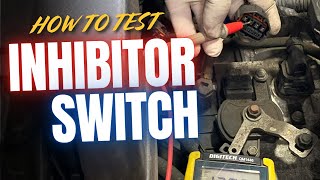
How to confirm: Use a scan tool to monitor live data from the Transmission Range Sensor while moving the shifter. If the display shows multiple gears selected at once, or an invalid/blank position, the sensor is bad. You can also test the sensor's pins with a multimeter for correct voltage/resistance at each gear position, but live data is faster and more definitive.
Typical fix: Replace the Transmission Range Sensor. This involves removing the battery, battery tray, and air intake housing to access the sensor on top of the transmission. The new sensor must be correctly aligned in the Neutral position before tightening.
Est. part cost: $45-$125 - Damaged Wiring or Connector ⚪ Low Probability The wiring harness connector sits on top of the transmission and is exposed to engine bay heat, vibration, and moisture, which can lead to corrosion (green/white powder) or damage over time.
How to confirm: Visually inspect the wiring harness and the connector going to the inhibitor switch. Look for green/white corrosion on the pins, melted plastic, or any frayed or broken wires. Wiggle the harness while monitoring live data to see if the signal changes.
Typical fix: Clean the connector terminals with an electrical contact cleaner. If the connector or wiring is damaged, it will need to be repaired or replaced. Ensure the connection is secure and free of moisture. 🎬 Watch: Crucial checks before replacing the switch
Est. part cost: $5-$50 - Misadjusted Shift Cable or Sensor ⚪ Low Probability This is uncommon unless the sensor has been recently replaced incorrectly or the shift cable has been disturbed during other service.
How to confirm: Check if the gear indicated on the dashboard matches the physical position of the shifter. If the sensor was recently replaced, verify it was properly aligned. An alignment procedure typically involves placing the transmission in Neutral and inserting a 5mm pin or bolt through the alignment hole on the switch.
Typical fix: Loosen the sensor mounting bolts or the shift cable adjustment nut and adjust the position until the sensor's output correctly matches the gear selector's position.
Est. part cost: $0
Rare But Worth Checking
- Faulty Transmission Control Module (TCM) or Powertrain Control Module (PCM): → Shop Engine Control Module (ECM) This is extremely rare. Before condemning the control module, all other possibilities (sensor, wiring, adjustment) must be exhaustively ruled out. A module failure would typically be accompanied by other communication codes or more widespread issues.
Diagnosis Steps
- Connect an OBD-II scanner and confirm the P0708 code is present. Note any other codes and review freeze-frame data.
- Using a scan tool with live data, monitor the 'Transmission Range' or 'Inhibitor Switch' parameter. Move the gear shifter slowly through all positions (P, R, N, D).
- Observe the live data. If the display shows invalid data, jumps between gears, or shows multiple gears selected at once (e.g., 'P' and 'D'), the sensor is faulty and needs replacement.
- If the live data appears normal, turn off the vehicle and disconnect the battery.
- Remove the air filter housing, battery, and battery tray to gain access to the inhibitor switch on top of the transmission.
- Thoroughly inspect the electrical connector and wiring harness for any signs of corrosion, moisture, or physical damage.
- If the wiring is okay and the live data was faulty, replace the Transmission Range Sensor (Inhibitor Switch).
- Ensure the new sensor is properly aligned. Place the manual control lever on the transmission in the 'Neutral' position. Align the hole on the new sensor with the hole on the lever and insert a 5mm bolt or alignment pin to hold it in place 🎬 Watch: How to align and install the new sensor while tightening the mounting bolts.
- Reassemble all components, clear the trouble codes, and perform a test drive, shifting through all gears to confirm the fix and that the dash indicator is correct.
Parts You'll Likely Need
- Transmission Range Sensor / Inhibitor Switch
(OEM #42700-26700)— This sensor is the direct cause of the P0708 code in the vast majority of cases on this vehicle. Its internal contacts fail, sending multiple or incorrect signals to the TCM. Part number 42700-26700 is the updated OEM part that supersedes 42700-26500.
Trusted brands: Hyundai OE, Kia OE (Genuine), Dorman, Standard Motor Products (SMP), Walker Products
OEM price range: $80-$140
Aftermarket price range: $45-$80
Related Codes That Often Appear With This One
- P0707 — P0707 is 'Transmission Range Sensor Circuit Low Input'. These codes are opposites but point to the same component. Seeing them together or intermittently could indicate a severe internal failure of the sensor or a major wiring issue with intermittent shorts.
- P0705 — P0705 is 'Transmission Range Sensor Circuit Malfunction (PRNDL Input)'. This is a more general fault for the same sensor, and it often appears alongside P0708 if the sensor is failing erratically. Hyundai TSBs group these codes together.
Technical Service Bulletins (TSBs) & Recalls
- 19-AT-024H: Supersedes earlier TSBs and provides comprehensive diagnostic and repair procedures for P0708, listing symptoms like 4th gear fail-safe and no-start. It specifically defines P0708 as a "Range switch - short circuit or multiple inputs" fault.
- 17-AT-005: An earlier, comprehensive TSB that also details the inspection, replacement, and critical alignment steps for the inhibitor switch across many Hyundai models.
- Bulletin #5NP-V3F8T-09: A manufacturer bulletin that confirms P0708 is associated with the Malfunction Indicator Light (MIL) being illuminated and the transmission entering a 4th gear fail-safe mode.
Platform-Specific Known Issues
- Hyundai issued Technical Service Bulletin 19-AT-024H, which supersedes 17-AT-005. It addresses diagnostic procedures for codes P0705-P0708. It acknowledges symptoms like the MIL being on, the transmission entering a 4th gear fail-safe mode, and intermittent no-start conditions, confirming this is a known issue.
Mechanic-Grade Diagnostic Values
- Inhibitor Switch Power Supply Voltage — expected: Battery Voltage (Approx. 11-14V). Failure: If no voltage is present at the power supply pin (often Pin 3), there is an issue with the wiring or a fuse upstream from the sensor.
- Inhibitor Switch Signal Voltage (Per Gear) — expected: When a single gear is selected, its corresponding signal pin should read Battery Voltage (approx. 12V) while all other signal pins read 0V.. Failure: If multiple signal pins show voltage simultaneously, or if the correct pin does not show voltage when a gear is selected, the switch is internally faulty. This is the direct cause of a P0708 'High Input' code.
Scan Tool Commands That Help
- Hyundai GDS (Global Diagnostic System): Live Data / Current Data (Transmission) — This is the primary diagnostic step. Use it to monitor the inhibitor switch's output as you move the gear selector. A faulty switch will show multiple gears selected at once or an illogical pattern, confirming the failure without manual electrical testing.
- Hyundai GDS (Global Diagnostic System): Vehicle S/W Management > Resetting adaptive values — After replacing a major transmission component like the inhibitor switch, it is good practice to reset the TCM's adaptive learning values to ensure the system starts fresh with the new component's signaling.
- Hyundai GDS (Global Diagnostic System): DTC Analysis > Fault Code Searching — To perform a full system scan and to clear the code from the TCM after the repair is complete. Some generic scanners may not fully clear codes from specific modules like the TCM.
Wiring & Ground Locations
- Inhibitor Switch Connector — On top of the transmission, connected directly to the inhibitor switch. It is located under the battery and airbox assembly.. This connector is a common point of failure due to exposure to heat, vibration, and moisture. Corrosion (green/white powder) or damage to the pins or wires at this connector can mimic a failed sensor, causing a P0708 code.
- Engine Ground Cable (Part #91860-D3520) — This is a specific ground wire assembly for the engine bay in the 2016-2021 2.0L Tucson. It typically connects the engine block to the chassis.. A poor engine or transmission ground can cause unstable voltages and electrical noise throughout the system. While not a direct cause, verifying the main grounds are clean and tight is a crucial step in diagnosing any complex electrical DTC, including P0708.
Real Owner Repair Stories
- Reddit user comment summary (2011-2018 Hyundai Sonata (similar platform and issue)) — P0708 code, likely with limp mode or no-start.
❌ Tried (didn't work) Initial diagnosis pointed towards replacing the sensor.
✅ What actually fixed it Before replacing the sensor, the owner found a wire had simply become unclipped and was tucked under the battery tray area. Re-securing the wire and its connector resolved the fault without needing to replace any parts.
OEM Part Supersession History
42700-26500, 42700-26000→42700-26700— Part revision and consolidation by the manufacturer.
Heads up: CRITICAL: This part number series is primarily for the previous generation (LM, 2010-2015) Tucson. While some aftermarket catalogs may list it for 2016+ models, it is often incorrect for the TL generation.Various→42700-3B700, 42700-23000, etc.— The 2016+ (TL) generation Tucson uses different transmissions than the prior generation.
Heads up: The inhibitor switch for a 2016-2021 Tucson is NOT interchangeable with the one from the 2010-2015 model. You must verify the correct part number for your specific vehicle's transmission (e.g., 6-speed A6MF1). Using the VIN to order the part is highly recommended to avoid getting the wrong switch.
Model Year Variations Within This Range
- 2016-2021: The primary variation is not by year but by the specific part number for the inhibitor switch, which differs from the previous generation despite similar symptoms. The 2019 facelift of the Tucson dropped the 1.6L Turbo engine option but retained the 2.0L with the 6-speed automatic, so the P0708 fault pattern on the 2.0L remains consistent across the entire 2016-2021 range.
Diagnostic Flowchart
Other Known Issues on This Vehicle
Issues unrelated to this code that are worth knowing about as an owner of this generation:
- Engine Failure / Connecting Rod Bearing Wear 🔴 High — Widespread issue affecting 2.0L and 2.4L 'Theta II' GDI engines, particularly the 2017 model year. Can occur at various mileages, often under 100k miles. (Ref: Recall 209 (NHTSA 21V727000) was issued for 2017 Tucsons. It involves an engine inspection and installation of a Knock Sensor Detection System (KSDS). Engine replacement may be required if damage is found.)
- Excessive Oil Consumption 🔴 High — Commonly reported by owners of the 2.0L Nu GDI engine, often starting after 60,000 miles. Consumption can exceed 1 quart per 1,000 miles. (Ref: No specific recall, but related to general engine issues. Dealers may perform an oil consumption test. Some owners report success with piston soaks to free stuck oil control rings.)
- Dual-Clutch Transmission (DCT) Failure 🔴 High → Shop Transmission Assembly — Affects 2016-2018 models equipped with the 1.6L Turbo engine and 7-speed DCT, NOT the 2.0L model with the conventional automatic. Symptoms include hesitation from a stop and complete loss of power. (Ref: Recall 149 (NHTSA 16V628000) was issued to update TCU software to prevent overheating and failure.)
- ABS Module Short Circuit / Fire Risk 🔴 High — Affects multiple model years. The ABS module can malfunction internally and short circuit, increasing the risk of an engine compartment fire, even when the car is off. (Ref: Recall 195 (NHTSA 20V543000) advises parking vehicles outside and away from structures until the recall repair (replacing a fuse) is completed.)
Used vs. New Parts: Buying Guide for This Vehicle
When a used part is the smart pick: For the inhibitor switch, a used part is strongly discouraged. It is a known high-failure component, and a used part from a salvage yard has a high probability of either being faulty or having very limited life remaining. It should only be considered for a temporary, emergency fix to make the vehicle mobile.
Donor-vehicle mileage cap: roughly under 50000 miles for the part to have meaningful remaining life.
What to inspect on the donor part:
- Inspect the connector pins for any sign of green or white corrosion.
- Ensure the plastic housing is not cracked or showing signs of extreme heat stress.
- Confirm the lever arm moves smoothly without binding.
- Avoid parts from vehicles with flood or fire damage.
OEM-only on this vehicle (don't cheap out):
- Transmission Control Module (TCM) / Powertrain Control Module (PCM)
Aftermarket brands forum-validated for this vehicle:
- Dorman
- Standard Motor Products (SMP)
- Walker Products
Brands owners have reported issues with on this vehicle:
- Unbranded, 'white-box' parts from online marketplaces are a significant gamble on quality and longevity.
Real Owner Stories
Aggregated from forums and TSBs cited above. Mileages and costs reflect what owners reported in those sources.
2017 Hyundai Tucson 2.0L
Symptoms: Intermittent no-start and limp mode with code P0708. Confirmed the battery and starter were good, but the vehicle would not engage properly.
What fixed it: Replaced the inhibitor switch (part #42700-26700). The repair involved removing the battery and airbox for access and aligning the new switch in Neutral.
Source hint: hyundai-forums.com thread titled '2017-tucson-inhibitor-switch-replacement-p0708.689123/'
Related OBD-II Codes
Frequently Asked Questions
My 2017 Tucson is stuck in 4th gear and won't start sometimes; is there an official Hyundai bulletin for this?
What specific part number do I need to fix the P0708 'high input' error on my 2.0L Tucson?
Can I just swap the sensor, or is there a specific alignment procedure for the 2016-2021 Tucson?
Why does my dashboard gear indicator show multiple gears or go blank when P0708 is set?
Is the P0708 code related to the 7-speed DCT recall on some Tucson models?
I'm seeing P0708 and my engine is also consuming a lot of oil; are these related?
Helpful Videos

We Have This Part in Stock


The information in this article is provided for general reference and educational purposes only. Vehicle specifications, procedures, and part compatibility can vary by production date, trim level, and region. Always consult your vehicle's factory service manual and verify part numbers before purchasing or performing repairs. Safety-critical components such as airbags, seat belts, and braking systems should be installed by a qualified professional.
- Hyundai Tucson:
- 🧭 Diagnostic Flowchart
- 🎬 Helpful Videos
- 🛍️ Shop This Part
- What's Unique About the 2016-2021 Hyundai Tucson
- Symptoms You May Notice
- Most Likely Causes
- Rare But Worth Checking
- Diagnosis Steps
- Parts You'll Likely Need
- Related Codes That Often Appear With This One
- Technical Service Bulletins (TSBs) & Recalls
- Platform-Specific Known Issues
- Mechanic-Grade Diagnostic Values
- Scan Tool Commands That Help
- Wiring & Ground Locations
- Real Owner Repair Stories
- OEM Part Supersession History
- Model Year Variations Within This Range
- Other Known Issues on This Vehicle
- Used vs. New Parts: Buying Guide for This Vehicle
- Real Owner Stories
- 2017 Hyundai Tucson 2.0L
- Related OBD-II Codes
- Frequently Asked Questions
- 🎟️ Get 5% Off