

OBD-II Code P0712: Transmission Fluid Temperature Sensor 'A' Circuit Low
What P0712 means, why it triggers, and how to fix it
- P0712 is an electrical short-circuit code, not a mechanical transmission failure, and is most often caused by a failed $50 sensor or a rubbed wire.
- Check live scanner data first: a transmission fluid temperature reading of -40°F (or -40°C) instantly confirms a short to ground in the sensor circuit.
- Never drive with an active P0712 code, as the resulting incorrect hydraulic line pressures can destroy a transmission's clutch packs in under 500 miles.
- Repair costs range from $150 for a wiring fix to over $1,800 if your vehicle integrates the sensor into a non-serviceable valve body.
What Does P0712 Mean?

P0712 means the Powertrain Control Module (PCM) receives a signal from the transmission fluid temperature (TFT) sensor that falls below the minimum expected voltage. This almost always indicates a short circuit, forcing the computer to assume the transmission fluid is extremely cold (e.g., -40°F). This false reading disrupts shift timing, torque converter lockup, and internal line pressure, leading to rapid transmission damage if ignored.
Technical definition: The SAE/OBD-II definition is "Transmission Fluid Temperature Sensor 'A' Circuit Low." The PCM or Transmission Control Module (TCM) sets this code when the TFT sensor's voltage signal drops below the specified threshold (often under 0.1V) for a set duration. Because the TFT sensor is a thermistor where resistance and voltage decrease as temperature rises, an abnormally low voltage indicates a short to ground in the signal wire or an internally shorted sensor.
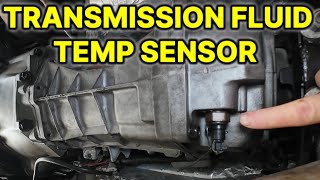
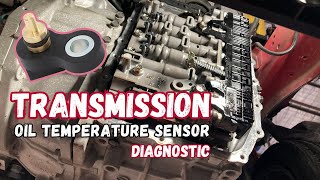
🎬 Watch: Step-by-step testing for the P0712 fault code 🎬 Watch: How to test and replace the TFT sensorCan I Drive With P0712?
Yes, But With Caution. You can drive short distances, but doing so risks catastrophic damage. The transmission operates 'blind' to its temperature, causing incorrect shift pressures that burn clutches and cause overheating. Continuing to drive risks turning a $200 repair into a $4,000+ transmission replacement. The vehicle will also unexpectedly enter 'limp mode' with limited gears, creating a serious safety hazard in traffic.
Common Causes

- Faulty Transmission Fluid Temperature (TFT) Sensor (Very Common) — The sensor itself fails internally from heat and age, shorting out and sending a continuous low voltage signal.
- Wiring or Connector Shorts (Common) — The external wiring harness chafes against the chassis or exhaust, shorting to ground. Connectors also corrode from moisture, dropping the voltage.
- Internal Transmission Harness Failure (Common) — Wiring inside the transmission pan degrades from constant exposure to hot fluid, leading to internal shorts. This is a known defect on many GM, Hyundai, and Honda models.
- Contaminated or Burnt Transmission Fluid (Less Common) — Fluid full of metallic debris or severely burnt fluid contaminates the sensor and harness pins, contributing to electrical faults and erratic readings.
- Software Calibration Issue (Rare) — Out-of-date PCM/TCM firmware misinterprets sensor values. A manufacturer software update resolves this.
- Faulty Powertrain/Transmission Control Module (PCM/TCM) (Very Rare) — The computer's internal circuit that reads the TFT signal malfunctions. Consider this only after exhausting all other electrical tests.
Symptoms

- Check Engine Light On — This is the first and most obvious sign that the PCM has detected a fault. A transmission-specific warning light may also illuminate.
- Harsh or Delayed Shifting — The transmission slams into gear or hesitates because it uses a false '-40°F' temperature reading to calculate shift pressures.
- Vehicle Enters 'Limp Mode' — The computer puts the vehicle into a self-preservation mode, limiting engine power and locking the transmission in a single gear (usually 2nd or 3rd) to prevent damage.
- Transmission Slipping — If the PCM commands insufficient line pressure based on the faulty 'cold' reading, clutch packs fail to engage fully, causing a slipping sensation between gears.
- Malfunctioning Torque Converter Clutch (TCC) — The PCM prevents the torque converter clutch from engaging, leading to poor fuel economy and a feeling of surging at highway speeds.
- Transmission Overheating (also visible on scanner) — A false 'cold' reading causes the transmission to overheat. Incorrect line pressures and lack of TCC lockup generate excessive heat, potentially triggering a separate temperature warning light.
- Incorrect Temperature Reading on Scan Tool (scan-tool only — no driver-felt sign) — When viewing live data, the TFT sensor displays an impossibly low temperature, such as -40°F. This definitively confirms a short circuit.
Diagnostic Flowchart

Tap your situation to follow the diagnostic path that matches what you're seeing on this code.
Common Fixes & Costs
- Replace Transmission Fluid Temperature (TFT) Sensor — Parts: $20-$100, Labor: $150-$300, ~1.5 hr book time (Intermediate)
- Repair Damaged Wiring or Connectors — Parts: $10-$50, Labor: $100-$300, ~1.5 hr book time (Intermediate)
- Replace Internal Transmission Wiring Harness — Parts: $100-$300, Labor: $200-$500, ~3.0 hr book time (Intermediate)
- Replace Transmission Solenoid Pack / Valve Body Assembly — Parts: $300-$1,500, Labor: $500-$1,500, ~4.5 hr book time (Professional)
- Replace or Reprogram PCM/TCM — Parts: $500-$1,200, Labor: $300-$500, ~1.5 hr book time (Professional)
DIY vs Professional
- Replace External TFT Sensor 🟢 Beginner
Tools: Socket set, wrench, drain pan, new fluid. - Repair Damaged Wiring 🟢 Beginner
Tools: Multimeter, wire cutters/strippers, soldering iron, heat shrink tubing. - Replace Internal Sensor / Harness 🟢 Beginner
Tools: Extensive socket set, torque wrench, drain pan, fluid pump, scraper, service manual. - Replace Valve Body / Solenoid Pack 🟢 Beginner
Tools: Low-range inch-pound torque wrench, meticulous cleaning supplies. - Replace/Reprogram PCM/TCM 🟢 Beginner
Tools: Specialized OEM diagnostic tool for programming.
Used vs. New Parts: Buying Guide
When a used part is worth it: For integrated components like a valve body or solenoid pack, a used part from a low-mileage, accident-damaged vehicle is a cost-effective option. For standalone sensors or wiring harnesses, the low cost of new aftermarket parts makes them a better choice.
Donor-vehicle mileage cap: roughly under 70000 miles for the part to have meaningful remaining life.
Donor quality checklist:
- Verify the donor vehicle VIN to ensure it wasn't scrapped for transmission failure.
- Inspect electrical connectors for corrosion or damage.
- Match part numbers exactly, as even slight variations cause incompatibility.
- For harnesses, check for any signs of previous repairs, brittleness, or heat damage.
Decision logic:
- If The part is a simple external sensor or wiring pigtail → Buy new. The cost savings for a used part are minimal and not worth the risk of premature failure.
- If The part is an expensive integrated assembly (valve body, solenoid pack) and the vehicle has high mileage (>150k) → A used part is a reasonable choice to minimize repair cost, but accept that it has a shorter remaining lifespan.
- If The part is an internal wiring harness → Favor new OEM or high-quality aftermarket. Used internal harnesses have been exposed to the same heat and fluid that caused the original to fail.
Warranty tradeoff: Used parts typically come with a 30-90 day warranty. New aftermarket parts often have a 1-year to limited-lifetime warranty. New OEM parts carry a 1-2 year warranty.
Worst-case if a used part fails: $400-$1000 if a used internal part fails after installation, as the labor must be paid for a second time.
What Happens If You Wait — Timeline
- 0-2 weeks: Check Engine Light is on. Torque converter clutch is disabled, causing RPMs to be slightly higher at highway speeds. Shifting may feel normal or slightly off. (MPG impact: 5-10%% · Added cost: $0-$50 in wasted fuel.)
- 2 weeks - 3 months: Shifting becomes noticeably harsher or delayed as the PCM uses incorrect line pressure based on the false -40°F reading. Transmission fluid begins to overheat from lack of TCC lockup. (MPG impact: 10-15%% · Added cost: $50-$200 in wasted fuel. Minor, accelerated clutch wear begins.)
- 3-6 months: Significant internal wear occurs. Clutch packs start to slip due to prolonged incorrect pressure. Overheating degrades the fluid, turning it dark and burnt. Vehicle unpredictably enters limp mode. (MPG impact: 15-25%% · Added cost: $1,800-$3,500. Damage is likely significant enough to require a transmission rebuild.)
- 6+ months: Catastrophic failure. Clutches are completely burnt, hard parts warp from heat, and the torque converter fails. The transmission slips severely or fails to engage gears entirely. (MPG impact: 25%+% · Added cost: $4,000-$8,000+. A complete transmission replacement is now required.)
Cost of Not Fixing It
- 0-1 month: Erratic shifting, poor fuel economy due to no torque converter lockup, and potential for entering 'limp mode' at any time. (Added cost: Negligible, but high risk of safety incidents.)
- 1-6 months: Accelerated wear on transmission clutches and bands from incorrect hydraulic pressures. Transmission fluid overheats and degrades. (Added cost: $1500-$3500 for a potential transmission rebuild if damage becomes significant.)
- 6+ months: Catastrophic transmission failure is likely. Burnt clutches, warped hard parts, and a failed torque converter necessitate a complete transmission replacement. (Added cost: $3000-$8000+ for a remanufactured or new transmission replacement.)
Diagnosis Steps
- Scan for Codes and View Live Data
Use an OBD-II scanner to confirm P0712. Access the live data stream and look at the Transmission Fluid Temperature (TFT) reading. A reading of -40°F (or -40°C) definitively confirms a short circuit fault. Note: On some Toyota systems, a shorted circuit displays as an impossibly high temperature (e.g., 302°F).
Tools: OBD-II Scanner (Beginner) - Pro Tip: Compare TFT and IAT Sensor Data on a Cold Engine
With the vehicle fully cold (sitting overnight), turn the key to 'On' without starting the engine. Compare live data for the TFT and the Intake Air Temp (IAT). They should be within 5 degrees of each other. If the IAT is 75°F and the TFT is -40°F, the TFT circuit is faulted.
Tools: OBD-II Scanner (Beginner) - Pro Tip: Perform a Connector Disconnect Test
While watching live TFT data on your scan tool, disconnect the sensor's main electrical connector. If the wiring and PCM are good, the reading immediately changes from -40°F (short) to 300°F+ (open circuit). This isolates the fault to the sensor itself or the internal transmission harness.
Tools: OBD-II Scanner (Advanced) - Visually Inspect Wiring and Connectors
Trace the wiring from the transmission case to the control module. Look for burnt wires near the exhaust, rodent damage, or corroded connectors. Pay close attention to areas exposed to road spray.
Tools: Flashlight (Intermediate) - Check the Transmission Fluid
Check the transmission fluid level and condition. Low, dark, or burnt-smelling fluid indicates internal damage. While not the direct cause of P0712, it dictates whether you need a simple sensor or a full transmission rebuild.
Tools: Rag, Dipstick (if equipped) (Beginner) - Test the Sensor's Reference Voltage
Disconnect the sensor's electrical connector. With the key 'On' (engine off), use a multimeter to check for a 5-volt reference signal from the PCM. If there is no voltage, the problem is in the wiring or the PCM.
Tools: Multimeter (Intermediate) - Test the TFT Sensor's Resistance
With the sensor disconnected, measure the resistance across its terminals. Compare this to the manufacturer's specifications for the current ambient temperature. A reading near zero ohms indicates an internally shorted sensor.
Tools: Multimeter, Service Manual (Intermediate) - Check for a Short to Ground
With the sensor and PCM connectors disconnected, check for continuity between the signal wire at the sensor connector and a known good chassis ground. Continuity (near zero ohms) confirms the signal wire is shorted to ground in the harness.
Tools: Multimeter, Service Manual (Advanced) - Pro Tip: Perform a 'Wiggle Test'
With the engine running and a scan tool connected, carefully wiggle the wiring harness between the sensor and the control module. If the temperature reading jumps, you have found an intermittent short in that section of the harness.
Tools: OBD-II Scanner (Advanced) - Advanced: Resistance vs. Temperature Chart Test
Measure the sensor's resistance when cold and compare it to the manufacturer's chart. For example, a GM 4L60-E sensor reads 3,520 Ohms at 68°F and 241 Ohms at 194°F. A reading near zero Ohms at any temperature indicates a short.
Tools: Multimeter, Infrared Thermometer, Service Manual (Advanced) - Advanced: Voltage Drop Test on Ground Circuit
Measure the voltage between the TFT sensor's ground pin at the connector and the negative battery terminal with the circuit active. A reading above 0.1V indicates excessive resistance in the ground circuit.
Tools: Multimeter (Advanced)
When This Code Triggers (Freeze-Frame Conditions)
- Engine Coolant Temp: 180-210°F (82-99°C) (Engine is at normal operating temperature.)
- RPM: 1200-2500 RPM (Vehicle is being driven at a steady cruise or under light acceleration.)
- Engine Load: 25-70% (The engine is under a moderate load, not idling or at full throttle.)
- Vehicle Speed: 30-60 mph (48-97 kph) (Typically occurs during city or highway driving, not at a standstill.)
Related Codes
- P0710 — A general code for 'Transmission Fluid Temperature Sensor 'A' Circuit Malfunction.' P0712 specifically points to a 'low' or shorted circuit condition.
- P0711 — Indicates the sensor's readings are erratic or illogical. P0712 indicates a signal that is stuck permanently low.
- P0713 — The direct opposite of P0712 ('Circuit High'). P0713 is caused by an open circuit (broken wire) and reads an extremely high temperature (e.g., 300°F+).
- P0714 — Indicates the signal is unstable and dropping in and out, typically caused by a loose connector pin rather than a permanent short to ground.
Climate & Environmental Factors
- Road Salt / High Humidity: Winter road salt and high humidity create a corrosive electrolyte that attacks undercarriage wiring. This corrosion penetrates wire insulation and connector seals, causing a short to ground in the TFT sensor circuit.
- Extreme Temperature Cycles: Repeated cycling from freezing to operating temperature makes plastic wire insulation and rubber seals brittle. Cracking allows moisture in, eventually causing an electrical short.
How to Talk to a Mechanic About This Code
Say this: "I have a P0712 code and my scanner shows the transmission fluid temperature is stuck at negative 40 degrees. I'd like to book a diagnostic appointment to test the TFT sensor circuit. Please start with checking the wiring and connector before quoting a larger component."
This signals you've done research, know the specific symptom (the -40° reading), and understand the most likely causes. It directs the shop to perform basic electrical checks first, preventing an immediate and expensive recommendation to replace a major part when only a wire is broken.
Avoid saying:
- 'My check engine light is on, can you look at it?'
- 'My transmission is acting weird.'
- 'Just fix whatever's wrong with it.'
Questions to ask before authorizing the repair:
- Did you confirm the short by testing the sensor's resistance and checking the harness for a short to ground?
- For my vehicle, is the sensor a separate part or is it integrated into the valve body or solenoid pack?
- If it's a wiring issue, can you show me where the damage is?
- What is the warranty on this specific repair, including both parts and labor?
Where to Take It: Dealer vs Independent vs Chain
- Dealer:
Recommended only if the repair is covered by a warranty or TSB. Otherwise, an independent specialist is a better value.
Best for: Vehicles under warranty or covered by a special coverage program (e.g., certain GM, Subaru models)., Complex repairs requiring replacement of a valve body or TCM that needs OEM programming.
Downsides: Highest labor rates., Defaults to replacing a large, expensive assembly (like a whole transmission) instead of performing a component-level repair. (Typical cost: +50% vs. baseline) - Independent Shop:
Best fit. An independent transmission specialist is the ideal choice for diagnosing and repairing a P0712 code accurately and cost-effectively.
Best for: Out-of-warranty vehicles where the cause is a wiring fault, external sensor, or internal harness/solenoid pack., Getting a component-level diagnosis instead of a full transmission replacement quote.
Downsides: Quality varies greatly; seek out a shop that specializes in transmissions., May not have access to the latest manufacturer-specific programming tools for TCM/valve body replacements. (Typical cost: +0% vs. baseline) - Chain Shop:
AVOID. The risk of misdiagnosis or an improper repair is high. This code requires specialized transmission knowledge not typical for chain shops.
Best for: Simple, external sensor replacements where the diagnosis is already certain.
Downsides: Technician skill varies dramatically; they lack the expertise for transmission diagnostics., High pressure to upsell; misdiagnoses the issue and recommends an unnecessary transmission flush or replacement. (Typical cost: -10% vs. baseline)
When to Walk Away From the Repair
If the estimated repair cost for the P0712 fault exceeds 50% of your car's private-party value from a source like Kelley Blue Book, it's time to seriously consider selling or scrapping the vehicle.
- Car worth $4000, fix is $2200: Walk away. The repair cost is over half the car's value. This is a common scenario for an older Subaru needing a valve body.
- Car worth $15000, fix is $1500: Fix it. The repair is only 10% of the car's value and restores its function and reliability.
- Car worth $3000, fix is $600: Fix it. This is a good value repair, likely for a wiring issue or an accessible sensor, that keeps a functional car on the road.
What Scan Tool You Need for This Code
Minimum: A scanner that can read and graph live data for the Transmission Control Module (TCM).
A basic $20 code reader only shows 'P0712'. It cannot display the live transmission fluid temperature data, which is essential for diagnosis. Seeing the '-40°F' reading is the key to confirming the short circuit.
Budget: BlueDriver Bluetooth Pro or FOXWELL NT301 (~$70) — Both connect to your phone or have a screen to display and graph live sensor data, including transmission fluid temperature. This is sufficient to confirm the '-40°F' reading and perform the 'connector disconnect test'.
Mid-range: Innova 5610 or XTOOL D7 (~$330) — These handheld or tablet scanners offer bidirectional controls. While not strictly required for P0712, they allow you to command other transmission solenoids and components to perform deeper health checks once the initial problem is fixed.
Professional: Autel MaxiCOM MK808S/MK808Z or Topdon ArtiDiag800BT (~$450-600) — Provides full bidirectional control, advanced data graphing, and potential access to manufacturer-specific codes and tests. These tools are essential for a professional or a very serious DIYer who needs to perform advanced functions like TCM programming or adaptations after a repair.
Rent vs buy: For a one-time diagnosis, many auto parts stores like AutoZone or O'Reilly loan you a scanner for free (with a refundable deposit). If you plan to do your own maintenance regularly, buying a budget pick like the BlueDriver is a worthwhile investment.
How to Clear the Code After You Fix It
- Reconnect any disconnected components, including the battery.
- Use an OBD-II scan tool to erase the P0712 trouble code from the PCM/TCM memory.
- Perform a complete drive cycle to allow the vehicle's readiness monitors to run and complete their self-tests.
Drive cycle (~30 minutes): A general drive cycle includes a cold start (after sitting for 6-8 hours), a few minutes of idling, followed by mixed city driving (stop-and-go) and a period of steady highway speed (e.g., 55-60 mph for 5-10 minutes).
Readiness monitors affected: Comprehensive Component Monitor, Transmission-related monitors
Watch out for:
- Simply clearing the code without performing a drive cycle leaves readiness monitors in a 'Not Ready' state, causing an automatic emissions test failure.
- The code returns immediately if the root electrical short has not been properly repaired.
- Not allowing the vehicle to cool down sufficiently before starting the drive cycle prevents certain monitors from running.
Will This Fail Emissions / State Inspection?
Yes — this code typically fails an OBD-II emissions inspection.
- California: An active P0712 code causes an automatic failure of the smog check. After repair, you must complete a drive cycle to set the readiness monitors before re-testing.
- New York: The NYS DMV inspection includes an OBD-II scan. An illuminated Check Engine Light for code P0712 results in an automatic failure.
- Texas: In the 17 counties requiring emissions testing, an active P0712 code causes the vehicle to fail the inspection. The Check Engine Light must be off and readiness monitors must be set.
Most Commonly Affected Vehicles
- Chevrolet / GMC Silverado, Sierra, Yukon, Escalade (2016) — GM issued Special Coverage N192291660 for models with a 6.2L engine, extending the warranty to 10 years/120,000 miles for internal transmission harness failures causing P0711, P0712, and P0713.
- Hyundai / Kia Elantra, Sonata, Accent, Tucson, Optima (2011-2017) — TSB 12-AT-021-1 advises against replacing the entire transaxle. Technicians must replace the oil temperature sensor and/or the internal wiring harness (OEM 46307-3B650).
- Subaru Outback, Forester, Crosstrek, Impreza (2012-2019) — On TR580 and TR690 CVTs, the TFT sensor is integrated into the valve body. P0712 requires replacing the entire valve body assembly. Subaru extended the CVT warranty to 10 years/100,000 miles for many models.
- Ram 2500/3500 (2013-2018) — On the 68RFE transmission, the TFT sensor is integrated into the main solenoid pack. 2011-2018 models use a pack with a white or gray connector, while 2019+ models use a blue connector.
- Nissan Altima, Versa, Rogue, Sentra (2012-2018) — The TFT sensor is part of the valve body assembly and is not sold separately. Dealerships often recommend replacing the entire valve body or complete CVT unit.
- Honda Accord, Civic, HR-V, Pilot (2016-2023) — The TFT sensor is integrated with the internal solenoid wire harness ('harness A'). P0712 requires replacing this entire harness assembly by removing the transmission pan.
- Ford Fusion, Escape, Focus (2013-2019) — Prone to wiring harness issues where the harness chafes against the transmission case, leading to a short circuit. A 'wiggle test' is highly effective here.
- Toyota Camry, Corolla, RAV4 (2015-2020) — Rodent damage to the transmission wiring harness is a known issue. Note that on some Toyota systems, a P0712 (short circuit) displays as a very high temperature (e.g., 302°F) on a scan tool.
Manufacturer-Specific Notes
- Toyota / Lexus: Unlike most manufacturers, some Toyota/Lexus systems are wired such that a short circuit (P0712) results in a high temperature reading (e.g., 302°F) on a scan tool, while an open circuit (P0713) results in a low temperature reading (-40°F).
- Ram/Chrysler/Dodge: On 68RFE transmissions, the TFT sensor is part of the solenoid pack. A simple sensor failure requires replacing the entire solenoid assembly. Connector color (white/gray vs. blue) dictates the correct part.
- Subaru: For TR580/TR690 CVTs, the TFT sensor is a non-serviceable part of the main valve body. The official repair is replacing the entire valve body, though a 10-year/100,000-mile warranty extension often covers it.
- General Motors (Chevrolet/GMC): GM has a Special Coverage program (N192291660) for some 2016 trucks extending the warranty for P0712 issues caused by a faulty internal harness.
Real Owner Stories
2014 Nissan Versa Note with P0712
Check Engine Light came on. Dealer diagnosed P0712 and quoted a full CVT transmission replacement because the car was out of warranty.
Outcome: Nissan had a Technical Service Bulletin (NTB15-037b) revising the repair procedure from replacing the entire CVT to replacing only the valve body assembly. This was significantly cheaper than a full transmission replacement.
Lesson: Always check for TSBs. For integrated sensors, a dealership defaults to replacing the largest assembly. Question the diagnosis and ask about component-level repairs like a valve body replacement.
2013 Ram 3500 with 68RFE Transmission
Check Engine Light on, vehicle stuck in 4th gear ('limp mode'). Scan showed P0712.
Outcome: The shop replaced the entire solenoid pack, transmission fluid, and filter for around $1,500. This resolved the code and the shifting issues.
Lesson: On vehicles where the sensor is part of a larger pack, be prepared for a more expensive repair than a simple sensor swap. A DIY replacement saves money but is a messy, intermediate-level job.
2006 Pontiac Grand Prix with P0712 and P0300
Vehicle had a P0712 (TFT sensor) and a P0300 (random misfire) code. Owner was concerned they needed a new transmission.
Outcome: After the fluid change, the P0712 code did not immediately return, though a slight shifting drag remained. This suggests the issue was intermittent or temporarily affected by the work being done.
Lesson: While a fluid change won't fix an electrical short, it's a basic maintenance step. Always diagnose the electrical circuit before assuming the transmission is failing.
2015 Subaru Forester with CVT solenoid codes
Vehicle had codes for a bad solenoid, which is part of the valve body on Subaru CVTs. P0712 is a common related code.
Outcome: The rebuilt valve body failed within a few weeks. After multiple failed attempts with non-OEM parts, the mechanic installed a brand new, factory Subaru valve body, which permanently fixed the issue.
Lesson: For complex, integrated parts like a Subaru CVT valve body, using cheaper aftermarket or rebuilt units is a significant gamble. Professional transmission builders recommend using only new OEM parts for this specific repair.
How to Prevent This Code From Triggering
- Perform regular transmission fluid and filter changes. (Every 30,000-60,000 miles, or as specified by your owner's manual.) — Clean fluid lubricates better and dissipates heat more effectively, reducing thermal stress on internal electronics like the sensor and wiring harness.
- Inspect and clean underbody wiring connectors. (Every 1-2 years, especially in the rust belt.) — Applying dielectric grease to the transmission harness connector seals out moisture and salt, preventing the corrosion that leads to short circuits.
- Avoid overloading or excessive towing. (Daily driving habit.) — Towing beyond your vehicle's capacity creates extreme heat in the transmission, which is the number one cause of failure for internal components, including sensors and wiring.
- Install an auxiliary transmission cooler. (One-time upgrade for vehicles used for towing or in hot climates.) — Directly reduces the transmission's operating temperature, significantly extending the life of the fluid, clutches, and all electronic components by preventing heat degradation.
- Allow a brief warm-up period in cold weather. (On cold start days.) — Letting the engine idle for 30-60 seconds before driving allows transmission fluid to circulate, ensuring all components are lubricated and reducing thermal shock on cold electronics.
Frequently Asked Questions
Can I just clear the P0712 code and keep driving?
No. Because P0712 is caused by a hard electrical fault (a short circuit), the code returns immediately upon the next drive cycle. Clearing it does not fix the underlying problem and provides no benefit.
How much does it cost to fix code P0712?
Costs range from $150 for a simple wiring repair to $400 for a standalone sensor replacement. If the sensor is integrated into a valve body or solenoid pack (common in Subaru and Ram), expect to pay $800 to $3,000+.
Will a transmission fluid change fix a P0712 code?
No. P0712 is an electrical circuit code indicating a short. While clean fluid is essential for transmission health, it cannot fix a faulty sensor, a shorted wire, or a bad connector.
What happens if I ignore code P0712 long-term?
Ignoring P0712 causes permanent, expensive damage. Incorrect line pressures burn out clutches, and the lack of torque converter lockup causes severe overheating, eventually requiring a $4,000+ transmission replacement.
Can a bad TFT sensor cause transmission slipping?
Yes. The PCM uses the temperature reading to calculate the hydraulic line pressure needed to clamp the clutch packs. If the PCM thinks the fluid is -40°F, it commands pressure too low to hold the clutches, causing them to slip.
My mechanic says I need a whole new transmission for a P0712 code. Is this true?
This is rarely true and often an up-sell. The fault is almost always confined to the sensor, wiring, or an integrated component like a valve body. Seek a second opinion from an independent transmission specialist.
Can I bypass the transmission temperature sensor?
No. The PCM relies on this data for critical transmission functions, including shift strategy and preventing overheating. Bypassing it with a resistor leads to poor performance and severe transmission damage.
Key Takeaways
- P0712 is an electrical short-circuit code, not a mechanical transmission failure, and is most often caused by a failed $50 sensor or a rubbed wire.
- Check live scanner data first: a transmission fluid temperature reading of -40°F (or -40°C) instantly confirms a short to ground in the sensor circuit.
- Never drive with an active P0712 code, as the resulting incorrect hydraulic line pressures can destroy a transmission's clutch packs in under 500 miles.
- Repair costs range from $150 for a wiring fix to over $1,800 if your vehicle integrates the sensor into a non-serviceable valve body.
Helpful Videos
Shop the Parts Behind P0712
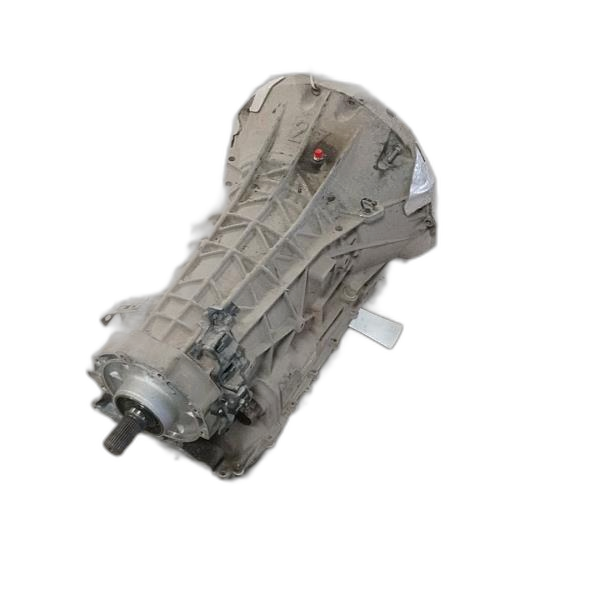
Below are the parts most often responsible for code P0712, ranked by how frequently each one is the actual culprit (per the diagnosis above). Tap any to see what we have for your vehicle.



The information in this article is provided for general reference and educational purposes only. Vehicle specifications, procedures, and part compatibility can vary by production date, trim level, and region. Always consult your vehicle's factory service manual and verify part numbers before purchasing or performing repairs. Safety-critical components such as airbags, seat belts, and braking systems should be installed by a qualified professional.
- 🧭 Diagnostic Flowchart
- 🎬 Helpful Videos
- 🛍️ Shop This Part
- What Does P0712 Mean?
- Can I Drive With P0712?
- Common Causes
- Symptoms
- Common Fixes & Costs
- DIY vs Professional
- Used vs. New Parts: Buying Guide
- What Happens If You Wait — Timeline
- Cost of Not Fixing It
- Diagnosis Steps
- When This Code Triggers (Freeze-Frame Conditions)
- Related Codes
- Climate & Environmental Factors
- How to Talk to a Mechanic About This Code
- Where to Take It: Dealer vs Independent vs Chain
- When to Walk Away From the Repair
- What Scan Tool You Need for This Code
- How to Clear the Code After You Fix It
- Will This Fail Emissions / State Inspection?
- Most Commonly Affected Vehicles
- Manufacturer-Specific Notes
- Real Owner Stories
- 2014 Nissan Versa Note with P0712
- 2013 Ram 3500 with 68RFE Transmission
- 2006 Pontiac Grand Prix with P0712 and P0300
- 2015 Subaru Forester with CVT solenoid codes
- How to Prevent This Code From Triggering
- Frequently Asked Questions
- Can I just clear the P0712 code and keep driving?
- How much does it cost to fix code P0712?
- Will a transmission fluid change fix a P0712 code?
- What happens if I ignore code P0712 long-term?
- Can a bad TFT sensor cause transmission slipping?
- My mechanic says I need a whole new transmission for a P0712 code. Is this true?
- Can I bypass the transmission temperature sensor?
- Key Takeaways
- 🎟️ Get 5% Off