

P0712 on 2006-2011 Honda Civic: Transmission Temperature Sensor Circuit Low Causes and Fixes
On a 2006-2011 Honda Civic, code P0712 is most often caused by a failed automatic transmission fluid (ATF) temperature sensor or damaged wiring. This will cause a flashing 'D' light and harsh shifting. Expect to pay $150-$350 for a professional repair.
- P0712 on your Civic means there's an electrical short in the transmission temperature sensor circuit.
- The most common symptoms are a flashing 'D' light and harsh shifting.
- The most likely fix is replacing the ATF temperature sensor (Part No. 28650-RPC-003), w
What's Unique About the 2006-2011 Honda Civic
For the 8th generation Honda Civic (2006-2011), this code is a straightforward electrical issue. The automatic transmission in these models has the temperature sensor located internally on the valve body. Accessing it requires draining the transmission fluid and removing the transmission pan. While the components themselves are not overly complex, the location makes the repair more involved than a simple external sensor swap. The sensor is integrated into a harness assembly on the valve body.
Symptoms You May Notice
- Check Engine Light is on
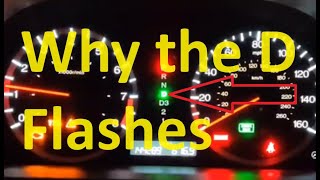
- Flashing 'D' (Drive) indicator light on the instrument cluster. 🎬 See why your Honda's D light is flashing and how to fix it.
- Harsh, erratic, or delayed gear shifts.
- Transmission may be stuck in one gear (limp mode).
- Reduced fuel economy.
- Improper torque converter clutch operation.
- Replacing the entire transmission valve body when only the sensor is bad.
- Replacing the PCM before verifying the sensor and wiring are functioning correctly.
- Confusing the Automatic Transmission Fluid (ATF) Temperature Sensor with the Engine Coolant Temperature (ECT) Sensor.
Most Likely Causes
- Failed Automatic Transmission Fluid (ATF) Temperature Sensor 🔴 High Probability → Shop Transmission Assembly The sensor is a thermistor that can fail internally over time due to constant heat cycles and vibration, causing an electrical short that results in a 'Circuit Low' reading.
How to confirm: After accessing the sensor, measure its resistance with a multimeter. 🎬 Watch: How to diagnose a short in the ATF sensor circuit. Compare the reading to the temperature/resistance chart in the factory service manual. A reading far outside the expected range (e.g., very low or near-zero resistance for a short) indicates failure.
Typical fix: Replace the ATF temperature sensor. This requires draining the transmission fluid, removing the transmission pan, and then removing the sensor from the valve body.
Est. part cost: $40-$100 - Shorted Wiring or Damaged Connector 🟡 Medium Probability The wiring harness leading to the transmission can become damaged from engine heat, vibration, or road debris, causing a short to ground. The main transmission connector is a common point for corrosion or loose pins.
How to confirm: Visually inspect the wiring harness from the PCM to the transmission case connector for any signs of chafing, melting, or corrosion. Use a multimeter to check for continuity between the PCM connector and the sensor connector, and also test for a short to ground on the signal wire.
Typical fix: Repair the damaged section of the wire or replace the corroded connector. In some cases, the entire engine or transmission harness may need replacement if the damage is extensive.
Est. part cost: $10-$50 for repair materials - Low or Contaminated Transmission Fluid ⚪ Low Probability → Shop Transmission Assembly While less likely to directly cause a 'Circuit Low' code, extremely low or degraded fluid can lead to overheating, which may damage the sensor or its wiring over time, eventually causing an electrical failure.
How to confirm: Check the transmission fluid level and condition using the dipstick. The fluid should be at the correct level, red in color, and not have a burnt smell.
Typical fix: Perform a transmission fluid drain and fill using Honda-specific ATF DW-1 fluid. 🎬 Watch: Step-by-step guide to draining and filling your transmission fluid. If the fluid is very dirty, multiple drain-and-fills may be needed.
Est. part cost: $40-$80 for fluid
Rare But Worth Checking
- Faulty Powertrain Control Module (PCM): → Shop Engine Control Module (ECM) This is the least likely cause and should only be considered after the sensor and wiring have been thoroughly tested and proven to be good. A PCM failure for this specific input circuit is rare.
Diagnosis Steps
- Connect an OBD-II scanner and confirm P0712 is the active code. Check the live data for the Transmission Fluid Temperature. A reading of -40°F or a voltage below 0.1V strongly suggests a short circuit.
- Check the automatic transmission fluid level and condition. Ensure it is clean, full, and does not smell burnt.
- Visually inspect the external wiring harness leading to the transmission for any obvious signs of damage, melting, or corrosion at the main connector.
- If external wiring looks good, safely raise the vehicle, drain the transmission fluid, and remove the transmission pan to access the internal components.
- Locate the ATF temperature sensor on the valve body. It is often part of a larger wire harness assembly on the valve body. Inspect its connector and wiring for any visible damage.
- Disconnect the sensor and test its resistance with a multimeter. Compare this to the vehicle's service manual specifications. For example, at 68°F (20°C), the resistance should be approximately 2.5 kΩ. If the resistance is near zero, the sensor is shorted and faulty.
- If the sensor tests good, check the wiring harness for a short to ground between the sensor connector and the PCM. Repair any found shorts.
- If both the sensor and wiring are confirmed to be good, the issue may be with the PCM, which requires advanced diagnostics or replacement by a professional.
Parts You'll Likely Need
- Automatic Transmission Fluid Temperature Sensor
(OEM #28650-RPC-003)— This sensor is the most common failure point for code P0712, as it can short out internally. Note: This part number often refers to the sensor integrated into a small harness that attaches to the valve body.
Trusted brands: Honda (Genuine OEM), Denso, Standard Motor Products (SMP), WVE
OEM price range: $80-$150
Aftermarket price range: $40-$90 - Honda Genuine ATF DW-1 Fluid
(OEM #08200-9008)— The transmission fluid must be drained to replace the sensor. It is critical to refill with the correct OEM-specified fluid to prevent shift problems or damage.
Trusted brands: Honda
OEM price range: $10-$15 per quart - Transmission Pan Gasket — The original gasket should be replaced when the transmission pan is removed to prevent leaks.
Trusted brands: Honda (Genuine OEM), Fel-Pro, Mahle
OEM price range: $20-$40
Aftermarket price range: $10-$25
Related Codes That Often Appear With This One
- P0713 — This code means 'Circuit High' and is the opposite of P0712. It can appear if there's an intermittent wiring issue that alternates between a short and an open circuit.
- P0711 — This code for 'Range/Performance' can be stored if the sensor's signal is erratic or illogical, which can happen alongside a short circuit condition.
Mechanic-Grade Diagnostic Values
- ATF Temperature Sensor Resistance — expected: Approximately 2.5 kΩ at 20°C (68°F). Resistance decreases as temperature increases.. Failure: A resistance reading near zero ohms indicates an internal short. A reading significantly different from the service manual's chart for a known temperature indicates failure.
- ATF Temperature Sensor Signal Voltage (at PCM) — expected: Above 0.07 Volts with ignition on.. Failure: A reading of 0.07 Volts or less indicates a short to ground in the sensor or wiring harness.
- Sensor Reference Voltage (at sensor connector) — expected: Approximately 5.0 Volts DC with the sensor disconnected and ignition on.. Failure: A reading significantly below 5.0V or 0V indicates a problem with the PCM or the wiring between the PCM and the sensor.
Scan Tool Commands That Help
- Honda Diagnostic System (HDS): AT Data List > ATF Temp Sensor Voltage — This is the first step in diagnosis. Use it to view the live voltage the PCM is seeing from the sensor. A value at or below 0.07V confirms the fault condition the PCM is detecting.
- Honda Diagnostic System (HDS): Clear DTCs — After the repair is completed, use this function to clear the P0712 code and turn off the Check Engine Light and flashing 'D' indicator.
Wiring & Ground Locations
- PCM Connector — Located in the engine bay, typically near the battery or firewall.. The ATF temperature sensor sends its signal directly to the PCM. Testing for voltage and continuity at the specific PCM pins is crucial for determining if a wiring fault exists between the sensor and the control module.
- Transmission Main Connector — The main electrical connector on the exterior of the automatic transmission housing.. This is a common point for corrosion, moisture intrusion, or pin damage that can cause a short circuit. It's the junction between the external engine harness and the internal transmission harness where the sensor is located.
OEM Part Supersession History
28650-RPC-003→28650-RWE-003— Part number consolidation and potential design update over time. The -RWE- part number is cited for later model Hondas but is often listed as a compatible replacement.
Heads up: While often cross-compatible, always verify the part number with a Honda dealer using the vehicle's VIN before purchasing, as subtle changes in the integrated harness or connector could exist.
Model Year Variations Within This Range
- 2009-2011: The 2009 model year facelift introduced minor updates, but the automatic transmission (R18A1 engine) and the location/function of the ATF temperature sensor remained fundamentally the same as the 2006-2008 models. The external ATF filter was added/emphasized in service procedures around this time.
Diagnostic Flowchart
Other Known Issues on This Vehicle
Issues unrelated to this code that are worth knowing about as an owner of this generation:
- Cracked Engine Block (R18A1) 🔴 High — Common in 2006-2009 models, particularly before 150,000 miles. Causes coolant loss and overheating. (Ref: Honda TSB 10-048 extended the warranty to 10 years (now expired), but acknowledges the manufacturing defect.)
- Peeling/Fading Clear Coat and Paint 🟠 Medium — Widespread across this generation, especially on dark colors like Nighthawk Black Pearl and Figi Blue Pearl. The clear coat fails, leading to large patches of peeling paint. (Ref: Honda TSB 12-049 addressed this for specific colors under a warranty extension (now expired).)
- Drooping or Cracked Sun Visors 🟡 Low — Extremely common. The plastic pivot point for the visor cracks, causing it to droop and obstruct the driver's view. A class-action lawsuit was filed over this issue.
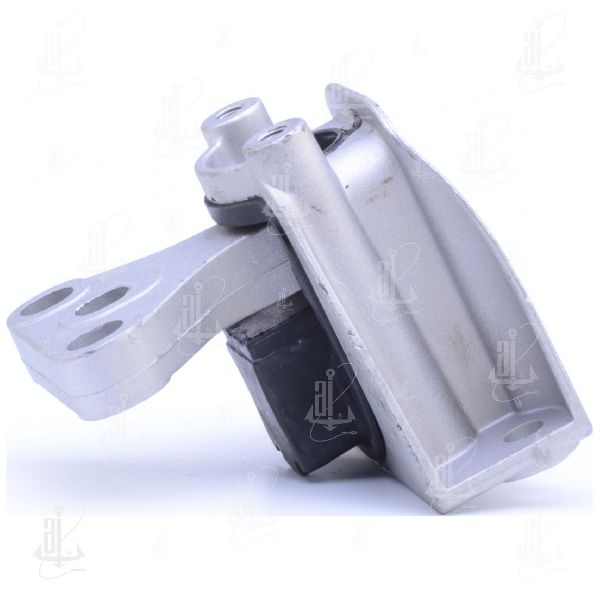
- Failing Passenger-Side Engine Mount 🟠 Medium — The hydraulic passenger-side engine mount is prone to leaking and collapsing, causing excessive engine vibration to be felt in the cabin, especially at idle.
- Faulty Rear Upper Control Arms 🟠 Medium — The original rear upper control arms can cause premature and uneven inner tire wear. Many owners replace them with adjustable aftermarket arms to correct the alignment.
Used vs. New Parts: Buying Guide for This Vehicle
When a used part is the smart pick: A used sensor is generally not recommended. Because the part is located inside the transmission and requires significant labor to access, the risk of a used part failing prematurely outweighs the small cost savings. The failure is electronic and not easily visible.
Donor-vehicle mileage cap: roughly under 60000 miles for the part to have meaningful remaining life.
What to inspect on the donor part:
- If considering a used part, source it from a vehicle with the lowest possible mileage.
- Ensure the donor vehicle was not involved in a front-end collision that could have stressed the transmission or its wiring.
- Inspect the connector pins on the used sensor for any signs of corrosion or damage before purchase.
OEM-only on this vehicle (don't cheap out):
- Honda Genuine ATF DW-1 Fluid
Aftermarket brands forum-validated for this vehicle:
- Denso
- Standard Motor Products (SMP)
Brands owners have reported issues with on this vehicle:
- No-name, unbranded sensors from online marketplaces should be avoided due to the high labor cost of replacement if the part fails early.
Real Owner Stories
Aggregated from forums and TSBs cited above. Mileages and costs reflect what owners reported in those sources.
2008 Honda Civic
Symptoms: The car had a flashing 'D' light on the dashboard and was experiencing harsh, sudden shifting between gears.
What fixed it: The problem was resolved by replacing the automatic transmission fluid (ATF) temperature sensor. This required draining the transmission fluid, dropping the pan to access the sensor on the valve body, and installing the new part.
Source hint: 8thcivic.com Thread: 'P0712 Code, Flashing D, Harsh Shifting'
Related OBD-II Codes
Frequently Asked Questions
My 2008 Civic's 'D' light is flashing and it's shifting very hard. Is this the P0712 code?
Where is the ATF temperature sensor located on my Honda Civic?
What kind of transmission fluid should I use when replacing the sensor?
I'm testing the sensor with a multimeter. What resistance reading means it's bad?
Is it okay to buy a used ATF temperature sensor to save money?
Does this P0712 information also apply to my 2009 Acura CSX?
My Civic has the known peeling paint issue. Does Honda still cover this?
Helpful Videos

We Have This Part in Stock

The information in this article is provided for general reference and educational purposes only. Vehicle specifications, procedures, and part compatibility can vary by production date, trim level, and region. Always consult your vehicle's factory service manual and verify part numbers before purchasing or performing repairs. Safety-critical components such as airbags, seat belts, and braking systems should be installed by a qualified professional.
- Honda Civic:
- 🧭 Diagnostic Flowchart
- 🎬 Helpful Videos
- 🛍️ Shop This Part
- What's Unique About the 2006-2011 Honda Civic
- Symptoms You May Notice
- Most Likely Causes
- Rare But Worth Checking
- Diagnosis Steps
- Parts You'll Likely Need
- Related Codes That Often Appear With This One
- Mechanic-Grade Diagnostic Values
- Scan Tool Commands That Help
- Wiring & Ground Locations
- OEM Part Supersession History
- Model Year Variations Within This Range
- Other Known Issues on This Vehicle
- Used vs. New Parts: Buying Guide for This Vehicle
- Real Owner Stories
- 2008 Honda Civic
- Related OBD-II Codes
- Frequently Asked Questions
- 🎟️ Get 5% Off