

P0714 on 2013 Ram 3500: Transmission Temp Sensor Intermittent Causes & Fixes
P0714 on a 2013 Ram 3500 indicates an intermittent signal from the transmission fluid temperature sensor. The most common cause is a failing sensor, which is often integrated into the transmission solenoid/TRS assembly inside the transmission pan. A software update may also be required per manufacturer TSBs. This is a very common issue on the 68RFE transmission.
- P0714 on a 2013 Ram 3500 means the transmission temperature sensor signal is intermittent.
- Before replacing any parts, check if your vehicle needs a software update, as multiple TSBs exist to fix this issue by reprogramming the PCM.
- The most common hardware failure is the temperature sensor itself, which is part of the solenoid pack inside the transmission pan and requires significant labor to replace.
- Symptoms include erratic shifting, transmission overheating, and the vehicle entering limp mode.
- Driving with this code can lead to poor transmission performance and potential long-term damage.
What's Unique About the 2013-2013 Ram 3500
For the 2013 Ram 3500, particularly those with the common 68RFE automatic transmission, the transmission temperature sensor is not a simple, externally accessible part. Instead, it is integrated into the solenoid pack and transmission range sensor (TRS) assembly. This entire assembly is mounted on the valve body inside the transmission, meaning the transmission pan must be removed for access. Additionally, Ram has issued multiple Technical Service Bulletins (TSBs), such as 18-043-17, that involve software updates to the Powertrain Control Module (PCM) to address false or premature P0714 codes. The TSBs specifically change the fault logic from a one-trip to a two-trip fault, making it less likely to trigger the check engine light for a momentary glitch. This indicates the issue is frequently related to software sensitivity, not just hardware failure.
Diagnostic Flowchart
Tap your situation to follow the diagnostic path that matches what you're seeing on this vehicle.
Symptoms You May Notice
- Check Engine Light is on
- Transmission overheating warning light illuminates
- Harsh, delayed, or erratic shifting
- Vehicle enters 'limp mode' (stuck in a single gear)
- Torque converter clutch fails to engage or disengage properly
- A smell of burnt transmission fluid
- RPMs spiking without corresponding acceleration
- Replacing only the external wiring without checking the internal sensor.
- Replacing the PCM before verifying that the correct software is installed and that the sensor/wiring are functioning correctly.
- Replacing the solenoid pack when only a PCM software update was needed.
Most Likely Causes
- Faulty Transmission Temperature Sensor / Solenoid Pack 🔴 High Probability → Shop Transmission Assembly On the common 68RFE transmission, the temperature sensor is integrated into the solenoid/TRS assembly, which is a known failure point due to internal wear and constant heat cycles. The entire pack is a common replacement item. The factory circuit board within the solenoid pack is also known to flex, causing false pressure switch codes and intermittent electrical faults.
How to confirm: Use a professional scan tool to monitor the live transmission temperature data. If the reading jumps erratically (e.g., from 150°F to -40°F) or is clearly incorrect, the sensor is faulty. A diagnostic procedure using a transmission simulator (Miller tool #8333) can definitively isolate the fault to the solenoid pack or the PCM wiring.
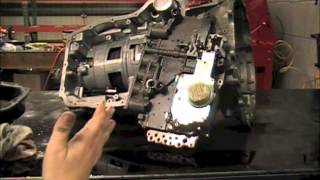
Typical fix: Replace the entire transmission solenoid/TRS assembly. This requires draining the fluid, removing the transmission pan, and unbolting the assembly from the valve body. 🎬 Watch: Step-by-step guide to replacing the solenoid block pack. The transmission filter and pan gasket should be replaced at the same time. It's critical to verify the correct color of the electrical connector (white or gray) on the old solenoid pack before ordering a new one, as both were used.
Est. part cost: $250-$450 - Outdated Powertrain Control Module (PCM) Software 🟡 Medium Probability → Shop Engine Control Module (ECM) Ram has released multiple TSBs (e.g., 18-091-16, 18-057-15 REV A, 18-030-14 REV. B) to address this specific code by reprogramming the PCM. The original software logic was overly sensitive and could set the code when no hardware fault existed. The update changes P0714 from a one-trip to a two-trip fault, reducing false positives.
How to confirm: A Ram dealership or a qualified shop with a wiTECH scan tool can check the current software calibration of the PCM against the latest available version and determine if an update related to the TSBs is available for your VIN.
Typical fix: Reprogram the PCM with the latest software version. After the flash, a 'Quick Learn' procedure must be performed for the transmission. The key must also be left off for 10 minutes to allow the PCM to power down completely.
Est. part cost: $0-$200 - Damaged Wiring or Loose Connectors ⚪ Low Probability The main transmission harness connector is exposed to road debris and weather, while internal wiring is subject to constant heat and vibration. The screws holding the solenoid pack to the valve body have also been known to loosen over time, potentially causing a poor connection.
How to confirm: Visually inspect the external transmission wiring harness and connector for damage, corrosion, or loose pins. Wiggle the wires while checking for shorted and open circuits. Check continuity between the sensor connector and the TCM.
Typical fix: Repair the damaged section of the wiring harness or clean/replace the connector. If internal, it may require dropping the pan to inspect the connection at the solenoid pack.
Est. part cost: $20-$150 - Low or Degraded Transmission Fluid ⚪ Low Probability → Shop Transmission Assembly Low fluid levels can cause the transmission to overheat, which can lead to erratic sensor readings and trigger various temperature-related codes. The 68RFE is known to be sensitive to fluid condition.
How to confirm: Check the transmission fluid level and condition according to the manufacturer's procedure. If the fluid is dark, burnt-smelling, or low, it needs attention.
Typical fix: Top off or perform a full fluid and filter change using Mopar ATF+4. If the level was low, the source of the leak must be found and repaired.
Est. part cost: $100-$300
Rare But Worth Checking
- Faulty Powertrain Control Module (PCM): → Shop Engine Control Module (ECM) This is rare, but if all other causes have been ruled out (sensor, wiring, software), the PCM itself could be the issue. Diagnostic procedures often list PCM replacement as the final step after verifying all other components are good.
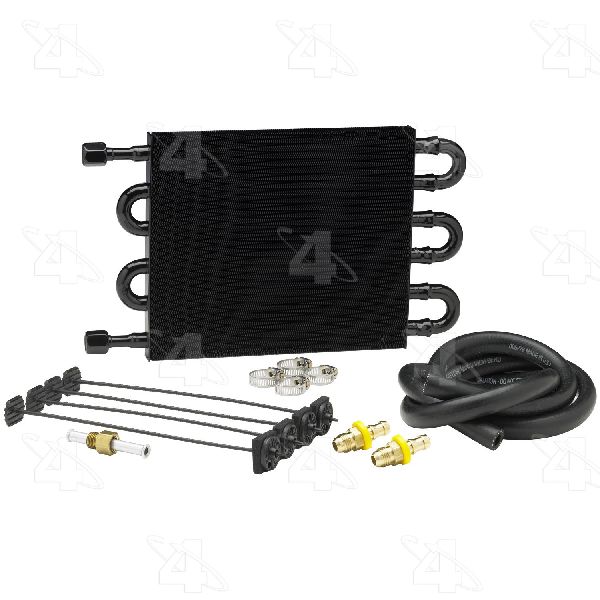
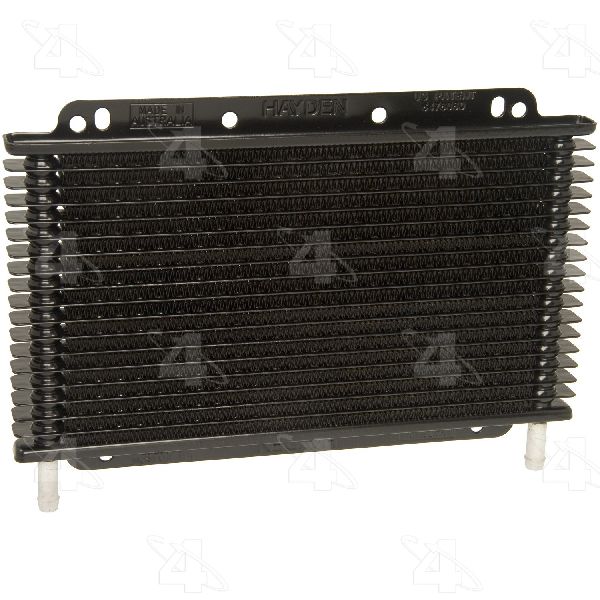
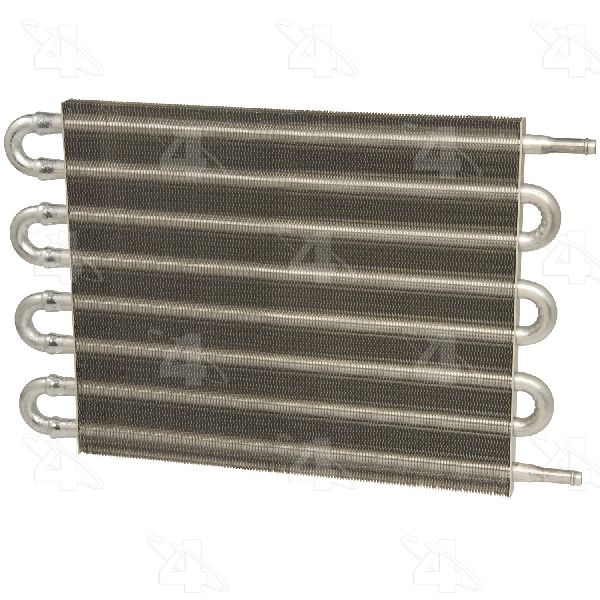
- Stuck Transmission Cooler Thermostat Bypass Valve: → Shop Transmission Assembly Some Ram trucks have a thermal bypass valve for the transmission cooler that can fail, causing the transmission to overheat. While this typically sets overheating codes, the resulting erratic temperatures could potentially trigger a P0714. 🎬 See how to fix common 68RFE transmission overheating issues.
Diagnosis Steps
- Check the transmission fluid level and condition. Address if low or burnt. Use only ATF+4 fluid.
- Connect a professional scan tool to verify P0714 is present and check for any other related codes. Note the freeze-frame data.
- Check with a dealer or equipped shop if any PCM software updates related to TSBs 18-091-16, 18-057-15, or 18-030-14 apply to your vehicle's VIN. If so, performing the update is a primary and cost-effective first step.
- Using the scan tool, monitor the live data for Transmission Fluid Temperature. Watch for erratic jumps or readings that are illogical (e.g., reading 250°F on a cold start).
- Visually inspect the main transmission electrical connector and harness for any signs of corrosion, damage, or fluid intrusion.
- If the signal is erratic and software is up to date, the next step is to test the sensor itself. This requires dropping the transmission pan to access the solenoid/TRS assembly where the sensor is located.
- Test the sensor's resistance and the wiring continuity between the solenoid pack connector and the PCM. Compare readings to manufacturer specifications.
- If the sensor or its internal wiring fails tests, replace the solenoid/TRS assembly. Be sure to get the correct connector color (white or gray).
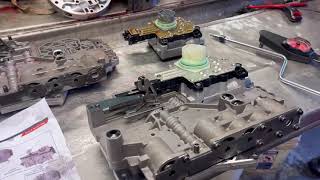
- After replacement, a TCM 'Quick Learn' procedure should be performed with a capable scan tool. 🎬 Watch: How to upgrade your valve body and solenoid pack.
Parts You'll Likely Need
- Transmission Solenoid Block / Range Sensor Assembly
(OEM #68002342AD (White Connector, common replacement), 68376695AA (Gray Connector))— The temperature sensor is integrated into this assembly on the 68RFE transmission. A failure of the sensor requires replacement of the entire unit. It is critical to verify connector color before ordering.
Trusted brands: Mopar, RevMax, ATS Diesel
OEM price range: $350-$500
Aftermarket price range: $250-$450
Related Codes That Often Appear With This One
- P0711 — Both relate to the transmission temperature sensor's performance, with P0711 indicating a general performance issue and P0714 pointing to an intermittent signal. They are often listed together in the same TSBs and diagnostic charts.
- P0712 — This code indicates the sensor circuit is reading too low (high temperature). It can appear with P0714 if the sensor is failing and sending erratic signals that swing between low, high, and intermittent.
- P0713 — This code indicates the sensor circuit is reading too high (low temperature). It can appear with P0714 if the sensor is failing and sending erratic signals that swing between low, high, and intermittent.
- P0869 — This code for high line pressure is often listed in the same TSBs as P0714, suggesting a related software logic issue or a common cause within the transmission's hydraulic control system.
Technical Service Bulletins (TSBs) & Recalls
- 18-091-16: Flash: Powertrain Diagnostic And System Improvements, addresses P0714 by reprogramming the PCM.
- 18-057-15 REV A: Flash: 6.7L Diagnostic and System Improvements, involves reprogramming the PCM for P0714 among other codes.
- 18-030-14 REV. B: Flash: 6.7L Diagnostic and System Improvements, also lists a software update for P0714. [Bulletin #18-030-14 REV. B]
Platform-Specific Known Issues
- Solenoid Pack Connector Color: For 2011-2018 models with the 68RFE, Ram used both white and gray electrical connectors for the solenoid pack, sometimes within the same model year. It is absolutely critical to drop the pan and visually verify the color of the connector on the existing solenoid pack before ordering a replacement to ensure compatibility.
- Software Update Sensitivity: A significant number of P0714 faults on this platform are due to overly sensitive PCM software logic, not a hardware failure. TSB 18-043-17 and others were released specifically to change P0714 from a one-trip to a two-trip fault, meaning the condition must be detected on two consecutive drive cycles to trigger the light. Always check for available software updates before replacing expensive hardware.
- Post-Repair 'Quick Learn' Requirement: After replacing the solenoid pack or performing a PCM flash, the transmission's adaptive memory must be reset. This is done via a 'Quick Learn' procedure using a capable bidirectional scan tool. Failure to perform this step can result in continued poor shifting, slipping, and setting of new codes as the TCM uses old, incorrect adaptive values.
Mechanic-Grade Diagnostic Values
- Transmission Temperature Sensor Resistance — expected: Approximately 1,000 Ohms (1 kΩ) at 20°C (68°F). Resistance should decrease smoothly as temperature increases.. Failure: An open circuit (infinite resistance), a short circuit (near zero resistance), or erratic/jumping resistance values when wiggling wires indicates a fault.
- Transmission Temperature Sensor Voltage (Live Data) — expected: A steady voltage reading that corresponds to the fluid temperature, typically between 0.5V (hot) and 4.5V (cold). Normal operating temperature is around 160-185°F.. Failure: Voltage readings that jump to 0V or 5V, or fluctuate wildly without a corresponding change in actual temperature, will set a P0714 code.
Scan Tool Commands That Help
- Miller Tool #8333 (Transmission Simulator): Thermistor Voltage Switch — This special tool connects in place of the solenoid pack to simulate sensor inputs. By switching between its three thermistor voltage positions and watching the scan tool's 'TRANS TEMP VOLTS' reading, a technician can determine if the fault is in the vehicle's wiring/PCM or within the solenoid pack itself. If the scan tool voltage matches the simulator's output, the vehicle wiring is good and the solenoid pack is the problem.
- wiTECH or equivalent professional scan tool: Read 'Starts Since Set' Counter — For intermittent faults, checking this counter helps determine how recently the fault occurred. If the count is 2 or less, it's considered a current, active fault that warrants immediate hands-on testing. If the count is higher, the problem is intermittent and may require checking wiring and connectors first.
Wiring & Ground Locations
- Transmission Solenoid / TRS Assembly Connector — On the left (driver's) side of the 68RFE transmission case. It is a large, round, black connector.. This is the main external connection point for all internal transmission electronics, including the temperature sensor. It is a primary location to check for corrosion, pin damage, or fluid intrusion that could cause an intermittent signal.
- Engine/Transmission Ground Strap — Typically runs from the back of the cylinder head to a stud on the firewall or bell housing area.. A poor or loose ground connection can cause a floating ground, leading to erratic voltage readings from various sensors, including the transmission temperature sensor. This can mimic a sensor or wiring failure, making it a critical but sometimes overlooked check.
Real Owner Repair Stories
- Cummins Forum user (2008 Ram 2500 with 6.7L Cummins and 68RFE) — Transmission would not shift past 4th gear, Check Engine Light on with codes P0700 and P0871.
❌ Tried (didn't work) A full transmission rebuild with a new heavy-duty torque converter. The problem returned after only 50 miles.
✅ What actually fixed it The issue was suspected to be electrical. The owner noted the truck would drive fine for about an hour after sitting for a day or two, indicating a heat-related electrical problem. The transmission shop suspected a short, possibly related to a 'touchy' Tow/Haul button, but the final resolution pointed towards replacing the entire valve body assembly, not just the solenoid, to resolve the persistent electrical fault.
OEM Part Supersession History
N/A (White Connector Solenoid Pack, e.g., 68002342AD)→N/A (Gray Connector Solenoid Pack, e.g., 68376695AA, 68376695AB)— In 2010, Chrysler determined one of the six solenoids was not needed and removed it, changing the connector color from white to gray to signify the change.
Heads up: For 2011+ models, the gray connector pack (PN 68376695AA, superseded by 68376695AB) is correct. However, the older white connector solenoid pack (e.g., 68002342AD) can be used to service later models and is often done when the gray pack is on backorder. The gray connector pack cannot be used on earlier models that require the white connector. It is crucial to visually confirm the connector color on the vehicle before ordering.
Helpful Videos



We Have This Part in Stock

The information in this article is provided for general reference and educational purposes only. Vehicle specifications, procedures, and part compatibility can vary by production date, trim level, and region. Always consult your vehicle's factory service manual and verify part numbers before purchasing or performing repairs. Safety-critical components such as airbags, seat belts, and braking systems should be installed by a qualified professional.
- Ram 3500:
- 🧭 Diagnostic Flowchart
- 🎬 Helpful Videos
- 🛍️ Shop This Part
- What's Unique About the 2013-2013 Ram 3500
- Symptoms You May Notice
- Most Likely Causes
- Rare But Worth Checking
- Diagnosis Steps
- Parts You'll Likely Need
- Related Codes That Often Appear With This One
- Technical Service Bulletins (TSBs) & Recalls
- Platform-Specific Known Issues
- Mechanic-Grade Diagnostic Values
- Scan Tool Commands That Help
- Wiring & Ground Locations
- Real Owner Repair Stories
- OEM Part Supersession History
- 🎟️ Get 5% Off