

P0715 on 2015-2016 Ford Edge: Input/Turbine Speed Sensor 'A' Circuit Causes and Fixes
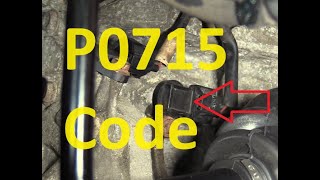
On a 2015-2016 Ford Edge, code P0715 is most often caused by a faulty transmission Input/Turbine Speed Sensor (TSS) or damaged wiring to the sensor. This can lead to severe shifting problems, including harsh shifts and the vehicle entering 'limp mode'. The fix usually involves replacing the sensor, which is an external component on the 6F35/6F55 transmission, or repairing the wiring harness.
- P0715 on a 2015-2016 Ford Edge indicates a problem with the transmission's Input Speed Sensor circuit, which is critical for proper shifting.
- The most common symptoms are severe, including harsh shifting, failure to shift, and the vehicle entering a protective 'limp mode'.
- The most likely cause is a failed Input/Turbine Speed Sensor (TSS) itself, followed by damaged wiring or a bad connector.
- Do not immediately assume the transmission needs a costly rebuild; a thorough diagnosis of the sensor and its circuit should be the first step.
- On this platform's 6F35/6F55 transmission, the TSS is an external sensor, making it more accessible for DIY or professional replacement compared to internal sensors.
What's Unique About the 2015-2016 Ford Edge
The 2015-2016 Ford Edge uses the 6F series automatic transmission (either the 6F35 or 6F55 depending on the engine). While generally reliable, these transmissions can be susceptible to issues with their external sensors and wiring over time. Unlike some transmissions where the sensor is internal, on the 6F35, the TSS is typically an externally mounted sensor, making replacement less labor-intensive as the transmission does not need to be fully disassembled. However, a proper diagnosis is still critical to differentiate between a sensor failure, wiring issue, or a more severe internal transmission problem.
Symptoms You May Notice
- Check Engine Light is on
- Harsh, erratic, or delayed gear shifts
- Vehicle enters "fail-safe" or "limp mode"
- Transmission may be stuck in one gear
- Decreased fuel economy
- Inability to shift gears at all
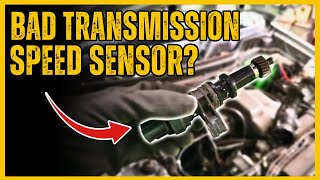
- Flashing O/D (Overdrive) light on the shifter 🎬 Watch: 4 signs of a bad transmission speed sensor
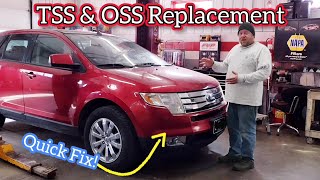
- Replacing the Output Speed Sensor (OSS) instead of the Input/Turbine Speed Sensor (TSS). 🎬 See this video on replacing both TSS and OSS sensors They are different parts with different functions.
- Condemning the entire transmission for a rebuild without first thoroughly testing the TSS and its electrical circuit.
Most Likely Causes
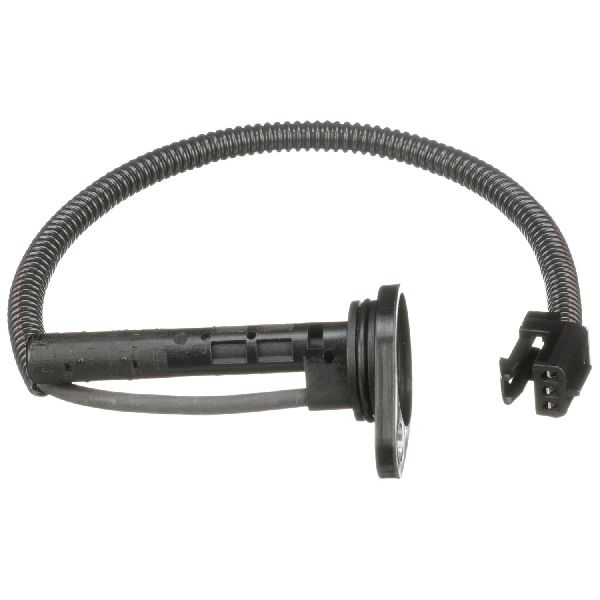
- Faulty Input/Turbine Speed Sensor (TSS) 🔴 High Probability → Shop Automatic Transmission Input Shaft Speed Sensor The sensor is an electronic component that is subjected to heat and vibration and can fail over time. Debris or metal shavings in the transmission fluid can also accumulate on the magnetic tip of the sensor, disrupting its signal.
How to confirm: A technician can use a scan tool to monitor the live data from the TSS. If the reading is erratic, zero, or does not change with engine RPM, the sensor is likely faulty. The sensor's internal resistance can also be tested with a multimeter and compared to the manufacturer's specifications.
Typical fix: Replace the Input/Turbine Speed Sensor. On the 6F35 transmission, this sensor is located on the outside of the transmission case, making it accessible for replacement without major disassembly. 🎬 Watch: Ford Edge turbine speed sensor replacement walkthrough
Est. part cost: $30-$80 - Damaged Wiring or Electrical Connector 🟡 Medium Probability The wiring harness leading to the transmission can be exposed to heat, vibration, and road debris, potentially causing wires to break, chafe, or corrode over time.
How to confirm: Visually inspect the wiring harness and connector for any signs of damage, corrosion, or loose connections. A multimeter can be used to check for continuity, proper voltage, and ground at the connector.
Typical fix: Repair the damaged section of the wiring harness or replace the connector pigtail.
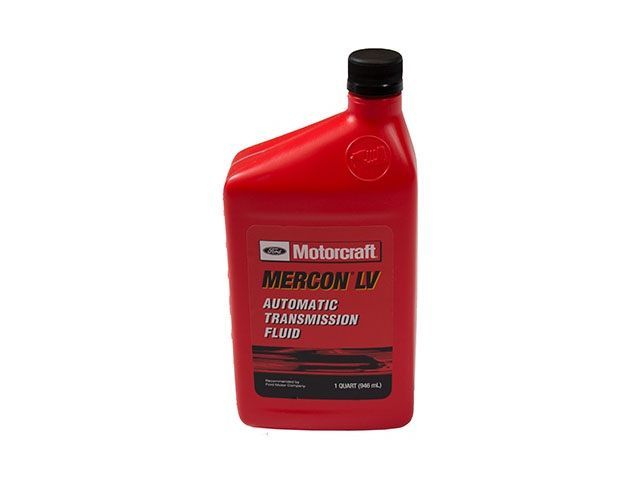
Est. part cost: $20-$50 - Low or Dirty Transmission Fluid ⚪ Low Probability → Shop Transmission Assembly Neglected maintenance can lead to fluid breakdown and contamination. Metal shavings and other debris in the fluid can interfere with the magnetic operation of the speed sensor.
How to confirm: Check the transmission fluid level and condition. The fluid should be at the correct level and appear clean (typically red). If it is dark, burnt-smelling, or contains debris, it needs to be changed.
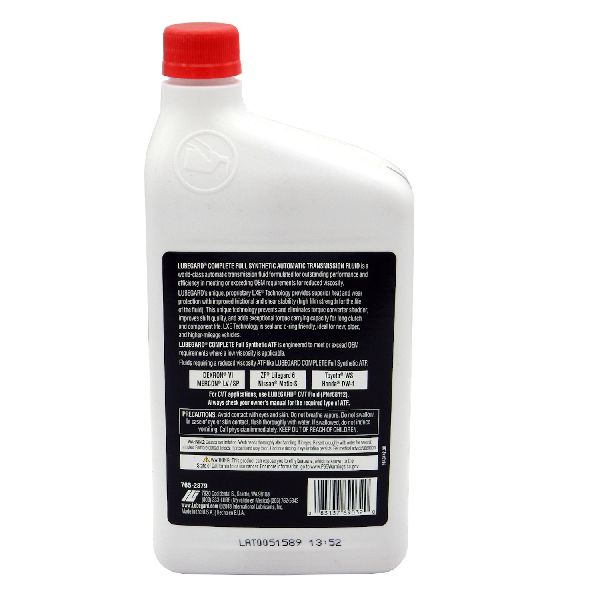
Typical fix: Perform a transmission fluid and filter change. This may resolve the issue if it's caused by contaminated fluid or restricted hydraulic passages.
Est. part cost: $100-$250 (for fluid and filter)
Rare But Worth Checking
- Faulty Powertrain Control Module (PCM) or Transmission Control Module (TCM): → Shop Transmission Assembly This is a very uncommon cause. All other possibilities, especially the sensor and wiring, should be exhaustively ruled out before considering module replacement.
- Internal Transmission Mechanical Failure: → Shop Transmission Assembly A more serious internal issue, such as a damaged reluctor ring, failing torque converter, or worn internal components, can also trigger this code. This is usually accompanied by other symptoms like noise or severe slipping.
Diagnosis Steps
- Connect an OBD-II scanner to read the code and check for any other related codes.
- Check the level and condition of the automatic transmission fluid. Top off or change if necessary.
- Perform a thorough visual inspection of the transmission wiring harness and the main connector for any signs of damage, corrosion, or loose pins.
- Use a scan tool with live data capability to monitor the Input Speed Sensor (TSS) PID. Observe if the RPM reading is present, stable, and corresponds to engine speed.
- If the signal is absent or erratic, test the sensor's circuit. Check for proper voltage, ground, and signal at the sensor connector using a multimeter and a vehicle-specific wiring diagram.
- If the wiring is confirmed to be good, test the sensor itself. Check its internal resistance with a multimeter and compare it to the OEM specification (typically 500–1,200 Ω).
- If the sensor tests faulty, replace the Input/Turbine Speed Sensor.
- If the problem persists after replacing the sensor and verifying the wiring, further diagnosis of the PCM or internal transmission components may be required by a professional.
Parts You'll Likely Need
- Transmission Input/Turbine Speed Sensor (TSS)
(OEM #DL8Z-7M101-A)— This sensor is the most common failure point for the P0715 code. It is an electronic component that wears out over time.
Trusted brands: Motorcraft, Standard Motor Products (SMP), NTK
OEM price range: $50-$90
Aftermarket price range: $25-$60
Related Codes That Often Appear With This One
- P0717 — P0717 indicates 'Input/Turbine Speed Sensor 'A' Circuit No Signal'. A failing sensor or broken wire can cause an erratic signal (P0715) or a complete loss of signal (P0717), so they often appear together.
- P0720 — This code relates to the Output Speed Sensor (OSS) circuit. Sometimes, a wiring issue or module fault affecting the TSS can also impact the OSS circuit, causing both codes to appear.
Technical Service Bulletins (TSBs) & Recalls
- TSB 07-21-11: While for an older 2007-2008 model, this TSB addresses DTC P0715 on the 6F50 transmission, indicating a history of potential intermittent shorts in the TSS sensor.
Platform-Specific Known Issues
- Owner Experience with P0715 and P0717: On the Ford Edge Forum, a user with a 2008 model (which uses a similar 6F50 transmission) reported getting both P0715 and P0717 codes along with a wrench light, even after replacing both the TSS and OSS sensors. This highlights that the issue can sometimes be intermittent or related to the wiring harness or PCM, not just the sensor itself.
- DIY Repair Discussion: A thread on the Ford Truck Enthusiasts forum for a similar transmission details the symptoms of a failing TSS, including banging into gear and a flashing O/D light. The user successfully replaced the sensor, confirming it as the fix. This provides context that a sensor replacement is a common and effective solution for these symptoms.
Diagnostic Flowchart
Other Known Issues on This Vehicle
Issues unrelated to this code that are worth knowing about as an owner of this generation:
- 2.0L EcoBoost Coolant Intrusion 🔴 High — A known issue for 2015-2018 models where a design flaw may allow coolant to leak into the engine's cylinders, potentially causing misfires and engine failure. (Ref: TSB 19-2346)
- Brake Hose Rupture 🔴 High — Affects 2015-2018 models. The front brake jounce hoses can rupture, leading to a brake fluid leak and increased stopping distances. (Ref: Recall 20S42)
- Torque Converter Failure 🟠 Medium — Some owners have reported issues with the torque converter, which can cause shuddering, slipping, and eventual transmission failure. Recalls were issued for bad welds on some model years. (Ref: Recalls in 2017 and 2018)
- Faulty Brake Booster 🟠 Medium — A prevalent issue reported for models up to 2015, where the brake booster may fail, resulting in a hard brake pedal and increased effort to stop the vehicle.
- Door Ajar Warning Light Stays On 🟡 Low — A common complaint where a faulty door latch sensor causes the 'door ajar' warning to remain illuminated, which can drain the battery.
Real Owner Stories
Aggregated from forums and TSBs cited above. Mileages and costs reflect what owners reported in those sources.
2008 Ford Edge
Symptoms: Wrench light keeps coming on; getting both P0715 and P0717 codes.
What fixed it: The issue persisted even after replacing both TSS and OSS sensors, suggesting an intermittent fault in the wiring harness or PCM.
Source hint: Ford Edge Forum - 'Wrench light keeps coming on after replacing TSS and OSS sensors - code P0715 & P0717'
Ford Truck (6F series transmission)
Symptoms: Transmission was banging into gear and the O/D (Overdrive) light was flashing on the shifter.
What fixed it: Successfully replaced the Turbine Shaft Speed (TSS) sensor.
Source hint: Ford Truck Enthusiasts Forums - 'Code P0715 Turbine Shaft Speed Sensor...how to replace'
Related OBD-II Codes
Frequently Asked Questions
Where is the Input/Turbine Speed Sensor (TSS) located on my 2015 Ford Edge with the 6F35 transmission?
Does TSB 07-21-11 apply to my 2015-2016 Ford Edge?
Can dirty transmission fluid cause a P0715 code on my Ford Edge?
What should the resistance reading be for a healthy TSS sensor on this vehicle?
I'm seeing a 'wrench light' and P0715; could this be something other than the sensor?
Are there any other major mechanical issues I should look out for on a 2015-2016 Ford Edge while fixing the transmission?
Helpful Videos

We Have This Part in Stock



The information in this article is provided for general reference and educational purposes only. Vehicle specifications, procedures, and part compatibility can vary by production date, trim level, and region. Always consult your vehicle's factory service manual and verify part numbers before purchasing or performing repairs. Safety-critical components such as airbags, seat belts, and braking systems should be installed by a qualified professional.
- Ford Edge:
- 🧭 Diagnostic Flowchart
- 🎬 Helpful Videos
- 🛍️ Shop This Part
- What's Unique About the 2015-2016 Ford Edge
- Symptoms You May Notice
- Most Likely Causes
- Rare But Worth Checking
- Diagnosis Steps
- Parts You'll Likely Need
- Related Codes That Often Appear With This One
- Technical Service Bulletins (TSBs) & Recalls
- Platform-Specific Known Issues
- Other Known Issues on This Vehicle
- Real Owner Stories
- 2008 Ford Edge
- Ford Truck (6F series transmission)
- Related OBD-II Codes
- Frequently Asked Questions
- 🎟️ Get 5% Off