

P0715 on 2001-2005 Ford Explorer Sport Trac: Input Speed Sensor Guide
This code means the transmission's Input Speed Sensor has a circuit problem. On this vehicle, the sensor is inside the transmission, making it a labor-intensive fix. The most common cause is the sensor itself failing, leading to harsh shifting, a flashing O/D light, and potential limp mode. Diagnosis can begin externally by checking resistance at the main connector before committing to internal repairs.
- P0715 on a 2001-2005 Sport Trac points to a problem with the Input Speed Sensor circuit.
- The most likely fix is replacing the sensor itself, but this is a difficult DIY job because the sensor is inside the transmission.
- Symptoms are serious and include harsh shifting and the transmission going into a protective 'limp mode'.
- Do not confuse the internal Input Speed Sensor (TSS) with the external Output Speed Sensor (OSS); replacing the wrong one will not fix the problem.
- Due to the complexity of the repair, getting a professional diagnosis is highly recommended to confirm the sensor is the fault before starting this labor-intensive job.
What's Unique About the 2001-2005 Ford Explorer Sport Trac
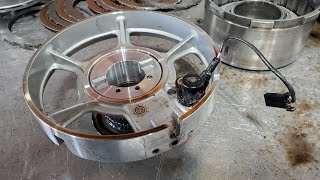
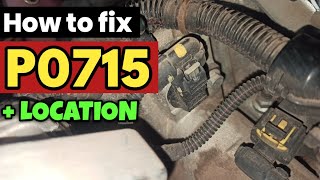
The 2001-2005 Explorer Sport Trac uses the Ford 5R55E (or a similar variant like the 5R55W/S) automatic transmission. A critical, and often frustrating, characteristic of this specific transmission is that the Input Speed Sensor (TSS) is located internally, mounted on the center support. 🎬 Watch: See exactly where this internal sensor is located. This means that unlike many other vehicles where the sensor is a simple external part, replacing it on the Sport Trac requires removing the transmission oil pan and valve body to gain access. In some cases, the transmission may need to be partially or fully disassembled, significantly increasing labor time and cost. This internal location is shared across several Ford and Mazda platforms using this transmission family.
Symptoms You May Notice
- Harsh or erratic shifting, especially a hard 'bang' between 1st and 2nd gear.
- Transmission entering 'limp mode,' often stuck in 2nd or 3rd gear.
- Flashing 'O/D OFF' (Overdrive Off) light on the instrument cluster.
- Delayed engagement when shifting from Park to Drive or Reverse.
- Inaccurate or non-functional speedometer (less common, as the main VSS is often on the rear differential for the speedometer reading on these models).
- Reduced fuel economy.
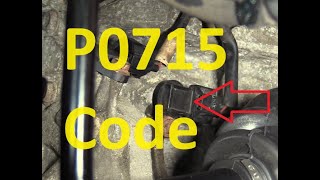
- Engine may hesitate or surge during acceleration. 🎬 Watch: A breakdown of P0715 causes and common fixes.
- Replacing the external Output Shaft Speed (OSS) sensor. The OSS sensor is located on the outside of the transmission case and is easy to access, but it is a different part and will not fix a P0715 code, which is for the internal Input Speed Sensor (TSS). Many parts stores will incorrectly sell an external sensor for this code, leading to frustration.
- Replacing the Vehicle Speed Sensor (VSS) on the rear differential. This sensor provides the signal for the speedometer and rear ABS but is not related to the P0715 input speed code.
Most Likely Causes
- Failed Internal Input Speed Sensor (TSS) 🔴 High Probability The sensor operates in a harsh environment of heat and fluid inside the transmission and can fail electronically over time. It is a known failure point on the 5R55E transmission family.
How to confirm: A professional scan tool can monitor the live data stream from the TSS. If the reading is erratic, zero, or does not change with engine RPM while in gear, the sensor is likely bad. Before opening the transmission, you can test the sensor's resistance at the 16-pin external connector on the driver's side of the transmission. Using an ohmmeter on pins 2 and 3, the reading should be between 64-126 ohms. An open or shorted reading points to a bad sensor or internal wiring.
Typical fix: Replace the Input Speed Sensor (TSS). This requires draining the transmission fluid, removing the oil pan, and removing the valve body to access the sensor on the center support. Often, the entire internal wiring harness is replaced at the same time. 🎬 See this walkthrough on how to replace the sensor.
Est. part cost: $40-$90 - Damaged Wiring or Connectors 🟡 Medium Probability The main external 16-pin connector on the transmission case is exposed to road debris and moisture. Internal wiring can also become brittle from constant heat cycles, causing shorts or open circuits.
How to confirm: Visually inspect the main transmission harness connector for corrosion, bent pins, or damage. Perform a continuity test on the wires from the PCM/TCM to the transmission connector. The resistance test across pins 2 and 3 will also help determine if the external wiring is intact.
Typical fix: Repair the damaged section of the external wiring harness or replace the connector pigtail. If the fault is internal, the internal transmission harness must be replaced, which requires the same labor as replacing the sensor itself.
Est. part cost: $20-$100 - Low or Dirty Transmission Fluid ⚪ Low Probability → Shop Transmission Assembly Neglected maintenance can lead to fluid that is contaminated with clutch material and metal shavings, which can interfere with magnetic sensors or cause solenoid issues that present similarly.
How to confirm: Check the transmission fluid level and condition. If the fluid is dark brown/black, smells burnt, or contains visible debris, it is overdue for service.
Typical fix: Perform a transmission fluid and filter change. This is often done as part of the sensor replacement. While a fluid change alone is unlikely to fix a P0715 circuit code, it can sometimes resolve performance issues if the fluid is extremely degraded.
Est. part cost: $80-$150
Rare But Worth Checking
- Faulty Powertrain Control Module (PCM): This is very uncommon. The PCM should only be suspected after all other possibilities, including the sensor and all internal/external wiring, have been definitively ruled out.
- Internal Transmission Mechanical Failure: → Shop Transmission Assembly A damaged reluctor ring (the part the sensor reads) or other hard part failure can cause this code, but would typically be accompanied by severe mechanical symptoms like grinding noises or a complete loss of movement.
Diagnosis Steps
- Check for other stored DTCs to see if other codes provide more clues.
- Use a scan tool to view the live data for the Input/Turbine Speed Sensor (TSS). The reading should be stable and correspond to engine RPM when the torque converter is locked.
- Check the transmission fluid level and condition. Ensure it is full and not burnt or contaminated.
- Inspect the main 16-pin electrical connector on the driver's side of the transmission case for any signs of damage, corrosion, or fluid intrusion.
- Test the sensor circuit externally. Disconnect the 16-pin connector and measure the resistance between pins 2 and 3. A healthy TSS should read between 64-126 ohms. An open circuit (infinite resistance) or short circuit (zero resistance) confirms a fault in the sensor or internal harness.
- If the external wiring and resistance test check out, the problem may be intermittent or in the wiring between the connector and the PCM. If the resistance test fails, the transmission must be opened.
- Drain the fluid, drop the transmission pan, and remove the valve body.
- Visually inspect the internal wiring harness and the Input Speed Sensor itself. The harness can become brittle and crack from heat.
- Replace the Input Speed Sensor and consider replacing the entire internal harness as a preventative measure.
- Reassemble with a new pan gasket and filter, and refill with the correct type of transmission fluid (Mercon V).
Parts You'll Likely Need
- Transmission Input Speed Sensor (TSS)
(OEM #F5TZ-7M101-A)— This is the most common failure point for a P0715 code. It is an electronic sensor that fails over time due to heat and vibration inside the transmission.
Trusted brands: Motorcraft, Standard Motor Products (SMP), Rostra
OEM price range: $60-$100
Aftermarket price range: $30-$60 - Transmission Pan Gasket and Filter Kit — These must be replaced anytime the transmission pan is removed to access internal components like the sensor.
Trusted brands: Motorcraft, ATP, Wix
OEM price range: $40-$60
Aftermarket price range: $25-$45 - Transmission Internal Wiring Harness — Recommended to be replaced along with the TSS. The internal wiring becomes brittle from heat and can cause intermittent shorts or opens, leading to a repeat failure if not addressed.
Trusted brands: Motorcraft, Dorman
OEM price range: $80-$150
Aftermarket price range: $50-$90
Related Codes That Often Appear With This One
- P0717 — P0717 indicates 'Input/Turbine Speed Sensor 'A' Circuit No Signal', which is a more specific version of P0715. They often appear together if the sensor has completely failed or is disconnected.
- P0500 — P0500 is for the Vehicle Speed Sensor (VSS) circuit, typically reading from the rear differential on this truck. While a different circuit, a user on a forum reported having both P0715 and P0500 simultaneously, which could indicate a broader wiring harness issue or multiple separate faults.
Technical Service Bulletins (TSBs) & Recalls
- No specific TSB for P0715 on the 2001-2005 Explorer Sport Trac with the 5R55E was found. TSB 07-21-11 exists for P0715 but applies to the unrelated 6F50 transmission found in newer, different vehicle
- A related manufacturer bulletin, TSB 07-3-11, describes issues with 6F50 transaxles where DTCs P0715, P0717, and P0718 are present alongside harsh engagement or a "fifth gear only" condition (NHTSA ODI #10692963).
Platform-Specific Known Issues
- Real-World Repair Story: An owner on Ranger-Forums with a P0715 code on a 5R55E transmission was quoted $1,300 for the repair. Another forum member confirmed the high labor cost is because the transmission must be disassembled to reach the ~$20 sensor, and recommended a full rebuild at that point since most of the labor is already done.
Mechanic-Grade Diagnostic Values
- TSS Sensor Resistance — expected: 64-126 ohms. Failure: Open circuit (infinite resistance) or short circuit (near zero resistance).
- TSS Signal Circuit Continuity (Trans Connector to PCM) — expected: Less than 5.0 ohms. Failure: Resistance greater than 5.0 ohms indicates excessive resistance or an open in the wiring harness.
- TSS Signal Circuit Short to Ground — expected: Greater than 10,000 ohms. Failure: Resistance less than 10,000 ohms indicates a short to ground in the harness.
- TSS Live Data (Scan Tool PID: TSS_SRC) — expected: RPM should increase and decrease smoothly with engine RPM and vehicle speed during a road test.. Failure: A reading of zero, or an erratic signal that drops to zero intermittently, points to a fault in the sensor, wiring, or PCM.
Scan Tool Commands That Help
- FORScan / Ford IDS: Live Data Monitoring (PID: TSS or TSS_SRC) — This is the most critical diagnostic function for P0715. It allows a technician to watch the sensor's reported speed in real-time while driving. An erratic or zero reading, while the engine is running and in gear, immediately confirms a problem in the sensor circuit.
Wiring & Ground Locations
- PCM Connector C175 (or similar) — Mounted on the passenger side of the firewall in the engine compartment.. The two wires from the internal TSS sensor run all the way to this connector. A technician can back-probe the specific pins for the TSS circuit here to test the entire circuit (sensor and wiring) from one location.
- G100 / G101 / G104 — These are primary engine compartment grounds, typically located on the firewall or inner fenders near the battery. For a 2003 model, G100 is at the center of the firewall, while G103 and G104 are at the left front of the engine compartment.. The PCM and its related sensors rely on clean, solid ground connections. A corroded or loose main ground can cause floating voltages and erratic sensor readings, potentially triggering a P0715 code even if the sensor and its direct wiring are good.
- Transmission 16-Pin Connector — On the driver's side of the transmission case.. This is the main external connection point for all internal electronics. Pins 2 and 3 are for the Input Speed Sensor (TSS). Testing resistance here is the first step to determine if the fault is inside the transmission (bad sensor/internal harness) or outside (external wiring/PCM).
Real Owner Repair Stories
- The Ranger Station forum user 'Tranger994x4' (1999 Ford Ranger 4.0L with 5R55E) — P0715, transmission in limp mode, banging into every gear.
❌ Tried (didn't work) Fluid and filter change., Cleaning all external transmission connectors and the main PCM connectors.
✅ What actually fixed it The user tested the TSS resistance at the connector and it was within spec (94 ohms). However, when monitoring live data on a scan tool, the TSS RPM reading was 0 but would flicker intermittently, indicating a short in the wiring that wasn't apparent during a static resistance test. The final fix was not posted, but the diagnosis pointed directly to an intermittent wiring short or a failing sensor that only manifested under operating conditions. - Ford Truck Enthusiasts forum user (1999 Ford Ranger 4.0L with 5R55E) — P0715 and P0500, very hard thump when shifting 1st-2nd and 2nd-3rd.
❌ Tried (didn't work) A complete transmission rebuild was performed, but the problem persisted immediately after, ruling out internal clutch/band failure.
✅ What actually fixed it The user took it to a Ford dealer for diagnosis after the rebuild failed to solve the issue. The combination of P0715 (internal TSS) and P0500 (VSS, typically the rear differential sensor) pointed towards a wiring or computer issue rather than just the internal sensor itself, especially since the problem survived a rebuild. The final resolution was not explicitly stated, but the diagnostic path correctly shifted away from the transmission's internal mechanics.
Documented NHTSA Reports
- An owner reported a P0715 code where the TSS input was erratic, leading the dealership to consider the code inconclusive (NHTSA ODI #10584497).
- In NHTSA ODI #11437142, a vehicle entered limp mode with a dashboard wrench icon; the owner found codes P0715 and P0717 and eventually traced the issue to a wiring problem.
- Another report (NHTSA ODI #10440232) describes a P0715 failure where replacing the speed sensor did not resolve the issue, suggesting a deeper problem within the PCM or related circuitry.
- NHTSA ODI #10524644 notes a flashing dash light and a "turbine speed sensor check fault" associated with code P0715.
OEM Part Supersession History
95GT-7M101-AC→F5TZ-7M101-A— Standard part number update and consolidation by Ford.
Heads up: These parts are generally interchangeable for the specified application. The Motorcraft service part number is often DY1227.
Model Year Variations Within This Range
- 2001-2005 (and similar 1997+): The 5R55E transmission used in this generation of Explorer Sport Trac and Ranger has the Input Speed Sensor (TSS) located *internally* on the center support, requiring significant disassembly to replace. Later, related transmissions like the 5R55S and 5R55W (found in other Ford models like later Explorers and Mustangs) moved the TSS to an *external* location on the case, making it a simple bolt-off, bolt-on repair. This is a major point of confusion.
Diagnostic Flowchart
Other Known Issues on This Vehicle
Issues unrelated to this code that are worth knowing about as an owner of this generation:
- 4.0L SOHC Timing Chain Cassette Failure 🔴 High — Very common, often presents as a rattling noise on startup or deceleration ('death rattle'). Can occur at any mileage but becomes more likely after 70k miles. Failure can be catastrophic to the engine. (Ref: Ford issued updated tensioners, but no formal recall. Repair is labor-intensive, especially for the rear cassette which often requires engine removal.)
- Cracked Plastic Thermostat Housing 🔴 High — Extremely common failure point, leading to coolant leaks and potential overheating. The plastic becomes brittle and cracks at the seams. (Ref: No recall, but Ford and the aftermarket offer a much more durable metal replacement housing.)
- Transmission Solenoid Block Failure 🟠 Medium → Shop Transmission Assembly — Common after 100k miles. Can cause a variety of shifting issues, including harsh shifts, delayed engagement, and flashing O/D light, sometimes mimicking a speed sensor failure.
- Intermittent Dash Gauge Cluster Failure 🟡 Low — Owners report the instrument cluster intermittently shutting off and on while driving. This is often due to cold solder joints on the cluster's circuit board.
Used vs. New Parts: Buying Guide for This Vehicle
When a used part is the smart pick: For this repair, a used part is almost never a sensible choice. The primary failure parts are the electronic sensor and the internal wiring harness, which are wear items that degrade with heat and time. Pulling a 20-year-old sensor or harness from a junkyard vehicle provides no guarantee of remaining life and is not worth the immense labor required for the installation.
What to inspect on the donor part:
- Not applicable. Do not use salvaged electronic components for this internal transmission repair.
OEM-only on this vehicle (don't cheap out):
- While not strictly 'OEM-only', using a high-quality replacement is critical. Given the high labor cost, saving a few dollars on a questionable sensor is a poor gamble. Motorcraft (OEM) is the safest choice.
- Transmission Internal Wiring Harness
Aftermarket brands forum-validated for this vehicle:
- Rostra
- Standard Motor Products (SMP)
- Dorman (for internal harness)
Brands owners have reported issues with on this vehicle:
- No-name, unbranded sensors from online marketplaces should be avoided due to the high labor cost of a potential repeat failure.
Real Owner Stories
Aggregated from forums and TSBs cited above. Mileages and costs reflect what owners reported in those sources.
Ford with 5R55E transmission
Symptoms: Owner was experiencing a P0715 code.
What fixed it: The story highlights the high labor cost due to the need for significant transmission disassembly to reach the internal sensor. A full rebuild was recommended since most of the labor was already being done.
Cost: $1300-$1300
Source hint: Real-World Repair Story from Ranger-Forums
'98 Explorer
Symptoms: A P0715 code with rough 1-2 shifts.
What fixed it: Replacing the speed sensor was confirmed to be the root cause of the issue.
Source hint: Ford Truck Enthusiasts Forums - (https://www.ford-trucks.com/forums/495229-engine-code-p0715.html)
Ford Ranger with 5R55E
Symptoms: Transmission input sensor problem with O/D light flashing and P0715 code.
What fixed it: The owner confirmed the fix required replacing the internal TSS after testing the circuit at pins 2 and 3 on the external connector and getting a bad reading.
Source hint: Ranger-Forums - (https://www.ranger-forums.com/general-technical-electrical-18/po715-transmission-code-o-d-light-164741/)
Ford with 5R55E transmission
Symptoms: Error code P0715.
What fixed it: The owner was initially sold the wrong (external) speed sensor. The fix required obtaining and installing the correct internal Input Speed Sensor (TSS).
Source hint: Ford Truck Enthusiasts Forums - (https://www.ford-trucks.com/forums/1384013-error-code-p0715-question.html)
Related OBD-II Codes
Frequently Asked Questions
Where is the Input Speed Sensor (TSS) for code P0715 located on my Sport Trac? Can I change it myself?
Is there a way to test the P0715 speed sensor without taking the transmission apart?
A parts store sold me an external speed sensor for my P0715 code. Is this the right part for my 2001-2005 Sport Trac?
My 'O/D OFF' light is flashing and the transmission is shifting hard. Could this be caused by P0715?
Since the P0715 repair is so labor-intensive, is there anything else I should replace while the transmission is open?
What type of transmission fluid does my 2001-2005 Explorer Sport Trac need after replacing the P0715 sensor?
I found TSB 07-21-11 for code P0715. Does this apply to my 2001-2005 Explorer Sport Trac?
Helpful Videos

We Have This Part in Stock

The information in this article is provided for general reference and educational purposes only. Vehicle specifications, procedures, and part compatibility can vary by production date, trim level, and region. Always consult your vehicle's factory service manual and verify part numbers before purchasing or performing repairs. Safety-critical components such as airbags, seat belts, and braking systems should be installed by a qualified professional.
- Ford Explorer Sport Trac:
- 🧭 Diagnostic Flowchart
- 🎬 Helpful Videos
- 🛍️ Shop This Part
- What's Unique About the 2001-2005 Ford Explorer Sport Trac
- Symptoms You May Notice
- Most Likely Causes
- Rare But Worth Checking
- Diagnosis Steps
- Parts You'll Likely Need
- Related Codes That Often Appear With This One
- Technical Service Bulletins (TSBs) & Recalls
- Platform-Specific Known Issues
- Mechanic-Grade Diagnostic Values
- Scan Tool Commands That Help
- Wiring & Ground Locations
- Real Owner Repair Stories
- Documented NHTSA Reports
- OEM Part Supersession History
- Model Year Variations Within This Range
- Other Known Issues on This Vehicle
- Used vs. New Parts: Buying Guide for This Vehicle
- Real Owner Stories
- Ford with 5R55E transmission
- '98 Explorer
- Ford Ranger with 5R55E
- Ford with 5R55E transmission
- Related OBD-II Codes
- Frequently Asked Questions
- 🎟️ Get 5% Off