

P0715 on 2015-2016 Ford Flex: Input/Turbine Speed Sensor 'A' Circuit Failure Causes and Fixes
P0715 on a 2015-2016 Ford Flex indicates a fault with the transmission's Input/Turbine Speed Sensor 'A' circuit, which is part of the 6F50/6F55 automatic transmission. This usually means the sensor itself has failed. Expect harsh shifting, getting stuck in one gear, and the vehicle may enter a 'limp mode'. Replacing the sensor, located inside the transmission side cover, is the most common fix.
- P0715 on your Ford Flex points to a problem with the transmission's input speed sensor circuit in the 6F50/6F55 transmission.
- Symptoms will be very noticeable, including harsh shifting and potentially entering a reduced-power 'limp mode'.
- The most likely cause is a failed Turbine Speed Sensor (TSS) itself.
- Due to the sensor's location inside the transmission housing, this repair is labor-intensive and best handled by a professional mechanic.
- Do not ignore this code, as continued driving can cause additional stress and damage to the transmission.
What's Unique About the 2015-2016 Ford Flex
The Ford Flex from this era uses the 6F50/6F55 automatic transmission, shared with platform mates like the Ford Explorer, Edge, and Lincoln MKT. While generally reliable, issues with transmission speed sensors are a known issue across various Ford models using this family of transmissions. For the 2015-2016 models, the cause is most often an isolated failure of the sensor itself or its wiring, rather than a widespread design flaw covered by a specific recall for this component.
Symptoms You May Notice
- Harsh, erratic, or delayed gear shifts
- Vehicle entering 'limp mode' or 'fail-safe' mode with limited speed
- Check Engine Light is on
- Flashing Overdrive light or transmission warning message on the dash
- Decreased fuel economy
- Inability to shift into higher gears
- Engine stalling when coming to a stop
- Erratic or non-functional speedometer (less common, usually associated with the output speed sensor, but can occur)
- Replacing the Output Speed Sensor (OSS) instead of the Input/Turbine Speed Sensor (TSS). They are separate sensors with different functions and part numbers.
- Condemning the entire transmission without first diagnosing the sensor and its circuit.
- Replacing the sensor without checking for metal debris on the magnetic tip, which can sometimes be cleaned off to restore function temporarily, indicating a larger internal problem.
Most Likely Causes
- Defective Input/Turbine Speed Sensor (TSS) 🔴 High Probability → Shop Automatic Transmission Input Shaft Speed Sensor The sensor is an electronic component that operates in a high-temperature environment. Over time, heat cycles and vibration can cause the internal circuitry to fail.
How to confirm: A diagnostic scan tool can monitor the live data from the TSS. If the reading is erratic, zero, or doesn't change with engine RPM while in gear, the sensor is likely faulty. A technician can also test the sensor's resistance with a multimeter after removing it from the transmission.
Typical fix: Replace the Turbine Speed Sensor. This involves draining the transmission fluid and removing the side cover of the transmission to access the sensor.
Est. part cost: $50-$200 - Damaged Wiring or Connectors 🟡 Medium Probability The wiring harness leading to the transmission is exposed to the elements, road debris, and heat from the engine/exhaust. This can lead to chafed or broken wires, or corrosion in the connector pins.
How to confirm: Visually inspect the wiring harness going to the transmission for any signs of chafing, breaks, or corrosion at the connectors. Perform a continuity test on the wires from the sensor connector to the TCM connector.
Typical fix: Repair the damaged section of the wiring harness or replace the connector. Ensure the repaired section is properly insulated and secured away from heat sources.
Est. part cost: $20-$100 - Low or Dirty Transmission Fluid ⚪ Low Probability → Shop Transmission Assembly While not a direct cause of a circuit malfunction code, very low or contaminated fluid can cause erratic transmission behavior and overheating, which can contribute to sensor failure. Metal shavings from internal wear suspended in the fluid can also stick to the magnetic tip of the sensor, disrupting its signal.
How to confirm: Check the transmission fluid level and condition using the dipstick. The fluid should be at the correct level and reddish-pink, not brown, black, or smelling burnt.
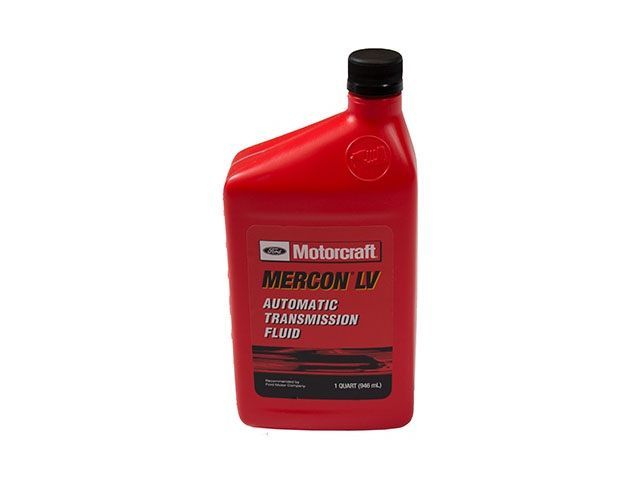
Typical fix: Perform a transmission fluid drain and fill, or a full fluid exchange if the fluid is heavily contaminated. This is often done as part of the sensor replacement.
Est. part cost: $100-$250 (for fluid and filter)
Rare But Worth Checking
- Faulty Powertrain Control Module (PCM) or Transmission Control Module (TCM): → Shop Transmission Assembly This is very rare. The PCM/TCM should only be considered after all other possibilities, including the sensor, wiring, and even internal mechanical components, have been thoroughly tested and ruled out.
- Internal Transmission Mechanical Failure: → Shop Transmission Assembly A severe internal issue, like a failing torque converter or a damaged reluctor wheel (the toothed ring the sensor reads), can cause erratic speed readings. This would typically be accompanied by other symptoms like loud grinding noises, severe slipping, or significant metal debris in the transmission pan.
Diagnosis Steps
- Connect a diagnostic scan tool and confirm that P0715 is the primary code. Note any other transmission-related codes.
- Use the scan tool to monitor the live data stream for the Input/Turbine Speed Sensor (TSS).
- Observe the TSS reading while the vehicle is in gear and the engine RPM is raised. The TSS RPM should increase smoothly with the engine RPM.
- If the TSS reading is erratic, intermittent, or stuck at zero, the problem is likely the sensor or its circuit.
- Perform a thorough visual inspection of the transmission wiring harness and connectors for any visible damage, corrosion, or loose connections.
- If wiring appears okay, access the sensor. This requires partial disassembly as it's located inside the transmission side cover.
- Once the sensor is removed, inspect its magnetic tip for any metal shavings or debris. An accumulation of metal indicates potential internal transmission wear.
- Check the sensor's internal resistance with a multimeter and compare it to the manufacturer's specifications. Also, test for proper voltage and ground at the sensor's connector.
- If the sensor and wiring test good, the issue may be with the reluctor wheel inside the transmission or, in rare cases, the TCM itself.
Parts You'll Likely Need
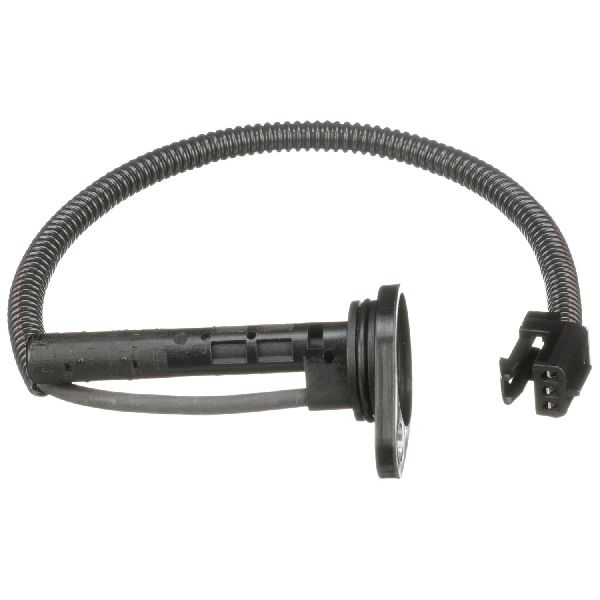
- Automatic Transmission Input/Turbine Speed Sensor
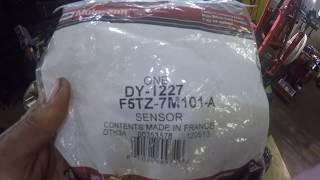
(OEM #8A8Z-7M101-A (Note: This part may be superseded by AA5Z-7M101-B))— This sensor is the most common failure point for the P0715 code.
Trusted brands: Motorcraft, Dorman, Standard Motor Products (SMP)
OEM price range: $150-$200
Aftermarket price range: $50-$120
Related Codes That Often Appear With This One
- P0717 — P0717 indicates 'Input/Turbine Speed Sensor A Circuit No Signal', which is a more specific version of the P0715 fault. They often appear together if the sensor has completely failed or the wiring is severed.
- P0720 — This code relates to the Output Speed Sensor (OSS). If both input and output speed sensor codes appear, it could point to a larger wiring harness issue affecting both sensors, a bad ground, or a problem with the TCM.
- P0722 — Similar to P0717, this code indicates 'Output Speed Sensor Circuit No Signal'. Seeing P0715 and P0722 together strongly suggests a shared wiring or power issue.
Platform-Specific Known Issues
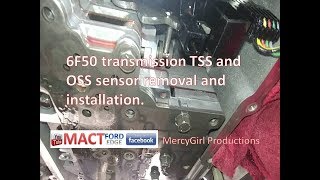
- Accessing the Sensor is Labor Intensive: On the Ford Flex with the 6F50/6F55 transmission, the input and output speed sensors are located behind the transmission side cover. This requires removing the driver's side wheel, axle shaft, and various suspension components to gain access, making it a more involved repair than on transmissions where the sensors are externally mounted. 🎬 Watch: Ford Flex turbine speed sensor replacement walkthrough
- Forum User Experience: A user on the Reddit r/FordFlex subreddit described classic P0715 symptoms including abnormal shifting. Another user correctly identified the code as relating to the Input/Turbine Speed Sensor circuit and listed the common causes, corroborating that a faulty sensor, wiring, or internal transmission issue are the primary culprits.
Diagnostic Flowchart
Other Known Issues on This Vehicle
Issues unrelated to this code that are worth knowing about as an owner of this generation:
- Internal Water Pump Failure (3.5L V6) 🔴 High — Can occur anytime after 60,000 miles, becoming more common at higher mileage. Failure can be catastrophic if coolant leaks into the engine oil. (Ref: While no specific recall for the 2015-16 Flex, the design is a known industry-wide issue and subject of class-action lawsuits. A coolant leak from a 'weep hole' on the passenger side of the engine block, near the alternator, is the primary warning sign.)
- Power Transfer Unit (PTU) Failure (AWD Models) 🔴 High — Common at mileages over 80,000, especially if the fluid has never been changed. The 'lifetime' fluid gets cooked by the nearby exhaust, leading to breakdown and gear failure. (Ref: TSB 19-2017 addresses fluid leaks from the PTU seals. Symptoms include a burning gear oil/propane smell, whining or grinding noises, and fluid leaks on the passenger side.)
- MyFord Touch / SYNC 2 Infotainment System Failure 🟠 Medium — Common across the entire lifespan of the vehicle. Issues include frozen/unresponsive touchscreens, system reboots, and loss of features like Bluetooth or navigation. (Ref: Ford issued a warranty extension (12M02) for the APIM module, extending coverage to 5 years from the original purchase date. The root cause is often a failed touchscreen digitizer or a faulty APIM module.)
- Fractured Rear Toe Links 🔴 High — Affects 2013-2018 models. Can lead to a sudden loss of steering control. (Ref: Ford issued safety recall 19S17 to replace the rear toe links on affected vehicles free of charge.)
- Faulty Fuel Pump Control Module 🔴 High — Affects 2013-2015 models. Can cause the engine to stall without warning or fail to start. (Ref: Ford issued safety recall 16S31 for this issue.)
Real Owner Stories
Aggregated from forums and TSBs cited above. Mileages and costs reflect what owners reported in those sources.
2015 Ford Flex — ~120000 miles
Symptoms: Abnormal shifting and classic P0715 symptoms.
What fixed it: Replacement of the Input/Turbine Speed Sensor (TSS) circuit components.
Source hint: Reddit r/FordFlex
2015 Ford Flex — ~150000 miles
Symptoms: Shifting issues and a P0715 code on a high-mileage Flex.
What fixed it: The community identified the cause as the Input/Turbine Speed Sensor circuit, requiring sensor or wiring repair.
Source hint: Reddit r/FordFlex thread titled 'shifting issues'
Related OBD-II Codes
Frequently Asked Questions
Is the P0715 sensor on my 2015-2016 Ford Flex easy to reach?
Can I just check the dipstick to see if my transmission fluid is causing the P0715 code?
Does the 2015-2016 Ford Flex have any recalls related to the rear suspension that I should check while fixing the transmission?
My Flex is also leaking coolant near the alternator; is this related to the P0715 code?
I have an AWD Flex and smell burning oil along with the shifting issues; what could that be?
Is there a warranty extension for the touchscreen issues I'm having alongside the check engine light?
Helpful Videos


We Have This Part in Stock



The information in this article is provided for general reference and educational purposes only. Vehicle specifications, procedures, and part compatibility can vary by production date, trim level, and region. Always consult your vehicle's factory service manual and verify part numbers before purchasing or performing repairs. Safety-critical components such as airbags, seat belts, and braking systems should be installed by a qualified professional.
- Ford Flex:
- 🧭 Diagnostic Flowchart
- 🎬 Helpful Videos
- 🛍️ Shop This Part
- What's Unique About the 2015-2016 Ford Flex
- Symptoms You May Notice
- Most Likely Causes
- Rare But Worth Checking
- Diagnosis Steps
- Parts You'll Likely Need
- Related Codes That Often Appear With This One
- Platform-Specific Known Issues
- Other Known Issues on This Vehicle
- Real Owner Stories
- 2015 Ford Flex — ~120000 miles
- 2015 Ford Flex — ~150000 miles
- Related OBD-II Codes
- Frequently Asked Questions
- 🎟️ Get 5% Off