

P0715 on 2015-2016 Ford Taurus: Input Speed Sensor Circuit Malfunction Guide
On a 2015-2016 Ford Taurus, code P0715 is most often caused by a failed Input/Turbine Speed Sensor (TSS). This sensor is located on the outside of the transmission, making it a relatively straightforward replacement. Expect to pay $30-$60 for an aftermarket sensor and around $100 for an OEM part. Before replacing, always check the wiring and connector, as damage there is also a common culprit.
- P0715 on a 2015-2016 Taurus almost always points to a problem with the Input/Turbine Speed Sensor (TSS) or its wiring.
- The most likely fix is replacing the TSS, which is an affordable part (OEM P/N: AA5Z-7M101-B) located on the outside of the transmission, making it a manageable DIY job for those with some experience.
- Symptoms are noticeable and affect drivability, including harsh shifting, bucking, and the possibility of the car entering a 'limp mode'.
- Before replacing the sensor, always inspect the wiring and connector first, as a simple wiring repair could save you money.
What's Unique About the 2015-2016 Ford Taurus
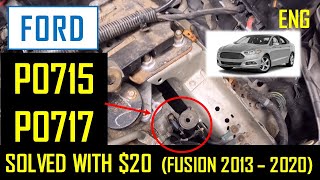
The 2015-2016 Ford Taurus uses the 6F50 or 6F55 six-speed automatic transmission. A key detail for this platform is that it has two primary speed sensors: an Input Speed Sensor (TSS) and an Output Speed Sensor (OSS). Code P0715 specifically points to the TSS, which is fortunately mounted externally on the transmission case. This makes it accessible and replaceable without removing the transmission, a much simpler job than replacing the internal OSS which is associated with different trouble codes (like P0720). The TSS sensor is located on the top of the transmission case.
🎬 Watch: Step-by-step guide to replacing the input speed sensorSymptoms You May Notice
- Harsh, erratic, or delayed gear shifts
- Vehicle enters "limp mode," often getting stuck in 3rd or 5th gear
- Check Engine Light is on
- Reduced fuel economy
- In some cases, the speedometer may malfunction or read incorrectly
- "Transmission Limited Function" warning on the dashboard display
- Vehicle bucks or jerks during shifts
- Banging noise when shifting into gear from a stop
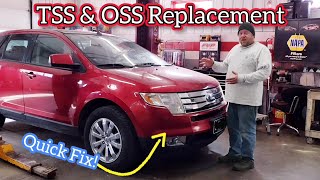
- Replacing the Output Speed Sensor (OSS) instead of the Input Speed Sensor (TSS). The OSS is internal and a much more difficult job. 🎬 See: How to replace both TSS and OSS sensors
- Replacing the entire transmission when only the external sensor or wiring is at fault.
- Replacing the PCM/TCM when the sensor is the actual point of failure.
Most Likely Causes
- Failed Input/Turbine Speed Sensor (TSS) 🔴 High Probability → Shop Automatic Transmission Input Shaft Speed Sensor The sensor is an electronic component exposed to heat and vibration from the transmission, making it a common failure point over time. Intermittent shorts within the sensor are a known issue on this transmission family.
How to confirm: After checking wiring, test the sensor's resistance with a multimeter to see if it's within the manufacturer's specifications (typically between 500-1,200 Ω). A scan tool can also monitor the sensor's output in real-time; dropouts or erratic readings confirm failure.
Typical fix: Replace the Input/Turbine Speed Sensor. It is held to the transmission case by a single 8mm bolt.
Est. part cost: $30-$120 - Damaged Wiring or Connector 🟡 Medium Probability The wiring harness leading to the sensor can be damaged by road debris, heat from the engine/exhaust, or corrosion, especially at the connector. Chafing or broken strands can disrupt the signal.
How to confirm: Visually inspect the wiring harness from the TCM to the sensor for any signs of fraying, melting, or breaks. Check the connector for corrosion, bent pins, or a loose fit. Use a multimeter to check for continuity and shorts in the wiring.
Typical fix: Repair the damaged section of wire or replace the pigtail connector.
Est. part cost: $15-$40 - Low or Dirty Transmission Fluid ⚪ Low Probability → Shop Transmission Assembly While not a direct cause of a circuit code, low or contaminated fluid can cause shifting problems and internal component wear. Metal debris suspended in the fluid can accumulate on the magnetic tip of the sensor, disrupting its reading.
How to confirm: Check the transmission fluid level and condition according to the owner's manual procedure. Fluid should be red and clear, not brown, black, or burnt-smelling. Inspect the sensor tip for metal shavings upon removal.
Typical fix: Perform a transmission fluid drain-and-fill or a full fluid exchange if the fluid is old or contaminated. Clean any debris from the sensor.
Est. part cost: $100-$250
Rare But Worth Checking
- Faulty Powertrain Control Module (PCM) or Transmission Control Module (TCM): → Shop Transmission Assembly This is very uncommon. The sensor and wiring should be thoroughly tested before considering the control module as the cause. TSBs for older models specifically advise against replacing the PCM for this code until the sensor has been replaced and the fix verified.
- Internal Transmission Failure: → Shop Transmission Assembly A damaged reluctor ring or other internal mechanical problems can cause this code, but would typically be accompanied by other symptoms like grinding noises or severe slipping.
Diagnosis Steps
- Scan for Codes: Use an OBD-II scanner to confirm P0715 is the primary code. Note any other transmission-related codes, especially P0717, P0720, P0721, or P0722.
- Check Transmission Fluid: Verify the transmission fluid level and condition. Low or burnt fluid can indicate larger problems.
- Inspect Wiring and Connector: Visually inspect the wiring harness leading to the Input/Turbine Speed Sensor. Look for damage, corrosion, or loose connections. The sensor is located on the exterior of the transmission case, near the top.
- Test the Sensor: If the wiring appears intact, disconnect the sensor and test its internal resistance with a digital multimeter. Compare the reading to the specifications (typically 500-1,200 Ohms). If you have an advanced scan tool, monitor the live data for the input speed RPM while driving; the signal should be smooth and correspond to engine RPM. Any dropouts indicate a faulty sensor.
- Inspect for Debris: When removing the sensor, check its magnetic tip for excessive metal shavings. A small amount of fine metal dust is normal, but large flakes indicate a more serious internal transmission problem.
- Replace the Sensor: If the sensor fails the test or is contaminated, replace it. It is typically held in by a single 8mm or 10mm bolt.
- Clear Codes and Test Drive: After replacement, clear the trouble codes and perform a test drive to ensure the transmission shifts smoothly and the code does not return.
Parts You'll Likely Need
- Transmission Input Speed Sensor / Turbine Speed Sensor (TSS)
(OEM #AA5Z-7M101-B)— This sensor is the most common failure point for code P0715 on the 6F50/6F55 transmission.
Trusted brands: Motorcraft, Standard Motor Products (SMP), NTK
OEM price range: $80-$120
Aftermarket price range: $30-$60
Related Codes That Often Appear With This One
- P0717 — P0717 indicates 'No Signal' from the same sensor, which can be triggered alongside P0715 if the signal is intermittent before failing completely.
- P0720 — This code relates to the Output Speed Sensor (OSS). If both input and output sensor codes are present, it may point to a larger wiring harness issue or an internal transmission problem affecting both components.
- P0721 — This code indicates an erratic signal from the Output Speed Sensor (OSS). Seeing it with P0715 could suggest a widespread electrical issue or internal transmission problem.
- P0722 — This code indicates 'No Signal' from the Output Speed Sensor (OSS). Like P0720, its presence with P0715 points towards a potentially larger issue than just the single TSS sensor.
Technical Service Bulletins (TSBs) & Recalls
- TSB 15-0156: The initial pass mentioned this TSB. However, further research shows TSB 15-0156 actually pertains to a vibration or noise from a cracked right-hand halfshaft bearing bracket on vehicles with 2.0L or 2.3L GTDI engines, and is not directly related to code P0715.
- TSB 07-21-11: While for earlier model years (2007-2008) with the 6F50 transmission, this TSB is highly relevant. It addresses DTCs including P0715 caused by an intermittent short in the TSS or OSS sensor, and instructs technicians to replace the sensor before considering a PCM replacement. This establishes a history of this specific failure mode on this transmission family.
Diagnostic Flowchart
Other Known Issues on This Vehicle
Issues unrelated to this code that are worth knowing about as an owner of this generation:
- Internal Water Pump Failure (3.5L V6) 🔴 High — Commonly occurs between 60,000 and 120,000 miles. Failure is catastrophic as the pump is driven by the timing chain. When the seal fails, coolant mixes directly with the engine oil, leading to engine failure if not caught immediately.
- Power Transfer Unit (PTU) Overheating and Failure (AWD Models) 🔴 High — Can occur at any mileage, but risk increases without preventative maintenance. The PTU is located next to the hot exhaust, which cooks the 'lifetime' fluid, causing it to break down and leak. Symptoms include a burning gear oil/propane smell, whining/grinding noises, and leaks. (Ref: TSB 19-2017 (for leaks))
- Electronic Throttle Body (ETB) Malfunction 🟠 Medium — Widespread enough to prompt a Customer Satisfaction Program. The ETB can fail, causing the vehicle to enter a low-power 'limp mode' and illuminate the wrench light. (Ref: Customer Satisfaction Program 16B32)
- Cracked Rear Suspension Toe Links 🔴 High — Affects SHO and Police Interceptor models primarily, but included in a recall for other models. The toe link can fracture, causing a sudden loss of steering control. (Ref: Recall 20S04)
- Leaking Turbocharger Oil Supply Tubes (3.5L EcoBoost) 🔴 High — Affects vehicles with the 3.5L GTDI (EcoBoost) engine. Improperly brazed tubes can leak oil onto hot engine components, creating a fire risk. (Ref: Recall 16S46)
Real Owner Stories
Aggregated from forums and TSBs cited above. Mileages and costs reflect what owners reported in those sources.
2008 Ford Taurus
Symptoms: The vehicle was bucking and experiencing gear issues, behaving as if the transmission was in neutral.
What fixed it: Replacement of the Input/Turbine Speed Sensor.
Source hint: r/MechanicAdvice - '2008 Ford Taurus bucking/gear issue code P0715 help please'
1997 Ford Taurus
Symptoms: Input/Turbine Speed Sensor Circuit Malfunction.
What fixed it: Replacing the sensor by accessing it through the driver's side front wheel (held by an 8mm bolt).
Source hint: CR4 - GlobalSpec - 'PO715-Input/Turbine Speed Sensor Circuit Malfunction-97 Ford Taurus'
Ford Taurus (6F50 Transmission)
Symptoms: Erratic and banging shifts and a flashing O/D light.
What fixed it: Replacement of the Turbine Shaft Speed Sensor located on top of the transmission.
Source hint: Ford Truck Enthusiasts Forums - 'Code P0715 Turbine Shaft Speed Sensor...how to replace'
Related OBD-II Codes
Frequently Asked Questions
Does TSB 15-0156 apply to my 2015-2016 Ford Taurus P0715 code?
Is there a TSB for the 6F50 transmission family regarding the Input/Turbine Speed Sensor?
Where is the Input/Turbine Speed Sensor located on the 2015-2016 Taurus?
Can I access the sensor through the wheel well on my Taurus?
What should the resistance reading be for a healthy TSS sensor on this Ford?
Could my 'Transmission Limited Function' warning be caused by something other than a bad sensor?
Helpful Videos
We Have This Part in Stock





The information in this article is provided for general reference and educational purposes only. Vehicle specifications, procedures, and part compatibility can vary by production date, trim level, and region. Always consult your vehicle's factory service manual and verify part numbers before purchasing or performing repairs. Safety-critical components such as airbags, seat belts, and braking systems should be installed by a qualified professional.
- Ford Taurus:
- 🧭 Diagnostic Flowchart
- 🎬 Helpful Videos
- 🛍️ Shop This Part
- What's Unique About the 2015-2016 Ford Taurus
- Symptoms You May Notice
- Most Likely Causes
- Rare But Worth Checking
- Diagnosis Steps
- Parts You'll Likely Need
- Related Codes That Often Appear With This One
- Technical Service Bulletins (TSBs) & Recalls
- Other Known Issues on This Vehicle
- Real Owner Stories
- 2008 Ford Taurus
- 1997 Ford Taurus
- Ford Taurus (6F50 Transmission)
- Related OBD-II Codes
- Frequently Asked Questions
- 🎟️ Get 5% Off