

P0715 on 2012-2017 Honda Accord: Input Speed Sensor Failure Causes and Fixes
For a 2012-2017 Honda Accord, code P0715 almost always points to a failed transmission input (mainshaft) speed sensor. The PCM triggers this code when the sensor's signal is lost or erratic, disrupting shift commands. Replacing this sensor is the most common fix. Part numbers vary by transmission type (CVT, 5AT, 6AT), so verification is crucial. The OEM part costs around $40-$60, and it's a DIY-friendly repair for those with basic tools.
- P0715 on a 2012-2017 Accord is most likely caused by a bad input/mainshaft speed sensor.
- The repair is straightforward for a DIYer and involves replacing a single sensor on the outside of the transmission.
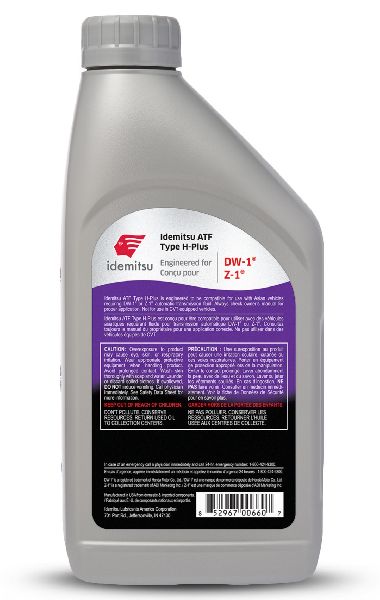
- Always check the transmission fluid level and condition first, and only use genuine Honda fluid (ATF DW-1 for automatics, HCF-2 for CVTs).
- Before replacing the sensor, inspect its wiring and connector for any obvious damage, as this can also cause the code.
- The correct OEM replacement sensor is likely part number 28820-RPC-013 for all transmissions in this year range.
What's Unique About the 2012-2017 Honda Accord
The 2012-2017 Accord range spans two different generations with three distinct automatic transmissions. The 2012 model (8th gen) uses a traditional 5-speed automatic. The 2013-2017 models (9th gen) introduced a Continuously Variable Transmission (CVT) for 4-cylinder engines and a 6-speed automatic for V6 engines. While the P0715 code points to the same fundamental issue, the specific part number for the input speed sensor differs across these transmissions. It is critical to identify the correct transmission to get the right part.
Generation note: Yes, this range covers the end of the 8th generation (2012 model) and the entire 9th generation (2013-2017). The 2012 model has a 5-speed automatic transmission. The 2013-2017 models have a CVT (4-cylinder) or a 6-speed automatic (V6). The most common cause (a failed input speed sensor) is similar for all versions, but the specific part numbers and sensor locations vary.
Symptoms You May Notice
- Check Engine Light is on
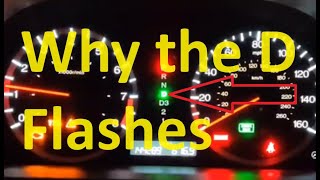
- Flashing 'D' (drive) indicator on the instrument cluster
- Harsh, erratic, or delayed gear shifts
- Transmission getting stuck in a single gear (limp mode)
- Vehicle hesitates or won't accelerate properly
- Whining sound from the transmission area, especially on a cold start
- Reduced fuel economy
- Transmission slipping, where engine RPMs increase without a corresponding increase in vehicle speed
- Replacing the output speed sensor instead of the input speed sensor.
- Replacing the entire transmission when only the external speed sensor or wiring is at fault.
- Replacing the PCM before thoroughly testing the sensor and its circuit.
- Assuming a transmission judder is a bad torque converter when it is actually caused by deteriorated fluid, as noted in Honda TSB 17-017.
Most Likely Causes
- Failed Input/Mainshaft Speed Sensor 🔴 High Probability The sensor is an electronic component that can fail over time due to heat cycles and vibration. It is the most common point of failure for this specific code on most vehicles.
How to confirm: After checking wiring, test the sensor's internal resistance with a multimeter. A healthy sensor should read between 400-600 Ω. A user on a Honda forum confirmed their good sensor read 511 ohms. If the reading is out of spec or shows an open circuit, the sensor is bad. Given the relatively low cost, replacement is a common diagnostic step.
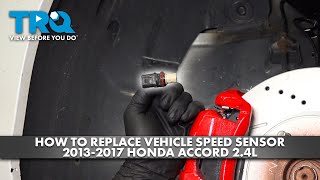
Typical fix: Replace the input/mainshaft speed sensor. The sensor is located on the exterior of the transmission housing, usually held in by a single 10mm bolt. 🎬 Watch this step-by-step sensor replacement for 2.4L Accord models. On V6 models, it's often at the left front corner of the transaxle.
Est. part cost: $30-$70 - Damaged Wiring or Loose Connector 🟡 Medium Probability The wiring harness leading to the sensor is exposed to engine bay heat and vibration, which can cause wires to become brittle, frayed, or for the connector pins to lose contact or corrode over time.
How to confirm: Visually inspect the wiring harness leading to the input speed sensor for any signs of cracking, melting, or physical damage. Unplug the connector and check for corrosion or bent/broken pins. Use a multimeter to check for continuity between the PCM/TCM connector and the sensor connector.
Typical fix: Repair the damaged section of the wire or clean the connector terminals. If the connector itself is broken, it will need to be replaced. Ensure a tight, clean connection.
Est. part cost: $5-$50 - Low or Dirty Transmission Fluid ⚪ Low Probability → Shop Transmission Assembly Honda transmissions are sensitive to fluid condition. On high-mileage vehicles, metallic debris suspended in the fluid can accumulate on the magnetic tip of the speed sensor, disrupting its signal. While not a direct cause for P0715, TSBs for this platform (like 17-017 and 16-091) show that deteriorated fluid can cause judder and other shifting issues due to high heat, indicating the system's sensitivity.
How to confirm: Check the transmission fluid level and condition. The fluid should be at the correct level and appear clean (pink/red for ATF DW-1, light amber for HCF-2). If the fluid is dark brown, black, or smells burnt, it needs to be changed. When removing the old sensor, check its magnetic tip for a build-up of metallic shavings.
Typical fix: Perform a transmission fluid drain-and-fill using the correct genuine Honda fluid (HCF-2 for CVT, ATF DW-1 for 5-speed and 6-speed automatics). A full flush (3x drain and fill) may be necessary for heavily degraded fluid.
Est. part cost: $40-$120
Rare But Worth Checking
- Faulty Powertrain Control Module (PCM) or Transmission Control Module (TCM): → Shop Transmission Assembly This is very rare. Before condemning the PCM/TCM, all other possibilities (sensor, wiring, fluid) must be exhaustively ruled out. A Honda-specific scan tool may be needed to diagnose this properly. In some older models, Honda issued service bulletins that pointed to a faulty PCM as a potential cause after checking the wiring.
- Internal Transmission Mechanical Failure: → Shop Transmission Assembly In some cases, especially on very high-mileage vehicles, severe internal slipping can cause a speed difference between the input and output shafts that triggers this code. This is usually accompanied by other severe symptoms like grinding noises, a complete failure to engage gears, or a whining sound.
Diagnosis Steps
- Read the code with an OBD-II scanner to confirm P0715 is present. Check for other related codes like P0700, P0717, or P0720.
- Check the transmission fluid level and condition. Ensure it is full and not burnt or excessively dirty. For 9th gen models (2013+), be aware of TSBs related to fluid degradation (TSB 17-017 for V6, TSB 15-086 for some CVTs).
- Locate the input/mainshaft speed sensor on the transmission housing. On 9th gen V6 models, it is at the left front corner of the transaxle. On CVT models, it is typically on the top side of the transmission case.
- Inspect the sensor's electrical connector and wiring for any visible damage, corrosion, or loose connections.
- If the wiring looks good, disconnect the sensor and test its resistance with a multimeter. The reading should be between 400 and 600 ohms. A reading of 511 ohms was reported as good in a forum. If it's outside this range or shows an open/short circuit, the sensor is faulty.
- If the sensor tests good, check for continuity in the wiring harness between the sensor connector and the PCM/TCM. A wiring diagram is highly recommended for this step.
- If the wiring and sensor are confirmed to be good, the issue may be a rare internal PCM fault or a mechanical problem within the transmission, which may require professional diagnosis.
Parts You'll Likely Need
- Transmission Input/Mainshaft Speed Sensor
(OEM #Varies by transmission: 28820-RPC-013 (V6 Auto), 28810-RJ2-003 (CVT))— This is the most common component to fail and directly cause the P0715 code. It is a relatively inexpensive and accessible part. NOTE: The part number 28820-RPC-013 appears to be for the V6 automatic transmissions (5AT and 6AT). The CVT transmission uses a different sensor, such as 28810-RJ2-003 or 28820-RJ2-003. Always verify with VIN.
Trusted brands: Honda (Genuine), NTK, Beck/Arnley, Standard Motor Products
OEM price range: $40-$60
Aftermarket price range: $30-$70 - Honda Genuine Transmission Fluid
(OEM #08200-9008 (ATF DW-1) or 08206-HCF2 (HCF-2 for CVT))— Correct fluid type and level are critical for Honda transmission health. Low or degraded fluid can cause or contribute to this code. Using non-genuine fluid can cause poor shift quality.
Trusted brands: Honda (Genuine)
OEM price range: $10-$15 per quart
Aftermarket price range: N/A
Related Codes That Often Appear With This One
- P0700 — P0700 is a generic code indicating that the Transmission Control Module (TCM) has stored a fault code. It often appears alongside more specific transmission codes like P0715.
- P0717 — P0717 means 'Input/Turbine Speed Sensor 'A' Circuit No Signal,' which is a more specific version of the P0715 fault, indicating a complete loss of signal rather than just an erratic one.
- P0720 — This code relates to the Output Speed Sensor. If both input and output sensor codes appear, it could point to a wiring issue common to both sensors or a more significant transmission problem.
Technical Service Bulletins (TSBs) & Recalls
- TSB 17-017: For 2013-17 Accords (and RDX), addresses a judder from the torque converter lock-up clutch caused by deteriorated ATF DW-1 fluid. The fix involves a software update and a transmission flush.
- TSB 15-086: For 2012-14 CR-V, addresses a surge, vibration, or judder under light acceleration. The fix is a software update and ATF replacement.
- TSB 17-040: A follow-up to TSB 15-086 for CR-Vs where the judder returns after the initial software update, potentially requiring torque converter replacement.
Platform-Specific Known Issues
- For 2013-2017 models with the CVT, Honda issued TSB 17-017 for a software update to address transmission judder, which can sometimes be confused with sensor-related shift problems. While not a direct fix for P0715, it highlights the sensitivity of the CVT to software and fluid condition.
Mechanic-Grade Diagnostic Values
- Input Speed Sensor (ISS) Resistance — expected: 400 - 600 Ω. Failure: A reading outside this range, or infinite (open circuit), indicates a failed sensor.
- Input Speed Sensor (ISS) Live Data Voltage — expected: 0.5V - 12V, fluctuating with engine/transmission speed.. Failure: A reading of 0V, a constant high voltage, or erratic spikes indicates a problem in the sensor or circuit.
- Circuit Continuity to PCM/TCM — expected: < 5.0 Ω. Failure: High resistance indicates a break or corrosion in the wiring harness between the sensor and the control module.
- Live Data: Input Speed vs. Engine RPM — expected: In Park or Neutral, the Input Speed Sensor reading should closely match the engine RPM.. Failure: A significant deviation or a zero reading for input speed while the engine is running points to a sensor or circuit failure.
Scan Tool Commands That Help
- Honda Diagnostic System (HDS): Data List > A/T > MAINSHAFT SPEED — This function is used to monitor the live data from the input/mainshaft speed sensor while driving or with the engine running at 3,000 RPM in neutral. It allows a technician to see the raw speed reading from the sensor to determine if the signal is present, rational, and corresponds to engine speed, which is crucial for diagnosing intermittent dropouts that a static resistance test would miss.
Wiring & Ground Locations
- G101 — In the engine bay on the driver's side, typically on the intake manifold plenum or thermostat housing.. G101 is a primary power and logic ground for the ECU/PCM. While a bad ground here would likely cause multiple, more severe issues than just a P0715, a corroded or loose connection could theoretically introduce electrical noise or voltage drops that affect sensor readings. It's a worthwhile check if the sensor and its direct wiring test good but problems persist.
- Input Speed Sensor Connector — On the transmission housing. For 9th Gen (2013-2017) CVT models, it's on the top side, near the transmission fill plug. For V6 models, it's on the front of the transmission, accessible through the driver's side wheel well.. This is the most common point for physical inspection. The connector itself can become brittle from heat, and the pins can corrode, leading to a poor signal. The wiring harness near the connector is also a common chafe point.
Real Owner Repair Stories
- Honda-Tech forum user '19Accord97' (1997 Honda Accord (Note: Older model, but diagnostic principles are identical)) — P0715 code appeared immediately after reinstalling an automatic transmission.
❌ Tried (didn't work) Cleaned both the mainshaft (input) and countershaft (output) speed sensors. The sensors were not dirty., Cleared the code, but it returned instantly when the car was put in gear.
✅ What actually fixed it The user tested the sensor and it read 487 ohms, which is within the correct 400-600 ohm specification. Despite testing 'good', the problem was ultimately resolved by replacing the mainshaft (input) speed sensor. This highlights that a sensor can sometimes fail dynamically under load even if its static resistance is within spec.
OEM Part Supersession History
28820-RPC-003→28820-RPC-013— Standard part revision by the manufacturer.
Heads up: The new part number (28820-RPC-013) is the correct replacement for the old one and is used for the V6 5-speed (2012) and 6-speed (2013-2017) automatic transmissions.
Model Year Variations Within This Range
- 2012 (8th Gen): The 2012 V6 model uses a 5-speed automatic transmission. The input speed sensor is part number 28820-RPC-013.
- 2013-2017 (9th Gen, 4-Cylinder): These models use a Continuously Variable Transmission (CVT). The input speed sensor is part number 28810-RJ2-003. Its location is on the top of the transmission case, near the fill plug, and can be accessed from the top of the engine bay.
- 2013-2017 (9th Gen, V6): These models use a 6-speed automatic transmission. The input speed sensor is part number 28820-RPC-013. Its location is on the front of the transmission, and access is typically gained by removing the driver's side front wheel and inner fender liner.
Diagnostic Flowchart
Used vs. New Parts: Buying Guide for This Vehicle
When a used part is the smart pick: For this repair, buying a used sensor is generally not recommended. The part is a relatively low-cost electronic component that is prone to failure from heat and vibration. The cost savings of a used part (likely $10-$20) do not outweigh the risk of receiving a part that is already near the end of its service life. A used part only makes sense if it's from a very low-mileage donor vehicle and the price is negligible.
Donor-vehicle mileage cap: roughly under 50000 miles for the part to have meaningful remaining life.
What to inspect on the donor part:
- Verify the part number on the sensor itself matches the required part for your specific transmission (CVT vs. 6AT).
- Inspect the plastic connector housing for any cracks, brittleness, or signs of heat damage.
- Check the electrical pins to ensure they are straight, clean, and free of corrosion.
- Ask for the mileage of the donor vehicle if possible.
OEM-only on this vehicle (don't cheap out):
- Transmission Fluid (Honda ATF DW-1 or HCF-2)
Aftermarket brands forum-validated for this vehicle:
- NTK
- Standard Motor Products (SMP)
- Beck/Arnley
Brands owners have reported issues with on this vehicle:
- No-name, unbranded sensors from online marketplaces should be avoided due to inconsistent quality control. Stick to known brands.
Real Owner Stories
Aggregated from forums and TSBs cited above. Mileages and costs reflect what owners reported in those sources.
2013 Honda Accord (CVT)
Symptoms: Check Engine Light on with codes P0715 and P0717, a flashing 'D' light, and the transmission going into limp mode.
What fixed it: Replacing the mainshaft speed sensor.
Source hint: https://www.driveaccord.net/threads/p0715-and-p0717-mainshaft-speed-sensor.546197/
Acura TL (Platform Mate)
Symptoms: P0715 code was present.
What fixed it: The issue was ultimately traced to a failing clutch, indicating that a mechanical transmission problem can trigger this electronic sensor code.
Source hint: https://acurazine.com/forums/3g-tl-problems-fixes-114/p0715-code-950793/
Older Honda Accord
Symptoms: Check Engine Light with code P0715.
What fixed it: The owner tested the input speed sensor and confirmed it was good with a resistance of 511 ohms. This led to a deeper diagnosis of the wiring harness or the PCM as the likely cause, rather than the sensor itself.
Source hint: https://www.honda-tech.com/forums/honda-accord-1990-2002-7/help-honda-pros-cel-p0715-need-more-insight-problem-2453494/
Related OBD-II Codes
Frequently Asked Questions
My 2014 Accord V6 is juddering during acceleration. Is this related to the P0715 code?
Where is the input speed sensor located on my 2013 Honda Accord V6?
What kind of transmission fluid should I use for my 2015 Accord with a CVT?
How can I test the input speed sensor on my Accord to see if it's bad?
The 'D' light on my dashboard is flashing. Is this a symptom of P0715?
Can low or dirty transmission fluid really cause the P0715 code?
Helpful Videos

We Have This Part in Stock

The information in this article is provided for general reference and educational purposes only. Vehicle specifications, procedures, and part compatibility can vary by production date, trim level, and region. Always consult your vehicle's factory service manual and verify part numbers before purchasing or performing repairs. Safety-critical components such as airbags, seat belts, and braking systems should be installed by a qualified professional.
- Honda Accord:
- 🧭 Diagnostic Flowchart
- 🎬 Helpful Videos
- 🛍️ Shop This Part
- What's Unique About the 2012-2017 Honda Accord
- Symptoms You May Notice
- Most Likely Causes
- Rare But Worth Checking
- Diagnosis Steps
- Parts You'll Likely Need
- Related Codes That Often Appear With This One
- Technical Service Bulletins (TSBs) & Recalls
- Platform-Specific Known Issues
- Mechanic-Grade Diagnostic Values
- Scan Tool Commands That Help
- Wiring & Ground Locations
- Real Owner Repair Stories
- OEM Part Supersession History
- Model Year Variations Within This Range
- Used vs. New Parts: Buying Guide for This Vehicle
- Real Owner Stories
- 2013 Honda Accord (CVT)
- Acura TL (Platform Mate)
- Older Honda Accord
- Related OBD-II Codes
- Frequently Asked Questions
- 🎟️ Get 5% Off