

P0715 on 2016-2021 Honda Civic: Input Speed Sensor Failure Causes and Fixes
On a 2016-2021 Honda Civic with a CVT, code P0715 is almost always a failed transmission input speed sensor. This causes a flashing 'D' light and limp mode. Expect to pay $60-$120 for an OEM sensor, with DIY repair being moderately difficult (2.5/5).
- P0715 on a 2016-2021 Civic almost certainly means you need a new transmission input speed sensor.
- The symptoms are dramatic (flashing 'D' light, limp mode) but the fix is relatively simple and inexpensive.
- The correct OEM part number is 28810-5DJ-004.
- This is a very common failure and is not typically indicative of a larger transmission problem.
What's Unique About the 2016-2021 Honda Civic
The 10th generation (2016-2021) Civic primarily uses a Continuously Variable Transmission (CVT), where the concept of 'gears' is replaced by a system of pulleys and a belt. The input speed sensor is essential for the computer to know how to adjust the pulleys for acceleration. Unlike some transmission codes that are fixed with software updates, P0715 on this platform is most commonly a direct failure of the sensor hardware itself. While Honda has issued TSBs for other CVT-related codes on similar models, a specific bulletin for P0715 on the 10th-gen Civic is not common, pointing towards a component failure rather than a widespread software issue.
Symptoms You May Notice
- Check Engine Light is on
- Flashing 'D' (Drive) indicator light on the dashboard
- Vehicle enters 'limp mode' with significantly reduced power and acceleration
- Harsh or delayed transmission engagement, especially when shifting from Park
- Erratic or jerky shifting while driving
- Cruise control is inoperable
- Stalling when changing gears or coming to a stop.
- Decreased fuel economy.
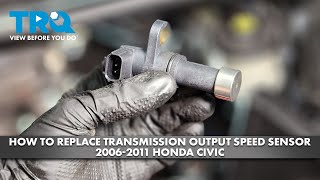
- Replacing the Output Speed Sensor instead of the Input Speed Sensor. The two sensors are located near each other on the transmission housing; the input sensor is the one that corresponds to code P0715.
- Assuming an internal transmission failure. While possible, the vast majority of P0715 cases on this vehicle are resolved by replacing the external sensor.
- Replacing the wrong sensor. There are two speed sensors on the CVT, an input (drive pulley) and an output (driven pulley) sensor. P0715 refers specifically to the input sensor.
Most Likely Causes
- Failed Input/Turbine Speed Sensor 🔴 High Probability → Shop Automatic Transmission Input Shaft Speed Sensor This is a common failure point on modern Honda CVTs due to wear and tear or internal electronic failure. The sensor is exposed to significant heat and vibration on top of the transmission housing.
How to confirm: After confirming no wiring issues, the most definitive test is to replace the sensor. A scan tool can also monitor the sensor's live data; a flat or erratic reading while the engine RPM changes points to a bad sensor. A value of zero RPM while the vehicle is moving is a clear indicator of failure.
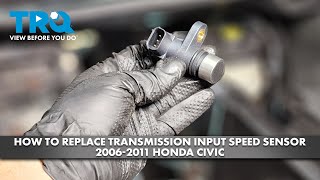
Typical fix: Replace the input speed sensor. The sensor is located on the top of the transmission housing and requires removing the air intake box for access. It is a single bolt (typically 10mm) holding it in place.
Est. part cost: $60-$120 - Damaged Wiring or Poor Connection 🟡 Medium Probability The sensor connector is located on top of the transmission and is exposed to engine bay heat and vibration, which can lead to corrosion or loose terminals over time. Rodents have also been known to chew on the wiring in this area on 10th gen Civics.
How to confirm: Visually inspect the wiring harness and the connector going to the input speed sensor for any signs of corrosion, damage, or loose pins. Use a multimeter to check for proper voltage (approx. 5V reference) and ground at the connector according to the factory service manual.
Typical fix: Repair the damaged section of the wire or clean/replace the connector.
Est. part cost: $5-$50 - Low or Contaminated Transmission Fluid ⚪ Low Probability → Shop Transmission Assembly While less common to directly cause P0715, extremely low or dirty fluid can cause erratic transmission behavior that may affect sensor readings. Metal debris in the fluid can also interfere with the magnetic sensor.
How to confirm: Check the transmission fluid level and condition. The fluid should be at the correct level and not appear burnt or contain excessive metal shavings. Honda CVTs require specific HCF-2 fluid.
Typical fix: Perform a transmission fluid drain and fill using only Honda HCF-2 fluid. If the fluid is heavily contaminated, the transmission may have internal damage.
Est. part cost: $50-$100 for fluid
Rare But Worth Checking
- Faulty Powertrain Control Module (PCM) or Transmission Control Module (TCM): → Shop Transmission Assembly This is very rare. The PCM/TCM should only be considered after all other possibilities, including the sensor and its wiring, have been exhaustively ruled out.
Diagnosis Steps
- Scan for Codes: Use an OBD-II scanner to confirm P0715 is the primary code. Note any other transmission-related codes like P0717.
- Inspect Wiring: Visually inspect the input speed sensor's connector and wiring harness for any obvious damage, corrosion, or loose connections. The sensor is on top of the transmission, under the airbox.
- Check Live Data (if possible): Use a capable scan tool to monitor the live data stream for 'Input Shaft Speed' or 'Turbine Speed'. The RPM should change smoothly with engine speed. If it's stuck at zero, reads erratically, or does not change, the sensor or its circuit is faulty.
- Test the Circuit: If you have access to a wiring diagram, disconnect the sensor and use a multimeter to check for the correct reference voltage (typically 5V) and ground at the connector from the PCM.
- Inspect the Sensor: Remove the sensor (requires taking off the airbox and is held by a 10mm bolt). Inspect the sensor's tip for any metal debris or physical damage.
- Replace the Sensor: If the wiring and connections are good, the sensor itself is the most likely culprit. Replace it with a new OEM or high-quality aftermarket part. Ensure the o-ring is properly seated.
- Clear Codes and Test Drive: After replacement, clear the trouble codes and perform a test drive to ensure the symptoms (flashing 'D' light, limp mode) are gone. The test drive should include various speeds to confirm proper CVT operation.
Parts You'll Likely Need
- Input Speed Sensor (CVT Drive Pulley Speed Sensor)
(OEM #28810-5DJ-004)— This sensor is the most common failure point for code P0715 on the 10th generation Civic. It is officially called a 'Pick Up Assembly' by Honda.
Trusted brands: Honda (OEM), NTK, Rostra, Standard Motor Products (SMP)
OEM price range: $80-$120
Aftermarket price range: $40-$70
Related Codes That Often Appear With This One
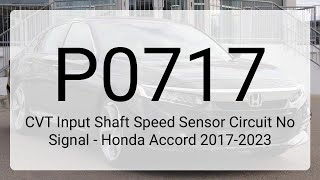
- P0717 — P0717 ('Input/Turbine Speed Sensor 'A' Circuit No Signal') is a more specific version of P0715. It indicates a complete loss of signal, whereas P0715 can mean the signal is intermittent or irrational. They often point to the same root cause.
- P0730 — P0730 ('Incorrect Gear Ratio') can sometimes accompany a P0715 because if the TCM doesn't know the input speed, it cannot verify if the selected CVT ratio is correct.
Platform-Specific Known Issues
- Owner Experience: DIY Replacement: An owner on the CivicX forums described getting the P0715 code along with a flashing 'D' light and limp mode on their 2018 Civic. They were able to fix the issue by replacing the input speed sensor (part # 28810-5DJ-004) themselves. The repair involved removing the air intake assembly for access, un-clipping the sensor harness, and removing a single 10mm bolt. The total time was under an hour and resolved all symptoms.
Diagnostic Flowchart
Other Known Issues on This Vehicle
Issues unrelated to this code that are worth knowing about as an owner of this generation:
- A/C Condenser Leaks 🔴 High — Extremely common across all 2016-2021 models. Can fail at any mileage. Tiny holes develop in the condenser walls, causing refrigerant to leak out. (Ref: Honda issued a warranty extension (TSB 19-091) for 10 years/unlimited miles for this specific issue.)
- Oil Dilution (1.5L Turbo Engine) 🟠 Medium — More common in colder climates and on vehicles that are frequently driven on short trips, preventing the engine from reaching full operating temperature. Fuel mixes with engine oil, reducing its viscosity. (Ref: Honda issued software updates and in some cases, component replacements, to mitigate the issue, but no formal recall.)
- Sticky Steering 🔴 High — Affects some 2022-2025 models, but the issue was first investigated on 2022-2023 Civics. The steering can feel 'sticky' or notchy, particularly at highway speeds. (Ref: NHTSA Campaign 24V-744 was issued, leading to a recall. The fix involves replacing a worm gear spring and/or applying new grease.)
- Infotainment System Glitches (2017-2018) 🟡 Low — Common on 2017-2018 models, symptoms include freezing, lagging, and issues with Apple CarPlay/Bluetooth connectivity. (Ref: Software updates from the dealer typically resolve most of these issues.)
- Premature Head Gasket Failure (1.5L Turbo) 🔴 High — Less common than other issues but a known potential failure between 40,000-70,000 miles. Symptoms often start as a cold-start misfire as coolant seeps into a cylinder.
Real Owner Stories
Aggregated from forums and TSBs cited above. Mileages and costs reflect what owners reported in those sources.
2018 Honda Civic
Symptoms: Flashing 'D' light and vehicle entered limp mode.
What fixed it: Replaced the input speed sensor (part # 28810-5DJ-004) after removing the air intake assembly.
Source hint: CivicX forums owner experience described in 'Owner Experience: DIY Replacement'
2016 Honda Civic EX-T — 85000 miles
Symptoms: P0717 / P0715 codes and limp mode.
What fixed it: Replacing the sensor (part 28810-5DJ-004).
Source hint: CivicX.com Forum Thread - 'P0717 / P0715 Input Speed Sensor Failure'
2016-2021 Honda Civic
Symptoms: Loud 'thud' and vibration when shifting from Park to Drive.
What fixed it: Replacement of the input speed sensor to restore sensor data and smooth engagement.
Source hint: Reddit r/MechanicAdvice
Related OBD-II Codes
Frequently Asked Questions
What is the specific part number for the input speed sensor on a 10th gen Honda Civic?
Where is the input speed sensor located on my 2016-2021 Civic, and is it a DIY repair?
My 2018 Civic has a flashing 'D' light and won't accelerate properly. Is this related to P0715?
Can rodents cause the P0715 code on a 10th gen Civic?
Does Honda have a warranty extension for the A/C condenser on my 2016-2021 Civic?
What type of transmission fluid should I use if I'm troubleshooting P0715 on my Civic CVT?
Helpful Videos

We Have This Part in Stock




The information in this article is provided for general reference and educational purposes only. Vehicle specifications, procedures, and part compatibility can vary by production date, trim level, and region. Always consult your vehicle's factory service manual and verify part numbers before purchasing or performing repairs. Safety-critical components such as airbags, seat belts, and braking systems should be installed by a qualified professional.
- Honda Civic:
- 🧭 Diagnostic Flowchart
- 🎬 Helpful Videos
- 🛍️ Shop This Part
- What's Unique About the 2016-2021 Honda Civic
- Symptoms You May Notice
- Most Likely Causes
- Rare But Worth Checking
- Diagnosis Steps
- Parts You'll Likely Need
- Related Codes That Often Appear With This One
- Platform-Specific Known Issues
- Other Known Issues on This Vehicle
- Real Owner Stories
- 2018 Honda Civic
- 2016 Honda Civic EX-T — 85000 miles
- 2016-2021 Honda Civic
- Related OBD-II Codes
- Frequently Asked Questions
- 🎟️ Get 5% Off