

P0715 on 2012-2017 Hyundai Accent: Input Speed Sensor Failure Causes and Fixes
On a 2012-2017 Accent, P0715 is almost always caused by a failed internal transmission wire harness that contains the input and output speed sensors. This is a known issue confirmed by Hyundai TSBs for the A6GF1 transmission. The repair is complex, requiring removal of the transmission's valve body, and is best left to a professional.
- P0715 on a 2012-2017 Accent is a serious code that will cause significant shifting problems and make the car unsafe to drive.
- The problem is almost certainly a failed internal transmission wire harness (Part No. 46307-2F000), a known issue documented by Hyundai.
- Do not let a shop replace the entire transmission without first attempting this much cheaper, well-documented repair.
- This is not a DIY-friendly fix for beginners, as it requires removing the transmission valve body.
- Always use the correct Hyundai-specific (SP-IV) transmission fluid when refilling.
What's Unique About the 2012-2017 Hyundai Accent
The 2012-2017 Hyundai Accent (known as the 'RB' generation) uses a 6-speed automatic transmission (model A6GF1) where the input and output speed sensors are integrated into a single internal wire harness assembly. This entire harness is a very common failure point, a fact acknowledged by Hyundai through multiple Technical Service Bulletins (TSBs). Unlike other vehicles where the sensor might be an easily accessible external part, fixing this code on an RB Accent requires getting inside the transmission to replace the entire harness assembly.
Symptoms You May Notice
- Check Engine Light is on
- Transmission is stuck in one gear (fail-safe or 'limp' mode), typically 3rd gear
- Harsh, erratic, or delayed gear shifts
- Vehicle may stall when coming to a stop
- Inability to shift into higher gears
- Cruise control may not function
- Replacing an external speed sensor. This generation's fault is almost always internal; there is no separate external input sensor to replace.
- Replacing the entire transmission. Hyundai TSBs specifically advise against this, as the much cheaper internal harness is the documented culprit for this code.
- Replacing the valve body. While the valve body must be removed to perform the repair, it is not typically the cause of the P0715 code itself.
Most Likely Causes
- Failed Internal Transmission Sensor Harness 🔴 High Probability → Shop Transmission Assembly This is a well-documented failure point for the A6GF1 6-speed automatic transmission, addressed by Hyundai TSB 20-AT-011H. The harness, which contains the input speed sensor, output speed sensor, and fluid temperature sensor, degrades over time from heat and constant exposure to transmission fluid, causing it to become brittle and fail.
How to confirm: A technician will use a scan tool to monitor live data from the input speed sensor. If the signal is absent or erratic while the engine is running, the internal harness is the likely cause. A key secondary check is to monitor the transmission fluid temperature; a reading stuck at a default value (e.g., -40°F) strongly points to a failed harness, as the temp sensor is part of the same assembly.
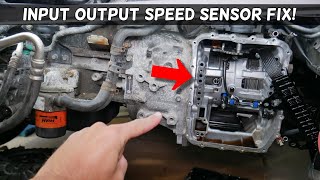
Typical fix: Replace the internal transmission wire harness assembly. 🎬 Watch: How to replace the internal speed sensor harness This involves removing the transmission oil pan and valve body to access the part.
Est. part cost: $100-$160 - Low or Dirty Transmission Fluid ⚪ Low Probability → Shop Transmission Assembly
How to confirm: Check the transmission fluid level and condition. The fluid should be at the correct level and pink/red in color, not dark brown or black, and should not smell burnt. Low fluid can cause a variety of shifting issues, though it's less likely to cause a specific sensor circuit code.
Typical fix: Perform a transmission fluid drain and fill, or a complete fluid exchange if the fluid is heavily contaminated. This is often done as part of the harness replacement.
Est. part cost: $50-$150 - Damaged External Wiring or Connectors ⚪ Low Probability
How to confirm: Visually inspect the main wiring harness leading to the transmission case for any signs of damage, corrosion, or loose pins. Test for continuity and voltage at the transmission connector with a multimeter.
Typical fix: Repair the damaged section of wiring or replace the faulty connector.
Est. part cost: $20-$100
Rare But Worth Checking
- Faulty Powertrain Control Module (PCM) or Transmission Control Module (TCM): → Shop Transmission Assembly This is very rare and should only be considered after all other possibilities, especially the internal harness and all related wiring, have been thoroughly ruled out.
Diagnosis Steps
- Connect an OBD-II scanner to verify the P0715 code and check for 🎬 Watch: Understanding the P0715 sensor circuit code any other related transmission codes (e.g., P0717, P0721, P0722, P0711).
- Use the scanner's live data function to monitor the Input Speed Sensor (ISS) RPM. If it reads 0 or is erratic while the engine is running, a circuit problem is confirmed.
- CRITICAL: While viewing live data, check the Transmission Fluid Temperature (TFT) sensor reading. If it is stuck on a default low value (like -40°F), this is a very strong indication that the entire internal harness has failed.
- Check the transmission fluid level and condition. Ensure it is full and not burnt or contaminated.
- Inspect the main electrical connector at the transmission for corrosion, damage, or loose pins.
- If external wiring and fluid are okay, the next step is to replace the internal harness, following the procedure in Hyundai TSB 20-AT-011H.
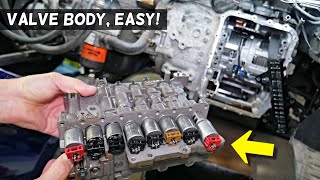
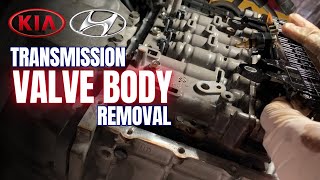
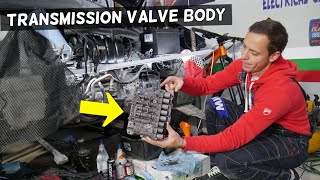
- Drain the transmission fluid, remove the oil pan, and carefully remove the valve body. 🎬 See this step-by-step valve body removal walkthrough
- Disconnect and remove the old internal wire harness assembly.
- Install the new harness assembly (Part No. 46307-3B650).
- Reinstall the valve body, torquing bolts to specification, and reinstall the oil pan with a new gasket.
- Refill with the correct type and amount of Hyundai SP-IV specification automatic transmission fluid.
- Clear the codes and perform a test drive to verify the repair.
Parts You'll Likely Need
- Transmission Sensor Wire Harness Assembly
(OEM #46307-3B650 (replaces 46307-3B620, 46307-3B610))— This is the most common cause of P0715 on this vehicle. It is an integrated harness that contains the input, output, and temperature sensors, and it fails from heat and age. This is the part recommended for replacement by Hyundai's TSB.
Trusted brands: Hyundai (Genuine)
OEM price range: $110-$160
Aftermarket price range: $80-$120 - Transmission Oil Pan Gasket
(OEM #45285-2F000)— The oil pan must be removed to access the internal harness, and the gasket is a one-time-use part that must be replaced to prevent leaks.
Trusted brands: Fel-Pro, Mahle, Hyundai (Genuine)
OEM price range: $20-$40
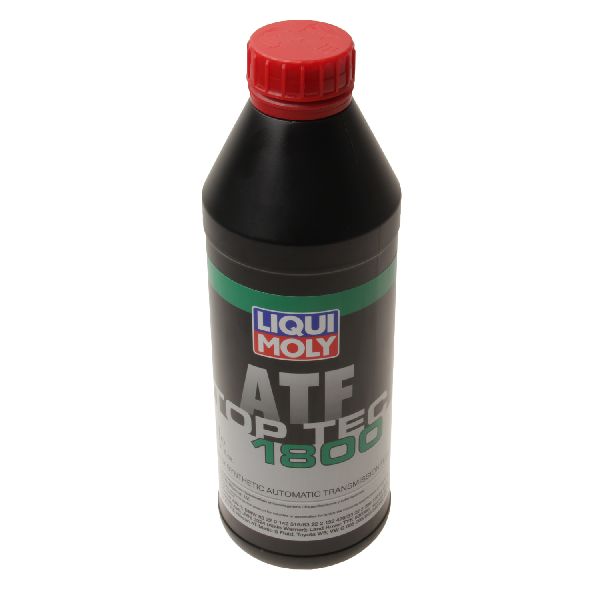
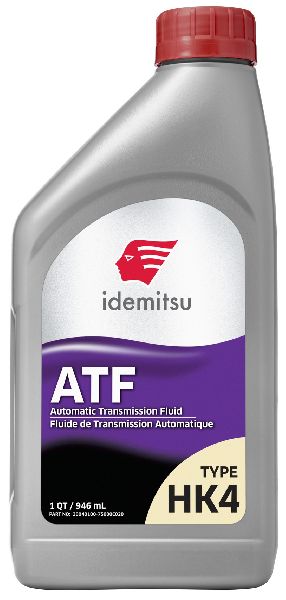
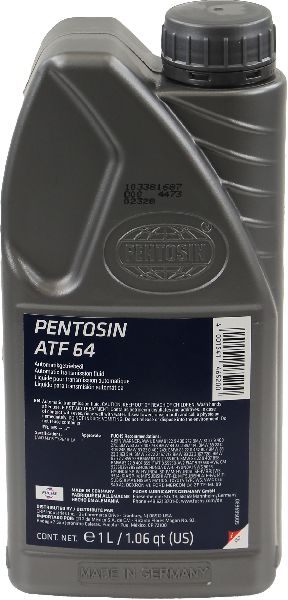
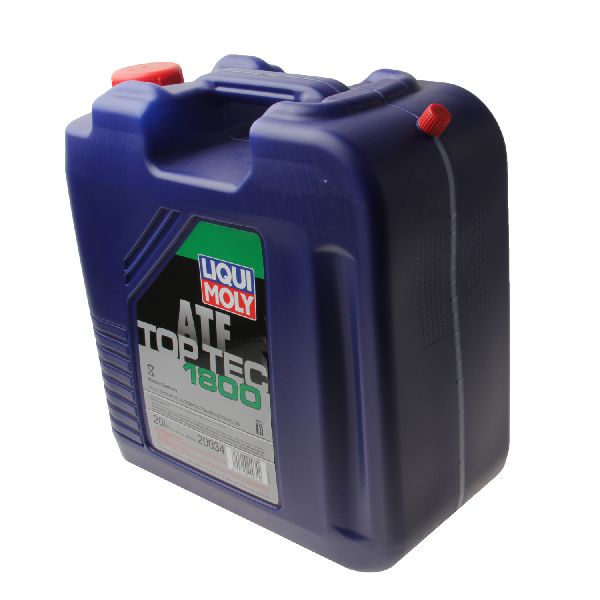
Aftermarket price range: $15-$25 - Automatic Transmission Fluid — The transmission fluid must be drained to perform the repair and will need to be replaced with fluid meeting Hyundai's SP-IV specification. Approximately 4-5 quarts are needed for a pan drop.
Trusted brands: Hyundai/Kia SP-IV, Idemitsu H, Valvoline MaxLife ATF
OEM price range: $15-$25 per quart
Aftermarket price range: $8-$15 per quart
Related Codes That Often Appear With This One
- P0717 — Input/Turbine Speed Sensor 'A' Circuit No Signal. This is a very similar code indicating a complete loss of signal, often caused by the same failed harness.
- P0721 — Output Speed Sensor Circuit Range/Performance. The output speed sensor is part of the same internal harness, so its failure is common alongside the input sensor.
- P0722 — Output Speed Sensor Circuit No Signal. Like P0721, this points to the output sensor within the same harness assembly failing.
- P0711 — Transmission Fluid Temperature Sensor 'A' Circuit Range/Performance. The temperature sensor is also integrated into the same internal harness, so its failure often occurs simultaneously.
- P0700 — Transmission Control System Malfunction. This is a general code indicating that the TCM has stored a fault, which in this case would be P0715.
Technical Service Bulletins (TSBs) & Recalls
- TSB 20-AT-011H: The most current bulletin, superseding previous versions. It instructs technicians to replace the internal oil pressure/sensor harness for DTCs P0717, P0721, & P0722 on a wide range of models including the 2012-2017 Accent (RB).
- TSB 16-AT-003 / 13-AT-014: Earlier versions of the same bulletin also covering the 2012+ Accent (RB) for input/output speed sensor DTCs. These are now superseded by 20-AT-011H.
Platform-Specific Known Issues
- The 2012-2017 Accent (RB) with the A6GF1 6-speed automatic transmission is subject to Hyundai TSB 20-AT-011H, which details the procedure for replacing the internal sensor harness for speed sensor-related fault codes.
Mechanic-Grade Diagnostic Values
- Input Speed Sensor (ISS) Internal Resistance — expected: 3.8 MΩ (Megaohms). Failure: A reading that is significantly different, open, or shorted. This test is performed on the pins of the internal harness once removed.
- Output Speed Sensor (OSS) Internal Resistance — expected: 5.8 MΩ (Megaohms). Failure: A reading that is significantly different, open, or shorted. As this sensor is on the same harness, its failure often accompanies an ISS failure.
- Transmission Fluid Temperature (TFT) Sensor Resistance — expected: Varies with temperature. Examples: 8.1 kΩ at 68°F (20°C), 3.8 kΩ at 104°F (40°C), 1.08 kΩ at 176°F (80°C).. Failure: An open circuit (infinite resistance) or short circuit (near zero resistance). A scan tool showing a fixed low temperature (e.g., -40°F) also confirms failure.
- Valve Body Bolt Torque — expected: 7-9 lb-ft (10-12 N.m). Failure: N/A - This is a reassembly specification.
Scan Tool Commands That Help
- Hyundai GDS (Global Diagnostic System): Resetting Auto T/A Values — This function must be performed after replacing the internal wire harness or valve body. It clears the transmission's adaptive learning memory, forcing it to relearn shift patterns with the new components. Failing to do this can result in continued harsh or erratic shifting even after the hardware is fixed.
Wiring & Ground Locations
- Main Transmission Harness Connector — On the exterior of the transmission case, where the main vehicle harness connects to the transmission.. This is the primary point to test for external wiring faults. A technician can check for the 5V reference signal and ground continuity at the pins leading to the input speed sensor circuit before condemning the internal harness. Damage or corrosion here can mimic an internal failure.
Real Owner Repair Stories
- eBay product review by user lakerfandk88877 (Vehicle with A6MF1 transmission (similar architecture to A6GF1)) — Owner was worried the transmission was 'toast' and would require a very expensive repair.
✅ What actually fixed it Replacing the internal transmission wiring harness (which includes the speed sensors) and a faulty solenoid brought the transmission back to normal operation.
OEM Part Supersession History
46307-3B610→46307-3B620, then 46307-3B650— The part has been revised by Hyundai, likely with improved materials for the wiring insulation and sensor components to increase resistance to heat and chemical degradation from transmission fluid, which was the cause of the original part's high failure rate.
Heads up: The newest part number, 46307-3B650, is fully backward compatible and should be used for all repairs.
Model Year Variations Within This Range
- 2012-2017: The A6GF1 transmission in this range uses a 'Generation 1' valve body with 8 solenoids. This is important to note if sourcing a complete valve body or transmission, as later Hyundai/Kia 6-speeds may use a 'Generation 2' valve body with 7 solenoids which is not compatible.
Diagnostic Flowchart
Other Known Issues on This Vehicle
Issues unrelated to this code that are worth knowing about as an owner of this generation:
- Steering Coupler Failure 🟠 Medium — Very common, typically occurs between 50,000 and 100,000 miles. Causes a distinct 'clunking' or clicking noise from the steering column when turning the wheel. (Ref: While no specific recall for the Accent, this is a widely known issue across many 2011-2014 Hyundai/Kia models. The replacement part is a small rubber bushing (OEM 56315-2K000-FFF).)
- GDI Engine Carbon Buildup 🟠 Medium — A long-term consequence of the GDI engine design, becoming noticeable after 60,000-100,000 miles. Leads to rough idle, hesitation, misfires (e.g., P0300), and loss of power. (Ref: No recall, as it's considered a maintenance issue. The fix is a manual cleaning of the intake valves (e.g., walnut blasting).)
- Ignition Coil Failure & Harness Chafing 🟠 Medium — Commonly reported issue causing engine misfires, rough idling, and stalling. The engine wiring harness can chafe against a bracket, causing shorts.
- Premature Rear Shock Wear 🟡 Low — Some owners report rear shocks leaking and failing earlier than expected, leading to a bouncy ride, clunking noises over bumps, and uneven tire wear.
Used vs. New Parts: Buying Guide for This Vehicle
When a used part is the smart pick: For this specific repair, using a used part is strongly discouraged. The primary failure part, the internal sensor harness, fails due to heat and age. A used harness from a salvage vehicle has been subjected to the same conditions and is likely to fail soon, if it hasn't already.
What to inspect on the donor part:
- Not applicable, as a used harness should not be considered.
OEM-only on this vehicle (don't cheap out):
- Transmission Sensor Wire Harness Assembly (Part No. 46307-3B650). Given the high failure rate and subsequent OEM part revisions, using a genuine Hyundai part is critical for a lasting repair. Aftermarket versions may not use the latest material specifications and could fail prematurely.
Brands owners have reported issues with on this vehicle:
- Unbranded or generic harnesses from online marketplaces. While cheaper, they often use lower-grade materials that are not resistant to the high-temperature, chemically-harsh environment inside a transmission, leading to repeat failures.
Real Owner Stories
Aggregated from forums and TSBs cited above. Mileages and costs reflect what owners reported in those sources.
2012-2017 Hyundai Accent (RB)
Symptoms: Owners report shifting issues and the internal harness being the common fix for P0715 and related codes, often resolving the problem by replacing the specific harness part.
What fixed it: Replacement of the internal transmission wire harness (Part No. 46307-3B650).
Source hint: Hyundai Forums - 'Hyundai Accent' Section
2012-2016 Hyundai Santa Fe
Symptoms: Progressive jerking while driving on the highway followed by a P0715 code.
What fixed it: Replacement of the Input/Turbine Speed Sensor.
Source hint: Reddit - r/AskMechanics - 'P0715 Input/Turbine Speed Sensor Location' (2022)
Related OBD-II Codes
Frequently Asked Questions
Does TSB 20-AT-011H apply to my 2012-2017 Hyundai Accent (RB)?
What specific part number is needed to fix the P0715 code on my Accent's A6GF1 transmission?
My Accent is stuck in 3rd gear and shifts harshly. Is this related to the P0715 code?
Can a transmission fluid temperature reading of -40°F help diagnose my P0715 code?
Is the P0715 issue common on other vehicles similar to the Hyundai Accent?
Do I need to remove the transmission to replace the sensor harness?
Helpful Videos
We Have This Part in Stock


The information in this article is provided for general reference and educational purposes only. Vehicle specifications, procedures, and part compatibility can vary by production date, trim level, and region. Always consult your vehicle's factory service manual and verify part numbers before purchasing or performing repairs. Safety-critical components such as airbags, seat belts, and braking systems should be installed by a qualified professional.
- Hyundai Accent:
- 🧭 Diagnostic Flowchart
- 🎬 Helpful Videos
- 🛍️ Shop This Part
- What's Unique About the 2012-2017 Hyundai Accent
- Symptoms You May Notice
- Most Likely Causes
- Rare But Worth Checking
- Diagnosis Steps
- Parts You'll Likely Need
- Related Codes That Often Appear With This One
- Technical Service Bulletins (TSBs) & Recalls
- Platform-Specific Known Issues
- Mechanic-Grade Diagnostic Values
- Scan Tool Commands That Help
- Wiring & Ground Locations
- Real Owner Repair Stories
- OEM Part Supersession History
- Model Year Variations Within This Range
- Other Known Issues on This Vehicle
- Used vs. New Parts: Buying Guide for This Vehicle
- Real Owner Stories
- 2012-2017 Hyundai Accent (RB)
- 2012-2016 Hyundai Santa Fe
- Related OBD-II Codes
- Frequently Asked Questions
- 🎟️ Get 5% Off