

P0715 on 2012-2017 Hyundai Azera: Input Speed Sensor Causes and Fixes
On a 2012-2017 Hyundai Azera, code P0715 is most often caused by a failed internal transmission speed sensor harness, OEM part number 46307-3B650. This is a known issue documented in Hyundai TSB 20-AT-011H. The sensor is located inside the transmission and requires removing the valve body to replace, making it a job for a professional. Expect repair costs to range from $400 to $800, with the part itself costing between $80 and $160.
- P0715 on a 2012-2017 Azera indicates a serious transmission issue, usually causing harsh shifting and limp mode.
- The most likely cause is a failed internal speed sensor harness, a known issue documented in a Hyundai TSB.
- This is not a simple DIY repair; it requires removing the transmission valve body and should be handled by a professional.
- Before agreeing to a full transmission replacement, ensure a technician has specifically diagnosed the internal sensor harness, as it is a much less expensive fix.
- Always use the correct Hyundai-specific (SP-IV) transmission fluid when performing this repair.
What's Unique About the 2012-2017 Hyundai Azera
The 2012-2017 Hyundai Azera (HG) uses a 6-speed automatic transmission (A6LF1/A6MF2 family) where the input and output speed sensors are integrated into a single internal wiring harness assembly. Unlike older vehicles where these sensors might be screwed into the outside of the transmission case, this design requires draining the fluid, removing the transmission oil pan, and then removing the entire valve body to access the harness. This makes the repair significantly more complex and labor-intensive. Hyundai acknowledged this specific failure point in TSB 20-AT-011H, which instructs technicians to replace the entire harness for this and other related codes.
Symptoms You May Notice
- Harsh or erratic shifting
- Transmission getting stuck in one gear (fail-safe or 'limp' mode, usually 3rd gear)
- Delayed engagement when shifting from Park to Drive or Reverse
- Check Engine Light is on
- Transmission-related warning lamp on the dashboard
- Reduced fuel economy
- Sudden 'slam' or 'thud' when the transmission shifts, especially when coming to a stop.
- Erratic or non-functional speedometer (less common, as VSS is often separate but can be affected by TCM issues)
- Replacing the entire transmission when only the internal sensor harness is needed. This is a much more expensive repair that may not be necessary. TSB 20-AT-011H was issued in part to prevent this misdiagnosis.
- Replacing an external vehicle speed sensor (VSS) when the issue is with the internal input/turbine speed sensor.
- Assuming the input speed sensor itself is a separate part. On this transmission, it is integrated into the harness assembly and cannot be replaced individually.
Most Likely Causes
- Failed Internal Input/Output Speed Sensor Harness 🔴 High Probability Hyundai issued Technical Service Bulletin (TSB 20-AT-011H) for this generation of Azera and many other models with the 6-speed automatic transmission, indicating a known issue with the internal sensor harness. The harness, which contains the input, output, and fluid temperature sensors, is constantly submerged in hot ATF, which can degrade the wiring and sensor potting over time, leading to failure.
How to confirm: A technician will use a scan tool to monitor live data from the input speed sensor (Turbine Speed) while driving. A reading that is zero, erratic, or does not change with engine RPM points to the sensor or its circuit. Confirmation requires testing the harness directly after removing the transmission valve body.
Typical fix: Replace the internal transmission wiring harness (OEM P/N: 46307-3B650). This requires draining the transmission fluid, removing the oil pan, and removing the valve body to access the harness. After replacement, the transmission adaptive values should be reset.
Est. part cost: $80-$160 - Low or Contaminated Transmission Fluid 🟡 Medium Probability → Shop Transmission Assembly These transmissions are 'sealed for life' and lack a traditional dipstick, which can lead to fluid level/condition being overlooked during routine maintenance. Leaks or fluid breakdown can cause shifting issues and potentially trigger sensor codes.
How to confirm: Check the transmission fluid level and condition via the fill and overflow plugs, a procedure that must be done at a specific fluid temperature. The fluid should be at the correct level, bright red, and not smell burnt. Dark or burnt-smelling fluid indicates a problem.
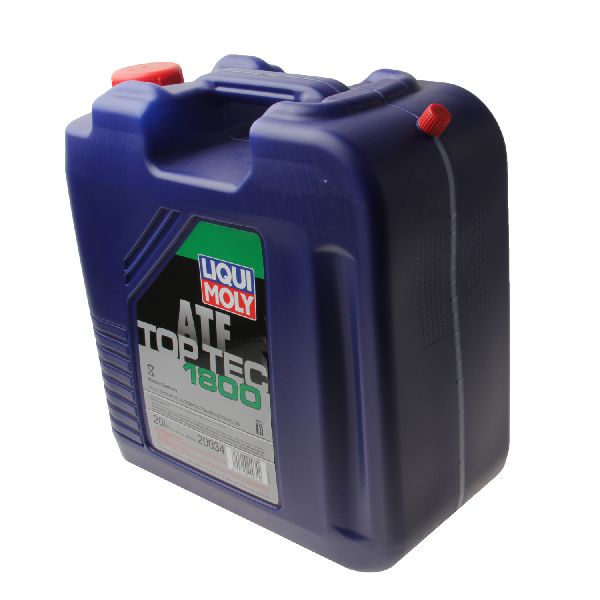
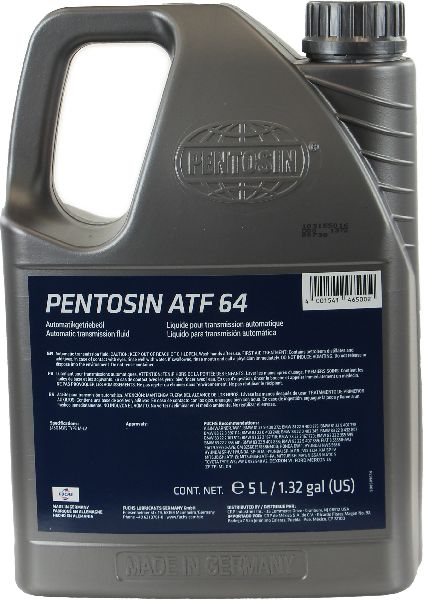
Typical fix: Perform a transmission fluid drain and fill, or a full fluid exchange if the fluid is very dirty. Use only Hyundai-specified ATF (SP-IV).
Est. part cost: $50-$150 - Damaged Wiring or Connectors ⚪ Low Probability
How to confirm: Visually inspect the main external transmission wiring harness and the connector at the transmission case for any signs of physical damage, corrosion, or loose pins. Test for continuity and shorts from the main transmission connector to the TCM.
Typical fix: Repair or replace the damaged section of the wiring harness or the faulty connector.
Est. part cost: $20-$100
Rare But Worth Checking
- Faulty Transmission Control Module (TCM) or Powertrain Control Module (PCM): → Shop Transmission Assembly This is a rare cause and should only be considered after all other possibilities (sensor, fluid, wiring) have been thoroughly ruled out. The module may misinterpret a good sensor signal or have an internal circuit failure.
- Damaged Internal Reluctor Ring: The speed sensor reads teeth on a spinning reluctor ring inside the transmission. While very rare, if this ring is damaged or has debris (like metal shavings) stuck to it, it can cause an erratic signal and trigger a P0715 code. This would typically be accompanied by other signs of serious internal transmission failure.
Diagnosis Steps
- Connect an OBD-II scanner and check for any other transmission-related codes. Note any codes like P0717, P0721, or P0722, as they strongly point to the internal harness.
- Use the scanner's live data function to monitor the Input Speed Sensor (Turbine Speed) signal while driving the vehicle. The reading should increase smoothly with engine RPM. Look for dropouts, erratic readings, or a value stuck at zero.
- Check the transmission fluid level and condition. This must be done with the vehicle level and the transmission fluid at a specific temperature range (consult service manual). Ensure it is full and the fluid is clean and red.
- If the fluid is fine, raise the vehicle on a lift to inspect the external transmission wiring harness and main connector for any visible damage, corrosion, or loose connections.
- If the external wiring is intact, the next step is to proceed with the internal inspection, which is the most likely point of failure.
- Drain the transmission fluid and remove the transmission oil pan.
- Carefully remove the transmission valve body to gain access to the input/output speed sensor harness.
- Visually inspect the internal harness for any signs of brittle wiring, cracked connectors, or other damage. Replace the sensor harness assembly (Part #46307-3B650).
- Reinstall the valve body, torquing bolts to the manufacturer's specification and sequence. Reinstall the transmission pan with a new gasket.
- Refill with the correct type and amount of Hyundai-specific automatic transmission fluid (SP-IV).
- Using a capable scan tool, reset the transmission's adaptive learning values.
- Clear the trouble codes and perform a test drive to ensure the shifting is smooth and the code does not return.
Parts You'll Likely Need
- Transmission Input/Output Speed Sensor Harness
(OEM #46307-3B650)— This is the most common failure point for a P0715 code on this vehicle, as documented in Hyundai TSB 20-AT-011H. It contains the input, output, and temperature sensors. This part number supersedes 46307-3B610 and 46307-3B620.
Trusted brands: Hyundai (Genuine OEM)
OEM price range: $80-$160
Aftermarket price range: $60-$120 - Automatic Transmission Fluid
(OEM #Hyundai SP-IV (or compatible))— The fluid must be drained to access the internal sensor harness and must be replaced with the correct specification fluid. Approximately 5-6 quarts are needed for a pan drop.
Trusted brands: Hyundai (Genuine OEM), Idemitsu TLS-LV, ENEOS ECO ATF
OEM price range: $15-$25 per quart
Aftermarket price range: $10-$20 per quart - Transmission Oil Pan Gasket
(OEM #45285-3B700 (verify by VIN))— The gasket should always be replaced when the oil pan is removed to prevent leaks. Some technicians prefer using a high-quality RTV sealant specified for transmission fluid.
Trusted brands: Hyundai (Genuine OEM), Fel-Pro
OEM price range: $20-$40
Aftermarket price range: $15-$30
Related Codes That Often Appear With This One
- P0717 — This code means 'Input/Turbine Speed Sensor 'A' Circuit No Signal,' which is a more specific version of the P0715 general fault. They often appear together when the sensor has completely failed.
- P0722 — This code indicates 'Output Speed Sensor Circuit No Signal.' Since the input and output sensors are part of the same internal harness on this transmission, a failure in the harness can cause both codes to appear simultaneously.
- P0711 — This code for 'Input/Turbine Speed Sensor 'A' Circuit Range/Performance' can sometimes appear as an intermittent fault before the sensor circuit fails completely and triggers P0715 or P0717.
Technical Service Bulletins (TSBs) & Recalls
- TSB 20-AT-011H: The primary TSB for this issue. It covers a wide range of Hyundai models (including the 2012-17 Azera) with the 6-speed automatic transmission (Gen1 valve body) and instructs technicians to replace the internal harness for codes P0717, P0721, and P0722.
- TSB 16-AT-003: An earlier, superseded version of 20-AT-011H that covered fewer models but addressed the same fundamental problem.
- TSB 09-AT-016: An older TSB covering P0715 and related codes for 2006 and newer Azeras, outlining diagnostic procedures for improperly functioning input or output speed sensors.
Platform-Specific Known Issues
- Hyundai issued Technical Service Bulletin 20-AT-011H, which supersedes previous TSBs, specifically addressing DTCs P0717, P0721, and P0722 by replacing the internal oil pressure harness (which includes the speed sensors) on 2012-2017 Azera (HG) models, among many others. This strongly indicates a known, widespread issue with this component across the Hyundai/Kia lineup using the 6-speed automatic with the Gen1 valve body.
Mechanic-Grade Diagnostic Values
- Input Speed Sensor Power Supply Voltage — expected: ~9 Volts. Failure: Significantly lower or no voltage indicates a wiring or PCM/TCM issue.
- Input Speed Sensor Signal Wire Continuity — expected: < 1.0 Ohm. Failure: A high resistance or open circuit (O.L.) reading indicates a break in the signal wire between the transmission connector and the PCM/TCM.
Scan Tool Commands That Help
- Hyundai GDS (Global Diagnostic System): Resetting Auto T/A values — This function must be performed after replacing the internal harness, valve body, or entire transmission. It erases the old learned shift adaptations from the TCM, allowing it to relearn shift points with the new components for optimal shift quality. It is typically found under the 'Vehicle S/W Management' or 'Option Treatment' menu.
Wiring & Ground Locations
- Main Transmission Connector Pin 14 — On the main external electrical connector of the automatic transmission case.. This pin provides the power supply to the internal input speed sensor. A technician can back-probe this pin to check for the expected ~9V, helping to diagnose if the fault is in the power supply from the PCM/TCM before opening the transmission.
- Main Transmission Connector Pin 8 — On the main external electrical connector of the automatic transmission case.. This is the signal wire from the input speed sensor to the PCM/TCM. A technician can perform a continuity test from this pin to the corresponding pin at the control module to rule out an external wiring break.
- Connector C105 (Gray, 3-Pin) — Located in the engine bay, next to the EBCM (Electronic Brake Control Module).. This is a key intermediary connector between the main engine harness and the TCM harness. It serves as an accessible external point to test continuity and voltage for the sensor circuits without having to access the main transmission connector directly.
Real Owner Repair Stories
- eBay product review by user lakerfandk88877 (Vehicle with A6MF1 transmission (same family as Azera's A6LF1/2)) — Owner was worried the transmission was 'toast' and would be a very expensive repair.
✅ What actually fixed it Replacing the internal wiring harness (which includes the speed sensors) and a faulty solenoid brought the transmission back to normal operation, avoiding a full replacement.
When the Usual Fixes Don't Work
- While the internal harness is the most common fix, it is not a guaranteed solution. In one documented case on a related Kia with the same transmission family, a user replaced the torque converter and the internal wiring harness, yet the shifting problems and lack of power persisted. This indicates that in some instances, the root cause could be a more significant internal mechanical issue, a problem with the valve body solenoids, or a faulty torque converter that was not resolved by the new parts.
OEM Part Supersession History
46307-3B610, 46307-3B620→46307-3B650— The updated harness is believed to use more durable materials to better withstand the high-temperature automatic transmission fluid environment, addressing the root cause of the original parts' failure.
Model Year Variations Within This Range
- 2013-2017: For models produced from March 2013 onwards, the transmission fluid temperature sensor is definitively integrated into the main internal wiring harness (part #46307-3B650) and cannot be replaced as a separate component. This reinforces that codes related to the temp sensor (like P0711, P0712, P0713) appearing with P0715 strongly point to this single harness assembly being the fault.
Diagnostic Flowchart
Other Known Issues on This Vehicle
Issues unrelated to this code that are worth knowing about as an owner of this generation:
- GDI Engine Carbon Buildup 🟠 Medium — Common on Gasoline Direct Injection (GDI) engines over 50,000-60,000 miles. Can cause rough idle, misfires, and reduced power. (Ref: TSB 22-EM-010H provides guidelines for cleaning the intake system during engine work.)
- Panoramic Sunroof Popping/Creaking Noise 🟡 Low — A common complaint where the sunroof assembly creaks or pops while driving, especially over uneven surfaces or when turning. (Ref: Hyundai issued TSBs like 19-BD-001HG for other models detailing lubrication and adjustment procedures. A warranty extension was also issued for some models.)
- ABS Module Electrical Short 🔴 High — Subject to a major recall. The ABS module can leak brake fluid internally, causing an electrical short that can lead to an engine compartment fire, even when the car is parked. (Ref: Recall 23V651000 (NHTSA ID))
- Startup Engine Rattle 🟠 Medium — Some owners report a brief, loud rattling or clattering noise from the engine for a few seconds on a cold start. This can be related to the timing chain tensioners. (Ref: RepairPal notes that improved timing chain tensioners are available to correct this issue.)
- Trunk Latch Failure 🟡 Low — The trunk latch mechanism can fail, preventing the trunk from being opened from the inside. (Ref: Recall 21V619000 (NHTSA ID))
Used vs. New Parts: Buying Guide for This Vehicle
When a used part is the smart pick: For this specific repair, a used part is NEVER a smart choice. The failure mode of the internal transmission harness is degradation from prolonged exposure to heat and transmission fluid. A used part from a junkyard has been subjected to the same conditions and is likely near the end of its own service life, if not already faulty.
What to inspect on the donor part:
- Not applicable. Do not purchase this part used.
OEM-only on this vehicle (don't cheap out):
- Transmission Input/Output Speed Sensor Harness (46307-3B650)
Aftermarket brands forum-validated for this vehicle:
- No specific aftermarket brands have established a strong reputation for reliability for this part. The consensus among professional technicians and forum members is to use the Genuine Hyundai OEM part to ensure compatibility and longevity.
Brands owners have reported issues with on this vehicle:
- Unbranded, low-cost harnesses from online marketplaces should be avoided. These often use inferior plastics and wiring that are not rated for the high-temperature, chemically harsh environment inside an automatic transmission, leading to premature failure.
Real Owner Stories
Aggregated from forums and TSBs cited above. Mileages and costs reflect what owners reported in those sources.
2012 Hyundai Azera
Symptoms: Check engine light came on and the car got stuck in 3rd gear (limp mode) with a P0717 code present.
What fixed it: Replacement of the internal wiring harness (speed sensor) which required removing the transmission valve body.
Cost: $700-$700
Source hint: Hyundai-Forums.com: 2012 Azera Transmission problem P0717
Related OBD-II Codes
Frequently Asked Questions
Does Technical Service Bulletin 20-AT-011H apply to my 2012-2017 Hyundai Azera?
What is the specific part number for the internal harness used to fix P0715 on my Azera?
Why does my Azera slam into gear or get stuck in 3rd gear when this code triggers?
Can I just replace an external sensor on the outside of the transmission case?
Is there a specific transmission fluid I must use after the harness repair?
Are there any other TSBs related to P0715 for older Azera models?
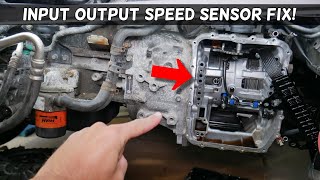
Helpful Videos
We Have This Part in Stock





The information in this article is provided for general reference and educational purposes only. Vehicle specifications, procedures, and part compatibility can vary by production date, trim level, and region. Always consult your vehicle's factory service manual and verify part numbers before purchasing or performing repairs. Safety-critical components such as airbags, seat belts, and braking systems should be installed by a qualified professional.
- Hyundai Azera:
- 🧭 Diagnostic Flowchart
- 🎬 Helpful Videos
- 🛍️ Shop This Part
- What's Unique About the 2012-2017 Hyundai Azera
- Symptoms You May Notice
- Most Likely Causes
- Rare But Worth Checking
- Diagnosis Steps
- Parts You'll Likely Need
- Related Codes That Often Appear With This One
- Technical Service Bulletins (TSBs) & Recalls
- Platform-Specific Known Issues
- Mechanic-Grade Diagnostic Values
- Scan Tool Commands That Help
- Wiring & Ground Locations
- Real Owner Repair Stories
- When the Usual Fixes Don't Work
- OEM Part Supersession History
- Model Year Variations Within This Range
- Other Known Issues on This Vehicle
- Used vs. New Parts: Buying Guide for This Vehicle
- Real Owner Stories
- 2012 Hyundai Azera
- Related OBD-II Codes
- Frequently Asked Questions
- 🎟️ Get 5% Off