

P0715 on 2011-2014 Hyundai Sonata: Input Speed Sensor Circuit Causes and Fixes
On a 2011-2014 Sonata, code P0715 is almost always caused by a failed internal transmission temperature/speed sensor wiring harness. The sensor assembly is located inside the transmission and requires removing the valve body to replace, making it a job for a professional. The updated OEM part is 46307-3B650. Expect a repair cost of $400-$800.
- P0715 on a 2011-2014 Sonata indicates a problem with the transmission's input speed sensor.
- The most common cause is the failure of the internal sensor harness assembly.
- This is not a simple DIY repair. The sensor is inside the transmission and requires removing the valve body, a job for a professional.
- Symptoms are severe and include harsh shifting and the transmission getting stuck in one gear ('limp mode').
- Before authorizing an expensive transmission replacement, ensure a technician has specifically diagnosed the internal sensor harness, as this is a much cheaper repair.
What's Unique About the 2011-2014 Hyundai Sonata
For the 2011-2014 Hyundai Sonata (YF generation) with its A6MF1 6-speed automatic transmission, the input and output speed sensors are integrated into a single wiring harness located *inside* the transmission case. This is a critical distinction from many other vehicles where these sensors were externally mounted and easy to replace. The A6MF1 is part of a larger family of 6-speed transmissions used across many Hyundai and Kia models. Accessing the sensor harness requires draining the fluid, dropping the transmission pan, and removing the complex valve body assembly, 🎬 Watch: A6MF1 transmission teardown and valve body removal making the repair significantly more involved and costly.
Symptoms You May Notice
- Check Engine Light is on
- Harsh, jerky, or delayed gear shifts, sometimes described as a 'bang' or 'thud' when engaging drive or during shifts.
- Transmission gets stuck in a single gear (fail-safe or 'limp' mode), often 3rd gear.
- Vehicle feels sluggish or has no power, especially from a stop
- Inability to shift into higher gears
- Sudden loss of power while driving, which may be temporarily resolved by restarting the car.
- Erratic speedometer behavior (less common, may indicate output sensor issue as well)
- Replacing only one of the speed sensors when the fault is in the integrated harness itself.
- Condemning the entire transmission for a rebuild when only the internal sensor harness is faulty.
- Replacing the external Vehicle Speed Sensor (VSS) on the transmission case, which is a different part and will not fix a P0715 code.
- Mistaking the issue for a major mechanical failure due to the harsh shifting symptoms, without first checking for the common electrical fault.
Most Likely Causes
- Failed Internal Input/Output Speed Sensor Harness 🔴 High Probability The sensors are part of a wiring harness assembly (which also often includes the transmission fluid temperature sensor) located inside the transmission, constantly submerged in hot transmission fluid. This environment degrades the plastic sensor housings and wire insulation over time, leading to shorts or open circuits.
How to confirm: A technician will need to drop the transmission pan and valve body to access and test the sensor harness for continuity and resistance. A scan tool will typically show an erratic or zero RPM reading for the input speed sensor while the engine is running and in gear.
Typical fix: Replace the entire speed sensor/temperature sensor wiring harness assembly. The updated OEM part number is 46307-3B650. 🎬 Watch: Step-by-step internal sensor harness replacement guide
Est. part cost: $60-$160 - Low or Contaminated Transmission Fluid 🟡 Medium Probability → Shop Transmission Assembly While these transmissions are 'sealed' and don't have a dipstick, leaks can develop. Extremely degraded or low fluid can cause erratic hydraulic pressure and shifting, which can sometimes be misinterpreted by the TCM or contribute to sensor failure.
How to confirm: The fluid level and condition must be checked by a technician via the fill and overflow plugs on the transmission case. Dark, burnt-smelling fluid indicates a problem that needs more than just a fluid change.
Typical fix: Perform a transmission fluid drain and fill with the correct Hyundai SP-IV specification fluid. If the fluid is heavily contaminated, the root cause (e.g., internal wear) must be investigated.
Est. part cost: $75-$200 for fluid - Damaged Wiring or Connector to Transmission ⚪ Low Probability → Shop Transmission Assembly The main external connector to the transmission can be exposed to road debris, moisture, and corrosion, though less common than internal failure.
How to confirm: Visually inspect the main transmission harness connector for pushed-out pins, corrosion, or wiring damage. Wiggle the harness while monitoring sensor data on a scan tool to check for intermittent connections.
Typical fix: Repair the damaged section of the wiring harness or clean/replace the connector.
Est. part cost: $20-$100
Rare But Worth Checking
- Faulty Transmission Control Module (TCM) or Powertrain Control Module (PCM): → Shop Transmission Assembly This is very uncommon. Before condemning the control module, all other possibilities (sensor, wiring, fluid) must be exhaustively ruled out. A module failure can sometimes be caused by an electrical short in the wiring it connects to.
Diagnosis Steps
- Connect an OBD-II scanner to confirm the P0715 code and check for any other related transmission codes (e.g., P0716, P0721, P0711).
- Use the scanner's live data function to monitor the Input Speed Sensor and Output Speed Sensor RPMs while driving. The input speed should be proportional to engine RPM and drop to zero when stopped, while the output speed should correspond to vehicle speed.
- If the input speed reading is erratic, intermittent, or stuck at zero while the engine is running, the problem is highly likely with the sensor or its circuit.
- Raise the vehicle and perform a visual inspection of the main transmission wiring harness and its connector for any signs of damage, corrosion, or loose pins.
- If external wiring is okay, the next step is to inspect the transmission fluid level and condition. This must be done by a professional as there is no dipstick.
- If the fluid level and external wiring are good, the transmission pan and valve body must be removed to access the internal speed sensor harness.
- Visually inspect the internal harness for broken wires, brittle plastic, or signs of heat damage, especially near the sensor connectors.
- Test the resistance and continuity of the sensor and its wiring from the sensor connector to the main transmission case connector pins. Compare readings to manufacturer specifications. An open or shorted circuit confirms a failed harness.
- If the sensor/harness fails testing, it must be replaced with the updated OEM part.
- After reassembly, perform the Transmission Adaptive Value Reset procedure as outlined in TSB 14-AT-008 to ensure proper shift quality.
Parts You'll Likely Need
- Transmission Wire Harness Assembly
(OEM #46307-3B650)— This is the most common failure point. The assembly includes the input speed sensor, output speed sensor, and transmission fluid temperature sensor on a single harness that lives inside the transmission. This part number supersedes older versions like 46307-3B610 and 46307-3B620. Always verify the correct part number with the vehicle's VIN.
Trusted brands: Hyundai (OEM), Mobis, Dorman
OEM price range: $100-$160
Aftermarket price range: $60-$100
Related Codes That Often Appear With This One
- P0716 — Input/Turbine Speed Sensor 'A' Circuit Range/Performance. This code is closely related and points to the same sensor, but indicates the signal is irrational or erratic rather than completely lost.
- P0721 — Output Speed Sensor Circuit Range/Performance. The input and output sensors are on the same internal harness, so a failure in the harness can trigger codes for both sensors simultaneously.
- P0711 — Transmission Fluid Temperature Sensor 'A' Circuit Range/Performance. The temperature sensor is often part of the same internal wiring harness assembly that houses the speed sensors, so a failure can trigger this code as well.
Technical Service Bulletins (TSBs) & Recalls
- TSB 14-AT-008: Describes the procedure to reset and relearn transmission adaptive values after replacing the transaxle or TCM/PCM, which is recommended after this repair to ensure smooth shifting.
Mechanic-Grade Diagnostic Values
- Input/Output Speed Sensor Input Voltage — expected: 9 Volts. Failure: Voltage significantly lower or higher than 9V indicates a power supply issue to the sensor.
- Transmission Fluid Temperature Sensor Voltage at 104°F (40°C) — expected: ~3.2 Volts. Failure: A reading that is drastically different can indicate a fault in the temperature sensor portion of the internal harness.
- Transmission Fluid Temperature Sensor Voltage at 302°F (150°C) — expected: ~0.29 Volts. Failure: A reading that is drastically different can indicate a fault in the temperature sensor portion of the internal harness.
Scan Tool Commands That Help
- Hyundai GDS (Global Diagnostic System): Resetting Auto T/A values — This function, found in the 'Option Treatment' or 'S/W Management' section of the A/T menu, must be performed after replacing the internal harness, valve body, or transmission assembly to clear old learned shift parameters and initiate a new adaptive learning cycle for optimal shift quality.
- Hyundai GDS (Global Diagnostic System): Flight Record — Used to record live data parameters, including input/output sensor speeds and solenoid operation, during a test drive to capture intermittent faults or analyze shift quality issues that may not be apparent during a static test.
Wiring & Ground Locations
- PCM/TCM Unit — In the engine bay, located near the battery and firewall. The Transmission Control Module (TCM) is integrated into the Powertrain Control Module (PCM) on this vehicle.. This is the destination for all sensor signals. The main harness connector here is a key test point for checking sensor circuits without opening the transmission.
- GHG01 / GHTG01 — Main engine compartment ground, located on the left side of the engine compartment.. A poor connection at this primary ground point can cause a wide range of electrical issues, potentially including erratic sensor readings or communication failures with the integrated TCM.
- A6MF1 Case Connector — The main electrical connector on the outside of the transmission case.. This is the primary interface between the internal harness (where the sensor is) and the rest of the car. Technicians can perform voltage and resistance tests at these pins to diagnose the internal harness without first removing the transmission pan and valve body.
OEM Part Supersession History
46307-3B610→46307-3B620, then 46307-3B650— Revisions to improve durability and resistance to heat-related failure.
Heads up: The newest part number, 46307-3B650, is the correct and recommended replacement for all previous versions.
Model Year Variations Within This Range
- 2011: The wiring diagrams for the Automatic Transaxle Control System are different for vehicles built before June 15, 2010, versus those built after. While the P0715 fault is the same, a technician referencing a diagram must ensure they are using the correct one for the vehicle's build date.
- 2011-2014: These Sonatas use the 'Generation 1' A6MF1 valve body, which has 8 solenoids. Later Hyundai models moved to a 'Generation 2' valve body with 7 solenoids. This is a critical distinction for any work involving the valve body or its solenoids.
Diagnostic Flowchart
Other Known Issues on This Vehicle
Issues unrelated to this code that are worth knowing about as an owner of this generation:
- Theta II Engine Seizure/Failure 🔴 High — Extremely common across 2.0L and 2.4L GDI engines. Led to massive recalls and a class-action lawsuit. (Ref: NHTSA Recall 15V-568, Hyundai Recall 132. Resulted in lifetime warranty extension for the engine short block for affected vehicles.)
- Steering Coupler Degradation 🟠 Medium — Very common; most owners will experience this. Causes a distinct clicking or clunking noise in the steering column when turning the wheel. (Ref: NHTSA #16V190000 (Recall 143) for some 2011 models, but the problem is widespread across all years. The failing part is a small rubber coupler (p/n 56315-2K000-FFF).)
- Subframe and Rear Suspension Corrosion 🔴 High — Common in 'Salt Belt' states, leading to premature and dangerous rusting of the front crossmember and rear suspension components. (Ref: Hyundai Service Campaign TXXC (NHTSA #10057098) to apply rust-proofing. Earlier models had recalls for the same issue.)
- Shifting Problems (Harsh/Delayed) 🟠 Medium — Frequently reported. Can be related to the P0715 issue, but also caused by other factors. Requires adaptive learning resets after certain repairs. (Ref: TSB 14-AT-008 describes the procedure to reset and relearn adaptive values after transmission repairs to improve shift quality.)
- Engine Fires (Non-Crash) 🔴 High — Significant enough to trigger separate NHTSA investigations, often related to the Theta II engine issues. (Ref: Ongoing NHTSA investigations mentioned in consent orders.)
Used vs. New Parts: Buying Guide for This Vehicle
When a used part is the smart pick: For this specific repair, a used part is almost never a smart choice. The primary failure is the internal wiring harness, which fails due to age and heat cycles. A used harness from a junkyard vehicle will have undergone similar stress and is likely to fail soon, if it doesn't have the same fault already. A used valve body or complete transmission assembly may be considered if there are additional mechanical problems, but the harness itself should always be new.
Donor-vehicle mileage cap: roughly under 30000 miles for the part to have meaningful remaining life.
What to inspect on the donor part:
- Not applicable for the harness itself. Avoid used.
- If considering a complete used transmission, look for one from a vehicle with the lowest possible mileage and evidence of regular fluid service.
- Check for any signs of external case damage or leaks around seals and the pan gasket.
OEM-only on this vehicle (don't cheap out):
- Transmission Wire Harness Assembly (46307-3B650)
Aftermarket brands forum-validated for this vehicle:
- Dorman (often cited as a viable alternative if OEM is unavailable)
Brands owners have reported issues with on this vehicle:
- Unbranded, no-name parts from online marketplaces like AliExpress or eBay should be avoided, as quality control is unknown and can lead to repeat failures or damage to the TCM.
Real Owner Stories
Aggregated from forums and TSBs cited above. Mileages and costs reflect what owners reported in those sources.
2011+ Hyundai Sonata (6-speed automatic)
Symptoms: Sudden seizure and loss of power before the check engine light illuminated with code P0715.
What fixed it: Replacement of the internal input and output speed sensors, which required removing the transmission valve body to access.
Source hint: hyundai-forums.com
2001 Hyundai Sonata
Symptoms: The car was 'banging' into limp gear and the check engine light came on; the issue would temporarily clear after restarting the vehicle.
What fixed it: Identified as an intermittent sensor failure.
Source hint: reddit.com/r/MechanicAdvice
2011-2014 Hyundai Sonata
Symptoms: Experienced a two-step 'THUD' when changing gears or accelerating from a stop.
What fixed it: Faulty sensor signal repair (P0715).
Source hint: reddit.com/r/MechanicAdvice
Related OBD-II Codes
Frequently Asked Questions
What is the recommended procedure for my 2011-2014 Sonata after replacing the transmission speed sensor harness?
Is there a specific updated part I should use for the P0715 fix on my Hyundai?
My Sonata is 'banging' into gear and stuck in 3rd gear; is this related to P0715?
Can I check the transmission fluid level myself to see if that's causing the P0715 code?
Does the P0715 issue affect other vehicles similar to the Sonata?
What specific transmission fluid should be used if a drain and fill is required?
Helpful Videos

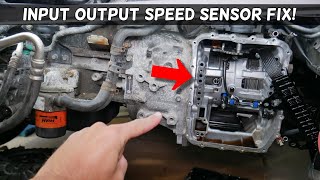
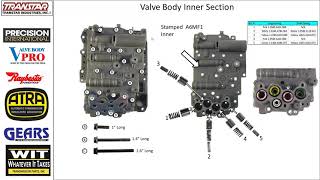
We Have This Part in Stock
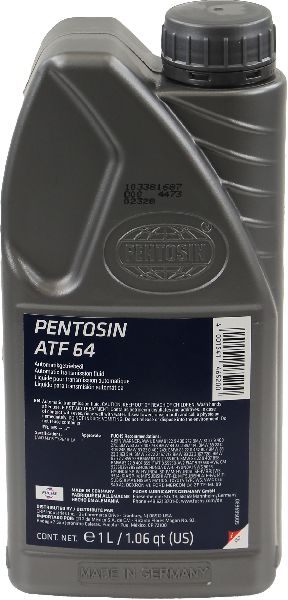

The information in this article is provided for general reference and educational purposes only. Vehicle specifications, procedures, and part compatibility can vary by production date, trim level, and region. Always consult your vehicle's factory service manual and verify part numbers before purchasing or performing repairs. Safety-critical components such as airbags, seat belts, and braking systems should be installed by a qualified professional.
- Hyundai Sonata:
- 🧭 Diagnostic Flowchart
- 🎬 Helpful Videos
- 🛍️ Shop This Part
- What's Unique About the 2011-2014 Hyundai Sonata
- Symptoms You May Notice
- Most Likely Causes
- Rare But Worth Checking
- Diagnosis Steps
- Parts You'll Likely Need
- Related Codes That Often Appear With This One
- Technical Service Bulletins (TSBs) & Recalls
- Mechanic-Grade Diagnostic Values
- Scan Tool Commands That Help
- Wiring & Ground Locations
- OEM Part Supersession History
- Model Year Variations Within This Range
- Other Known Issues on This Vehicle
- Used vs. New Parts: Buying Guide for This Vehicle
- Real Owner Stories
- 2011+ Hyundai Sonata (6-speed automatic)
- 2001 Hyundai Sonata
- 2011-2014 Hyundai Sonata
- Related OBD-II Codes
- Frequently Asked Questions
- 🎟️ Get 5% Off