

P0715 on 2010-2015 Hyundai Tucson 2.4L: Input Speed Sensor Causes and Fixes
P0715 on a 2010-2015 Tucson almost always means a failed internal transmission input speed sensor. This sensor is part of an integrated wiring harness inside the A6MF1 6-speed transmission, requiring removal of the valve body to replace. This is a complex job, and a shop repair can cost between $500 and $900. The OEM part number for the harness is 46307-3B650.
- P0715 on a 2010-2015 Tucson indicates a serious transmission issue that will cause limp mode and harsh shifting.
- The cause is almost always a failed speed sensor harness located *inside* the transmission.
- This is not a simple DIY job for beginners. It requires draining the transmission, dropping the pan, and removing the valve body.
- Always rule out external wiring problems before committing to the internal repair.
- When performing the repair, you must replace the sensor harness, the pan gasket, and the transmission fluid with the correct SP-IV type.
What's Unique About the 2010-2015 Hyundai Tucson
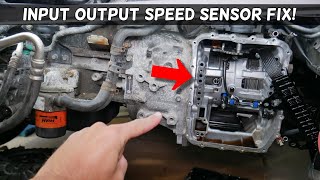
The 2010-2015 Tucson uses a 6-speed automatic transmission (the A6MF1). Unlike older 4-speed Hyundai transmissions where speed sensors were often external and easy to replace, the sensors in this 6-speed unit are located inside the transmission. They are integrated into an internal wiring harness that sits on the valve body and also contains the output speed sensor and transmission fluid temperature sensor. This design choice makes the repair significantly more complex, as the transmission pan and valve body must be removed for access.
Symptoms You May Notice
- Check Engine Light is on
- Transmission is stuck in one gear (usually 3rd gear, known as 'limp mode')
- Harsh, erratic, or delayed gear shifts
- Sudden jolt or loss of power during shifts
- Reduced fuel economy
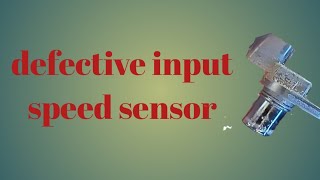
- Inoperable cruise control 🎬 Watch: Understanding P0715 causes and fixes
- Replacing the entire transmission when only the internal sensor harness is needed.
- Assuming the sensor is external and easy to replace, leading to wasted time searching for it on the outside of the transmission case. This is a common point of confusion, as older Hyundai models had external sensors.
Most Likely Causes
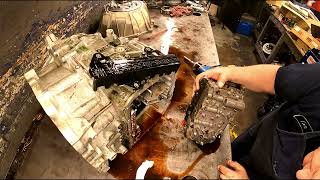
- Failed Internal Input/Output Speed Sensor Harness 🔴 High Probability The sensor is part of an internal wiring harness (OEM Part #46307-3B650 🎬 Watch: Step-by-step internal sensor harness replacement guide) constantly submerged in hot transmission fluid, which degrades the plastic and electronics over time. On these A6MF1 6-speed transmissions 🎬 See: A6MF1 transmission disassembly walkthrough, the input, output, and temperature sensors are integrated into a single harness assembly that must be replaced as one unit. This is a very common failure point across many Hyundai and Kia models using this transmission.
How to confirm: Use a high-end scan tool to monitor live data for the Input Speed Sensor RPM. If the reading is zero, erratic, or doesn't change with engine RPM while in gear, the sensor or its circuit is faulty. Given the internal location, direct sensor testing is difficult, so ruling out external wiring issues first is key. The failure is so common that if external wiring is confirmed good, the internal harness is the presumptive failed part.
Typical fix: Drain the transmission fluid, remove the transmission oil pan, and then remove the valve body to access and replace the internal sensor harness. The transmission fluid and pan gasket must also be replaced. After replacement, a transmission adaptive values reset procedure should be performed.
Est. part cost: $60-$160 - Damaged Wiring or Connector 🟡 Medium Probability The main transmission wiring harness connector can accumulate dirt and moisture, and wires can be damaged from road debris or engine bay heat, leading to corrosion or pushed-out pins.
How to confirm: Visually inspect the main connector at the transmission case for corrosion, pushed-out pins, or damage. Perform a continuity test on the wires for the input speed sensor circuit between the main connector and the TCM connector to check for opens or shorts.
Typical fix: Clean the connector terminals with electrical contact cleaner or repair the damaged section of the external wiring harness. Apply dielectric grease to the connector pins upon reassembly to prevent future corrosion.
Est. part cost: $5-$50 - Low or Contaminated Transmission Fluid ⚪ Low Probability → Shop Transmission Assembly These transmissions are 'sealed for life' and have no dipstick, which can lead to fluid level/condition being overlooked. Leaks can develop over time, and very low fluid levels can cause erratic operation. Fluid contaminated with excessive metal particles can also interfere with the magnetic speed sensor's operation.
How to confirm: Check the transmission fluid level and condition via the fill and overflow plugs. The fluid should be at the correct level, pink/red in color, and not smell burnt. Dark, burnt fluid with metal shavings indicates a more severe internal transmission problem, and the sensor failure may be a symptom of a larger mechanical failure.
Typical fix: Perform a transmission fluid drain and fill using the correct Hyundai SP-IV fluid. If the fluid is heavily contaminated, the transmission may require a rebuild or replacement.
Est. part cost: $80-$160
Rare But Worth Checking
- Faulty Transmission Control Module (TCM) or Powertrain Control Module (PCM): → Shop Transmission Assembly This is rare and should only be considered after the sensor and all wiring have been definitively proven to be good. A faulty module can fail to interpret a perfectly good sensor signal or have internal circuit damage.
Diagnosis Steps
- Connect an OBD-II scanner and confirm the presence of P0715 and any other related codes (e.g., P0717, P0720, P0722).
- Use the scanner's live data function to monitor the 'Input Speed Sensor' and 'Output Speed Sensor' RPMs. The input speed should correspond to engine RPM when the torque converter is locked.
- Check the transmission fluid level and condition. Burnt or dark fluid could indicate a larger issue beyond the sensor.
- Inspect the main external wiring harness connector on the transmission for any signs of damage, corrosion, or loose pins.
- If external wiring and fluid are okay, the fault is almost certainly the internal speed sensor harness.
- To replace the sensor, the transmission fluid must be drained, the oil pan removed, and the valve body carefully lowered to gain access to the sensor harness.
- Replace the sensor harness (Part #46307-3B650), reinstall the valve body (torquing bolts to specification), install a new pan gasket, and reinstall the pan.
- Refill the transmission with the correct type of fluid (Hyundai SP-IV or equivalent).
- Clear the codes and perform a test drive to ensure normal shift operation.
- If shift quality is poor after the repair, perform the 'Automatic Transaxle Adaptive Values Reset' procedure as outlined in Hyundai TSB 14-AT-008.
Parts You'll Likely Need
- Transmission Input/Output Speed Sensor Harness
(OEM #46307-3B650)— This is the most common failure point. The sensors are integrated into an internal harness that fails as a unit. This part number supersedes older versions like 46307-3B610 and 46307-3B620.
Trusted brands: Hyundai (OEM), Kia (OEM), Dorman
OEM price range: $70-$160
Aftermarket price range: $50-$100 - Transmission Pan Gasket
(OEM #45283-3B010)— The pan must be removed to access the sensor harness, and the gasket is a one-time use part that must be replaced to prevent leaks.
Trusted brands: Hyundai (OEM), Fel-Pro, Mahle
OEM price range: $20-$40
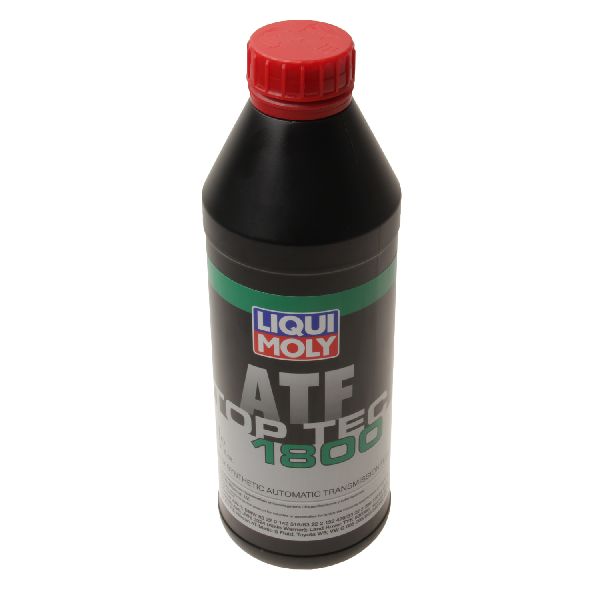
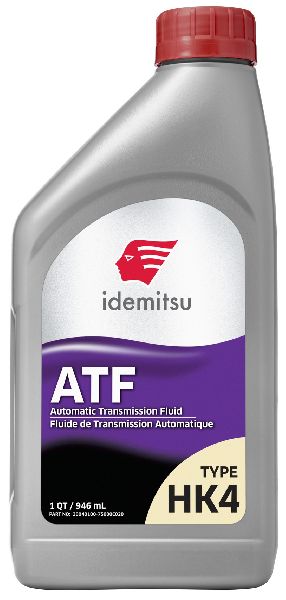
Aftermarket price range: $10-$25 - Hyundai SP-IV Automatic Transmission Fluid
(OEM #00232-19045 (example per quart))— The transmission fluid must be drained to perform the repair and must be refilled with the correct specification fluid. Approximately 5-6 quarts are needed for a pan drop.
Trusted brands: Hyundai/Kia (OEM), Valvoline MaxLife ATF, Castrol Transmax Full Synthetic Multi-Vehicle
OEM price range: $15-$25 per quart
Aftermarket price range: $10-$20 per quart
Related Codes That Often Appear With This One
- P0716 — This code indicates a 'Range/Performance' issue with the same sensor, often appearing with P0715 as the sensor begins to fail intermittently.
- P0717 — This code indicates 'No Signal' from the input speed sensor, representing a complete failure of the circuit. It is often triggered alongside P0715.
- P0720 — This code relates to the Output Speed Sensor Circuit Malfunction. Since the input and output sensors are part of the same internal harness on the A6MF1 transmission, a failure in the harness can trigger codes for both sensors.
- P0722 — This indicates 'No Signal' from the Output Speed Sensor. Like P0720, this code is common to see with P0715 because both sensors are on the same harness that fails as a unit.
Technical Service Bulletins (TSBs) & Recalls
- TSB 20-AT-011H: Supersedes an older TSB and directly addresses DTCs P0717, P0721, & P0722 for the 2010-2015 Tucson 2.4L (among other models). It confirms the fix is to replace the internal harness that contains both the input and output speed sensors.
- TSB 14-AT-008: Provides the official procedure for resetting the transmission's adaptive learning values using the GDS scan tool, which is often required after replacing the sensor harness to restore proper shift quality.
Platform-Specific Known Issues
- A common point of confusion for DIYers and some technicians is mistaking this vehicle for older Hyundai models where the speed sensors were externally mounted and simple to replace. A 2007 forum post shows a user with a P0715 code replacing an external sensor, which is misleading for owners of the 2010+ Tucson with the 6-speed A6MF1 transmission.
Mechanic-Grade Diagnostic Values
- VFS Solenoid Resistance (Linear Solenoids) — expected: Approximately 5.1 Ohms. Failure: A reading significantly higher or lower than 5.1 Ohms, or an open circuit (OL).
- On/Off Shift Solenoid Resistance — expected: 10 - 11 Ohms. Failure: A reading outside of this range, or an open circuit (OL).
- Transmission Fluid Temperature Sensor Resistance — expected: Approximately 2.51 kΩ (kilo-ohms) at 68°F (20°C). Failure: A reading that is drastically different at a known temperature, or an open/shorted circuit. This sensor is on the same harness as the speed sensors.
- Speed Sensor Input Voltage — expected: 9 Volts (at sensor power pin). Failure: Significantly lower voltage or no voltage indicates a power supply issue from the TCM or a wiring fault.
Scan Tool Commands That Help
- Hyundai GDS (Global Diagnostic System): Resetting Auto T/A values (also called 'Init Of TCU Learning') — This function must be performed after replacing the transmission, valve body, or internal wiring harness to erase the old adaptive shift data and allow the TCM to relearn shift points with the new components, ensuring optimal shift quality.
Wiring & Ground Locations
- Main Transmission Connector (Solenoid Pinout) — The main 16-pin electrical connector on the outside of the A6MF1 transmission case.. Allows for testing of related components on the same harness. For example, the Transmission Fluid Temperature sensor can be tested at pins 9 and 13 of this connector. A fault here can confirm the internal harness is bad without opening the transmission.
- Transmission Ground Strap — A braided or solid wire connecting the transmission case to the vehicle's chassis or engine block to ensure a good ground path.. A loose, corroded, or broken ground strap can cause a floating ground, leading to erratic sensor readings and multiple transmission codes, including P0715. While the internal harness is the most common cause, verifying the main ground is a crucial step in diagnosing any electrical fault.
Real Owner Repair Stories
- Summary of owner reports for 2011+ Hyundai Sonata with A6MF1 (2011+ Hyundai Sonata (uses the same A6MF1 transmission and 46307-3B650 harness)) — Sudden loss of power, harsh 'THUD' when shifting from a stop, check engine light on.
❌ Tried (didn't work) Clearing codes (they returned immediately), Checking external wiring (it was intact)
✅ What actually fixed it Replacement of the internal transmission wiring harness (which includes both input and output speed sensors) fixed the problem. This required removing the valve body for access.
OEM Part Supersession History
46307-3B610, 46307-3B620→46307-3B650— Improved design and materials to better withstand heat and prevent premature electronic failure. The updated harness often integrates the temperature sensor which may have been separate on the earliest designs.
Heads up: The newer 46307-3B650 part is backward compatible and is the correct replacement for the older part numbers.
Model Year Variations Within This Range
- 2010-2012 (Early Models): The earliest versions of the A6MF1 transmission may have used a harness where the transmission fluid temperature sensor was a separate component. Later versions, and all replacement service parts, integrate the temperature sensor into the main speed sensor harness. TSBs recommend always updating to the newer integrated harness style when performing a repair.
Diagnostic Flowchart
Other Known Issues on This Vehicle
Issues unrelated to this code that are worth knowing about as an owner of this generation:
- Catastrophic Engine Failure (Rod Bearing Wear) 🔴 High — Very common, can occur at any mileage but frequently seen between 60k-120k miles. Caused by manufacturing debris (metal shavings) restricting oil flow to the connecting rod bearings. (Ref: Subject of multiple recalls, class-action lawsuits, and a lifetime warranty extension for qualifying vehicles that have had the Knock Sensor Detection System (KSDS) software update (e.g., Campaign 966) installed.)
- Excessive Oil Consumption 🔴 High — Extremely common, often starting around 60,000-80,000 miles. It is a primary contributor to sludge buildup and is linked to the same design/manufacturing flaws as the bearing failure issue. (Ref: Related to the engine failure lawsuits and warranty extensions. NHTSA has also investigated issues with Hyundai oil drain pans and plugs.)
- Intake Valve Carbon Buildup 🟠 Medium — Common on all GDI (Gasoline Direct Injection) engines, including the Theta II. Typically requires professional cleaning every 60,000-100,000 miles to prevent rough idle, misfires (P0300), and power loss.
- Failing Oil Control Valve (OCV) 🟠 Medium — A common failure item that controls the CVVT (Continuously Variable Valve Timing) system. Often fails due to oil sludge or contamination, leading to codes like P0010, rough idle, and poor performance. (Ref: TSB 15-01-022-1 addresses a related issue on the Sonata where an internal oil seal plug causes a P0010 code.)
- ABS Module Failure / Brake Fluid Leaks 🔴 High — Affects many Hyundai models of this era. The ABS module can internally leak brake fluid, causing an electrical short that poses a fire risk, even when the car is parked. (Ref: Recall 23V651000 was issued for this problem, affecting 2010-2013 Tucson models, among others. The fix involves replacing the ABS multi-fuse.)
Used vs. New Parts: Buying Guide for This Vehicle
When a used part is the smart pick: For this specific repair, buying a used part is strongly discouraged. The primary failure is an electronic wiring harness that degrades due to prolonged exposure to heat and transmission fluid. A used harness from a junkyard vehicle has been subjected to the same wear and tear and is likely to fail soon, if it doesn't arrive already faulty. The labor involved in accessing the part is too high to risk using a used component.
What to inspect on the donor part:
- Not applicable as used parts are not recommended.
OEM-only on this vehicle (don't cheap out):
- Transmission Input/Output Speed Sensor Harness (46307-3B650)
Aftermarket brands forum-validated for this vehicle:
- While Dorman offers a replacement, owner and technician consensus heavily favors using the genuine Hyundai/Kia OEM part for transmission electronics to ensure reliability and avoid repeat repairs.
Brands owners have reported issues with on this vehicle:
- Unnamed, no-brand parts from online marketplaces should be avoided due to the high labor cost of the repair if the part fails prematurely.
Real Owner Stories
Aggregated from forums and TSBs cited above. Mileages and costs reflect what owners reported in those sources.
2010-2015 Hyundai Tucson 2.4L
Symptoms: Transmission is stuck in one gear (usually 3rd gear, known as 'limp mode'), harsh, erratic, or delayed gear shifts, and a sudden jolt or loss of power during shifts.
What fixed it: Replacement of the internal sensor harness (OEM Part #46307-3B650) after draining fluid and removing the valve body.
Source hint: TSB 20-AT-011H
2001 Hyundai Santa Fe
Symptoms: A/T P0715 Code - Turbine Input Speed Sensor.
What fixed it: Replacing an external sensor (Note: This source is cited in the context as a point of confusion because this repair does not apply to the 2010-2015 Tucson).
Source hint: hyundai-forums.com: A thread titled 'A/T P0715 Code - Turbine Input Speed Sensor'
Related OBD-II Codes
Frequently Asked Questions
Does TSB 20-AT-011H apply to my 2010-2015 Hyundai Tucson 2.4L?
What is the specific part number for the internal speed sensor harness on my Tucson?
Can I just replace an external sensor like on older Hyundai models?
Why is my Tucson stuck in 3rd gear with the P0715 code?
Do I need to do anything special after replacing the sensor harness (Part #46307-3B650)?
Is the P0715 code related to the Theta II engine recalls?
Helpful Videos


We Have This Part in Stock

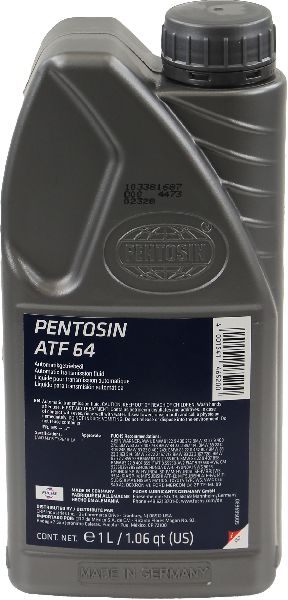

The information in this article is provided for general reference and educational purposes only. Vehicle specifications, procedures, and part compatibility can vary by production date, trim level, and region. Always consult your vehicle's factory service manual and verify part numbers before purchasing or performing repairs. Safety-critical components such as airbags, seat belts, and braking systems should be installed by a qualified professional.
- Hyundai Tucson:
- 🧭 Diagnostic Flowchart
- 🎬 Helpful Videos
- 🛍️ Shop This Part
- What's Unique About the 2010-2015 Hyundai Tucson
- Symptoms You May Notice
- Most Likely Causes
- Rare But Worth Checking
- Diagnosis Steps
- Parts You'll Likely Need
- Related Codes That Often Appear With This One
- Technical Service Bulletins (TSBs) & Recalls
- Platform-Specific Known Issues
- Mechanic-Grade Diagnostic Values
- Scan Tool Commands That Help
- Wiring & Ground Locations
- Real Owner Repair Stories
- OEM Part Supersession History
- Model Year Variations Within This Range
- Other Known Issues on This Vehicle
- Used vs. New Parts: Buying Guide for This Vehicle
- Real Owner Stories
- 2010-2015 Hyundai Tucson 2.4L
- 2001 Hyundai Santa Fe
- Related OBD-II Codes
- Frequently Asked Questions
- 🎟️ Get 5% Off