

P0715 on 2010-2011 Toyota Camry 2.5L: Input/Turbine Speed Sensor Failure Causes and Fixes
On a 2010-2011 Toyota Camry with the 2.5L engine, code P0715 is most often caused by a failed transmission revolution sensor (input/turbine speed sensor). This is a known issue addressed by Toyota TSB T-SB-0116-10. The repair involves replacing the sensor located inside the transmission by removing the valve body, which is a moderately difficult job. The updated OEM part is the most reliable fix.
- P0715 on a 2010-2011 Camry 2.5L is almost certainly due to a failed internal transmission input speed sensor.
- Toyota acknowledged this with a service bulletin (T-SB-0116-10) and released an updated part.
- The repair is labor-intensive, requiring removal of the transmission pan and valve body, making it a job best left to a professional unless you are an experienced DIYer.
- Always use Toyota Genuine ATF WS fluid when refilling the transmission to ensure proper operation.
- Check for other codes like P0717 or solenoid codes, as they are likely caused by the same faulty sensor and should be resolved by this repair.
What's Unique About the 2007-2011 Toyota Camry
The 2010-2011 Camry with the 2AR-FE engine uses a U760E 6-speed automatic transmission. Toyota issued a Technical Service Bulletin (TSB-0116-10) for the 2010 model year specifically because these vehicles may exhibit a P0715 code due to a faulty transmission revolution sensor. The bulletin indicates that the original sensor was revised to correct this problem, making it a well-documented failure point on this specific vehicle and transmission combination. The TSB also applies to other Toyota models from 2009-2010 using the same U760E transmission, such as the Highlander and Venza.
Generation note: The specified year range 2007-2011 covers the XV40 generation of the Toyota Camry. However, the 2AR-FE 2.5L engine was only introduced for the 2010 and 2011 model years, paired with the U760E transmission. This guide is specific to those 2010-2011 models. The TSB T-SB-0116-10 explicitly covers the 2010 Camry. The issue is also common on other vehicles using the U760E transmission.
Symptoms You May Notice
- Check Engine Light is on
- Harsh, delayed, or erratic gear shifts
- Vehicle enters "limp mode" (stuck in one gear)
- Transmission may slip between gears or feel like it's in neutral when accelerating from a stop.
- Reduced fuel economy
- Transmission warning light may illuminate
- Loud banging or 'thud' noise when shifting from Park to Drive or Reverse.
- Very slow acceleration, even with significant gas pedal input.
- Replacing the entire transmission when only the internal sensor is needed.
- Replacing the wrong speed sensor (e.g., the output speed sensor or wheel speed sensors).
- Mistaking the issue for a bad fuel pump, as symptoms can include poor acceleration and a feeling of power loss.
Most Likely Causes
- Failed Input/Turbine Speed Sensor 🔴 High Probability → Shop Automatic Transmission Input Shaft Speed Sensor Toyota released a Technical Service Bulletin (T-SB-0116-10) for the 2010 Camry acknowledging this issue and providing a revised part. The sensor is a known failure point across multiple Toyota models using the U760E transmission.
How to confirm: A diagnostic scan tool can monitor the live data for the input speed sensor (labeled 'SPD (NT)'). If the reading is 0 rpm or erratic while driving, the sensor is likely faulty. The TSB specifically notes that if the input shaft speed is less than 300 rpm while the output shaft speed is over 1000 rpm (vehicle speed >31 mph or 50 km/h), the code will set.
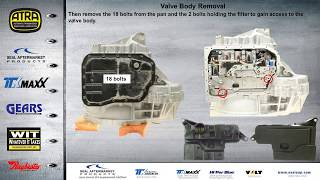
Typical fix: Replace the transmission revolution sensor (which includes the input speed sensor). This requires draining the transmission fluid, removing the transmission pan, and removing the valve body to access the sensor. The TSB outlines this procedure in detail, including bolt locations and torque specs.
Est. part cost: $150-$250 - Damaged Wiring or Connectors 🟡 Medium Probability Wiring inside the transmission is subjected to heat and constant immersion in fluid, which can degrade it over time. External connectors can also suffer from corrosion or physical damage. A YouTube video on a flooded Camry with a U760E highlights how a damaged external connector with missing bolts caused intermittent sensor signals.
How to confirm: Inspect the external transmission wiring harness for any visible damage, corrosion, or loose connections. An ohmmeter can be used to check for continuity and shorts in the wiring between the sensor connector and the TCM. A visual inspection of the internal harness is necessary when the valve body is removed.
Typical fix: Repair the damaged section of the wiring harness or replace the harness if damage is extensive. This may involve replacing the internal transmission wire harness or the external pigtail connector. Ensure the connector is properly seated and bolted down.
Est. part cost: $50-$300
Rare But Worth Checking
- Transmission Control Module (TCM) Failure: → Shop Transmission Assembly While rare, a faulty TCM can fail to process the signal from a perfectly good sensor. This should only be considered after the sensor and wiring have been thoroughly tested and confirmed to be good. In some cases, a software update may resolve false triggers.
- Low or Contaminated Transmission Fluid: → Shop Transmission Assembly Extremely low or dirty fluid can cause a variety of transmission issues, including erratic sensor readings due to debris or improper hydraulic operation. Metal shavings on the magnetic tip of the sensor can also disrupt its reading. This is usually accompanied by other symptoms like slipping or overheating.
- Damaged Tone Ring / Reluctor Wheel: The sensor reads a toothed metal ring on the input shaft. If this ring is cracked, damaged, or has missing teeth, it will cause irregular signals. This is a major internal transmission problem and is less common than sensor or wiring failure.
Diagnosis Steps
- Connect an OBD-II scanner and confirm the presence of P0715 and any other related codes. Note all codes before clearing.
- Use the scanner's live data function to monitor the Input Turbine Speed (often labeled 'SPD (NT)' or similar).
- Test drive the vehicle (if safe to do so). Observe the sensor's readings. The reading should increase smoothly with engine RPM in gear. If it is stuck at zero, reads erratically, or drops out (especially when vehicle speed is over 31 mph), a problem with the sensor or its circuit is confirmed.
- Check transmission fluid level and condition. Burnt or very dark fluid can indicate internal issues.
- Inspect the external transmission wiring harness and connector for any signs of damage, corrosion, or loose connections. Ensure the connector bolts are present and tight.
- If the external wiring is okay, the next step is to access the sensor itself. This involves draining the transmission fluid and removing the transmission oil pan (19 bolts).
- Remove the transmission valve body assembly (11 bolts) to gain access to the speed sensor.
- Inspect the sensor and its connector for any visible damage. Check the internal wiring harness for breaks or corrosion.
- If no visible issues are found, the most probable cause is a failed sensor. Replace the sensor (2 bolts), reassemble the valve body and pan using new gaskets, and refill with the correct type of Toyota ATF.
- Clear the trouble codes and perform another test drive to ensure the repair was successful.
Parts You'll Likely Need
- Transmission Revolution Sensor (Input Speed Sensor)
(OEM #89413-73010)— This is the revised part number specified in Toyota's TSB to fix the P0715 code on these vehicles. Some sources indicate this part may be superseded by 89413-06010, but 89413-73010 is the part directly referenced in the TSB.
Trusted brands: Toyota (OEM), Aisin
OEM price range: $200-$250
Aftermarket price range: $150-$200 - Transmission Pan Gasket
(OEM #35168-73010)— The transmission pan must be removed to access the sensor, and the gasket should always be replaced to prevent leaks. This part number is explicitly listed in TSB T-SB-0116-10.
Trusted brands: Toyota (OEM), Fel-Pro, Mahle
OEM price range: $25-$40
Aftermarket price range: $15-$25 - Toyota Genuine ATF WS (World Standard) Fluid
(OEM #00289-ATFWS)— The transmission fluid must be drained for the repair and refilled with the correct OEM-specified fluid. Using non-specified fluid can cause shifting problems. TSB T-SB-0116-10 calls for this specific fluid.
Related Codes That Often Appear With This One
- P0717 — P0717 (Input/Turbine Speed Sensor Circuit No Signal) is often triggered along with P0715, as it indicates a complete loss of signal, which is a specific type of circuit malfunction. The Toyota TSB lists both codes together as being caused by the same faulty sensor.
- P0791 / P0793 — These codes relate to the Intermediate Shaft Speed Sensor. The same faulty revolution sensor assembly can cause these codes, and they are also mentioned in TSB-0116-10.
- P0746, P0776, P0796, P2714, P2808 — These are solenoid performance codes. The TSB notes that a faulty revolution sensor can cause the TCM to misinterpret data and incorrectly flag solenoid issues. It is recommended to address the speed sensor codes first before diagnosing these solenoid codes.
Technical Service Bulletins (TSBs) & Recalls
- T-SB-0116-10: Published April 28, 2010, this TSB addresses a MIL ON condition with P0715 and other related codes on 2010 Camry models with the 2AR engine and U760 transmission. It identifies a faulty transmission revolution sensor and provides the procedure and updated part number for the repair. It also lists other required parts like the pan gasket and O-rings.
Platform-Specific Known Issues
- A known issue documented by Toyota TSB T-SB-0116-10 points to a faulty transmission revolution sensor in 2010 Camry models with the U760 automatic transaxle, causing codes P0715, P0717, P0791, and/or P0793.
- Owners on forums like ClubLexus discuss similar P0715 issues on vehicles with high mileage (over 200k miles), where symptoms include a complete lack of acceleration as if the transmission is in neutral.
Mechanic-Grade Diagnostic Values
- Input Speed Sensor (NT) Resistance — expected: 560 - 680 Ω at 20°C (68°F) (value from a similar Toyota transmission, use as a reference).. Failure: Resistance is infinite (open circuit) or near zero (short circuit).
- Input Speed Sensor (NT) Signal Voltage at TCM — expected: A fluctuating AC or digital pulse signal (e.g., 0.5V-12V) that increases with RPM.. Failure: The TCM will flag a fault if the voltage is less than 0.1V or greater than 1.9V for a set time.
- Scan Tool Live Data: Input vs. Output Speed — expected: Input speed 'SPD (NT)' should increase smoothly with engine RPM and correlate with output speed.. Failure: Code sets if 'SPD (NT)' is less than 300 rpm while output shaft speed is over 1000 rpm (vehicle speed > 31 mph / 50 km/h).
Scan Tool Commands That Help
- Toyota Techstream: Data List Monitoring for 'SPD (NT)' — This is the primary diagnostic step to confirm a fault. While driving, a technician can watch the live data from the input speed sensor. If the value is zero, erratic, or doesn't rise with vehicle speed, it confirms a problem in the sensor's circuit.
Wiring & Ground Locations
- TCM (Transmission Control Module) — For the 2010-2011 Camry, the TCM is a separate module, often located in the engine bay or under the dashboard on the front, left (driver's) side. It is not integrated into the transmission housing on this model.. The TCM receives and interprets the signal from the input speed sensor. All wiring tests for continuity, shorts, or voltage will terminate at the TCM connector, so knowing its location is critical for diagnosis beyond the sensor itself.
- Transmission Main Harness Connector — This is the large, multi-pin connector on the outside of the U760E transmission case where the internal harness connects to the main vehicle harness.. This connector is a key failure point. Corrosion, damage, or even missing retaining bolts can cause a poor connection, leading to intermittent or total loss of the speed sensor signal. This should be inspected before assuming an internal wiring or sensor fault.
Real Owner Repair Stories
- YouTube channel 'Drive Safe Automotive' (Toyota Camry (flooded vehicle) with U760E transmission) — Multiple codes for speed sensors and solenoids, no speed sensor signal, and shifting problems.
❌ Tried (didn't work) The PCM/ECM had already been replaced before arriving at the shop.
✅ What actually fixed it The mechanic found two missing bolts on the main external transmission connector, causing a poor connection. After securing it, he found the signal was still intermittent. By wiggling the internal harness (with the valve body removed), he isolated the fault to a bad connection or break within the internal transmission wiring harness itself, which was causing fluctuating voltage readings from the speed sensors.
OEM Part Supersession History
89413-73010→89413-06010— The original part was prone to failure, as acknowledged in TSB T-SB-0116-10. The new part is a revised, more reliable version.
Heads up: None found. 89413-06010 is the correct direct replacement for 89413-73010.
Model Year Variations Within This Range
- 2010-2011: Within the 2007-2011 (XV40) generation, only the 2010 and 2011 model years were equipped with the 2AR-FE 2.5L engine and the U760E 6-speed automatic transmission. Therefore, this specific P0715 issue, the related TSB, and the internal sensor location are only applicable to these two model years.
Diagnostic Flowchart
Used vs. New Parts: Buying Guide for This Vehicle
When a used part is the smart pick: For this specific repair, a used part is almost never a smart choice. The only exception might be sourcing a complete, low-mileage used transmission from a reputable recycler if the vehicle's original transmission has a major mechanical failure (like a damaged tone ring) in addition to the P0715 code.
Donor-vehicle mileage cap: roughly under 60000 miles for the part to have meaningful remaining life.
What to inspect on the donor part:
- For a complete transmission: check fluid color and smell (should not be dark black or burnt), verify the donor vehicle's VIN to confirm mileage, and look for evidence of leaks or external damage to the case and connectors.
OEM-only on this vehicle (don't cheap out):
- Transmission Revolution Sensor (Input Speed Sensor)
Aftermarket brands forum-validated for this vehicle:
- Aisin (Original Equipment Supplier for Toyota)
Brands owners have reported issues with on this vehicle:
- Unknown or unbranded sensors from online marketplaces are a high risk due to the moderate labor involved in replacement. A premature failure of a cheap part will require re-doing the entire job.
Real Owner Stories
Aggregated from forums and TSBs cited above. Mileages and costs reflect what owners reported in those sources.
2006-2011 Lexus ES350 — 233000 miles
Symptoms: RPMs shooting up over 3k with no power transfer to the wheels; a complete lack of acceleration as if the transmission is in neutral.
What fixed it: The owner was questioning if the cause was the sensor or a larger transmission failure; a specific fix was not mentioned in the source.
Source hint: ClubLexus - 'Transmission problems p0715'
2007-2011 Toyota Camry 2AR-FE 2.5L I4
Symptoms: A two-step 'THUD THUD' noise when shifting or accelerating from a stop.
What fixed it: The issue was diagnosed as code P0715.
Source hint: Reddit r/MechanicAdvice - 'Difficulty in Changing Gears + Error Code P0715'
Toyota Camry with U760E Transmission
Symptoms: Intermittent speed sensor signals causing fault codes.
What fixed it: Repairing an intermittent connection at the main harness connector, which was found to have missing bolts.
Source hint: YouTube - 'Toyota Camry U670 Transmission Repair - U760E Transmission | No speed sensor signal.'
Related OBD-II Codes
Frequently Asked Questions
I have a 2010 Toyota Camry with a P0715 code. Is this a known problem?
How can I test the input speed sensor on my Camry without taking the transmission apart?
My Camry is stuck in one gear and won't shift. Is this related to code P0715?
What is involved in replacing the input speed sensor on this Camry?
Are there other Toyota or Lexus models that have this same P0715 sensor issue?
What brand of replacement sensor should I use for the P0715 repair?
Helpful Videos
We Have This Part in Stock

The information in this article is provided for general reference and educational purposes only. Vehicle specifications, procedures, and part compatibility can vary by production date, trim level, and region. Always consult your vehicle's factory service manual and verify part numbers before purchasing or performing repairs. Safety-critical components such as airbags, seat belts, and braking systems should be installed by a qualified professional.
- Toyota Camry:
- 🧭 Diagnostic Flowchart
- 🎬 Helpful Videos
- 🛍️ Shop This Part
- What's Unique About the 2007-2011 Toyota Camry
- Symptoms You May Notice
- Most Likely Causes
- Rare But Worth Checking
- Diagnosis Steps
- Parts You'll Likely Need
- Related Codes That Often Appear With This One
- Technical Service Bulletins (TSBs) & Recalls
- Platform-Specific Known Issues
- Mechanic-Grade Diagnostic Values
- Scan Tool Commands That Help
- Wiring & Ground Locations
- Real Owner Repair Stories
- OEM Part Supersession History
- Model Year Variations Within This Range
- Used vs. New Parts: Buying Guide for This Vehicle
- Real Owner Stories
- 2006-2011 Lexus ES350 — 233000 miles
- 2007-2011 Toyota Camry 2AR-FE 2.5L I4
- Toyota Camry with U760E Transmission
- Related OBD-II Codes
- Frequently Asked Questions
- 🎟️ Get 5% Off