

P0715 on 2009-2010 Toyota Venza: Input Speed Sensor Failure Causes and Fixes
On a 2009-2010 Toyota Venza, particularly models with the U760 4-cylinder transmission, code P0715 is almost always caused by a failed internal transmission input speed sensor, a known issue addressed by Toyota TSB T-SB-0116-10. The repair is labor-intensive, requiring removal of the transmission pan and valve body, with shop costs ranging from $450 to $750.
- P0715 on a 2009-2010 Venza overwhelmingly points to a failed input speed sensor inside the transmission, a problem officially acknowledged by Toyota in TSB T-SB-0116-10.
- This is not a simple DIY repair; it requires removing the transmission pan and valve body, making professional service highly recommended.
- Check for companion codes like P0717, P0791, and P0793, as they are also covered by the same TSB and point to the same failed sensor.
- Ensure the correct, updated sensor part is used for the repair to prevent a recurrence of the issue.
What's Unique About the 2009-2010 Toyota Venza
The 2009-2010 Toyota Venza uses a U660E 6-speed automatic transmission with V6 engines or a U760E with 4-cylinder engines. The P0715 code on the U760E is a widely documented failure. Toyota issued Technical Service Bulletin (TSB) T-SB-0116-10 for the 2009-2010 Venza (among other models) which specifically addresses a MIL 'ON' condition for code P0715 due to a faulty transmission revolution sensor. The TSB confirms that an updated sensor was released, making sensor replacement the definitive and most probable fix for this specific vehicle and transmission combination.
Symptoms You May Notice
- Check Engine Light is illuminated
- Harsh, erratic, or delayed gear shifts
- Transmission gets stuck in one gear (limp mode)
- A distinct "THUD" noise when shifting from Park to Drive or when accelerating from a stop
- Poor acceleration from a stop
- Reduced fuel economy
- Vehicle may stall when shifting or coming to a stop
- Replacing the output speed sensor instead of the input speed sensor.
- Replacing the entire transmission valve body when only the sensor is faulty.
- Replacing the ABS wheel speed sensors, which are unrelated to this transmission code. 🎬 Watch this video on how to fix code P0715
- Assuming a major internal transmission failure without first diagnosing the sensor specified in TSB T-SB-0116-10.
Most Likely Causes
- Failed Input/Turbine Speed Sensor 🔴 High Probability → Shop Automatic Transmission Input Shaft Speed Sensor This is a widely documented failure point for the U760E transmission used in this vehicle. Toyota TSB T-SB-0116-10 was released specifically to address this common sensor failure.
How to confirm: A professional technician can use a scan tool to monitor live data for the Input Turbine Speed (NT). If the sensor shows 0 RPM or an erratic reading while the vehicle is in gear and moving (while the output sensor shows speed), the sensor has failed. The TSB confirms this is the primary diagnostic path. 🎬 See how to diagnose a U760E with no speed sensor signal Specifically, the TCM stores the code if the input shaft speed is less than 300 rpm while the output shaft speed is over 1000 rpm (vehicle speed >31 mph).
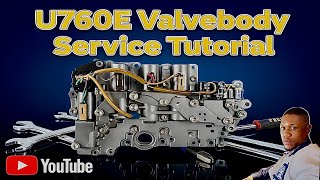
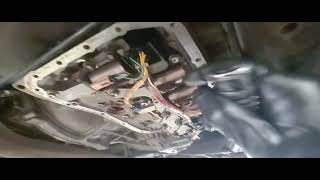
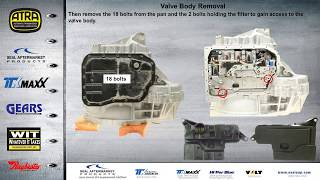
Typical fix: Replace the input speed sensor (called Transmission Revolution Sensor by Toyota). This requires draining the transmission fluid, removing the transmission pan, and detaching the valve body to access the sensor, as detailed in TSB T-SB-0116-10.
Est. part cost: $150-$300 - Damaged Wiring or Connectors ⚪ Low Probability While less common than sensor failure, wiring issues can occur, especially on flood-damaged vehicles where corrosion can compromise the harness connectors.
How to confirm: Visually inspect the wiring harness leading to the transmission for any signs of damage, corrosion, or fluid contamination. Test for continuity and proper voltage at the sensor connector using a multimeter. A resistance check between the sensor-side and TCM-side of the harness should show below 1 Ω, and a check to ground should show 10 kΩ or higher.
Typical fix: Repair or replace the damaged section of the wiring harness or clean/replace the connector.
Est. part cost: $20-$200 - Low or Contaminated Transmission Fluid ⚪ Low Probability → Shop Transmission Assembly
How to confirm: Check the transmission fluid level and condition. If the fluid is dark, burnt-smelling, or contains metal shavings, it can interfere with the sensor's magnetic operation or indicate a more severe internal transmission problem.
Typical fix: Perform a transmission fluid drain and fill. If significant metal debris is present, the transmission may have internal mechanical damage requiring further diagnosis and is likely not the root cause of an isolated P0715.
Est. part cost: $100-$250 for fluid and filter
Rare But Worth Checking
- Faulty Powertrain or Transmission Control Module (PCM/TCM): → Shop Transmission Assembly This is very uncommon and should only be considered after the sensor and wiring have been definitively ruled out. A faulty TCM is more likely to set multiple, unrelated codes.
- Damaged Tone/Reluctor Ring: The sensor reads a toothed ring on the input shaft. If this ring is cracked or damaged, it will cause an erratic signal. This is a major internal transmission failure and is much less common than the sensor itself failing.
Diagnosis Steps
- Scan the vehicle for stored trouble codes. Note if P0715 is accompanied by P0717, P0791, or P0793, as this strongly points to the issue covered in TSB T-SB-0116-10.
- Check the level and condition of the automatic transmission fluid. Ensure it is clean and at the proper level.
- Use a professional scan tool (like Toyota Techstream) to monitor the live data stream for the Input Speed Sensor (NT). The reading should change smoothly with engine RPM when in gear.
- Confirm the failure condition: The TCM flags the fault if the input speed (NT) is less than 300 RPM while the output speed is over 1000 RPM (vehicle speed > 31 mph / 50 km/h).
- If the sensor reading is 0 or erratic, and other codes from the TSB are present, the input speed sensor is almost certainly the cause.
- If wiring is suspected, disconnect the TCM and transmission connectors. Check for continuity between the corresponding pins of the harness; resistance should be below 1 ohm. Check for shorts by measuring resistance from each pin to body ground; it should be 10k ohms or higher.
- If wiring and voltages are correct, the input speed sensor itself is faulty and needs to be replaced.
- To replace the sensor, follow the procedure in TSB T-SB-0116-10, which involves removing the transmission pan and valve body.
- After replacement, refill the transmission with genuine Toyota World Standard (WS) ATF, clear the codes, and perform a test drive to allow the TCM to relearn shift points.
Parts You'll Likely Need
- Transmission Input Speed Sensor (Revolution Sensor)
(OEM #89413-73010)— This is the specific failure part identified in Toyota TSB T-SB-0116-10 for the P0715 code on the U760E transmission. An updated version of this part was released to correct the defect. The part number 89413-48010 from the first pass is a more generic sensor that may fit but the TSB is specific to this failure.
Trusted brands: Toyota (Genuine), Aisin, Denso
OEM price range: $200-$290
Aftermarket price range: $120-$200 - Automatic Transmission Fluid (Toyota WS)
(OEM #00289-ATFWS)— The transmission must be drained to replace the sensor, requiring a fluid refill. Using the manufacturer-specified fluid is critical for transmission longevity. The TSB calls for this fluid specifically.
Trusted brands: Toyota (Genuine)
OEM price range: $12-$18 per quart - Transmission Pan Gasket
(OEM #35168-73010)— The transmission pan must be removed for the repair, and the gasket should always be replaced to prevent leaks. This part number is specified in TSB T-SB-0116-10.
Trusted brands: Toyota (Genuine), Fel-Pro
OEM price range: $25-$40
Aftermarket price range: $15-$25
Related Codes That Often Appear With This One
- P0717 — P0717 indicates 'Input/Turbine Speed Sensor 'A' Circuit No Signal,' which is a more specific version of the P0715 fault. TSB T-SB-0116-10 explicitly groups P0715 and P0717 as being caused by the same faulty sensor.
- P0716 — P0716 indicates 'Input/Turbine Speed Sensor 'A' Circuit Range/Performance,' pointing to an erratic signal rather than a complete loss. This can also be caused by a failing sensor or wiring issue.
- P0791 — P0791 ('Intermediate Shaft Speed Sensor “A” Circuit') is also listed in TSB T-SB-0116-10 as a code that can be triggered by the same faulty transmission revolution sensor.
- P0793 — P0793 ('Intermediate Shaft Speed Sensor “A” Circuit No Signal') is another code covered by TSB T-SB-0116-10, pointing to the same sensor replacement as the fix.
Technical Service Bulletins (TSBs) & Recalls
- T-SB-0116-10: MIL 'ON' DTC P0715, P0717, P0791, and/or P0793 (U760): Published April 28, 2010, this TSB directly addresses the P0715 code in 2009-2010 Venza models with the U760 automatic transaxle. It confirms the cause is a faulty Transmission Revolution Sensor and provides the part number and detailed replacement procedure, which involves removing the valve body. It notes that the sensor was revised to correct the problem.
Platform-Specific Known Issues
- Real-World Failure Example: An owner on Reddit described their vehicle exhibiting a two-step "THUD THUD" noise when shifting into drive and accelerating from a stop. After a few days of this symptom, the Check Engine Light illuminated with code P0715. This is a classic real-world example of the sensor failing before the code is stored.
Mechanic-Grade Diagnostic Values
- Scan Tool Live Data: Input Shaft Speed (NT) vs. Output Shaft Speed — expected: NT speed should be approximately equal to engine RPM when in gear and not slipping. It should change smoothly with acceleration.. Failure: The TCM logs P0715/P0717 if NT speed is less than 300 RPM when output shaft speed is over 1000 RPM (vehicle speed > 31 mph / 50 km/h).
- Wiring Harness Continuity (TCM connector to Transmission connector) — expected: Below 1 Ω. Failure: A reading higher than 1 Ω indicates excessive resistance in the wire.
- Wiring Harness Short to Ground (TCM connector pin to Body Ground) — expected: 10 kΩ or higher. Failure: A low resistance reading indicates a short circuit to ground.
- Sensor Input Voltage at TCM — expected: A specific voltage range is expected, though not always published. A failure is logged if voltage is more than 1.9V or less than 0.1V for 4.5 seconds or more.. Failure: Voltage outside the 0.1V - 1.9V range for an extended period.
Scan Tool Commands That Help
- Toyota Techstream: Reset Memory (AT) — After replacing the sensor or performing other transmission repairs, this function should be used to clear the TCM's adaptive learning values. A road test is then required to allow the TCM to relearn shift points.
- Toyota Techstream: Data List — Used during diagnosis to monitor 'SPD (NT)' (Input Turbine Speed) in real-time to confirm if the sensor is sending a signal and if it is rational compared to engine RPM and output speed.
Wiring & Ground Locations
- Transmission Revolution Sensor Connector — Inside the transmission, connected to the sensor on the valve body. The main harness connects externally at the transmission case.. This is the direct connection to the faulty sensor. The internal wiring is replaced with the sensor, but the external connector can be a point of failure due to corrosion or damage, especially on flood vehicles.
- TCM Connector — The location of the Transmission Control Module (TCM) or Engine Control Module (ECM, which incorporates the TCM) varies, but it's typically in the engine bay or behind the dashboard. Wiring diagrams are needed to identify the specific pins for the NT sensor circuit.. This is the termination point for the sensor circuit. Technicians test for continuity and shorts between this connector and the transmission connector to isolate a wiring fault from a sensor fault.
Real Owner Repair Stories
- Reddit user in r/MechanicAdvice (Honda (similar symptoms and code)) — A two-step "THUD THUD" noise when shifting from Park to Drive or accelerating from a stop. The Check Engine Light later came on with P0715.
❌ Tried (didn't work) Initial scan by a mechanic found pedal and O2 sensor codes, which were reset but did not fix the shifting issue.
✅ What actually fixed it The final fix was not posted in the thread, but the user was advised that the symptoms strongly pointed to a failing input/output speed sensor, which was the next diagnostic step. The story is valuable for its description of the pre-code symptoms. - YouTube video by 'Drive Safe Automotive' (2016-2017 Toyota Camry with U760E (flood vehicle)) — Multiple codes including P0715, P0717, and others related to speed sensors and solenoids. No proper shifting.
❌ Tried (didn't work) Clearing codes (they returned immediately).
✅ What actually fixed it The mechanic found an intermittent connection in the main transmission wiring harness by wiggling the connector and watching the sensor voltage fluctuate on a scan tool. The harness itself was faulty, not the internal sensor. This is a key finding for vehicles with a history of water damage.
OEM Part Supersession History
89413-73010→89413-06010— Part number consolidation and updates over time. The TSB T-SB-0116-10 specifically calls out 89413-73010 as the part to use for the repair, indicating it was the revised part at the time. Later parts catalogs show 89413-06010 as the replacement for 89413-73010.
Heads up: Both part numbers refer to the same sensor for this application. Ensure the part purchased is listed as a direct replacement for either number from a reputable source like Toyota, Aisin, or Denso.
Model Year Variations Within This Range
- 2009 vs 2010: There are no significant mechanical differences in the U760E transmission or the P0715 fault between the 2009 and 2010 Venza models. The only notable change for 2010 was an updated standard audio system with USB and Bluetooth. Both model years are covered under the same TSB for this issue.
Diagnostic Flowchart
Other Known Issues on This Vehicle
Issues unrelated to this code that are worth knowing about as an owner of this generation:
- Steering Column Pop or Rattle 🟡 Low — Common issue on 2009-2013 models, especially during low-speed turns. (Ref: TSB T-SB-0015-13 details a procedure to apply special grease to fix a 'pop' noise. TSB SB-0005-11 addresses a 'rattle' noise.)
- VVT-i Oil Line Rupture (V6 Only) 🔴 High — A significant issue for the 2GR-FE V6 engine where a rubber oil line degrades, leading to rapid oil loss and potential engine seizure. (Ref: Addressed by Limited Service Campaign (LSC) 90K and Warranty Enhancement Program ZE2, which extended coverage for repair.)
- Melting / Sticky Dashboard 🟠 Medium — Common in vehicles exposed to high heat and sun, affecting many Toyota models from this era. The dash surface becomes shiny, sticky, and can crack. (Ref: No TSB, but was part of a wider Warranty Enhancement Program (ZE6) for other models. Venza owners often report the issue.)
- Driver's Door Airbag Wiring Failure 🔴 High — The wiring in the driver's door harness can fatigue and break from repeated opening and closing of the door. (Ref: Recall 21V257000 was issued for 2009-2015 Venzas to inspect and replace the wire harness, as failure could deactivate the side and curtain airbags.)
- Faulty Stop Lamp Switch 🟠 Medium — A faulty switch could prevent brake lights from illuminating, prevent the vehicle from starting, or keep the shifter from moving out of Park. (Ref: A recall was issued for 2009-2011 Venza models to replace the stop lamp switch.)
Used vs. New Parts: Buying Guide for This Vehicle
When a used part is the smart pick: For this specific repair, using a used part is strongly discouraged. The input speed sensor is a known failure item with a revised part issued by Toyota. The labor to access the sensor is extensive. Installing a used, non-updated sensor from a junkyard has a very high risk of premature failure, forcing you to pay for the expensive labor all over again.
What to inspect on the donor part:
- Not applicable, as a used sensor is not recommended.
OEM-only on this vehicle (don't cheap out):
- Transmission Input Speed Sensor (Revolution Sensor): Due to the known defect and high labor cost, only a new Genuine Toyota, Aisin, or Denso sensor should be used to ensure it is the updated design.
- Automatic Transmission Fluid: Using the specified Toyota World Standard (WS) fluid is critical for the health and longevity of the U760E transmission. Do not substitute with generic ATF.
Aftermarket brands forum-validated for this vehicle:
- Aisin: Aisin is the original equipment manufacturer (OEM) for many Toyota transmission components, including this transmission. Their branded parts are equivalent to Genuine Toyota parts.
- Denso: Denso is another primary OEM supplier for Toyota electronics and sensors. Their quality is considered equivalent to Genuine Toyota.
Brands owners have reported issues with on this vehicle:
- Unnamed/white-box brands from online marketplaces: While cheap, these sensors have a high failure rate. The significant labor cost of this job makes using a low-quality part a major financial risk.
Real Owner Stories
Aggregated from forums and TSBs cited above. Mileages and costs reflect what owners reported in those sources.
2009-2010 Toyota Venza
Symptoms: The vehicle exhibited a two-step "THUD THUD" noise when shifting into drive and accelerating from a stop. After a few days of these symptoms, the Check Engine Light illuminated with code P0715.
What fixed it: Replacement of the input speed sensor (Transmission Revolution Sensor) as detailed in the TSB procedure.
Source hint: Reddit - r/MechanicAdvice: Difficulty in Changing Gears + Error Code P0715
Related OBD-II Codes
Frequently Asked Questions
Does TSB T-SB-0116-10 apply to my 2009-2010 Toyota Venza?
What specific transmission is prone to the P0715 error in the Venza?
Can I replace the P0715 sensor myself on a Venza?
Is there a revised part for the Transmission Revolution Sensor?
What live data values confirm the sensor has failed on my Venza?
Should I use a specific type of transmission fluid after the sensor repair?
Helpful Videos

We Have This Part in Stock

The information in this article is provided for general reference and educational purposes only. Vehicle specifications, procedures, and part compatibility can vary by production date, trim level, and region. Always consult your vehicle's factory service manual and verify part numbers before purchasing or performing repairs. Safety-critical components such as airbags, seat belts, and braking systems should be installed by a qualified professional.
- Toyota Venza:
- 🧭 Diagnostic Flowchart
- 🎬 Helpful Videos
- 🛍️ Shop This Part
- What's Unique About the 2009-2010 Toyota Venza
- Symptoms You May Notice
- Most Likely Causes
- Rare But Worth Checking
- Diagnosis Steps
- Parts You'll Likely Need
- Related Codes That Often Appear With This One
- Technical Service Bulletins (TSBs) & Recalls
- Platform-Specific Known Issues
- Mechanic-Grade Diagnostic Values
- Scan Tool Commands That Help
- Wiring & Ground Locations
- Real Owner Repair Stories
- OEM Part Supersession History
- Model Year Variations Within This Range
- Other Known Issues on This Vehicle
- Used vs. New Parts: Buying Guide for This Vehicle
- Real Owner Stories
- 2009-2010 Toyota Venza
- Related OBD-II Codes
- Frequently Asked Questions
- 🎟️ Get 5% Off