

P0716 on 2012-2019 Dodge Charger: Input Speed Sensor Causes and Fixes
P0716 on a Dodge Charger indicates a problem with the transmission's Input/Turbine Speed Sensor signal. This often causes harsh shifting or limp mode. The most common fix is replacing the sensor, which is usually part of an internal assembly (conductor plate on 5-speeds, mechatronic unit on 8-speeds), requiring a transmission service.
- P0716 on a 2012-2019 Charger points to an unreliable signal from the transmission input speed sensor.
- The most common symptoms are a lit Check Engine Light, harsh shifting, and the transmission entering 'limp mode'.
- The most likely cause is a faulty sensor, which is typically integrated into the conductor plate inside the transmission.
- Repair is not a simple DIY job as it requires removing the transmission pan and valve body.
- Always check transmission fluid level and condition first, as low or dirty fluid can cause similar symptoms.
What's Unique About the 2012-2019 Dodge CHARGER
For the 2012-2019 Dodge Charger, two main automatic transmissions were used: the earlier 5-speed W5A580 (NAG1) and the later 8-speed ZF 845RE/8HP series. On the 5-speed NAG1, the input and output speed sensors are part of a replaceable internal component called the conductor plate. On the more common 8-speed transmissions, these sensors are integrated directly into the much more complex and expensive mechatronic assembly (valve body). The manufacturer has issued a Technical Service Bulletin (TSB #S2621000003 REV.A) that lists P0716 as a potential fault for these 8-speed transmissions, often recommending replacement of the entire valve body assembly.
Diagnostic Flowchart
Tap your situation to follow the diagnostic path that matches what you're seeing on this vehicle.
Symptoms You May Notice
- Check Engine Light is on
- Transmission gets stuck in a single gear (limp mode), often 2nd or 3rd gear
- Harsh, erratic, or delayed gear shifts, sometimes feeling like a buck or a clunk
- Vehicle hesitates or feels sluggish, with engine RPMs rising without an increase in speed
- Flashing PRNDL (gear selector indicator) light
- Inability to use cruise control
- Engine may stall when coming to a stop
- Replacing the entire transmission when only the internal conductor plate (NAG1) or valve body (8-speed) is needed.
- Replacing the output speed sensor instead of the input speed sensor.
- Condemning the TCM before thoroughly checking the sensor, fluid, and wiring, including checking for fluid intrusion at the main connector.
Most Likely Causes
- Faulty Input/Turbine Speed Sensor (Conductor Plate or Mechatronic Unit) 🔴 High Probability → Shop Automatic Transmission Input Shaft Speed Sensor The sensor is an electronic component located inside the transmission, subject to heat and potential contamination from aging fluid. It is the most common failure point for this code. On the 5-speed NAG1, it's part of the conductor plate, a known failure item. On the 8-speed ZF, it's integrated into the valve body/mechatronic unit, which is also a known issue.
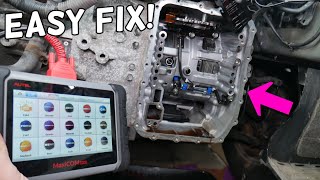
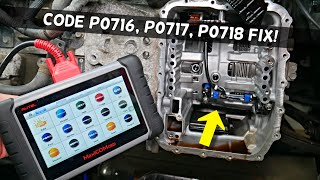
How to confirm: Use a diagnostic scan tool with live data to monitor the Input Speed Sensor RPM. 🎬 See how to diagnose and fix these common transmission codes. The reading should increase smoothly with engine RPM. Erratic jumps, dropouts, or a zero reading while the vehicle is moving indicate a faulty sensor or circuit. A multimeter can also be used to test sensor resistance, which should typically be between 500–1500 Ω.
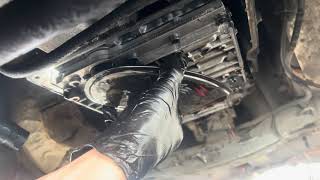
Typical fix: For 5-speed W5A580/NAG1, replace the transmission conductor plate. 🎬 Watch: Step-by-step guide to replacing the NAG1 conductor plate. For 8-speed 845RE/8HP series, replace the entire valve body/mechatronic assembly as the sensors are not serviced separately.
Est. part cost: $150-$600 - Low or Contaminated Transmission Fluid 🟡 Medium Probability → Shop Transmission Assembly Fluid can become contaminated with fine metallic particles from normal clutch wear, which can stick to the magnetic tip of the speed sensor and disrupt its signal. Many of these transmissions were marketed with 'lifetime' fluid, leading to deferred maintenance.
How to confirm: Check the transmission fluid level and condition. The fluid should be at the correct level and appear clean (typically red for ATF+4 in NAG1, or amber/green for ZF fluid). Dark, burnt-smelling fluid or fluid with visible metal particles indicates a problem.
Typical fix: Perform a transmission fluid and filter change using the correct OEM-specified fluid (Mopar ATF+4 for NAG1, Mopar ZF 8&9 Speed ATF for 8-speeds). If significant metal debris is found, further internal inspection is required.
Est. part cost: $100-$300 - Damaged Wiring or Connectors ⚪ Low Probability The main transmission wiring harness connector is a common point for fluid leaks from the transmission case connector sleeve (a known issue on the NAG1), which can wick up into the harness and cause corrosion and signal issues. The harness can also be damaged by road debris or exhaust heat.
How to confirm: Visually inspect the wiring harness going to the transmission for any signs of cracking, melting, or corrosion. Disconnect the main connector and check for bent, corroded pins or the presence of transmission fluid. A multimeter can be used to test for continuity and shorts between the TCM and the sensor connector.
Typical fix: Repair the damaged section of the wiring harness. Replace the transmission connector sleeve if it is leaking fluid into the connector.
Est. part cost: $20-$250
Rare But Worth Checking
- Faulty Transmission Control Module (TCM) or Powertrain Control Module (PCM): → Shop Engine Control Module (ECM) This is rare, but a software glitch or internal failure in the module can cause it to misinterpret a good sensor signal. TSBs like 21-017-16 REV. A sometimes recommend a software update as a first step for shift quality issues. Always eliminate sensor and wiring issues before condemning the TCM/PCM.
- Internal Mechanical Transmission Failure: → Shop Transmission Assembly Excessive metal debris found in the transmission pan points to a more serious internal issue, such as failing clutches or bearings. The debris interferes with the magnetic speed sensor, but the root cause is mechanical wear, not just a bad sensor. In this case, a transmission rebuild or replacement is likely necessary.
Diagnosis Steps
- Connect an OBD-II scanner and verify P0716 is present. Note any other transmission-related codes like P0717, P0721, or gear ratio errors.
- Check the transmission fluid level and condition. Ensure the correct fluid is being used (ATF+4 for NAG1, ZF Lifeguard 8 for 8-speed). Low, dirty, or burnt fluid can cause this code.
- Use a scan tool with live data capability to monitor the Input Speed Sensor (TSS) RPM while in gear. Compare it to the engine RPM. The input speed should be steady and rise and fall smoothly with the engine speed. Erratic jumps, dropouts, or a reading of zero indicate a problem.
- If the signal is erratic, inspect the transmission's main electrical connector for damage, corrosion, or fluid contamination from a leaking connector sleeve.
- If wiring appears intact, test the circuits for the input speed sensor between the transmission connector and the TCM for continuity, shorts to power, or shorts to ground.
- If the wiring tests good, the issue is internal to the transmission. For a 5-speed NAG1, plan to replace the conductor plate. For an 8-speed ZF, plan to replace the mechatronic/valve body assembly.
- If the sensor and wiring test good, check for any available TCM software updates with a dealer-level scan tool, as some shift anomalies can be corrected with a reflash. Only consider replacing the TCM as a last resort.
Parts You'll Likely Need
- Transmission Conductor Plate (for 5-Speed NAG1/W5A580)
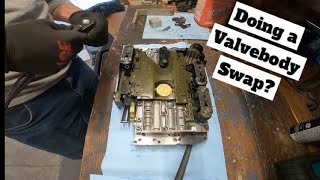
(OEM #52108308AC, 68021352AA)— On the 5-speed transmission, the input and output speed sensors are integrated into this single electronic plate, which is mounted to the valve body. 🎬 Watch: How to swap the conductor plate onto a new valve body. It is a very common failure point.
Trusted brands: Mopar, Dorman (917-678), SKP (SK917679)
OEM price range: $250-$350
Aftermarket price range: $120-$200 - Transmission Mechatronic/Valve Body Assembly (for 8-Speed 845RE/8HP70)
(OEM #68227332AD (example, part number is vehicle specific))— On the 8-speed transmissions, the speed sensors are integrated into this assembly and are not sold separately. TSBs and repair data confirm that replacing the entire unit is the standard fix for P0716.
Trusted brands: Mopar (ZF is the OEM), Sonnax (offers repair kits)
OEM price range: $500-$900
Aftermarket price range: N/A (Remanufactured units vary) - Transmission Fluid and Filter Kit — This is required for any repair that involves dropping the transmission pan. Using the correct fluid is critical: Mopar ATF+4
Related Codes That Often Appear With This One
- P0717 — This code means 'Input/Turbine Speed Sensor Circuit No Signal'. It often appears alongside P0716, indicating the signal is not just erratic but has been lost completely.
- P0721 — This code relates to the Output Speed Sensor 'Circuit Range/Performance'. Problems in the transmission's electrical system, fluid, or a failing conductor plate can affect both input and output sensors simultaneously.
- P0733 — This code indicates 'Gear 3 Incorrect Ratio'. The TCM uses the input and output speed sensors to verify correct gear ratios. If the input speed signal is bad, the TCM can't confirm the ratio and may set this code.
Technical Service Bulletins (TSBs) & Recalls
- S2621000003 REV.A: Lists P0716 as a potential diagnostic trouble code for a wide range of 8-speed automatic transmissions used in Dodge vehicles, indicating it's a known manufacturer issue often resolved by valve body replacement.
- 21-017-16 REV. A: A software update for the TCM on 2016 models with 8-speed transmissions to address various shift and drivability enhancements. While not a direct fix for a failed sensor, it's a relevant step in diagnosis for software-related performance issues.
Platform-Specific Known Issues
- TSB S2621000003 REV.A specifically acknowledges that P0716 is a potential diagnostic code for the 8HP45, 850RE, 8HP50, 8HP70, 8HP75, and 8HP90 transmissions, often leading to a valve body replacement.
- On NAG1 (5-speed) models, a common related failure is the 13-pin connector sleeve O-rings, which leak fluid into the main harness connector, causing this and other transmission codes.
- TSB 21-017-16 REV. A involves a TCM software reflash for 2016 models with 8-speed transmissions to improve shift quality and drivability, which can sometimes be related to how the TCM interprets sensor data.
Mechanic-Grade Diagnostic Values
- Input Speed Sensor Signal Voltage (Live Data) — expected: ~0.5 V at idle, rising proportionally to 4.0–4.5 V at wide-open throttle.. Failure: A reading that is static, zero, jumps erratically, or falls outside the 0.5-4.5V range.
- Input Speed Sensor Resistance (for 5-Speed NAG1 Conductor Plate) — expected: 500–1500 Ω at room temperature.. Failure: A resistance reading significantly outside this range indicates a faulty sensor coil.
- Sensor Signal Wire Continuity — expected: 0.5 Ω or lower resistance.. Failure: A higher resistance reading (or OL) indicates a break or corrosion in the wire between the TCM and the transmission connector.
- Sensor 5V Reference Voltage at Connector — expected: 5V ±0.2V.. Failure: Voltage outside this range points to a problem with the TCM or the power supply, not necessarily the sensor.
Scan Tool Commands That Help
- wiTECH, Autel, Snap-on, HP Tuners: Transmission Quick Learn / Fast Learn — This procedure should be performed after replacing the valve body, conductor plate, or the entire transmission. It resets the adaptive memory and forces the TCM to relearn clutch fill volumes and shift points, which can resolve harsh or erratic shifting after a repair.
OEM Part Supersession History
52108308AB→52108308AC— Part revision and update for the 5-speed NAG1 conductor plate.
Heads up: The newer part number (52108308AC) is the correct replacement for vehicles that used the older version.
Model Year Variations Within This Range
- 2012-2014: The 5-speed W5A580 (NAG1) transmission was available, particularly with the 5.7L V8 engine. For these models, P0716 is almost always caused by the conductor plate.
- 2012-2019 (V6), 2015-2019 (V8): The 8-speed ZF transmission (845RE/8HP70) was introduced on V6 models in 2012 and became standard on V8 RWD models in 2015. For these vehicles, P0716 points to an issue within the integrated mechatronic/valve body assembly.
Helpful Videos
We Have This Part in Stock




The information in this article is provided for general reference and educational purposes only. Vehicle specifications, procedures, and part compatibility can vary by production date, trim level, and region. Always consult your vehicle's factory service manual and verify part numbers before purchasing or performing repairs. Safety-critical components such as airbags, seat belts, and braking systems should be installed by a qualified professional.
- Dodge CHARGER:
- 🧭 Diagnostic Flowchart
- 🎬 Helpful Videos
- 🛍️ Shop This Part
- What's Unique About the 2012-2019 Dodge CHARGER
- Symptoms You May Notice
- Most Likely Causes
- Rare But Worth Checking
- Diagnosis Steps
- Parts You'll Likely Need
- Related Codes That Often Appear With This One
- Technical Service Bulletins (TSBs) & Recalls
- Platform-Specific Known Issues
- Mechanic-Grade Diagnostic Values
- Scan Tool Commands That Help
- OEM Part Supersession History
- Model Year Variations Within This Range
- 🎟️ Get 5% Off