

P0716 on 2012-2016 Honda CR-V: Input Speed Sensor Causes and Fixes
For a 2012-2016 Honda CR-V, code P0716 most often means the transmission's input speed sensor has failed. On 2012-2014 models with the 5-speed automatic, this is a straightforward sensor replacement. On 2015-2016 CVT models, it's also likely the sensor but confirming the diagnosis is key. Expect to pay $60-$150 for the part.
- P0716 on a 2012-2016 CR-V points to a problem with the transmission input speed sensor or its circuit.
- First, identify your transmission: 2012-2014 models have a 5-speed automatic, while 2015-2016 models have a CVT. The correct replacement part depends on this.
- The most likely fix is replacing the sensor itself, which is an external part and a manageable DIY job for those with some experience.
- Always check the transmission fluid level and condition. Use only genuine Honda fluid (ATF-DW1 for 5-speed, HCF-2 for CVT) if a change is needed.
- Before replacing parts, inspect the sensor's wiring and connector for any obvious damage, as this can also trigger the code.
What's Unique About the 2012-2016 Honda CR-V
The 2012-2016 CR-V spans two different transmissions. 2012-2014 models use a conventional 5-speed automatic, while the facelifted 2015-2016 models use a Continuously Variable Transmission (CVT). While the P0716 code's meaning is the same for both, the specific sensor part numbers, locations, and diagnostic nuances differ. The 5-speed automatic is known for being robust, with sensor failure being a common and simple fix. The CVT is more sensitive to fluid condition and has two primary speed sensors (a drive pulley/input sensor and a driven pulley/output sensor), making accurate diagnosis crucial to ensure the correct sensor is replaced.
Symptoms You May Notice
- Check Engine Light is on
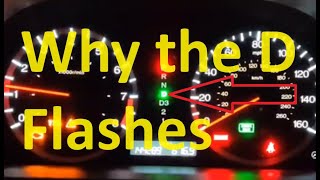
- Flashing 'D' (Drive) indicator light on the dashboard
- Harsh, erratic, or delayed gear shifts
- Transmission may feel like it's slipping
- Vehicle may enter 'limp mode' with reduced power
- Poor acceleration
- Reduced fuel economy
- Fluctuating or incorrect speedometer/odometer readings
- Replacing the output speed sensor instead of the input speed sensor.
- Assuming the entire transmission has failed and needs replacement, when it is often just an inexpensive external sensor.
Most Likely Causes
- Failed Input/Turbine Speed Sensor 🔴 High Probability → Shop Automatic Transmission Input Shaft Speed Sensor The sensor is an electronic component that can fail over time due to heat cycles and vibration. It is the most common cause for this code.
How to confirm: After checking wiring, test the sensor's resistance with a multimeter or use a professional scan tool to observe its live data stream. An erratic or non-existent reading indicates failure. Honda's official procedure involves driving the vehicle over 12 mph for at least 10 seconds to see if the code returns after being cleared.
Typical fix: Replace the faulty input speed sensor. The sensor is external to the transmission, typically held in by one bolt.
Est. part cost: $50-$150 - Low or Degraded Transmission Fluid 🟡 Medium Probability → Shop Transmission Assembly Honda transmissions are sensitive to fluid type and condition. Old, burnt, or low fluid can cause erratic hydraulic pressure and performance, which may lead to the sensor reporting irrational values.
How to confirm: Check the transmission fluid level and condition using the dipstick. The fluid should be at the correct level, pink/red in color, and not have a burnt smell. Note: 2015-2016 CVT models may not have a traditional dipstick and must be checked via a fill/check plug.
Typical fix: Perform a drain and fill with the correct OEM fluid. Use Honda ATF-DW1 for the 5-speed automatic (2012-2014) and Honda HCF-2 fluid for the CVT (2015-2016).
Est. part cost: $40-$120 - Damaged Wiring or Loose Connector ⚪ Low Probability The wiring harness leading to the sensor is exposed to engine bay heat and vibration, which can cause wires to become brittle, frayed, or corroded over time.
How to confirm: Visually inspect the wiring and connector for any signs of damage, corrosion, or loose pins. Perform a continuity test on the wiring between the sensor and the PCM/TCM.
Typical fix: Repair the damaged section of wiring or clean/replace the connector.
Est. part cost: $10-$50
Rare But Worth Checking
- Faulty Powertrain Control Module (PCM) or Transmission Control Module (TCM): → Shop Engine Control Module (ECM) This is rare. Before replacing the module, all other possibilities (sensor, fluid, wiring) must be exhaustively ruled out. Sometimes a software update from the dealer can resolve these issues. Honda has issued TSBs for other models (like the Pilot with the 9-speed auto) where a TCM software update was the fix for a P0716 code caused by a software miscalculation. Manufacturer TSB Bulletin #A19-124 notes that abnormal TCM adaptation values or software miscalculations can cause the MIL to come on with DTC P0716.
- Metal Debris on Sensor Tip: The input speed sensor is magnetic. Metal shavings from normal wear or an internal transmission problem can accumulate on the sensor's tip, disrupting the signal and causing a P0716 code. Cleaning the sensor may be a temporary fix, but the presence of significant metal debris warrants an inspection of the transmission fluid and pan for signs of a more serious internal issue.
Diagnosis Steps
- Read the code with an OBD-II scanner and check for any other related transmission codes.
- Check the level and condition of the transmission fluid. Ensure it is clean, full, and does not smell burnt. If the condition is poor, a fluid change with the correct OEM fluid is recommended.
- Locate the input speed sensor on the transmission housing. For 2012-2014 models, this often requires removing the air filter housing for access. 🎬 See this step-by-step CR-V input shaft speed sensor replacement video
- Inspect the sensor's electrical connector and wiring for any visible damage, corrosion, or loose connections.
- If wiring appears okay, use a scan tool to monitor the input shaft speed sensor data in real-time while driving (if safe) or with the wheels off the ground. Look for erratic readings, dropouts, or a complete lack of signal.
- If a scan tool is unavailable, you can test the sensor's internal resistance with a multimeter (specifications required from a service manual) or simply replace it, as it is the most common failure point. A general expected resistance is between 500–1500 Ω.
- If the sensor and wiring are good, the issue may be with the PCM/TCM, which may require professional diagnosis or a software update from a Honda dealer. Honda has issued TSBs for other models where a software update fixed a P0716, so this should be considered before replacing expensive hardware.
Parts You'll Likely Need
- Input Shaft Speed Sensor (5-Speed Automatic)
(OEM #28810-R5L-014 (replaces 28810-R5L-004))— This is the most common part to fail for this code on 2012-2014 models with the 5-speed automatic transmission.
Trusted brands: Honda Genuine Parts, NTK, Standard Motor Products (SMP)
OEM price range: $130-$175
Aftermarket price range: $40-$90 - Input/Drive Pulley Speed Sensor (CVT)
(OEM #28810-RJ2-003)— This is the corresponding sensor most likely to fail for this code on 2015-2016 models with the CVT. It is also called the 'CVT Drive Pulley Speed Sensor'.
Trusted brands: Honda Genuine Parts, NTK, Beck/Arnley
OEM price range: $80-$120
Aftermarket price range: $50-$90 - Honda Genuine Transmission Fluid
(OEM #08200-9008 (ATF-DW1) / 08200-HCF2 (CVT))— Using the correct OEM fluid is critical for Honda transmission health. A fluid change is often recommended when addressing transmission codes.
Trusted brands: Honda Genuine Parts
OEM price range: $12-$20 per quart
Aftermarket price range: N/A
Related Codes That Often Appear With This One
- P0717 — This code indicates 'Input/Turbine Speed Sensor 'A' Circuit No Signal,' which is a more specific version of the same problem, pointing directly to a dead sensor or a complete break in the circuit.
- P0718 — This code means 'Input/Turbine Speed Sensor 'A' Circuit Intermittent,' indicating the signal is dropping out, often due to a failing sensor or a loose connection.
Platform-Specific Known Issues
- While no specific TSB for the 2012-2016 CR-V and P0716 was found, Honda has issued TSB 19-004 for the 2016-17 Pilot and TSB 19-003 for the 2016-18 MDX/TLX, where a TCM software update was the fix for a P0716 code caused by a software miscalculation during downshifts. This suggests that in rare cases, a software issue could be the root cause on the CR-V as well and should be investigated before replacing the PCM/TCM. Manufacturer TSB Bulletin #A19-004 specifically describes this as a miscalculation during a downshift from 9th or 8th gear to 7th gear or lower.
Mechanic-Grade Diagnostic Values
- Input Speed Sensor Resistance — expected: 500 - 1500 Ω (general specification). Failure: A reading outside this range, or an open/infinite resistance, indicates a failed sensor.
- Sensor Signal Wire Continuity to PCM/TCM — expected: 0.5 Ω or lower. Failure: Higher resistance indicates a problem in the wiring harness.
- Sensor Signal Voltage (Live Data) — expected: ~0.5 V at idle, rising proportionally with engine speed to ~4.0-4.5 V at wide-open throttle.. Failure: Readings that are static, jump erratically, or fall outside the 0.5-4.5V range confirm a performance issue.
- Sensor Power Supply (Reference Voltage at Connector) — expected: Approximately 5V. Failure: Significantly lower or no voltage indicates a wiring or PCM/TCM issue, not a sensor failure.
Scan Tool Commands That Help
- Honda Diagnostic System (HDS): Clear DTCs — Used after a repair to clear the P0716 code and reset the system before performing a drive cycle to verify the fix.
- Honda Diagnostic System (HDS): Live Data Monitoring (Input/Turbine Speed Sensor) — To observe the sensor's output in real-time while driving. This is the primary method to confirm an erratic signal, comparing it to engine RPM and output speed sensor data.
- Honda Diagnostic System (HDS) or equivalent: CVT Start Clutch Calibration — While not strictly for a sensor replacement, this procedure is recommended after significant CVT service (like replacing a valve body) or disconnecting the battery. It helps the TCM relearn clutch engagement points for smooth operation.
Wiring & Ground Locations
- G101 — Bolted to the transmission case, typically near the starter or at the left rear of the engine.. This is a main engine and transmission ground point. A poor or corroded connection at G101 can cause unstable voltage and erratic signals for various sensors, including the input speed sensor, leading to a P0716 code even if the sensor and wiring are otherwise intact.
- Input Speed Sensor Connector (CVT) — On the transmission housing for the 2015-2016 CVT models. It is a 3-wire connector.. This is the direct connection point for testing the sensor. Verifying power, ground, and signal at this connector is a key diagnostic step. A pigtail connector (e.g., Standard Motor Products QF94B8) is available for repairs if the connector itself is damaged.
- PCM Connector B (2012-2014 5-Speed AT) — The Powertrain Control Module is located in the engine compartment, on the left side.. Wiring diagrams for related systems show that transmission sensor signals route to specific pins on the PCM connectors. For example, the ATF temp sensor routes to pin 38 on connector B. A continuity test from the sensor connector to the corresponding pin at the PCM is the definitive way to rule out a wiring harness issue.
Real Owner Repair Stories
- CarKiller forum user (2015 Honda CR-V EX-L, 2.4L Earth Dreams engine, CVT) — Check engine light on, flashing 'D' indicator, vehicle in 'safe' mode with reduced power, unable to exceed 30 mph. Scanner showed P0717 (No Signal), a closely related code.
❌ Tried (didn't work) Initially replaced one transmission speed sensor (Intermotor part SC657), which seemed to fix the issue for a few months, but the problem returned.
✅ What actually fixed it The owner then replaced the *other* transmission speed sensor (Intermotor part SC655). This resolved the issue long-term, with no codes returning after 3,500 miles. This highlights the importance of correctly identifying which sensor (input vs. output) has failed on CVT models.
Documented NHTSA Reports
- An owner reported in NHTSA ODI #11541723 that their vehicle stored a P0716 code and they were informed by a dealership that a TSB existed for the issue, though they were told it was no longer in effect at the time of service.
- NHTSA ODI #11451395 describes an incident on a highway where a vehicle recorded permanent transmission codes P0716 and P0700, which a body shop and dealership initially struggled to pinpoint.
- NHTSA ODI #11489573 notes that the transmission may experience intermittent harsh or jerky upshifts with steady acceleration when the MIL comes on with DTC P0716, often caused by TCM software miscalculations.
OEM Part Supersession History
28810-R5L-004→28810-R5L-014— Standard part revision by Honda for the 5-speed automatic transmission speed sensor.
Heads up: The new part number (28810-R5L-014) is the correct replacement and is fully compatible with vehicles that used the original part.
Model Year Variations Within This Range
- 2012-2014: These models use a 5-speed automatic transmission. The input speed sensor is part number 28810-R5L-014.
- 2015-2016: These models use a Continuously Variable Transmission (CVT). The corresponding input (drive pulley) speed sensor is part number 28810-RJ2-003. Diagnosis is more complex as there is also an output (driven pulley) speed sensor that can cause similar symptoms.
Diagnostic Flowchart
Other Known Issues on This Vehicle
Issues unrelated to this code that are worth knowing about as an owner of this generation:
- VTC Actuator Rattle on Cold Start 🟠 Medium — Very common on 2012-2014 models. Causes a brief, loud grinding/rattling noise for 1-2 seconds on cold engine startup. The issue is less of a reliability threat and more of a significant annoyance. Some owners report the issue returning even after replacement. (Ref: Honda TSB 09-010, 16-012. The updated part number is 14310-R5A-305.)
- Premature Starter Motor Failure 🟠 Medium — Common on 2015-2016 models. Symptoms include a single loud click with no crank, or requiring multiple presses of the start button to engage the engine. Failure can be intermittent at first, making diagnosis difficult.
- Vibration at Idle/Low RPM (CVT Models) 🟡 Low — A widely reported issue specific to the 2015-2016 models with the new 'Earth Dreams' engine and CVT. Owners feel a noticeable vibration in the seat and steering wheel when stopped in gear or driving at low RPMs (e.g., 1100-1500 RPM). Honda acknowledged the issue and released software updates to mitigate it, but it's often considered a characteristic of the vehicle. (Ref: Honda released a service bulletin and software update to address the vibration.)
- Parasitic Battery Drain 🟡 Low — Some owners report the battery dying after the vehicle sits for a few days. A stuck A/C compressor relay has been identified as a common cause for this parasitic drain.
Used vs. New Parts: Buying Guide for This Vehicle
When a used part is the smart pick: A used sensor from a low-mileage donor vehicle is a reasonable option for this repair. Since it is an external electronic part, its failure is not typically tied to the mechanical condition of the donor transmission. It's a cost-effective way to get an OEM-quality part.
Donor-vehicle mileage cap: roughly under 80000 miles for the part to have meaningful remaining life.
What to inspect on the donor part:
- Verify the part number from the donor vehicle matches the required part for your transmission (5-speed vs. CVT).
- Inspect the connector pins for any corrosion, bending, or damage.
- Check the plastic housing for cracks or signs of extreme heat exposure.
- Ensure the O-ring is present and in good condition, though replacing it is always recommended.
OEM-only on this vehicle (don't cheap out):
- Transmission Fluid (Honda ATF-DW1 or HCF-2)
Aftermarket brands forum-validated for this vehicle:
- NTK
- Standard Motor Products (SMP)
- Beck/Arnley
Brands owners have reported issues with on this vehicle:
- No-name, unbranded sensors from online marketplaces should be avoided, as they are frequently cited for having incorrect signal amplitude or premature failure.
Real Owner Stories
Aggregated from forums and TSBs cited above. Mileages and costs reflect what owners reported in those sources.
2015 Honda CR-V — 148000 miles
Symptoms: Single click and no-start condition.
What fixed it: Replacing the starter motor.
Source hint: crvownersclub.com thread cited in forum_citations
2013 Honda Accord (2.4L K24)
Symptoms: P0716 code and transmission issues similar to the CR-V platform.
What fixed it: Replacing the input speed sensor.
Source hint: driveaccord.net forum discussion cited in forum_citations
Related OBD-II Codes
Frequently Asked Questions
Does the 2015-2016 CR-V CVT have a dipstick to check the fluid for a P0716 code?
What specific transmission fluid should I use for my 2013 CR-V to resolve shifting issues?
Is there a software update for the P0716 code on my 2016 CR-V?
Where is the input speed sensor located on a 2014 CR-V?
What fluid is required for the 2015 CR-V CVT if I'm performing a drain and fill?
Can I use a used sensor from a Honda Accord to fix my P0716 code?
Helpful Videos

We Have This Part in Stock

The information in this article is provided for general reference and educational purposes only. Vehicle specifications, procedures, and part compatibility can vary by production date, trim level, and region. Always consult your vehicle's factory service manual and verify part numbers before purchasing or performing repairs. Safety-critical components such as airbags, seat belts, and braking systems should be installed by a qualified professional.
- Honda CR-V:
- 🧭 Diagnostic Flowchart
- 🎬 Helpful Videos
- 🛍️ Shop This Part
- What's Unique About the 2012-2016 Honda CR-V
- Symptoms You May Notice
- Most Likely Causes
- Rare But Worth Checking
- Diagnosis Steps
- Parts You'll Likely Need
- Related Codes That Often Appear With This One
- Platform-Specific Known Issues
- Mechanic-Grade Diagnostic Values
- Scan Tool Commands That Help
- Wiring & Ground Locations
- Real Owner Repair Stories
- Documented NHTSA Reports
- OEM Part Supersession History
- Model Year Variations Within This Range
- Other Known Issues on This Vehicle
- Used vs. New Parts: Buying Guide for This Vehicle
- Real Owner Stories
- 2015 Honda CR-V — 148000 miles
- 2013 Honda Accord (2.4L K24)
- Related OBD-II Codes
- Frequently Asked Questions
- 🎟️ Get 5% Off