

P0717 on 2003-2011 Jeep Wrangler: Input Speed Sensor 'No Signal' Causes and Fixes
On a 2003-2011 Wrangler with the 42RLE transmission, code P0717 is most often caused by a failed input speed sensor. This sensor is located externally on the driver's side of the transmission and is a relatively easy DIY fix, with parts costing between $35 and $60. Failure results in the transmission entering 'limp mode,' getting stuck in 2nd gear.
- P0717 on a 2003-2011 Wrangler almost always points to a bad input speed sensor.
- Symptoms are serious and include the transmission going into 'limp mode,' making the vehicle difficult to drive.
- The fix is DIY-friendly; the sensor is on the outside of the transmission on the driver's side and is held by one bolt.
- Always verify you are replacing the correct sensor (the one towards the front of the vehicle is the input sensor).
- Only use Mopar ATF+4 transmission fluid if you need to top off or change the fluid.
What's Unique About the 2003-2011 Jeep Wrangler
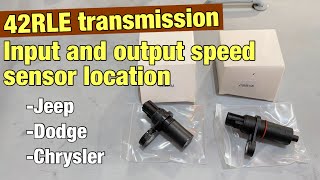
The 42RLE automatic transmission used in the 2003-2011 Jeep Wrangler (covering both the late TJ and early JK generations) is known for having issues with its speed sensors. Unlike some transmissions where sensors are located internally within the valve body, the input and output speed sensors on the 42RLE are mounted externally on the driver's side, making them exceptionally accessible for DIY repair. 🎬 Watch: See exactly where these sensors are located on your Jeep. Owners frequently experience symptoms like the transmission entering "limp mode" (stuck in 2nd gear) as a direct result of this sensor failing, a story corroborated in countless forum threads.
Generation note: This guide covers the Jeep Wrangler TJ (2003-2006) and JK (2007-2011) generations, both of which used the 42RLE automatic transmission. The causes, symptoms, and repair procedures for code P0717 are consistent across these models.
Symptoms You May Notice
- Transmission stuck in one gear, often 2nd gear ('limp mode').
- Harsh, erratic, or delayed shifting.
- Check Engine Light is on.
- Vehicle may feel sluggish or have limited power.
- Reduced fuel economy.
- Cruise control may not function.
- Replacing the Output Speed Sensor: The input and output sensors look nearly identical and are located next to each other. The input sensor is the one closer to the front of the vehicle (towards the engine). P0717 specifically points to the input sensor circuit. 🎬 See this step-by-step guide for fixing the P0717 no signal code.
- Rebuilding the Transmission: This code is almost always caused by an inexpensive external sensor or wiring. A full transmission rebuild is rarely necessary unless there are signs of severe internal mechanical failure, like large metal chunks in the pan.
- Blaming Wheel Speed Sensors: On 2007-2011 Wranglers with the 42RLE, the transmission uses its own dedicated input and output sensors. A faulty ABS wheel speed sensor will typically trigger ABS/ESP lights and will not cause a P0717 code.
Most Likely Causes
- Failed Input Speed Sensor 🔴 High Probability The speed sensors on the 42RLE are a common failure point due to age, heat exposure, and vibration. The sensor is magnetic and can also become coated in fine metallic debris over time, disrupting its signal.
How to confirm: The sensor is located on the driver's side of the transmission housing; it is the one closer to the front of the vehicle. Upon removal, owners often find the magnetic tip covered in a metallic sludge, which is a strong indicator of the problem. Given the low cost, direct replacement is the most common diagnostic step.
Typical fix: Replace the input speed sensor. It is held in by a single 10mm bolt. The electrical connector can be difficult to release; some owners find it easier to unbolt the sensor first to get a better angle on the connector tab.
Est. part cost: $35-$60 - Wiring or Connector Issue 🟡 Medium Probability The wiring harness leading to the sensor is exposed under the vehicle and can be damaged by road debris, corrosion, or heat from the exhaust. On lifted Wranglers or those used for off-roading, the harness can also chafe against the driveshaft or other components.
How to confirm: Visually inspect the wiring and connector for any signs of damage, corrosion, or loose pins. Wiggle the connector while the engine is running to see if the fault is intermittent. Check for oil contamination inside the connector, which can interfere with the signal.
Typical fix: Repair the damaged section of wire or replace the connector pigtail. Clean the connector pins with electrical contact cleaner.
Est. part cost: $10-$30 - Low or Dirty Transmission Fluid ⚪ Low Probability → Shop Transmission Assembly
How to confirm: Check the transmission fluid level and condition using the dipstick. The fluid should be at the correct level and appear clean and red, not brown, black, or burnt-smelling. Note: Only use Mopar ATF+4 fluid in the 42RLE transmission.
Typical fix: Top off the fluid to the correct level or perform a transmission fluid and filter change. This is unlikely to fix a 'No Signal' code but is good maintenance.
Est. part cost: $50-$150
Rare But Worth Checking
- Faulty Powertrain Control Module (PCM) or Transmission Control Module (TCM): → Shop Transmission Assembly This is uncommon. Before condemning the control module, you must exhaustively rule out sensor and wiring issues. A faulty module may also present with other, unrelated codes.
- Internal Transmission Solenoid Block Failure: → Shop Transmission Assembly While less common for just a P0717 code, the 42RLE is known for solenoid block failures that can cause limp mode and various shifting codes. This is a more involved repair that requires dropping the transmission pan.
Diagnosis Steps
- Confirm the code P0717 is present using an OBD-II scanner.
- Check the transmission fluid level and condition. Ensure it is full and clean. Use only Mopar ATF+4 fluid.
- Locate the input speed sensor on the driver's side of the transmission. It is the front-most of the two sensors.
- Inspect the electrical connector and wiring going to the sensor. Look for any breaks, corrosion, or loose connections. Pay close attention to the area near the front driveshaft.
- If wiring appears okay, the most straightforward step is to replace the input speed sensor. It is held by one 10mm bolt. It may be easier to unbolt the sensor before attempting to disconnect the stubborn electrical clip.
- When removing the old sensor, inspect its magnetic tip for a build-up of metallic paste. Clean the sensor bore with a rag before installing the new one.
- Apply a small amount of bearing grease or transmission fluid to the O-ring of the new sensor to ensure it seats properly without rolling or tearing.
- Since the part is inexpensive and the labor is identical, consider replacing the nearby output speed sensor at the same time as preventative maintenance.
- After replacing the sensor(s), clear the trouble code with the scanner and perform a test drive to ensure the shifting issues are resolved and the Check Engine Light does not return.
- If the code persists, a more in-depth diagnosis of the wiring continuity back to the PCM/TCM or a check of the module itself may be needed.
Parts You'll Likely Need
- Automatic Transmission Input Speed Sensor
(OEM #4799061AB)— This is the most common failure point for a P0717 code on the 42RLE transmission. The original part number was 4799061 and was superseded by 4799061AB.
Trusted brands: Mopar, NGK/NTK, Standard Motor Products (SMP)
OEM price range: $50-$70
Aftermarket price range: $35-$55
Related Codes That Often Appear With This One
- P0716 — This code indicates 'Input/Turbine Speed Sensor 'A' Circuit Range/Performance'. It often appears alongside P0717 as it points to an erratic or implausible signal from the same sensor, rather than a complete loss of signal.
- P0700 — This is a generic code that means the Transmission Control Module (TCM) has stored a fault code. It acts as a general alert that a more specific transmission code, like P0717, is present.
Platform-Specific Known Issues
- On JK models, especially those with suspension lifts, the wiring harness for the speed sensors can come into contact with the front driveshaft, leading to chafed or severed wires. Always inspect this area carefully if the vehicle is modified.
Mechanic-Grade Diagnostic Values
- Input Speed Sensor AC Voltage Generation — expected: Generates a small, fluctuating AC voltage signal when a ferrous metal object is passed quickly over its magnetic tip.. Failure: No AC voltage is produced, indicating a dead sensor.
- Wiring Harness Continuity — expected: Less than 1.0 ohm of resistance.. Failure: Resistance greater than 1.0 ohm, or an open circuit (OL), indicates a break or corrosion in the wiring between the sensor connector and the PCM/TCM.
Scan Tool Commands That Help
- wiTECH or other advanced scan tool: Reset Adaptive Values — After replacing the sensor or repairing wiring, this function can be used to clear the transmission's learned shift data. This forces the TCM to relearn shift timing with the new, correct sensor data, which can improve post-repair shift quality.
- wiTECH or other advanced scan tool: Quick Learn Procedure — This is a more involved procedure than resetting adaptive values. It actively puts the transmission through a process to learn clutch fill times. While typically reserved for major repairs like a valve body or clutch pack replacement, it can be performed if shift quality issues persist after a sensor replacement and resetting adaptations.
Wiring & Ground Locations
- (T52) Input Speed Sensor Signal Circuit — This is the wire that carries the AC voltage signal from the sensor to the Powertrain Control Module (PCM). On the 42RLE's 60-way connector, this corresponds to pin 52.. An open or short to ground on this specific wire will cause a P0717 'No Signal' code.
- (T13) Speed Sensor Ground Circuit — This is the shared ground wire for both the input and output speed sensors. It provides the ground path back to the PCM. On the 42RLE's 60-way connector, this corresponds to pin 34.. A fault on this ground circuit can cause codes for both the input and output speed sensors. If you have a P0717, checking this ground is critical.
- TJ Engine Block & Firewall Grounds — On TJ models (2003-2006), primary grounds run from the battery negative terminal to the engine block and to the firewall. A key ground strap also runs from the back of the cylinder head to the firewall.. While not the direct sensor ground, poor engine-to-chassis grounds can introduce electrical noise and voltage drops that can affect various sensors, including the transmission speed sensors.
- JK Main Engine/Body Grounds — On JK models (2007-2011), key grounds are located on the back of the engine (G101, G104) and behind the passenger headlight (G103). The G103 ground is known to corrode and cause widespread electrical issues.. A corroded main ground, particularly G103, can create floating grounds and intermittent issues for many systems controlled by the PCM, potentially contributing to sensor signal problems.
Real Owner Repair Stories
- YouTube channel 'EL NERON' (Jeep Wrangler (generation not specified, but wiring is consistent with TJ/JK)) — Transmission would not shift out of first gear, engine would rev high but vehicle would not accelerate properly.
❌ Tried (didn't work) The initial diagnosis pointed to the sensor itself.
✅ What actually fixed it The wiring harness running to the sensor had melted together due to heat. The two wires were shorting against each other, preventing any signal from reaching the computer. The fix was to cut out the damaged section of wire and splice in a new section. - YouTube channel 'SomeGuyOutside' (2003 Jeep Wrangler TJ with 42RLE) — Transmission going into limp mode (stuck in gear).
❌ Tried (didn't work) The owner was diagnosing a general limp mode issue.
✅ What actually fixed it The magnetic tip of the input speed sensor was completely covered in a thick paste of metallic shavings. Cleaning the sensor bore and replacing the sensor resolved the limp mode. The video clearly shows the contamination, which was blocking the sensor from getting a clean reading of the reluctor wheel.
OEM Part Supersession History
4799061→4799061AB— Standard part revision and improvement by the manufacturer.
Heads up: The sensors are physically identical and fully interchangeable. The 'AB' version is the current replacement part.
Model Year Variations Within This Range
- 2007-2011 (JK): The PCM and TCM are integrated into a single unit in the JK generation. While the sensor and its direct wiring are the same, diagnosing a module-related issue involves the main PCM. Also, the routing of the wiring harness near the front driveshaft on JK models makes it more susceptible to chafing, especially on lifted vehicles.
- 2003-2006 (TJ): The TJ models have a separate TCM, though it is often located near the main PCM under the hood. The wiring harness routing is generally less prone to driveshaft interference compared to the JK.
Diagnostic Flowchart
Other Known Issues on This Vehicle
Issues unrelated to this code that are worth knowing about as an owner of this generation:
- Death Wobble 🔴 High — Common on JK models (2007-2018), especially after hitting a bump at highway speeds. Often caused by worn track bar bushings, ball joints, or steering damper. (Ref: Multiple TSBs exist, but no single recall covers all causes. It's a well-documented issue across owner forums.)
- Totally Integrated Power Module (TIPM) Failure 🔴 High — Prevalent in 2007-2014 Chrysler vehicles, including the Wrangler JK. Can cause a wide range of bizarre electrical issues, from fuel pump failure and engine stalling to horn and wipers activating randomly. (Ref: A class-action lawsuit and several recalls (like NHTSA Recall 14V-530 for other models) have addressed some TIPM issues, but problems persist across many vehicles.)
- 3.8L V6 Engine Oil Consumption 🟠 Medium — Notorious on 2007-2011 JK models. Many owners report consuming a quart of oil every 1,000-2,000 miles. Causes are debated, from PCV system design to piston rings. (Ref: TSB 09-008-07 addresses oil seepage from the timing cover, which can be a contributing factor.)
- Frame Rust 🔴 High — A significant problem for TJ models (1997-2006), especially in the rust belt. Critical areas to inspect are the frame sections near the rear axle and control arm mounts.
- Leaking Door and Top Seals 🟡 Low — A very common complaint across all Wrangler generations (YJ, TJ, JK). Water leaks into the cabin, particularly around the A-pillars and door surrounds, are a frequent annoyance for owners.
Used vs. New Parts: Buying Guide for This Vehicle
When a used part is the smart pick: For this specific repair, using a salvaged part is NOT recommended. The sensor is a low-cost wear item, and the labor to replace it is the same whether the part is new or used. A used sensor has unknown remaining life and may have been exposed to the same heat and vibration that caused the original to fail.
What to inspect on the donor part:
- Not applicable, as a new part is strongly advised.
OEM-only on this vehicle (don't cheap out):
- While not strictly 'OEM-only', using a known-good brand is critical. Avoid unbranded, no-name sensors from online marketplaces, as their quality control can be poor, leading to a quick repeat failure.
Aftermarket brands forum-validated for this vehicle:
- Mopar (OEM)
- NGK / NTK
- Standard Motor Products (SMP)
Brands owners have reported issues with on this vehicle:
- Unbranded or 'white-box' parts with no manufacturer reputation.
Real Owner Stories
Aggregated from forums and TSBs cited above. Mileages and costs reflect what owners reported in those sources.
Jeep Wrangler TJ
Symptoms: Owner reported getting code P0717.
What fixed it: Replacing the input speed sensor resolved the issue.
Source hint: Wrangler TJ Forum thread titled 'P0717 Input Speed Sensor'
Jeep Wrangler TJ with 42RLE
Symptoms: Vehicle was in 'limp mode'. The old sensor's magnetic tip had a heavy accumulation of metal shavings.
What fixed it: The issue was resolved by replacing the input speed sensor.
Source hint: YouTube video titled '42rle input and output speed sensor location (replacement)'
2008 Jeep Wrangler JK with 42RLE
Symptoms: Vehicle was stuck in 2nd gear.
What fixed it: The owner confirmed that the issue was not caused by a wheel speed sensor, as the transmission uses its own dedicated sensors.
Source hint: JK-Forum.com thread titled 'Trans Issue Caused by Wheel Speed Sensor???'
Related OBD-II Codes
Frequently Asked Questions
Where is the P0717 input speed sensor located on my Jeep Wrangler's 42RLE transmission?
I have a lifted JK Wrangler and got this code. Is there anything specific I should check?
What is the correct transmission fluid for a 2003-2011 Wrangler with the 42RLE?
Is it a good idea to replace the output speed sensor at the same time as the input sensor?
My Jeep is stuck in 2nd gear. Could a bad wheel speed sensor cause the P0717 code?
What's the most common and straightforward fix for P0717 on this Jeep?
I'm having trouble unplugging the sensor's electrical connector. Is there a trick to it?
Helpful Videos
We Have This Part in Stock

The information in this article is provided for general reference and educational purposes only. Vehicle specifications, procedures, and part compatibility can vary by production date, trim level, and region. Always consult your vehicle's factory service manual and verify part numbers before purchasing or performing repairs. Safety-critical components such as airbags, seat belts, and braking systems should be installed by a qualified professional.
- Jeep Wrangler:
- 🧭 Diagnostic Flowchart
- 🎬 Helpful Videos
- 🛍️ Shop This Part
- What's Unique About the 2003-2011 Jeep Wrangler
- Symptoms You May Notice
- Most Likely Causes
- Rare But Worth Checking
- Diagnosis Steps
- Parts You'll Likely Need
- Related Codes That Often Appear With This One
- Platform-Specific Known Issues
- Mechanic-Grade Diagnostic Values
- Scan Tool Commands That Help
- Wiring & Ground Locations
- Real Owner Repair Stories
- OEM Part Supersession History
- Model Year Variations Within This Range
- Other Known Issues on This Vehicle
- Used vs. New Parts: Buying Guide for This Vehicle
- Real Owner Stories
- Jeep Wrangler TJ
- Jeep Wrangler TJ with 42RLE
- 2008 Jeep Wrangler JK with 42RLE
- Related OBD-II Codes
- Frequently Asked Questions
- 🎟️ Get 5% Off