

P0720 on 2001-2007 Acura MDX: Output Speed Sensor Causes and Fixes
P0720 on a 2001-2007 Acura MDX usually means the transmission output speed sensor has failed. This is often a simple DIY fix costing $25-$70 for a new sensor. However, on 2001-2006 models, if the old sensor is physically damaged, it indicates a major internal transmission failure requiring a rebuild or replacement.
- P0720 on the Acura MDX is most often caused by a failed transmission output speed sensor.
- Key symptoms include a flashing 'D' light, erratic shifting, and a non-working speedometer.
- For 2001-2006 models, you MUST inspect the old sensor when you remove it. If it's physically damaged, your transmission needs to be professionally rebuilt.
- If the old sensor is clean, replacing it is a simple, low-cost DIY job that usually solves the problem.
- Always check wiring and connectors before assuming a more complex part has failed.
What's Unique About the 2001-2007 Acura MDX
The 2001-2007 MDX spans two generations, and the first generation (2001-2006) has a well-documented, critical transmission flaw. These 5-speed automatic transmissions (coded MGHA/BGHA) were prone to premature failure. A failing internal bearing on the countershaft can cause a gear to wobble and physically destroy the output speed sensor. This means that while P0720 can be a simple sensor failure, it can also be the first and only warning sign of a catastrophic transmission failure on these earlier models. Diagnosing this requires inspecting the old sensor for physical damage (scrapes, gouges, metal shavings) upon removal. A damaged sensor confirms the need for a transmission rebuild or replacement.
Generation note: This range covers the first generation (2001-2006) and the first year of the second generation (2007). The first generation is notorious for its 5-speed automatic transmission issues, where a failing internal bearing can destroy the speed sensor, making P0720 a potential indicator of a much larger problem. This specific failure mode is less common on the redesigned 2007 model, which uses a different transmission, though sensor failure can still occur.
Symptoms You May Notice
- Harsh, erratic, or delayed gear shifting
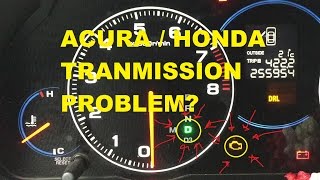
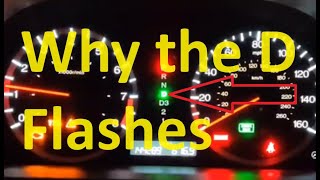
- Flashing 'D' or 'D5' gear indicator light
- Speedometer is inaccurate or does not work at all
- Check Engine Light is on
- Cruise control is inoperative
- Vehicle may be stuck in a low gear (limp mode)
- Decreased fuel efficiency
- Car may jolt or lurch suddenly during steady driving before going into limp mode
- Inability to shift into Park unless the engine is turned off
- Replacing the entire transmission without first checking if the P0720 code is from a simple sensor failure on an otherwise healthy transmission (especially on 2007+ models).
- Replacing only the sensor on a 2001-2006 MDX without inspecting the old one for damage, leading to the new sensor being quickly destroyed by the same internal fault.
- Confusing the output speed sensor with the input speed sensor. They are separate parts in different locations and are not interchangeable.
Most Likely Causes
- Failed Output Speed Sensor 🔴 High Probability Sensors are electronic components that can fail over time due to heat cycles and vibration. The sensor's location on the transmission housing exposes it to harsh conditions.
How to confirm: Test the sensor with a multimeter for proper voltage signals or use a scan tool to monitor its live data output while driving. The easiest confirmation for a DIYer is often replacing it, as the part is relatively inexpensive. If the old sensor is clean and undamaged, failure is the likely cause.
Typical fix: Replace the output speed sensor. It is typically held in by a single 10mm bolt.
Est. part cost: $25-$70 - Internal Transmission Bearing Failure (2001-2006) 🟡 Medium Probability → Shop Transmission Assembly First-generation MDX 5-speed automatic transmissions have a known design weakness with a countershaft bearing that can fail, causing excessive movement. This was a widespread issue affecting many Honda/Acura models from this era.
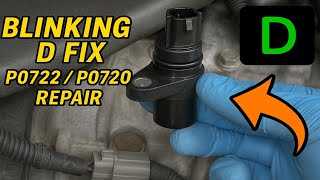
How to confirm: Remove the output speed sensor and inspect it for physical damage. If the tip is scraped, chewed up, or has metal shavings on it, a component inside the transmission is hitting it. This is definitive proof of internal failure. 🎬 See what a blinking D light means for your transmission's health.
Typical fix: This requires a complete transmission rebuild or replacement by a professional. A simple sensor replacement will not fix the root cause and the new sensor will be destroyed.
Est. part cost: $2500-$5000+ - Damaged Wiring or Connectors ⚪ Low Probability The sensor is located on the exterior of the transmission, where its wiring is exposed to road debris, heat from the exhaust, and potential corrosion. The plastic connector can become brittle over time.
How to confirm: Visually inspect the wiring harness leading to the sensor for any breaks, chafing, melting, or corrosion. Check for bent or loose pins at the connector. Perform a continuity test on the wires between the sensor connector and the PCM if a visual inspection is inconclusive.
Typical fix: Repair the damaged section of the wiring harness or replace the connector pigtail.
Est. part cost: $10-$50
Rare But Worth Checking
- Low or Dirty Transmission Fluid: → Shop Transmission Assembly While unlikely to directly cause a P0720 circuit code, extremely low or contaminated fluid can cause erratic transmission behavior, overheating, and general component stress that could contribute to sensor failure or mimic its symptoms. It should always be checked as a basic step.
- Faulty Powertrain Control Module (PCM): → Shop Engine Control Module (ECM) This is very rare. The PCM is the last component to suspect. It should only be considered after all other possibilities, including the sensor, wiring, and internal transmission health (on Gen 1), have been thoroughly ruled out by a professional.
Diagnosis Steps
- Scan the vehicle for all stored trouble codes. Note any other codes that appear with P0720, as they can provide valuable context.
- Check the transmission fluid level and condition. Ensure it is at the correct level and does not look dark, smell burnt, or contain excessive metal debris.
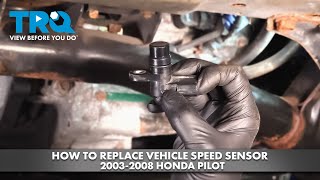
- Locate the output speed sensor on the transmission casing. On the MDX, it is on the outside of the transmission housing, typically held by a single 10mm bolt. You may need to remove the air intake box for access. 🎬 Watch this walkthrough for a clear view of the sensor location.
- Inspect the sensor's wiring and connector for any visible damage, corrosion, or loose connections. Ensure the connector is seated firmly.
- Disconnect the connector and remove the sensor (typically one 10mm bolt). The sensor pulls straight out. 🎬 Watch: This step-by-step guide shows you how to replace the sensor.
- CRITICAL STEP (especially for 2001-2006 models): Carefully inspect the removed sensor's tip. If it is physically damaged, scraped, or 'chewed up', stop. The transmission has a serious internal failure and needs professional service.
- If the old sensor appears undamaged, you can test it with a multimeter (if resistance specs are available) or simply proceed with replacement, as it's the most likely culprit.
- Install the new sensor with a new O-ring, ensuring it is seated properly. Torque the bolt to specification.
- Reconnect the wiring harness connector securely.
- Clear the trouble codes with the scan tool. Perform a test drive, monitoring the speedometer and shift quality to confirm the fix.
Parts You'll Likely Need
- Transmission Output Speed Sensor (Countershaft Speed Sensor)
(OEM #28810-P7W-004)— This is the most common cause of the P0720 code when there is no internal transmission damage. It is the primary component responsible for reporting output speed. This part number is specific to 2001-2002 MDX models. 2003-2006 models may use a different part number. Always verify with VIN.
Trusted brands: Acura (OEM), NGK/NTK, Standard Motor Products (SMP), Denso, Beck/Arnley
OEM price range: $80-$120
Aftermarket price range: $25-$70
Related Codes That Often Appear With This One
- P0722 — This code means 'Output Speed Sensor Circuit No Signal' and is a more specific version of the P0720 fault, often appearing together when the sensor fails completely or is disconnected.
- P0723 — This code for 'Output Speed Sensor Circuit Intermittent' may be logged if the sensor signal is dropping in and out due to a failing sensor or a loose connection.
- P0700 — This is a general transmission control system malfunction code. It's an informational code that indicates the Transmission Control Module (TCM) has stored a specific fault code, like P0720.
- P0730, P0740, P0780 — These codes relate to incorrect gear ratios, torque converter clutch circuit issues, and shift malfunctions. They can be triggered as a direct result of the PCM not getting a reliable speed signal from the output sensor, causing it to detect shifting errors.
Technical Service Bulletins (TSBs) & Recalls
- While no TSB is specifically for P0720, Acura has issued numerous bulletins for transmission issues on these models, including TSB 02-011 and others related to harsh shifting and torque converter judder, which can sometimes be related to sensor inputs. Owners experiencing transmission problems should have a dealer check for all applicable software updates and TSBs.
Platform-Specific Known Issues
- On 2001-2006 models, a failing countershaft bearing is a known issue that causes internal transmission components to physically strike and destroy the output speed sensor, leading to a P0720 code. This requires a transmission rebuild.
- The flashing 'D' light is a hallmark symptom for this issue on Honda/Acura platforms of this era, immediately pointing technicians toward a transmission-related sensor or solenoid fault.
Mechanic-Grade Diagnostic Values
- 3-Pin Sensor Voltage Supply — expected: 5V or 12V. Failure: No voltage present indicates a wiring or PCM issue, not a sensor failure.
- Alternator AC Ripple Voltage — expected: Less than 0.5V AC. Failure: A reading greater than 0.5V AC indicates failing diodes in the alternator, which can induce electrical noise (AC ripple) into the vehicle's DC system, causing erratic sensor readings.
Scan Tool Commands That Help
- Honda HDS (or equivalent advanced scanner): A/T Data List - Input Shaft (Mainshaft) Speed vs. Output Shaft (Countershaft) Speed — This function is used to diagnose a no-signal condition (P0722). With the vehicle raised on a lift and wheels spinning, a technician can monitor the live data from both the input and output speed sensors. If the input sensor shows a speed but the output sensor reads zero, it confirms a fault in the output sensor or its circuit.
Wiring & Ground Locations
- G101 — At the left rear of the engine.. This is a primary ground distribution point for multiple critical engine and transmission components, including the Powertrain Control Module (PCM) and various sensors. A corroded or loose connection at G101 can cause intermittent and difficult-to-diagnose sensor circuit codes, including P0720.
- PCM Connector C (31-Pin) — The PCM is located behind the center console, accessible from the passenger footwell area.. This connector contains the wire for the output speed sensor signal. Based on wiring diagrams for similar Honda/Acura V6 models of the era, the countershaft (output) speed sensor signal wire is often located at pin C16. A technician must verify this with a model-specific diagram but it provides a starting point for continuity testing between the sensor and the PCM.
Real Owner Repair Stories
- AcuraZine Forum User 'tlorencz' (2005 Acura TL (similar platform/powertrain)) — Transmission would cut out at highway speed, Check Engine Light would come on and go off, and both the tachometer and speedometer would drop to zero while driving.
❌ Tried (didn't work) The user did not specify parts tried, but the symptoms were recurring and pointed towards a complex electrical issue rather than a simple sensor failure.
✅ What actually fixed it The dealership diagnosed a faulty Powertrain Control Module (PCM). Replacing the PCM resolved all symptoms. The total cost of the repair was $940. - YouTube user 'mods forever' (Acura TL (similar platform/powertrain)) — Flashing 'D' light, speedometer not working, and inability to shift the car into Park without first turning the engine off.
❌ Tried (didn't work) Diagnosis directly pointed to the output speed sensor via codes P0720/P0722.
✅ What actually fixed it Replacing the transmission output speed sensor. After replacement and clearing the codes, the speedometer worked correctly and the vehicle could be shifted into Park normally with the engine running.
"I Checked Everything" — The Actual Cause
- A failing alternator can pass a standard charging test (showing correct voltage) but still be defective. If its internal diodes are failing, it can leak AC voltage ('AC ripple') into the car's DC electrical system. This electrical noise can interfere with the signal from sensitive components like the transmission speed sensors, causing the PCM to register a P0720 code even though the sensor and its wiring are perfectly fine. The fix is to test for AC ripple at the alternator's main post and replace the alternator if the reading exceeds 0.5V AC.
OEM Part Supersession History
28810-P7W-004→N/A, this part number is specific to year range.— Part specific to the 2001-2002 MDX transmission (MGHA/BGHA).
Heads up: This part is for 2001-2002 models only and is not compatible with 2003-2006 models, which use a different transmission and sensor.28810-PCJ-014→N/A— This is the OEM part number for the output speed sensor on 2003-2006 Acura MDX models.
Heads up: This part is for 2003-2006 models and is not interchangeable with the 2001-2002 sensor.
Model Year Variations Within This Range
- 2001-2002: Uses transmission models MGHA/BGHA. The correct output speed sensor is OEM part number 28810-P7W-004.
- 2003-2006: Uses a different 5-speed automatic transmission. The correct output speed sensor is OEM part number 28810-PCJ-014. The procedure for replacing related transmission pressure switches also differs from the earlier models.
- 2007: This is the first year of the second generation MDX, which features a completely different transmission design. While sensor failure can still occur, it is not linked to the catastrophic internal bearing failure common in the 2001-2006 models.
Diagnostic Flowchart
Other Known Issues on This Vehicle
Issues unrelated to this code that are worth knowing about as an owner of this generation:
- Widespread Automatic Transmission Failure (2001-2005) 🔴 High → Shop Transmission Assembly — Very common, often occurring between 80,000 and 130,000 miles. The 2004 model is noted as failing earlier, around 84,000 miles. (Ref: While no full recall was issued for the transmission itself, Acura did extend warranties and settle a class-action lawsuit over the issue.)
- Failing Front Lower Control Arm Compliance Bushings 🟠 Medium — Common for bushings to tear or leak fluid prematurely, sometimes before 50,000 miles, causing alignment issues, clunking noises, and torque steer.
- EGR Valve Clogging / Insufficient Flow (P0401) 🟠 Medium — Common issue where EGR passages in the intake manifold get clogged with carbon, leading to rough idle, poor performance, and failed emissions tests.
- Failing Navigation/Infotainment Screen 🟡 Low — The screen can go blank or the unit can fail entirely. This is often caused by an overheated display driver in the navigation unit located under the passenger seat.
- Active Damper System (ADS) Suspension Failure 🔴 High — On models equipped with the Sport Package, the electronic struts are prone to leaking and failure, leading to a harsh ride and a 'Check ADS' warning light. Replacement is very expensive.
Used vs. New Parts: Buying Guide for This Vehicle
When a used part is the smart pick: For a simple sensor replacement, buying used is not recommended as the part is inexpensive and electronic components have a finite life. A new aftermarket sensor is a better value. However, if diagnosis confirms a catastrophic internal transmission failure (common on 2001-2006 models), a used transmission from a reputable salvage yard is a common and cost-effective alternative to a $3000-$5000 rebuild.
Donor-vehicle mileage cap: roughly under 120000 miles for the part to have meaningful remaining life.
What to inspect on the donor part:
- For a used transmission, request a vehicle history report (VIN) from the donor car to check for accidents and maintenance history.
- Ask for a short warranty (30-90 days) from the salvage yard.
- Inspect the transmission fluid from the donor unit if possible. It should not be black, smell burnt, or contain excessive metal shavings.
- Check the donor vehicle's production date to ensure it's a later model in the generation, as they had some incremental improvements.
OEM-only on this vehicle (don't cheap out):
- For the most critical repairs like a full transmission replacement, a remanufactured unit from Acura is the highest quality but most expensive option. For sensor-only fixes, OEM is not strictly necessary.
Aftermarket brands forum-validated for this vehicle:
- NGK / NTK
- Standard Motor Products (SMP)
- Beck/Arnley
- Denso
Brands owners have reported issues with on this vehicle:
- Avoid unbranded, 'white-box' sensors from online marketplaces, as their quality control and longevity are highly questionable and can lead to repeat failures.
Real Owner Stories
Aggregated from forums and TSBs cited above. Mileages and costs reflect what owners reported in those sources.
2001-2006 Acura MDX
Symptoms: The user replaced the countershaft speed sensor but the P0720 problem persisted, suggesting the issue was not the sensor itself but potentially wiring or other electrical faults.
What fixed it: The source indicates that simply replacing the sensor did not resolve the issue, highlighting the need for further diagnosis of the wiring harness or PCM.
Source hint: AcuraZine - acurazine.com: 'Countershaft Speed Sensor' (https://acurazine.com/forums/1g-mdx-problems-fixes-2001-2006-79/countershaft-speed-sensor-916053/)
1999-2003 Acura TL (Platform Mate)
Symptoms: Sudden limp mode, flashing 'D' light, and various electrical oddities.
What fixed it: Members advised immediate code scanning to differentiate between a simple sensor failure and internal transmission damage.
Source hint: AcuraZine - acurazine.com: 'Limp mode, flashing D light, but…' (https://acurazine.com/forums/1g-tl-problems-fixes-1999-2003-97/limp-mode-flashing-d-light-1000095/)
2004 Acura MDX — 84000 miles
Symptoms: Widespread automatic transmission failure symptoms typical of the 1st generation MDX.
What fixed it: Complete transmission replacement or rebuild due to internal failure, as a simple sensor fix is insufficient when internal components fail.
Source hint: Known issues section: Widespread Automatic Transmission Failure (2001-2005)
Related OBD-II Codes
Frequently Asked Questions
My 2001-2006 MDX has a flashing 'D' light and is stuck in limp mode. Is this related to P0720?
Can I just replace the output speed sensor myself to fix the P0720 code?
Are there any TSBs for transmission issues on the 2001-2007 MDX?
Is it true that the 2004 MDX is more prone to early transmission failure?
Why would my speedometer stop working at the same time the Check Engine Light came on for P0720?
Does the MDX share this P0720 issue with other Honda vehicles?
Helpful Videos
We Have This Part in Stock

The information in this article is provided for general reference and educational purposes only. Vehicle specifications, procedures, and part compatibility can vary by production date, trim level, and region. Always consult your vehicle's factory service manual and verify part numbers before purchasing or performing repairs. Safety-critical components such as airbags, seat belts, and braking systems should be installed by a qualified professional.
- Acura MDX:
- 🧭 Diagnostic Flowchart
- 🎬 Helpful Videos
- 🛍️ Shop This Part
- What's Unique About the 2001-2007 Acura MDX
- Symptoms You May Notice
- Most Likely Causes
- Rare But Worth Checking
- Diagnosis Steps
- Parts You'll Likely Need
- Related Codes That Often Appear With This One
- Technical Service Bulletins (TSBs) & Recalls
- Platform-Specific Known Issues
- Mechanic-Grade Diagnostic Values
- Scan Tool Commands That Help
- Wiring & Ground Locations
- Real Owner Repair Stories
- "I Checked Everything" — The Actual Cause
- OEM Part Supersession History
- Model Year Variations Within This Range
- Other Known Issues on This Vehicle
- Used vs. New Parts: Buying Guide for This Vehicle
- Real Owner Stories
- 2001-2006 Acura MDX
- 1999-2003 Acura TL (Platform Mate)
- 2004 Acura MDX — 84000 miles
- Related OBD-II Codes
- Frequently Asked Questions
- 🎟️ Get 5% Off