

P0720 on 2008-2016 Audi A4: Output Speed Sensor and Mechatronic/TCU Failure Guide
On a 2008-2016 Audi A4 with an automatic transmission (Multitronic or S-Tronic), code P0720 almost always indicates a failure of the internal speed sensor inside the Mechatronic or Transmission Control Unit (TCU). This is not a simple external sensor swap; expect a complex repair involving a specialized repair kit or unit replacement, costing $1,500 to $5,000+.
- P0720 on a B8 Audi A4 is rarely a simple sensor fix; it usually points to an internal failure of the expensive Mechatronic or Transmission Control Unit.
- Symptoms are serious and include harsh shifting and the car entering 'limp mode'. Driving should be minimized.
- The repair is complex and expensive. Professional diagnosis with Audi-specific tools is essential to avoid misdiagnosis.
- For Quattro models with the S-Tronic gearbox, a Mechatronic repair kit (e.g., 0B5398009F) is the common fix. For FWD models with the Multitronic CVT, repairing or replacing the TCU (e.g., 0AW927156K) is required.
- Do not trust a generic quote for an 'output speed sensor replacement'. The actual job is much more involved and costly.
What's Unique About the 2008-2016 Audi A4
Unlike many vehicles where the output speed sensor is an inexpensive, externally mounted part, the B8-generation Audi A4 is different. On the common Multitronic (CVT) and S-Tronic (DSG) automatic transmissions, the speed sensors are integrated directly into the Transmission Control Unit (TCU) or Mechatronics unit, which is located inside the transmission. Therefore, a P0720 code on these models usually points to a much more complex and expensive internal failure, rather than a simple sensor problem. The failure is often due to broken solder joints or failed traces on the internal circuit board, a well-documented issue.
Generation note: The 2008-2016 year range covers the entire B8 generation of the Audi A4, including the B8.5 facelift (2013-2016). The key differences are the transmission types offered. Front-wheel drive (FWD) models typically use a Multitronic CVT (type 0AW), while all-wheel drive (Quattro) models use a 7-speed S-Tronic (DL501/0B5) dual-clutch or, less commonly, a ZF-sourced Tiptronic automatic. The internal sensor issue is most prevalent on the Multitronic and S-Tronic units.
Symptoms You May Notice
- "Gearbox Malfunction: you can continue to drive" message in the instrument cluster
- Flashing PRNDS (gear selector) indicator light
- Harsh, jerky, or delayed shifting, especially a jolt when downshifting from 2nd to 1st gear.
- Vehicle enters 'limp mode' with limited power and RPM
- Inability to shift into certain gears or reverse
- Inaccurate or non-functional speedometer and cruise control
- Vehicle may stall when coming to a stop
- Delayed engagement when shifting from Park to Drive or Reverse
- Replacing only the transmission fluid without addressing the underlying Mechatronic/TCU fault.
- Assuming the Output Speed Sensor is a cheap, external part that can be easily swapped. On most automatic B8 A4s, it is internal and part of a larger assembly.
- Replacing the entire Mechatronic unit when only a repair kit or TCU rebuild was necessary, leading to thousands in unnecessary costs.
Most Likely Causes
- Internal Mechatronic / TCU Failure 🔴 High Probability On S-Tronic (DL501) and Multitronic (0AW) transmissions, the speed sensors (G195/G196) are integrated into the control unit's circuit board inside the transmission. These internal circuit boards and their fine wire-bond connections are a known failure point, susceptible to heat and vibration, leading to broken solder joints and loss of signal. This is the most common cause for P0720 on these models.
How to confirm: A professional diagnosis with an Audi-specific scan tool (like VCDS or ODIS) is needed to read advanced fault data. The mechanic will check for codes related to speed sensors G195 and G196, such as P0722 or P1793. Live data monitoring will show the output speed sensor signal dropping to zero intermittently or permanently while the vehicle is in motion. The ultimate confirmation is visual inspection of the circuit board after removing the unit, where broken connections are often visible.
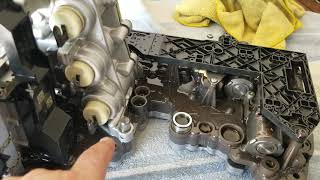
Typical fix: For S-Tronic (DL501), the fix is to install a Mechatronic repair kit which includes a new circuit board/harness. For Multitronic (0AW), the entire TCU is typically sent to a specialist electronics rebuilder for repair or replaced with a rebuilt unit. Simple replacement of the entire Mechatronic unit is also an option, but significantly more expensive. The replacement or repaired unit must be coded to the vehicle.
Est. part cost: $400-$1,500 for a repair kit or rebuilt TCU - Low or Contaminated Transmission Fluid 🟡 Medium Probability → Shop Transmission Assembly While not a design flaw, neglected fluid service can lead to debris from clutch wear contaminating the shared oil circuit for the hydraulics and mechatronics on the DL501, potentially affecting sensor operation. Low fluid levels can cause erratic hydraulic pressure, which the system may interpret as a sensor fault.
How to confirm: Check the transmission fluid level and condition according to the manufacturer's procedure. This requires the vehicle to be level and the fluid to be at a specific temperature (typically 35-45°C), checked via a fill plug (no dipstick). Burnt-smelling or dark, metallic fluid indicates a problem and likely accelerated wear.
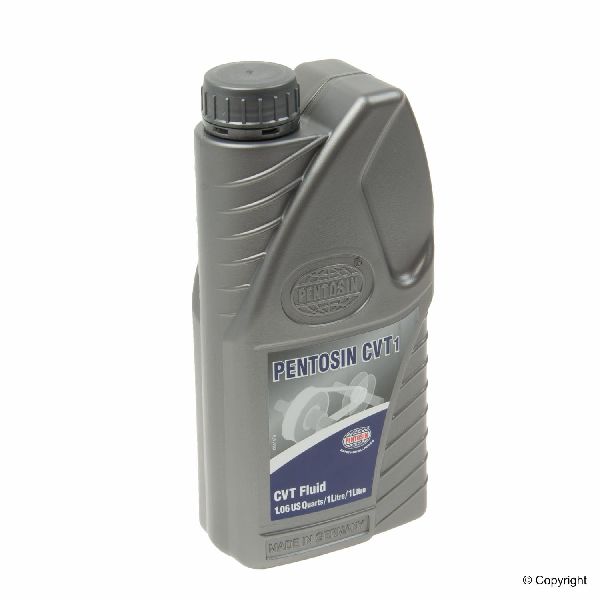
Typical fix: Perform a complete transmission fluid and filter change using the correct OEM-spec fluid (e.g., G052529A2 for S-Tronic). If the fluid is heavily contaminated, this may be a symptom of a larger internal transmission issue and a fluid change alone is unlikely to fix P0720.
Est. part cost: $150-$300 for fluid and filter - Damaged Wiring or Connectors ⚪ Low Probability The main harness connector to the transmission can be exposed to road debris and moisture. On Multitronic models, water ingress into the main plug is a known issue that can cause corrosion and short circuits, leading to various transmission faults including speed sensor codes.
How to confirm: Visually inspect the main electrical connector going into the transmission for any signs of corrosion (green crust), bent pins, or damaged wires. On Multitronic units, check for signs of water inside the connector plug itself. Test for continuity and voltage at the connector with a multimeter.
Typical fix: Clean the connector pins with contact cleaner or repair/replace the damaged section of the wiring harness. If the TCU connector is corroded, it may need to be replaced along with the harness section.
Est. part cost: $50-$250
Diagnosis Steps
- Scan for Codes: Use an OBD-II scanner, preferably an Audi-specific tool like VCDS or ODIS, to confirm P0720 and check for any other related transmission codes (e.g., P0721, P0722, P1793, P0706). Document all codes.
- Check Transmission Fluid: Verify the transmission fluid level and condition. This must be done with the vehicle level and the fluid at a specific temperature (35-45°C). Dark, burnt, or metallic fluid suggests severe internal wear and that a fluid change alone will not be the solution.
- Inspect External Wiring: Thoroughly check the main electrical connector at the transmission for corrosion, moisture intrusion, or physical damage. Disconnect it and look for bent or corroded pins.
- Advanced Diagnostics (Professional Recommended): A technician should use a tool like VCDS or ODIS to monitor live data from the transmission speed sensors (G195/G196) during a drive. A reading that is erratic, reads 0 RPM while the vehicle is moving, or doesn't match the input speed sensor reading confirms a sensor signal issue.
- Isolate the Fault: If the external wiring is intact and the live data confirms a sensor signal loss, the fault is almost certainly internal to the TCU/Mechatronics unit. For S-Tronic (DL501) and Multitronic (0AW) transmissions, the next step is removal of the unit for repair or replacement.
- Post-Repair Adaptation: After installing a repaired or new unit, a basic settings and adaptation procedure must be performed using a diagnostic tool to ensure the transmission shifts correctly.
Parts You'll Likely Need
- Mechatronic Repair Kit (for S-Tronic)
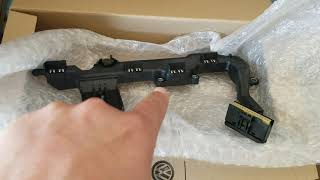
(OEM #0B5398009F (supercedes 0B5398009A/B/C/D/E))— This is the official Audi repair for internal circuit board failures on the DL501 S-Tronic transmission, which is the most common cause of P0720 on Quattro models. It includes the circuit board, solenoids, and other hardware.
Trusted brands: Audi Genuine Parts
OEM price range: $800-$1500
Aftermarket price range: $400-$800 (for aftermarket kits or individual components) - Transmission Control Unit (TCU) Repair Service (for Multitronic)
(OEM #0AW927156K, 0AW927156H, 0AW927156G)— For Multitronic (CVT) models, the speed sensor is part of the TCU (part numbers can vary). Since new units are prohibitively expensive, the common fix is to send the original unit to a specialist for rebuilding, where they repair the failed internal connections.
Trusted brands: ECU Testing, Module Repair Pro
Aftermarket price range: $400-$800
Related Codes That Often Appear With This One
- P0721 — This code, 'Output Speed Sensor Range/Performance', indicates the sensor signal is erratic, which is a common symptom of the same internal Mechatronic/TCU failure.
- P0722 — This code, 'Output Speed Sensor No Signal', points directly to a complete failure of the G195 sensor signal, often caused by a broken internal circuit on the TCU/Mechatronic board.
- P1793 — This is an Audi-specific code for 'Output Speed Sensor 2 (G196) No Signal', indicating a failure of the secondary output speed sensor, which is also located on the same internal control unit.
- P0706 — This code for the 'Transmission Range Sensor (F125) Circuit Range/Performance' often appears alongside speed sensor faults as it is part of the same internal Mechatronic/TCU assembly and can fail simultaneously.
Platform-Specific Known Issues
- The Multitronic (0AW) and S-Tronic (DL501) transmissions used in this generation are known for internal TCU/Mechatronic failures that manifest as speed sensor codes like P0720. This is a widely documented issue in owner forums.
Mechanic-Grade Diagnostic Values
- Output Speed Sensor (G195) Resistance — expected: 5.0 MΩ at room temperature. Failure: A significantly different reading or an open/short circuit indicates a failed sensor. This test requires removing the Mechatronic unit to access the sensor/harness.
- DL501 (S-Tronic) Clutch Solenoids (N436, N440) Resistance — expected: 4.8 Ω (± 0.1 Ω) at 25°C. Failure: A reading outside this narrow range indicates a failing solenoid coil, which can cause pressure regulation issues. These are often replaced with the repair kit.
- DL501 (S-Tronic) Main Pressure Solenoid (N472) Resistance — expected: 4.2 Ω (± 0.1 Ω) at 25°C. Failure: An incorrect resistance value points to a problem with the main pressure regulating solenoid, affecting overall hydraulic control.
- VCDS Live Data - Transmission Output Speed (G195) — expected: Should closely match vehicle speed and other wheel speed sensors while driving.. Failure: The value drops to 0, becomes erratic, or shows a wildly implausible number while the vehicle is in motion. This is the most common way to confirm the fault without disassembly.
Hidden / Shadow Codes Worth Checking
- P17D8: Torque limitation because of clutch temperature. This often accompanies speed sensor faults as the TCU loses confidence in its data and protects the clutches. (see via Audi-specific scanners like VCDS or ODIS.)
- P17E1 / P17E0: Gear positioner / actuator mechanical malfunction. These codes point to a failure within the Mechatronic unit's electro-hydraulic control and often appear with sensor faults as part of a systemic failure. (see via Audi-specific scanners like VCDS or ODIS.)
- P176A / P176B / P176C / P176D: Gear Selector 1-4 Cannot be Regulated. This indicates the TCU cannot control the hydraulic actuators for gear selection, a direct consequence of the internal circuit board or solenoid failure. (see via Audi-specific scanners like VCDS or ODIS.)
Scan Tool Commands That Help
- VCDS or ODIS: Basic Settings: Clutch Valve Calibration — Required after replacing the Mechatronic unit or repair kit to calibrate the hydraulic pressure applied to the clutch valves.
- VCDS or ODIS: Basic Settings: Distance Sensor Calibration — Required after repair to allow the TCU to relearn the physical travel distance of the gear selectors. The transmission will make audible clicking noises during this procedure.
- VCDS or ODIS: Basic Settings: Erase counter for start and stop processes — This is often the first step in the adaptation process, clearing learned values before new calibrations are performed.
- VCDS or ODIS: Basic Settings: Clutch Engagement Point Adaptation — The final step, performed during a test drive, to allow the TCU to learn the clutch bite points for smooth take-offs.
Wiring & Ground Locations
- Main Transmission Connector — A large, round, multi-pin connector on the side of the transmission case where the main vehicle harness connects to the Mechatronic unit.. This is the only external wiring point to test before condemning the internal Mechatronic unit. It can be disconnected by unscrewing a central bolt and rotating the housing. Check for corrosion, moisture, or bent pins here first.
- Transmission Ground Strap — A braided metal strap connecting the transmission case to the vehicle's chassis/frame.. A corroded or loose ground strap can cause unstable voltage and erratic signals for all transmission sensors, including the output speed sensor. While not a common cause, it should be inspected for integrity.
Real Owner Repair Stories
- AudiSRS.com forum user (Audi Q5 (with DL501 S-Tronic)) — Juddering when slowing to a stop, especially into 1st gear. No fault codes were present on VAG-COM.
❌ Tried (didn't work) Transmission fluid service, Multiple adaptation resets by the Audi dealer
✅ What actually fixed it The owner sold the car to avoid the inevitable and expensive Mechatronic repair that the symptoms pointed to, despite the lack of codes. This highlights that mechanical symptoms can precede logged electronic faults. - Reddit user in r/Audi (2009 Audi S5 3.0T Quattro (DL501)) — Mechatronic unit failure, leading to the car 'grenading itself'.
❌ Tried (didn't work) A repair costing thousands of pounds.
✅ What actually fixed it The expensive repair did not properly fix the issue, and the owner ultimately got rid of the car, highlighting the risk and difficulty of the repair even when performed professionally. - Reddit user in r/Audi (2011 Audi Q5 2.0T) — Gearbox started slipping two months after purchase.
✅ What actually fixed it The required fix was a Mechatronic replacement quoted at $15,000 AUD, confirming the extremely high cost of replacement for this known failure.
OEM Part Supersession History
0B5398009A/B/C/D/E→0B5398009F— Revisions to improve the reliability of the internal circuit board and sensor assembly for the DL501 S-Tronic.
Heads up: The latest version (F) is generally recommended. Some repair kits may or may not include new solenoids (e.g., 0B5398048D). It is highly recommended to use a kit that includes new solenoids to prevent near-term failure of the old ones.
Model Year Variations Within This Range
- 2008-2012 (Pre-facelift B8): These models used the first-generation DL501 S-Tronic transmission, which is significantly more prone to Mechatronic failure. Forum reports suggest the vast majority of failures occur in these earlier models.
- 2013 (B8.5 Facelift): This model year often has what is referred to as a 'gen 1.5' Mechatronic unit. It is more reliable than the first generation but still has a higher failure rate than later models.
- 2014-2016 (B8.5 Facelift): These models feature the most revised and reliable version of the DL501 Mechatronic unit. While failures are not impossible, they are far less common than in earlier B8 models.
Diagnostic Flowchart
Other Known Issues on This Vehicle
Issues unrelated to this code that are worth knowing about as an owner of this generation:
- Excessive Oil Consumption (2.0T Engine) 🔴 High — Very common on early B8 models (2008-2011) with the 2.0T EA888 engine. Can start as early as 50,000 miles. Caused by faulty piston rings. (Ref: Subject of multiple class-action lawsuits. Audi addressed this with updated piston rings and a consumption test procedure for warranty claims.)
- Timing Chain Tensioner Failure (2.0T Engine) 🔴 High — Common on pre-facelift B8 models (2008-2012). The original tensioner design can fail, allowing the timing chain to jump teeth, causing catastrophic engine damage. Warning signs include a rattling noise on cold starts. (Ref: Audi released an updated tensioner (Part # 06K109467K). This is a preventative maintenance item that should be checked or replaced on affected vehicles.)
- Failing Water Pump (Plastic Housing) 🟠 Medium — The original water pumps have plastic housings that can crack or leak prematurely, sometimes as early as 25,000-30,000 miles, but more commonly around 60,000-80,000 miles. Leaks are the primary symptom. (Ref: No recall, but it's a very common repair. Aftermarket all-aluminum housing replacements are available, though the failure point is often the gasket seal, which can fail even on aluminum units if there are oil leaks from above.)
- Multitronic (CVT) Transmission Unreliability 🔴 High → Shop Transmission Assembly — Affects FWD models. The 0AW Multitronic transmission has a reputation for issues, including jerking, shuddering, and complete failure, often starting around 100,000-150,000 km. The TCU failure causing P0720 is a major component of this unreliability.
- Carbon Buildup on Intake Valves (Direct Injection Engines) 🟠 Medium — A common issue for all direct-injection engines, including the 2.0T. Over time, carbon deposits build up on the back of the intake valves, leading to misfires, rough idle, and reduced performance. Typically requires cleaning every 50,000-80,000 miles.
Used vs. New Parts: Buying Guide for This Vehicle
When a used part is the smart pick: Purchasing a complete used Mechatronic unit is extremely high-risk and not recommended. The part is a known high-failure item and is coded to the donor vehicle's immobilizer. A better alternative to a new OEM unit is having your original unit rebuilt by a reputable specialist, which preserves the original coding.
Donor-vehicle mileage cap: roughly under 30000 miles for the part to have meaningful remaining life.
What to inspect on the donor part:
- Not applicable for a used Mechatronic, as internal failure cannot be seen.
- If buying a complete used transmission, look for a documented service history with on-time fluid changes.
- Avoid units from early model year B8s (2008-2012) as they have the highest failure rates.
OEM-only on this vehicle (don't cheap out):
- Mechatronic Repair Kit (0B5398009F)
Aftermarket brands forum-validated for this vehicle:
- ECU Testing (for rebuilding services)
- Sonnax (for individual valve body components, if not buying a full kit)
Brands owners have reported issues with on this vehicle:
- Unbranded, cheap Mechatronic repair kits from online marketplaces like eBay or AliExpress. Forum and video reports indicate a very high failure rate for these parts.
Real Owner Stories
Aggregated from forums and TSBs cited above. Mileages and costs reflect what owners reported in those sources.
Audi B8 S4 (DL501 Transmission)
Symptoms: Vehicle entered limp mode due to sensor failures.
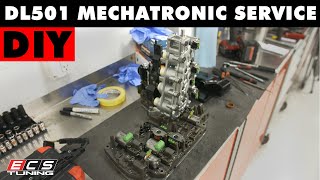
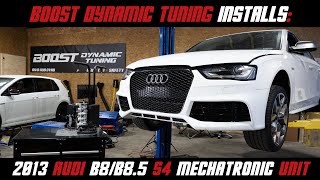
What fixed it: Removing and repairing the Mechatronic unit by replacing the wiring harness/circuit board.
Source hint: YouTube series by user R2SWIFT titled 'Audi B8 Mechatronic unit removal and repair'
Audi A4 B8 Multitronic (0AW Transmission)
Symptoms: Fault codes P0722 and P1793 present.
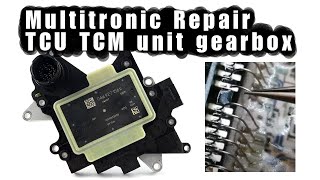
What fixed it: Disassembly of the TCU and repairing a broken solder joint on a pin connecting to the sensor module.
Source hint: YouTube video 'Audi A4 B8 Multitronic 8 TCU / TCM unit gearbox repair'
Audi A4 B8
Symptoms: Owners discussed high costs and diagnostic challenges at dealerships regarding Mechatronic unit failures.
What fixed it: Replacement of the Mechatronic unit.
Source hint: AudiWorld Forums thread 'Getting new Mechatronic unit - AudiWorld Forums'
Related OBD-II Codes
Frequently Asked Questions
My 2010 Audi A4 is showing 'Gearbox Malfunction: you can continue to drive' and P0720. Is this a common issue for the B8 platform?
Can I just replace the speed sensor on my S-Tronic (DL501) transmission to fix P0720?
What specific transmission fluid should I use for my Audi A4 S-Tronic to prevent sensor issues?
Is there a way to fix the P0720 code on a Multitronic (0AW) without buying a brand new Mechatronic unit?
My Audi A4 speedometer stopped working and the PRNDS light is flashing. Are these related to P0720?
Does the Audi Q5 or A5 have this same P0720 speed sensor problem?
Helpful Videos
We Have This Part in Stock

The information in this article is provided for general reference and educational purposes only. Vehicle specifications, procedures, and part compatibility can vary by production date, trim level, and region. Always consult your vehicle's factory service manual and verify part numbers before purchasing or performing repairs. Safety-critical components such as airbags, seat belts, and braking systems should be installed by a qualified professional.
- Audi A4:
- 🧭 Diagnostic Flowchart
- 🎬 Helpful Videos
- 🛍️ Shop This Part
- What's Unique About the 2008-2016 Audi A4
- Symptoms You May Notice
- Most Likely Causes
- Diagnosis Steps
- Parts You'll Likely Need
- Related Codes That Often Appear With This One
- Platform-Specific Known Issues
- Mechanic-Grade Diagnostic Values
- Hidden / Shadow Codes Worth Checking
- Scan Tool Commands That Help
- Wiring & Ground Locations
- Real Owner Repair Stories
- OEM Part Supersession History
- Model Year Variations Within This Range
- Other Known Issues on This Vehicle
- Used vs. New Parts: Buying Guide for This Vehicle
- Real Owner Stories
- Audi B8 S4 (DL501 Transmission)
- Audi A4 B8 Multitronic (0AW Transmission)
- Audi A4 B8
- Related OBD-II Codes
- Frequently Asked Questions
- 🎟️ Get 5% Off