

P0720 on 2011-2018 Audi A6: Output Speed Sensor Malfunction Causes and Fixes
On a 2011-2018 Audi A6, code P0720 typically points to a problem with the transmission Output Speed Sensor (OSS) circuit. This often results from a faulty sensor (specifically the G195 sensor) located within the transmission's mechatronic unit, which requires specialized repair or replacement of an internal circuit board module.
- P0720 on a 2011-2018 Audi A6 indicates a serious issue with the transmission's Output Speed Sensor circuit.
- Symptoms are significant and affect drivability, including harsh shifting and the vehicle entering a 'limp-mode'.
- The most likely cause is a fault within the internal mechatronic unit, which is a complex and expensive repair.
- Due to the complexity of the transmission and the need for specialized tools for diagnosis and programming, this is not a recommended DIY repair.
- Addressing the issue promptly is crucial to prevent further, more catastrophic transmission damage.
What's Unique About the 2011-2018 Audi A6
The 2011-2018 (C7 generation) Audi A6 primarily uses the sophisticated 7-speed S-Tronic (DL501/0B5) dual-clutch transmission for its Quattro models. In this gearbox, the output speed sensor (G195) is not an externally accessible, bolt-on part. Instead, it is integrated directly onto a printed circuit board (PCB) inside the complex mechatronic unit. This design means a sensor failure requires the removal of the transmission oil pan and the mechatronic unit itself to replace the internal sensor/circuit board module. This makes the repair significantly more involved and costly than on older vehicles.
Symptoms You May Notice
- Check Engine Light or Transmission Warning Light is on ('Gearbox malfunction: you can continue driving' message)
- Harsh, erratic, or delayed gear shifts, sometimes described as 'bucking' or 'clunking'.
- Transmission gets stuck in one gear or enters 'limp-mode'
- Inaccurate or non-functional speedometer
- Cruise control not working
- Increased fuel consumption
- Vehicle may hesitate or stall when coming to a stop.
- Inability to select reverse gear
- Replacing the entire transmission when only the mechatronic unit's internal circuit board is faulty.
- Replacing external wheel speed sensors, which are part of the ABS system, not the transmission's internal output speed sensor (G195).
- Assuming the entire mechatronic unit needs replacement when a more affordable repair kit would suffice.
Most Likely Causes
- Faulty Output Speed Sensor (Internal to Mechatronic Unit) 🔴 High Probability The speed sensors (G195 for output, G196 for input) are integrated into a circuit board module within the DL501 S-Tronic mechatronic unit. This board is a known weak point, susceptible to failure from heat cycles, vibration, and contamination from clutch wear particles in the shared oil circuit, leading to cracked solder joints or electronic failure.
How to confirm: A professional will use an advanced diagnostic scanner (like VCDS) to monitor live data from the output speed sensor (G195). If the reading is zero, erratic, or does not correspond with vehicle movement while other speed sensors (input, wheel speed) read correctly, the sensor module is faulty. This confirms the issue is internal to the transmission.
Typical fix: The mechatronic unit is removed from the transmission. A specialist will then replace the internal circuit board/sensor module with a repair kit. The entire mechatronic unit does not always need to be replaced. After installation, a transmission adaptation procedure must be performed.
Est. part cost: $800-$2500 - Low or Contaminated Transmission Fluid 🟡 Medium Probability → Shop Transmission Assembly Audi marketed the S-Tronic fluid as 'lifetime,' but experience has shown it degrades. The DL501 has two separate oil circuits; the circuit for the mechatronics and clutches is prone to contamination from clutch material wear. This metallic debris can interfere with the magnetic speed sensor's operation or cause premature wear on the mechatronic's solenoids and circuit board.
How to confirm: Check the transmission fluid level and condition. This must be done via a fill plug with the vehicle level and at a specific operating temperature (30-40°C). The fluid should be clear and at the correct level. Dark, burnt-smelling, or metallic fluid indicates contamination and likely internal wear.
Typical fix: Perform a transmission fluid and filter service for both the ATF (mechatronic) and MTF (gearbox) sides of the transmission. If the fluid is heavily contaminated, it may be a symptom of a larger internal failure, but a fluid change is often required as part of the mechatronic repair anyway.
Est. part cost: $200-$500 - Damaged Wiring or Corroded Connectors ⚪ Low Probability
How to confirm: Visually inspect the main wiring harness leading to the transmission's large, round electrical connector. Check for any signs of physical damage, fluid wicking, corrosion in the pins, or loose connections. Use a multimeter to test for continuity and shorts in the circuit between the TCM and the transmission connector.
Typical fix: Repair the damaged section of the wiring harness or clean/replace the corroded connector. This is less common as the fault is usually internal to the transmission housing.
Est. part cost: $50-$300
Rare But Worth Checking
- Faulty Transmission Control Module (TCM): → Shop Transmission Assembly While rare, the main logic portion of the TCM (which is part of the mechatronic unit) can fail, causing it to misinterpret a perfectly good sensor signal. This is usually diagnosed after a mechatronic repair kit (which includes the sensor board) fails to resolve the issue.
Diagnosis Steps
- Connect a professional-grade OBD-II scanner (VCDS is preferred for VW/Audi) to confirm the P0720 code and check for any other related transmission codes like P0715 or P0722.
- Use the scanner to monitor live data from the transmission sensors. Observe the Output Speed Sensor (G195) reading while driving. It should increase smoothly with vehicle speed. Compare it to the input speed (G196) and wheel speed sensor readings.
- Inspect the transmission fluid level and condition. Note that this requires the vehicle to be level and the fluid to be at a specific operating temperature (usually 30-40°C), and there is no dipstick.
- Visually inspect the main electrical connector and wiring harness going to the transmission for any obvious signs of damage, corrosion, or loose connections.
- If the sensor signal is absent/erratic and the external wiring is intact, the fault is highly likely internal to the transmission, pointing towards the mechatronic circuit board/sensor module.
- At this point, professional diagnosis is strongly recommended to differentiate between a repairable mechatronic circuit and a full unit replacement. The cost difference is substantial.
Parts You'll Likely Need
- Mechatronic Repair Kit (Circuit Board/Sensor Module)
(OEM #0B5398009F (and earlier revisions A-E))— This is the most common failure point for the P0720 code on the DL501 S-Tronic transmission. The kit contains the new circuit board with integrated speed sensors.
Trusted brands: Genuine Audi/VW, BorgWarner
OEM price range: $550-$800
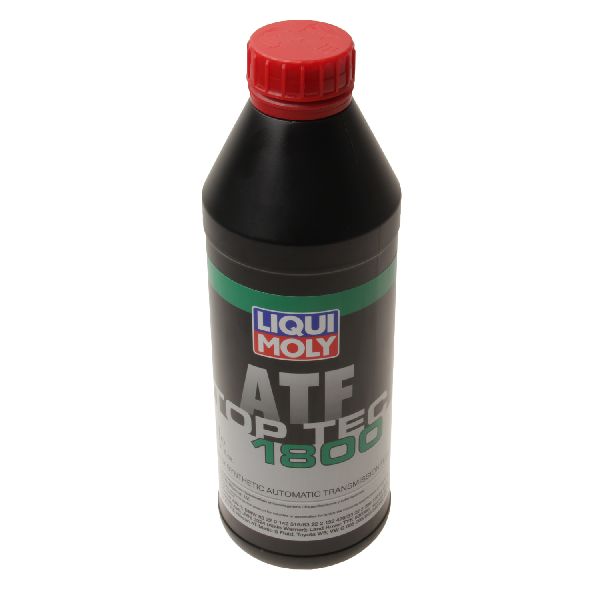
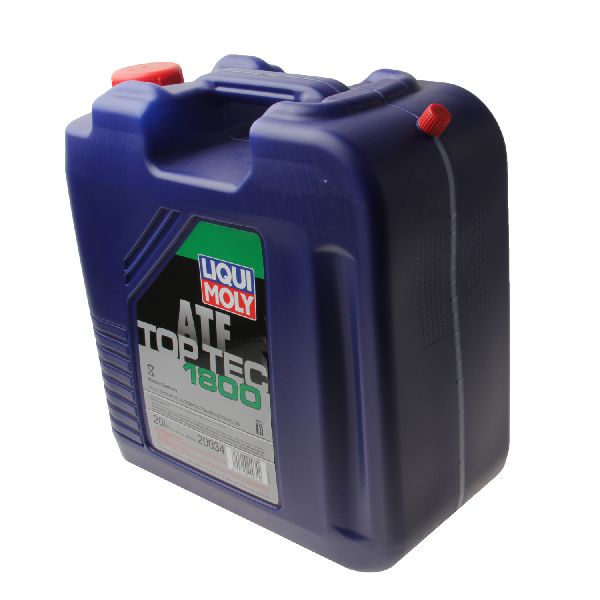
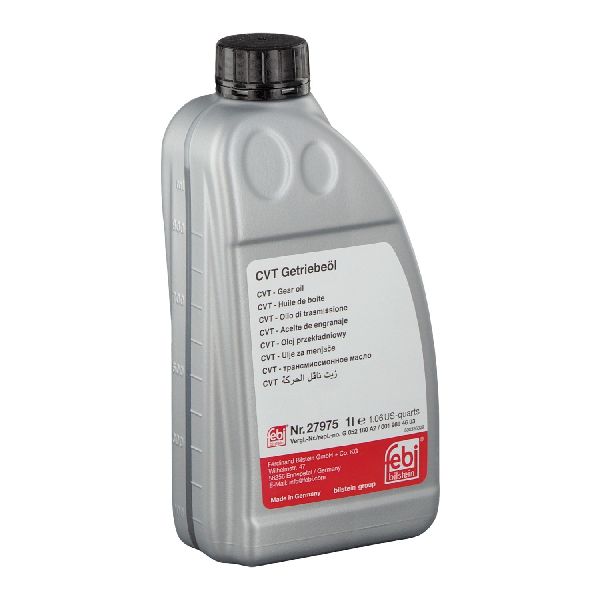
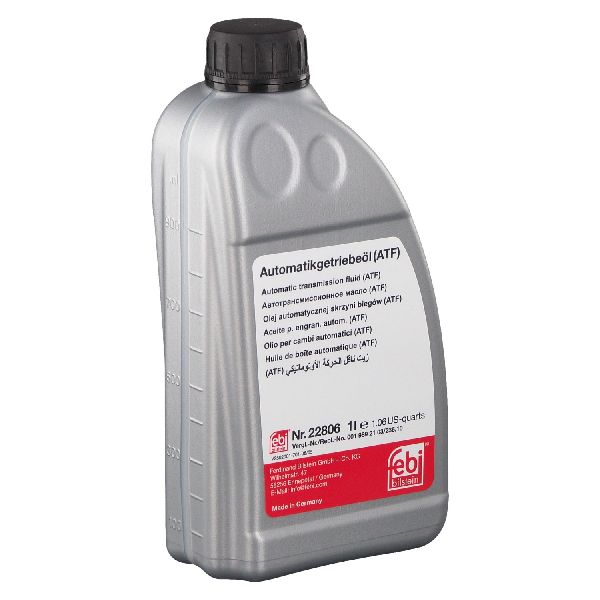
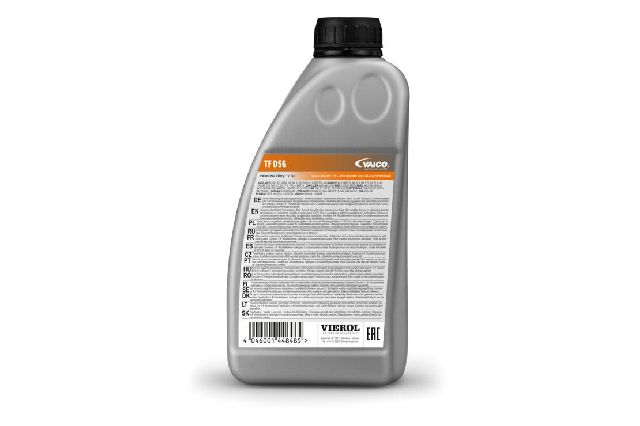
Aftermarket price range: $150-$400 - Transmission Fluid and Filter Kit — Required whenever the mechatronic unit is serviced. Clean fluid is essential for the health of the new or repaired unit. The DL501 requires both ATF for the clutch/mechatronic side and MTF for the gear side.
Trusted brands: Genuine Audi/VW, Liqui Moly, Pentosin, FCP Euro
OEM price range: $250-$400
Aftermarket price range: $150-$250
Related Codes That Often Appear With This One
- P0715 — This code relates to the Input/Turbine Speed Sensor (G196). Since both the input and output sensors are often on the same circuit board within the mechatronic unit, a failure of the board can trigger both codes simultaneously.
- P0721, P0722, P0723 — These are related codes that point to specific faults with the Output Speed Sensor circuit, such as range/performance issues (P0721), no signal (P0722), or intermittent signal (P0723), further specifying the nature of the malfunction.
- P17D8 — Torque limitation because of clutch temperature. This fault often accompanies mechatronic circuit board failures in the DL501 transmission.
Technical Service Bulletins (TSBs) & Recalls
- Audi TSB 2026748/4 (or similar variations) has been issued in the past for S-Tronic mechatronic issues, often involving faults with the wiring harness and sensor module, leading to various shifting problems and fault codes, including P0720.
Platform-Specific Known Issues
- The 7-Speed S-Tronic DL501 (0B5) transmission used in Quattro models is the primary unit affected by this issue. Early production models (pre-2013) are considered more prone to mechatronic failure.
- Some owners report that the issue appears intermittently at first, often when the transmission fluid is hot, before becoming a persistent fault.
- While the ZF 8-speed automatic was also available on the C7 A6 (typically with the 3.0 TDI engine in some markets), the P0720 fault is most famously and commonly associated with the S-Tronic's mechatronic unit.
Mechanic-Grade Diagnostic Values
- Output Speed Sensor (G195) Resistance — expected: 5.0M Ohms at room temperature. Failure: A reading significantly different from 5.0M Ohms suggests a faulty sensor. However, this test is difficult as the sensor is internal.
- VFS Clutch Solenoids (N436, N440) Resistance — expected: 4.8 Ω (± 0.1 Ω) at 25°C. Failure: A reading outside this narrow range indicates a failing solenoid coil, which is part of the mechatronic unit.
- Main Pressure Solenoid (N472) Resistance — expected: 4.2 Ω (± 0.1 Ω) at 25°C. Failure: An out-of-spec reading points to a fault in the main pressure regulating solenoid.
- VCDS Live Data - Transmission Output Speed (G195) — expected: RPM should increase smoothly and match vehicle speed.. Failure: The reading remains at 0 RPM or is erratic while the vehicle is moving, while wheel speed sensors show a correct speed.
Hidden / Shadow Codes Worth Checking
- P179E00 / P179F00: These codes indicate a malfunction or electrical error in the drive position sensor, which is part of the same internal mechatronic circuit board as the speed sensors. Their presence strongly supports an internal mechatronic failure. (see via VCDS or other professional VW/Audi diagnostic tools.)
- P1740: Clutch Temperature Monitoring fault. This is often triggered as a secondary fault when the mechatronic unit cannot properly regulate clutch pressure due to faulty sensor inputs or solenoid issues. (see via VCDS or other professional VW/Audi diagnostic tools.)
- P0726: RPM Signal from ECU, Implausible Signal. The TCM may log this fault when the output speed sensor signal (G195) conflicts with the engine speed signal it receives from the ECU, pointing to a sensor data mismatch. (see via VCDS or other professional VW/Audi diagnostic tools.)
Scan Tool Commands That Help
- VCDS (VAG-COM) or ODIS: Basic Settings - Erase counter for start and stop processes — This is one of the first steps in the adaptation sequence after replacing the mechatronic repair kit. It clears old learned values before new calibrations are performed.
- VCDS (VAG-COM) or ODIS: Basic Settings - Clutch valve calibration — This procedure, done with the engine running, calibrates the pressure valves for the clutches. It's a mandatory step after mechatronic repair to ensure smooth engagement.
- VCDS (VAG-COM) or ODIS: Basic Settings - Distance sensor calibration — This calibrates the sensors that detect the position of the gear selector forks. It is performed after the clutch valve calibration and is essential for proper gear selection.
- VCDS (VAG-COM) or ODIS: Basic Settings - Clutch engagement point adaptation — This final step allows the TCM to find the 'kiss point' for both clutches, ensuring smooth take-offs from a stop. It can be initiated with the scan tool and is finalized by driving the vehicle.
Wiring & Ground Locations
- Transmission Main Connector (T17) — Large, round multi-pin connector on the side of the transmission case.. This is the primary electrical interface between the car's wiring harness and the internal mechatronic unit. Corrosion or damage here can interrupt the signal from the G195 sensor, though it's less common than an internal fault.
- Engine Compartment Ground Points — There are several main ground points in the engine bay. One key location on some C7 models is on the chassis rail near the alternator.. A poor ground connection for the engine/transmission can introduce electrical noise or voltage drops that could potentially affect sensor readings, although it is a rare cause for this specific code.
Real Owner Repair Stories
- UroTuning Customer Review (Audi S5 (B8 chassis, uses same DL501 transmission)) — Unspecified transmission problems.
✅ What actually fixed it Replacing the mechatronic repair kit (Part No. 0B5398009F) solved all the problems. The user noted this was a TSB item for their vehicle. - YouTube User Comment (Audi A4 Allroad (B8 chassis, uses same DL501 transmission)) — Gearbox Malfunction error with codes P179E00 and P179F00 (Drive Position Sensor Malfunction).
❌ Tried (didn't work) The user did not report trying other fixes first.
✅ What actually fixed it A full mechatronics and clutch rebuild was required. The fault codes pointed to the sensor module within the mechatronic unit, which is the same board that houses the G195 speed sensor.
OEM Part Supersession History
0B5398009A, 0B5398009B, 0B5398009C, 0B5398009D, 0B5398009E→0B5398009F— Revisions were made to improve the durability of the circuit board, wiring, and sensor components to address the common failure patterns.
Heads up: All previous revisions are replaced by the 'F' version. Using an older revision is not recommended as it will have the original design flaws.
Model Year Variations Within This Range
- 2011-2018 (All C7): The gear selector fork adjustment measurement during mechatronic re-installation depends on the manufacturing date of the mechatronic unit. Units made before L31B1137 require a 28mm measurement, while units made after require a 32mm measurement. This is a critical detail for a successful repair.
- C7 (2011-2015) vs C7.5 (2016-2018): The C7.5 (facelift) models are reported to have an 'upgraded' DL501 transmission, though specific internal changes related to the mechatronic sensor board are not well-documented. However, failures are still reported on the later models, suggesting the fundamental design issue was not completely eliminated.
Diagnostic Flowchart
Other Known Issues on This Vehicle
Issues unrelated to this code that are worth knowing about as an owner of this generation:
- 3.0T Supercharged - Timing Chain Tensioner Wear 🔴 High — Becomes a concern around 80,000-120,000 miles. A rattling noise on cold starts for 1-2 seconds is the primary warning sign.
- 3.0T Supercharged - Water Pump & Thermostat Failure 🔴 High — Common failure item, often between 60,000-100,000 miles. The plastic components become brittle and crack, leading to coolant leaks and potential overheating. (Ref: Customer satisfaction campaigns were issued for some early models.)
- 3.0T Supercharged - PCV Valve (Oil Separator) Failure 🟠 Medium — Common failure that can occur at various mileages. Symptoms include a whistling noise, high oil consumption, rough idle, and sometimes coolant contamination in the oil. (Ref: An updated PCV valve was released for later models.)
- Excessive Oil Consumption (2.0T Engines) 🔴 High — Primarily affects earlier 2.0T TFSI engines (pre-2012) due to piston ring design, but can still be a factor on later models. (Ref: Subject of class-action lawsuits and service campaigns for piston/ring replacement on affected engines.)
- Carbon Buildup on Intake Valves 🟠 Medium — Inherent to all direct-injection engines (both 2.0T and 3.0T). Typically requires cleaning every 60,000-80,000 miles to prevent misfires and rough idle.
Used vs. New Parts: Buying Guide for This Vehicle
When a used part is the smart pick: A complete used mechatronic unit is generally NOT recommended. The internal circuit board is a known high-failure item, and a used unit carries a very high risk of having the same fault or developing it shortly after installation. A used part only makes sense if it has documented proof of being a very recent, low-mileage replacement with the latest part revision.
Donor-vehicle mileage cap: roughly under 30000 miles for the part to have meaningful remaining life.
What to inspect on the donor part:
- Verify the part number is the latest revision (0B5398009F for the repair kit).
- Ask for the donor vehicle's VIN to check its service history for any transmission-related repairs.
- If buying a complete used transmission, check the fluid color and smell. Any sign of burnt fluid or heavy metal debris is a major red flag.
OEM-only on this vehicle (don't cheap out):
- Mechatronic Repair Kit (Circuit Board)
- Transmission Control Module (TCM)
Aftermarket brands forum-validated for this vehicle:
- BorgWarner (often the OEM supplier for solenoids and clutch components)
- Reputable remanufacturing specialists (e.g., ECU Testing, Mechatronik-Zentrum) who offer warranties on rebuilt units.
Brands owners have reported issues with on this vehicle:
- Unnamed, no-brand repair kits from online marketplaces. These often use inferior components that fail quickly. The labor involved in this repair is too high to risk using a low-quality part.
Real Owner Stories
Aggregated from forums and TSBs cited above. Mileages and costs reflect what owners reported in those sources.
2012 Audi A6 C7
Symptoms: Multiple warning lights including a 'gearbox malfunction' message, indicative of complex electronic issues.
What fixed it: Mechatronic repair/replacement as discussed in the context of specialist repair needs.
Source hint: AudiWorld Forums - A6 (C7 Platform) Discussion thread titled 'Help, need some advice'
Audi A6 (C7 Platform)
Symptoms: Owner seeking specialist repair recommendations in the Highlands for a failed mechatronic unit.
What fixed it: Mechatronic unit repair.
Source hint: Audi Owners Club (UK) - A6 Mechatronic repair recommendations in highlands
Audi A6 3.0T (DL501 Transmission) — ~100000 miles
Symptoms: Shifting problems and fault codes including P0720; issues related to the inadequate cooling system and sensor module failure.
What fixed it: Replacement of the internal circuit board/sensor module within the mechatronic unit.
Source hint: Audi Revolution - DL501 OB5 Mechatronic discussion
Related OBD-II Codes
Frequently Asked Questions
Does Audi TSB 2026748/4 apply to my A6's S-Tronic transmission issues?
Is the P0720 code more common on the ZF 8-speed or the 7-speed S-Tronic A6?
I have a 2012 Audi A6; am I at higher risk for this mechatronic failure?
Can I just change the fluid to fix the 'Gearbox malfunction' message on my A6?
Why does my A6 only show the transmission warning light when the car is hot?
Do I need to replace the entire mechatronic unit for a P0720 code?
Helpful Videos
We Have This Part in Stock

The information in this article is provided for general reference and educational purposes only. Vehicle specifications, procedures, and part compatibility can vary by production date, trim level, and region. Always consult your vehicle's factory service manual and verify part numbers before purchasing or performing repairs. Safety-critical components such as airbags, seat belts, and braking systems should be installed by a qualified professional.
- Audi A6:
- 🧭 Diagnostic Flowchart
- 🎬 Helpful Videos
- 🛍️ Shop This Part
- What's Unique About the 2011-2018 Audi A6
- Symptoms You May Notice
- Most Likely Causes
- Rare But Worth Checking
- Diagnosis Steps
- Parts You'll Likely Need
- Related Codes That Often Appear With This One
- Technical Service Bulletins (TSBs) & Recalls
- Platform-Specific Known Issues
- Mechanic-Grade Diagnostic Values
- Hidden / Shadow Codes Worth Checking
- Scan Tool Commands That Help
- Wiring & Ground Locations
- Real Owner Repair Stories
- OEM Part Supersession History
- Model Year Variations Within This Range
- Other Known Issues on This Vehicle
- Used vs. New Parts: Buying Guide for This Vehicle
- Real Owner Stories
- 2012 Audi A6 C7
- Audi A6 (C7 Platform)
- Audi A6 3.0T (DL501 Transmission) — ~100000 miles
- Related OBD-II Codes
- Frequently Asked Questions
- 🎟️ Get 5% Off