

P0720 on 2009-2017 Chevrolet Traverse: Output Speed Sensor Causes and Fixes
P0720 on a 2009-2017 Traverse indicates a fault in the Output Speed Sensor (OSS) circuit. This often causes harsh shifting, an inaccurate speedometer, and can put the transmission in 'limp mode'. The sensor is located inside the transmission, making replacement complex. The most common causes are a failed sensor, wiring issues, or contaminated fluid, often resulting from the failure of the 3-5-R wave plate.
- P0720 on a 2009-2017 Traverse points to a problem with the Output Speed Sensor circuit, causing serious shifting problems.
- Before replacing the sensor, always check the transmission fluid. Dark, burnt, or metallic fluid suggests a deeper mechanical problem, like the common wave plate failure, which must be addressed first.
- The most likely causes are a bad sensor, contaminated fluid, or damaged wiring.
- Due to the potential for the sensor to be internal and the risk of misdiagnosis, professional service is strongly recommended.
- Do not continue driving with these symptoms, as you risk severe and expensive damage to the transmission.
What's Unique About the 2009-2017 Chevrolet Traverse
The 2009-2017 Traverse uses the GM 6T70/6T75 6-speed automatic transmission. A widely documented issue with these transmissions is the failure of the '3-5-R' clutch wave plate. When this plate breaks, it sends hardened metal debris throughout the transmission. This contaminated fluid can clog solenoids and damage sensors like the Output Speed Sensor, leading to codes like P0720. Therefore, this code may be an early symptom of a more significant internal transmission problem requiring a rebuild. The sensor itself is located internally, requiring removal of the valve body for access. The Transmission Control Module (TCM) is also located inside the transmission as part of the TEHCM (Transmission Electro-Hydraulic Control Module), making it susceptible to heat and vibration-related failures.
Symptoms You May Notice
- Check Engine Light is on
- Harsh, erratic, or delayed gear shifts
- Transmission stuck in one gear (limp mode)
- Inaccurate or non-functional speedometer
- Cruise control not working
- Engine stalling when coming to a stop
- Reduced fuel economy
- ABS or Traction Control lights may illuminate
- Replacing the Output Speed Sensor without checking the fluid condition first. If the fluid is full of metal debris from a wave plate failure, the new sensor will likely fail again quickly.
- Replacing the entire transmission valve body or TEHCM when only the external wiring or the sensor itself is faulty.
- Mistaking the P0720 Output Speed Sensor for the P0500 Vehicle Speed Sensor, which can be a different sensor on some vehicles.
Most Likely Causes
- Failed Output Speed Sensor (OSS) 🔴 High Probability The sensor is internal and bathed in transmission fluid. Contamination from normal wear or catastrophic component failure (like the wave plate) can destroy the sensor's electronics. Heat and high mileage also contribute to failure.
How to confirm: Use a professional scan tool to monitor the OSS data stream while driving. If the reading is erratic, zero, or doesn't match the vehicle's actual speed, the sensor is likely faulty. The sensor itself is a simple 2-pin magnetic pickup; however, testing it requires accessing it inside the transmission.
Typical fix: Replace the Output Speed Sensor. This requires removing the transmission side cover and the valve body to access the sensor.
Est. part cost: $30-$100 - Contaminated or Low Transmission Fluid 🟡 Medium Probability → Shop Transmission Assembly As mentioned, wave plate failure is a known issue that contaminates the fluid with metal shavings. These transmissions can also develop leaks over time, leading to low fluid levels which cause overheating and shifting problems.
How to confirm: Check the transmission fluid level and condition via the dipstick (on earlier models) or check plug. The fluid should be bright red and translucent. If it is dark, black, has a burnt smell, or contains visible metallic particles ('glitter'), it indicates internal wear or damage.
Typical fix: If the fluid is only slightly dirty, a fluid and filter change might resolve the issue. If significant contamination or metallic debris is found, a transmission rebuild or replacement is almost certainly necessary. Replacing only the sensor will not be a lasting repair.
Est. part cost: $50-$200 for fluid and filter; $3000-$5000 for rebuild/replacement. - Damaged Wiring or Connectors 🟡 Medium Probability The main transmission connector and harness are exposed to heat and the elements. The sensor's wiring is internal to the transmission, but can also be damaged during other repairs or from debris. Poor grounding is a known issue on GM platforms and can cause erratic sensor readings.
How to confirm: Visually inspect the main external wiring harness and connector going to the transmission for any signs of corrosion, breaks, or loose pins. Test the internal sensor wiring for continuity once the valve body is accessed. Check main battery and chassis ground connections for corrosion or looseness.
Typical fix: Repair the damaged section of the external wiring or replace the connector pigtail. Internal harness issues often necessitate replacement of the entire internal harness assembly during a valve body service.
Est. part cost: $20-$100
Rare But Worth Checking
- Faulty Transmission Control Module (TCM) or Powertrain Control Module (PCM): → Shop Engine Control Module (ECM) The TCM is located inside the transmission on the valve body (it is often called a TEHCM - Transmission Electro-Hydraulic Control Module). While it can fail, it is rare. All other possibilities, especially the sensor, wiring, and fluid condition, should be exhaustively ruled out before considering replacing the TCM, as it is expensive and requires special programming.
Diagnosis Steps
- Scan the vehicle's computer for P0720 and any other related trouble codes.
- Check the level and condition of the transmission fluid. Look for a dark color, burnt smell, or metallic particles. This is the most critical first step.
- If fluid is contaminated with metal, suspect internal failure (e.g., wave plate) and stop diagnosis. The transmission needs to be removed for inspection/rebuild.
- Perform a thorough visual inspection of the main transmission wiring harness and connector for any signs of damage, corrosion, or loose connections.
- Use a scan tool with live data capability to monitor the Output Speed (OSS) PID while driving. The reading should be smooth and correspond to vehicle speed.
- If the signal is erratic or absent and the fluid is clean, the fault is likely the sensor or internal wiring. This confirms the need to open the transmission side cover.
- Once accessed, test the sensor's internal resistance with a multimeter and compare it to the manufacturer's specifications. Check for continuity on the internal harness between the sensor connector and the main TEHCM connector.
- If the sensor and internal wiring test good, the issue may lie with the Transmission Control Module (TCM/TEHCM), which is a less common failure.
Parts You'll Likely Need
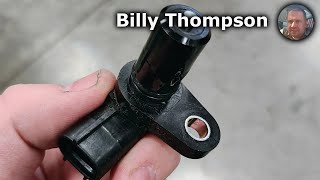
- Transmission Output Speed Sensor
(OEM #24253027 / 24262388 (Verify by VIN))— This is the most direct cause of a P0720 code when the circuit itself is intact and fluid is clean. Note that multiple part numbers may exist and have been superseded.
Trusted brands: ACDelco, General Motors
OEM price range: $40-$90
Aftermarket price range: $25-$60 - Transmission Fluid (DEXRON-VI) — Required for any repair that involves opening the transmission, such as replacing the internal sensor. A full fluid and filter change is necessary.
Trusted brands: ACDelco, Valvoline, Castrol
OEM price range: $10-$15 per quart
Aftermarket price range: $8-$12 per quart - 3-5-Reverse Clutch Wave Plate
(OEM #4YMT96)— If metal is found in the pan, this is the likely culprit. Replacing it requires a full transmission rebuild.
Trusted brands: ACDelco
OEM price range: $15-$30
Aftermarket price range: $10-$20
Related Codes That Often Appear With This One
- P0722 — This code for 'Output Speed Sensor Circuit No Signal' is a more specific version of P0720 and often appears alongside it.
- P0776 — This code relates to 'Pressure Control Solenoid 'B' Performance or Stuck Off'. It is commonly triggered by the same internal transmission issues (like wave plate failure and resulting debris) that can cause P0720 in the Traverse.
- P0723 — Indicates an intermittent signal from the Output Speed Sensor, which is closely related to the general malfunction reported by P0720.
Technical Service Bulletins (TSBs) & Recalls
- TSB 14404B: Addresses the fractured 3-5-R wave plate, which results in loss of 3rd, 5th, and reverse gears and contaminates the transmission with debris, a root cause for sensor-related codes like P0720. This TSB applied to early models of the Traverse and its platform mates.
- TSB 23-NA-072: Discusses transmission shudder issues which can be related to fluid contamination and torque converter problems that may influence sensor readings.
- TSB 09-07-30-012F: An earlier TSB also addressing the 3-5-R wave plate failure on 6T70/75 transmissions.
Platform-Specific Known Issues
- A known issue for the 6T70/6T75 transmission in this vehicle is the failure of the 3-5-R clutch wave plate. This failure releases metal debris into the transmission fluid, which can damage sensors and solenoids, leading to codes like P0720. GM issued TSB 14404B for this issue.
- The Output Speed Sensor (OSS) is confirmed to be internal, located on the valve body. This makes replacement a significant job, unlike many vehicles where it is an easily accessible external sensor.
- Some owners report a transmission 'shudder' at low speeds, which can be a precursor to more serious transmission failure. While not directly P0720, it points to the general sensitivity of these transmissions.
Mechanic-Grade Diagnostic Values
- Output Speed Sensor (OSS) Resistance — expected: 560 to 680 Ohms (typical for 2-wire sensors). Failure: A reading significantly outside this range, or an open/short circuit, indicates a faulty sensor.
- Sensor Reference Voltage at TCM — expected: 5 V ± 0.5 V. Failure: Voltage outside this range points to a problem with the TCM or the wiring, not necessarily the sensor.
- Ground Circuit Resistance at TCM — expected: < 0.1 Ω. Failure: Higher resistance indicates a poor ground connection, which can cause erratic signals.
Scan Tool Commands That Help
- GDS2/Tech2: TCM/ECM Reprogramming — This is mandatory after replacing the TEHCM (Transmission Electro-Hydraulic Control Module). The new module must be programmed with the vehicle's VIN and the latest software calibrations to function.
- GDS2/Tech2: Live Data - Transmission Output Speed — This is the primary diagnostic step to confirm a faulty sensor. While driving, the OSS PID should show a smooth, increasing speed that correlates with the vehicle's actual speed. Erratic jumps, dropouts to zero, or no reading at all while the vehicle is moving points to a fault in the sensor or its circuit.
Wiring & Ground Locations
- G103 — Rear of the left-hand (LH) engine cylinder head.. A poor connection at this engine ground can cause a variety of electrical issues, including erratic sensor readings for transmission components.
- G104, G105, G106 — Underhood, related to the main battery ground cable connections.. Improper grounding of the battery, especially in cases of battery relocation or corrosion, can lead to multiple transmission-related DTCs as the control modules seek a stable ground. The battery must be grounded directly to the engine block.
- TEHCM Connector — Internal to the transmission, connecting to the Transmission Electro-Hydraulic Control Module on the valve body.. The OSS signal wires terminate here. After confirming the external harness is good, this internal connector and its wiring become the next point of inspection, requiring removal of the transmission side cover.
Real Owner Repair Stories
- AR15.com user (2009 Saturn Outlook (same 6T75 platform), 161k miles, 10/2008 production date) — No symptoms reported; owner was performing preemptive maintenance due to the known wave plate issue.
✅ What actually fixed it The owner preemptively replaced the 3-5-R wave plate while also replacing motor/tranny mounts and TEHCM pressure sensor discs. The job was done with the transmission in the chassis and was described as 'not terrible', providing peace of mind against a future catastrophic failure.
OEM Part Supersession History
24253027→24262388— Part consolidation and potential design updates for reliability.
Heads up: Part number 24262388 is listed as a replacement for 24256878, 24247840, 24247568, and others. Always verify the correct part number by VIN, but 24262388 is the most likely service part.
Model Year Variations Within This Range
- 2009-2012 (Gen 1) vs 2013-2017 (Gen 2): The 6T70/6T75 transmission underwent a significant update for the 2013 model year, creating 'Gen 1' and 'Gen 2' versions. Changes were made to the 3-5-R clutch housing, wave plates, pistons, and valve body components to improve durability and shift feel. Many internal components, including rebuild kits and TEHCMs, are not interchangeable between generations. The RPO code on the vehicle's service parts label can confirm which generation is installed.
- 2009-2012: Early models are most susceptible to the original 3-5-R wave plate failure. While updated parts were used in later years and in rebuilds, any Gen 1 transmission that has not been rebuilt is at high risk. GM's special coverage for this issue (TSB 14404B) primarily targeted 2007-2009 models across the platform.
Diagnostic Flowchart
Other Known Issues on This Vehicle
Issues unrelated to this code that are worth knowing about as an owner of this generation:
- Premature Timing Chain Stretch 🔴 High — Very common, especially on 2009-2012 models. Often occurs between 70,000 and 120,000 miles. Can lead to catastrophic engine failure if ignored. (Ref: GM Special Coverage #11340C (now expired) covered this issue for 10 years/120,000 miles.)
- Power Steering Pump/Rack Failure 🔴 High — Commonly reported failure leading to loss of power assist, especially at low speeds. Can occur under 100,000 miles. (Ref: GM Special Coverage #14329 covered pump and gear replacement for certain model years up to 150,000 miles.)
- Water Pump Failure 🟠 Medium — Leaks from the weep hole are a common sign of failure, often occurring around 100,000 miles. Can lead to overheating if not addressed. (Ref: GM offered an extended warranty for this part on some earlier models.)
- 3-5-R Clutch Wave Plate Fracture 🔴 High — A well-documented failure in the 6T70/6T75 transmission, especially in 2009-2012 models, causing loss of 3rd, 5th, and Reverse gears. (Ref: TSB 14404B / Special Coverage Adjustment.)
- EVAP Purge Valve Failure 🟡 Low — A common cause for a check engine light (often code P0496) and can cause rough running after refueling.
Used vs. New Parts: Buying Guide for This Vehicle
When a used part is the smart pick: A complete, used transmission assembly from a low-mileage donor vehicle can be a cost-effective choice if the original transmission has suffered catastrophic internal damage from a wave plate failure. It is generally more reliable than a quick, localized rebuild and cheaper than a fully remanufactured unit.
Donor-vehicle mileage cap: roughly under 75000 miles for the part to have meaningful remaining life.
What to inspect on the donor part:
- Verify the donor vehicle's mileage and year (a later model year, especially 2013+, is preferable as it may have Gen 2 updates).
- If possible, inspect the transmission fluid from the donor unit. It should be reddish and clear, not black, burnt-smelling, or full of metallic particles.
- Ask for a short warranty (e.g., 30-90 days) from the salvage yard to protect against an immediate failure.
OEM-only on this vehicle (don't cheap out):
- Transmission Electro-Hydraulic Control Module (TEHCM): Due to the requirement for VIN-specific programming, an OEM or a reputable remanufactured and pre-programmed TEHCM is critical. A used module from another vehicle will not work without being reprogrammed by a dealer or specialized shop.
- 3-5-R Wave Plate: When rebuilding, always use a new, updated design wave plate from a reputable source like ACDelco or a major rebuild kit provider to prevent a repeat failure.
Aftermarket brands forum-validated for this vehicle:
- Transtec: Widely regarded as providing high-quality gasket and seal kits for transmission rebuilds.
- Raybestos: Offers comprehensive master and deluxe rebuild kits for both Gen 1 and Gen 2 versions of the 6T70/6T75.
- Sonnax: Produces well-regarded problem-solver parts, such as shift correction kits and pressure switch repair kits, that address known factory weaknesses.
Brands owners have reported issues with on this vehicle:
- Unbranded, no-name sensors or electrical components from online marketplaces. Failure rates are high, and given the labor involved to replace this internal sensor, the risk is not worth the small cost savings.
Real Owner Stories
Aggregated from forums and TSBs cited above. Mileages and costs reflect what owners reported in those sources.
2009 Chevrolet Traverse — ~100000 miles
Symptoms: Loss of 3rd, 5th, and Reverse gears; transmission contaminated with debris.
What fixed it: Repair addressed under TSB 14404B / Special Coverage Adjustment for the 3-5-R clutch wave plate fracture.
Source hint: TSB 14404B / Special Coverage Adjustment
2010 Buick Enclave (Platform Mate) — ~110000 miles
Symptoms: P0720 code appearing in conjunction with wave plate failure symptoms.
What fixed it: Transmission rebuild or replacement due to internal metal debris from the wave plate damaging the sensor.
Source hint: enclaveforum.net - Owners report P0720 in conjunction with wave plate failure
2009-2012 Chevrolet Traverse — ~85000 miles
Symptoms: Engine stalling when coming to a stop and erratic shifting.
What fixed it: Replacement of the Output Speed Sensor and cleaning of contaminated fluid caused by internal wear.
Source hint: Article Context - Symptoms and Common Causes
Related OBD-II Codes
Frequently Asked Questions
Is the P0720 code on my 2009-2012 Traverse related to the known wave plate issue?
Can I replace the Output Speed Sensor (OSS) on my Traverse myself to fix P0720?
Does TSB 14404B cover the cost of my P0720 repair?
My Traverse is shuddering at low speeds and now has a P0720 code; are they related?
Why did my mechanic say I need a whole new transmission for a simple sensor code?
Helpful Videos

We Have This Part in Stock

The information in this article is provided for general reference and educational purposes only. Vehicle specifications, procedures, and part compatibility can vary by production date, trim level, and region. Always consult your vehicle's factory service manual and verify part numbers before purchasing or performing repairs. Safety-critical components such as airbags, seat belts, and braking systems should be installed by a qualified professional.
- Chevrolet Traverse:
- 🧭 Diagnostic Flowchart
- 🎬 Helpful Videos
- 🛍️ Shop This Part
- What's Unique About the 2009-2017 Chevrolet Traverse
- Symptoms You May Notice
- Most Likely Causes
- Rare But Worth Checking
- Diagnosis Steps
- Parts You'll Likely Need
- Related Codes That Often Appear With This One
- Technical Service Bulletins (TSBs) & Recalls
- Platform-Specific Known Issues
- Mechanic-Grade Diagnostic Values
- Scan Tool Commands That Help
- Wiring & Ground Locations
- Real Owner Repair Stories
- OEM Part Supersession History
- Model Year Variations Within This Range
- Other Known Issues on This Vehicle
- Used vs. New Parts: Buying Guide for This Vehicle
- Real Owner Stories
- 2009 Chevrolet Traverse — ~100000 miles
- 2010 Buick Enclave (Platform Mate) — ~110000 miles
- 2009-2012 Chevrolet Traverse — ~85000 miles
- Related OBD-II Codes
- Frequently Asked Questions
- 🎟️ Get 5% Off