

P0720 on 2011-2014 Chrysler 200: Output Speed Sensor Causes and Fixes
On a 2011-2014 Chrysler 200, code P0720 is most often caused by a failed transmission Output Speed Sensor (OSS). This can cause the transmission to get stuck in gear (limp mode) and the speedometer to stop working. Replacing the sensor is a common DIY fix, with the part costing between $20 and $50. The OEM Mopar part number is 5078554AA.
- P0720 on a 2011-2014 Chrysler 200 almost always points to a problem with the transmission's Output Speed Sensor or its wiring.
- Symptoms are severe and include the transmission being stuck in one gear ('limp mode') and a non-functional speedometer.
- The most likely fix is replacing the Output Speed Sensor (Mopar P/N 5078554AA), an inexpensive part that is accessible after removing the driver's side front wheel.
- Before replacing, inspect the old sensor's magnetic tip. A heavy coating of metal shavings indicates a more serious internal transmission failure is likely.
- Do not immediately assume a costly transmission or computer failure; this simple sensor is the cause in the vast majority of cases.
What's Unique About the 2011-2014 Chrysler 200
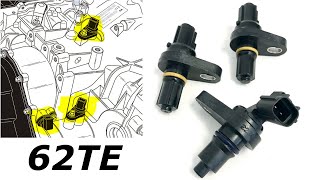
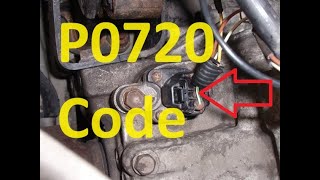
The 2011-2014 Chrysler 200, whether equipped with the 2.4L or 3.6L engine, primarily uses the 62TE 6-speed automatic transmission. This transmission has three speed sensors: Input (Nt), Transfer (Nc), and Output (No). The P0720 code specifically points to the Output sensor. A key characteristic of the 62TE is that the Input and Output sensors are identical, interchangeable parts (Mopar P/N 5078554AA), while the Transfer sensor is a different part. The identical nature of the input/output sensors can simplify parts ordering, but their connectors are also identical, creating a risk of them being cross-connected during a repair, which would lead to different gear ratio error codes. For an isolated P0720 code, the fault lies directly with the output sensor 🎬 Watch: Understanding the causes and fixes for the P0720 code. or its circuit.
Symptoms You May Notice
- Check Engine Light is illuminated
- Transmission is stuck in one gear (limp mode)
- Harsh, erratic, or delayed shifting
- Speedometer needle drops to zero or behaves erratically while driving
- Vehicle may stall when coming to a stop
- ABS or Traction Control light may illuminate
- Replacing the entire transmission when only a simple sensor is needed.
- Replacing the wrong speed sensor. The 62TE has three, and P0720 points specifically to the output sensor.
- Replacing the PCM/TCM before thoroughly testing the sensor and wiring circuit.
- Confusing a transmission speed sensor issue with an ABS wheel speed sensor issue. ABS/Traction lights point to wheel speed sensors, while limp mode and speedometer failure point to transmission speed sensors.
Most Likely Causes
- Failed Output Speed Sensor (OSS) 🔴 High Probability The sensor is an electronic component that operates in a high-heat environment and is a very common failure point on the 62TE transmission due to age and heat cycles.
How to confirm: After checking wiring, test the sensor's internal resistance with a multimeter; it should be within the manufacturer's specified range (typically 560-680 Ohms for this type). An out-of-spec reading or open-circuit confirms the sensor is bad. Alternatively, given the low cost of the part, many owners and technicians opt to replace it as the first step.
Typical fix: Replace the Output Speed Sensor. The Input and Output sensors are identical parts (Mopar 5078554AA) on the 62TE transmission, and many owners choose to replace both simultaneously as a preventative measure.
Est. part cost: $20-$50 - Damaged Wiring or Corroded Connector 🟡 Medium Probability The sensor wiring is located under the vehicle, exposed to road debris, moisture, and heat from the exhaust, which can lead to corrosion, chafing, or broken wires. Corrosion can also occur within the main transmission harness connector.
How to confirm: Visually inspect the wiring harness leading to the output speed sensor for any signs of damage, melting, or corrosion at the connector pins. Perform a continuity test on the wires between the sensor connector and the TCM connector.
Typical fix: Repair the damaged section of wiring or clean/replace the connector. In some cases, cleaning the main transmission connector with contact cleaner and applying dielectric grease can resolve intermittent issues.
Est. part cost: $10-$30 - Low or Contaminated Transmission Fluid ⚪ Low Probability → Shop Transmission Assembly Extremely dirty fluid can contain metallic particles that stick to the magnetic tip of the speed sensor, disrupting its signal. While less common as a direct cause for a circuit code, it's an easy and important check.
How to confirm: Check the transmission fluid level and condition. The fluid should be at the correct level, pinkish-red, and not smell burnt. If the fluid is dark, brown, and full of debris, it indicates a problem.
Typical fix: Perform a transmission fluid and filter change. If significant metal shavings are found on the sensor's magnetic tip, it may indicate a more severe internal transmission problem, such as compounder failure.
Est. part cost: $100-$250
Rare But Worth Checking
- Faulty Powertrain Control Module (PCM) or Transmission Control Module (TCM): → Shop Engine Control Module (ECM) This is the least likely cause. Before condemning the module, all other possibilities (sensor, wiring, fluid) must be exhaustively ruled out. A faulty module is expensive and often requires programming.
- Internal Transmission Failure (Compounder): → Shop Transmission Assembly A heavy coating of metal shavings on the magnetic tip of the old speed sensor is a major warning sign. The 62TE transmission is known for a failure in the 'compounder' (low clutch drum assembly) which sheds metal debris. This debris collects on the speed sensors, causing codes like P0720. In this case, replacing the sensor is only a temporary fix and the transmission will require a rebuild or replacement.
Diagnosis Steps
- Scan for Codes: Confirm P0720 is present. Note any other codes, especially P0700 or P0715.
- Check Transmission Fluid: Check the level and condition of the transmission fluid. Low or dirty fluid can cause a variety of issues.
- Inspect Wiring and Connector: Visually inspect the wiring harness and connector for the Output Speed Sensor. It is located on the driver's side of the transmission, accessible by removing the wheel. The output sensor is the rearmost of the two identical sensors. Look for corrosion, damage, or loose connections.
- Test the Sensor: Disconnect the sensor and test its resistance with a multimeter. Compare the reading to the manufacturer's specification (approx. 560-680 Ohms). An out-of-spec reading confirms a bad sensor.
- Check the Circuit: If the sensor tests good, check for voltage and ground at the sensor connector. Test for continuity on the signal wire between the sensor and the TCM to rule out a broken wire.
- Replace the Sensor: If the sensor is confirmed to be faulty (or as the most probable first step), replace it. It is held in by a single 8mm bolt. 🎬 See this walkthrough on how to replace the 62TE sensors. Lubricate the O-ring on the new sensor with clean transmission fluid before installation.
- Inspect Old Sensor Tip: Examine the magnetic tip of the old sensor. A light metallic fuzz is normal. Large chunks or a thick coating of shavings points to a serious internal transmission problem requiring professional diagnosis.
- Clear Codes and Test Drive: After the repair, clear the codes and perform a test drive to ensure the transmission shifts correctly and the code does not return.
Parts You'll Likely Need
- Transmission Output/Input Speed Sensor
(OEM #5078554AA)— This sensor is the most common point of failure for the P0720 code on this vehicle. It is the same part for both the input and output positions.
Trusted brands: Mopar, NTK, Standard Motor Products (SMP), Delphi
OEM price range: $40-$60
Aftermarket price range: $20-$40
Related Codes That Often Appear With This One
- P0700 — P0700 is a generic code that means the Transmission Control Module (TCM) has stored a fault code. It almost always appears alongside a more specific transmission code like P0720 to signal the check engine light.
- P0715 — This code points to the Input Speed Sensor. It can appear with P0720 if both sensors are failing due to age or if they are both contaminated with metallic debris from an internal transmission issue.
Technical Service Bulletins (TSBs) & Recalls
- TSB 21-013-13: This TSB addresses customer complaints about poor shift quality on the 62TE transmission and involves a software update (flash) for the control module. However, it does not directly fix a P0720 code, which confirms that P0720 is almost always a hardware failure (sensor or wiring) rather than a software glitch.
Platform-Specific Known Issues
- Metal Shavings on Sensor Tip: A well-documented issue with the 62TE transmission is the failure of the 'compounder' assembly. When this internal part fails, it sheds metal debris that gets circulated in the fluid. This debris sticks to the magnetic tips of the speed sensors, causing codes like P0720. If you replace your sensor and find it coated in metal shavings, the new sensor will likely fail again soon, and the transmission needs to be inspected for a rebuild.
Mechanic-Grade Diagnostic Values
- Output Speed Sensor Internal Resistance — expected: 560-680 Ohms at room temperature (approx. 70°F).. Failure: A reading of infinity (Open Loop) or near zero (short) indicates a failed sensor. A value significantly outside the expected range also warrants replacement.
- Sensor Circuit Reference Voltage — expected: 5 V ± 0.5 V at the sensor connector with key-on, engine-off.. Failure: Voltage outside this range points to a problem with the PCM or the wiring, not the sensor itself.
- Sensor Circuit Ground Resistance — expected: Less than 1.0 Ω between the ground pin at the connector and a known good chassis ground.. Failure: Higher resistance indicates a poor ground connection, which can cause erratic signals and intermittent codes.
Scan Tool Commands That Help
- wiTECH (Chrysler Dealer Tool): View 'Output Speed Sensor' Live Data — This is the primary diagnostic step. While driving, the OSS reading should increase smoothly and correlate with vehicle speed. If the reading is zero, erratic, or drops out intermittently, it confirms a fault in the sensor or its circuit.
- wiTECH (Chrysler Dealer Tool): Reset Adaptive Values / Quick Learn — After replacing the sensor or performing any transmission repair, a 'Quick Learn' procedure should be performed. This allows the TCM to relearn the clutch fill times and shift points, ensuring smooth operation and preventing harsh shifts after the repair. This is found under the 'Misc Functions' tab for the TCM.
Wiring & Ground Locations
- Output Speed Sensor Connector — On the driver's side of the 62TE transmission case, accessible by removing the driver's side front wheel. It is the rearmost of the two identical sensor connectors.. This is the primary point for testing the sensor and the circuit. Pin 1 is the Sensor Signal wire (typically Dark Green/Yellow) and Pin 2 is the Sensor Ground (typically Dark Blue/Dark Green). Verifying 5V reference, ground, and signal integrity happens here.
- PCM Connector C1 (Gasoline Engines) — The Powertrain Control Module is located in the engine bay, typically near the firewall or fender.. The Output Speed Sensor signal wire terminates at the PCM. For example, on a 2013 model, the (T52) Output Speed Sensor Signal wire goes to Pin 52 of the C1 connector. Testing for continuity between the sensor connector and this pin can identify a broken wire in the harness.
- G105 / G902A — A primary engine compartment ground. G105 is on the right side of the engine compartment, while G902A (on 3.6L) is on the left rear of the engine.. The PCM and its sensor grounds rely on clean, secure main ground points. A corroded or loose main ground can introduce electrical noise and cause intermittent or inexplicable sensor codes, including P0720, even if the sensor's direct circuit appears intact.
Real Owner Repair Stories
- Reddit user in r/MechanicAdvice (2015 Chrysler 200) — No start, multiple electrical issues including non-functional lights and horn after a starter replacement.
❌ Tried (didn't work) Mechanic #1 replaced the starter but noted a burnt wire from the body to the transmission., Mechanic #2 found the starter was fine but the starter ground wire was badly rotted.
✅ What actually fixed it The root cause was a severely rotted main starter ground wire. After fixing the ground and a partially broken signal wire, the car started, but numerous other electrical gremlins remained, indicating widespread issues stemming from the poor ground connection. This highlights the importance of checking main grounds for this platform. - NHTSA ODI #11257253 — An owner of a related Chrysler model reported that while the ABS light had ceased to appear, the check engine light remained steady with codes P0700, P0732, and P0720. The owner noted that when coming to a stop at a red light with the brake fully applied, the engine would jerk.
- NHTSA ODI #10565222 — A report describes a situation where, following a radiator repair, five different codes appeared including P0305, P0404, P0736, and P0720, illustrating how multiple electronic faults can sometimes surface simultaneously on these platforms.
OEM Part Supersession History
05078554AA→5078554AA— Standard Mopar part number format update. The leading '0' is often dropped in modern parts catalogs.
Heads up: The part itself has not changed. It is also cross-referenced with D262438A and D132438 in some systems. It remains the correct and interchangeable part for both Input and Output speed sensor positions on the 62TE transmission for this vehicle range.
Diagnostic Flowchart
Other Known Issues on This Vehicle
Issues unrelated to this code that are worth knowing about as an owner of this generation:
- Clogged Heater Core 🟠 Medium — Very common. Owners report progressively worsening heat, especially on the passenger side, often requiring multiple flushes or heater core replacements.
- 3.6L Pentastar Rocker Arm Failure ('Pentastar Tick') 🔴 High — A widely documented issue for the 3.6L V6. Failed rocker arm bearings cause a distinct ticking noise, misfires, and can lead to camshaft damage if ignored.
- Totally Integrated Power Module (TIPM) Failure 🔴 High — Common across many Chrysler products of this era. Can cause a wide range of bizarre electrical issues, including engine stalling, fuel pump problems, and random activation of accessories.
- Throttle Body Failure 🟠 Medium — Can cause erratic idle, poor throttle response, and stalling. Often due to carbon buildup on the throttle plate.
- Master Window Switch Failure 🟡 Low — The driver's side master window switch is a common failure point, causing one or more power windows to become inoperable.
Used vs. New Parts: Buying Guide for This Vehicle
When a used part is the smart pick: For this specific repair, a used part is NOT recommended. The Output Speed Sensor is a low-cost electronic component with a high failure rate due to heat and age. The risk of getting a used part that is already near the end of its service life is very high, and the cost savings are minimal compared to the labor of replacing it again.
What to inspect on the donor part:
- Not applicable; new part is strongly advised.
OEM-only on this vehicle (don't cheap out):
- While not strictly 'OEM-only', using a Mopar sensor is highly recommended for fit and longevity. If going aftermarket, stick to top-tier brands.
Aftermarket brands forum-validated for this vehicle:
- NTK (often the OEM supplier)
- Standard Motor Products (SMP)
- Delphi
Brands owners have reported issues with on this vehicle:
- Unbranded, 'white-box' parts from online marketplaces. These often have a high rate of being dead-on-arrival or failing prematurely.
Real Owner Stories
Aggregated from forums and TSBs cited above. Mileages and costs reflect what owners reported in those sources.
2013 Chrysler 200 V6
Symptoms: The vehicle suddenly went into limp mode (stuck in one gear) and the speedometer dropped to zero while driving.
What fixed it: The owner replaced the output speed sensor themselves.
Source hint: chrysler-200-forum.com / avengerforumz.com
2013 Chrysler 200 V6
Symptoms: Recurring issues with a clogged heater core and progressively worsening heat, especially on the passenger side.
What fixed it: The heater core required replacement for the third time.
Source hint: Reddit - r/MechanicAdvice
Related OBD-II Codes
Frequently Asked Questions
Does TSB 21-013-13 fix the P0720 code on my 2011-2014 Chrysler 200?
Where is the Output Speed Sensor located on the Chrysler 200 62TE transmission?
Can I use the same part for both the input and output speed sensors?
What should the resistance reading be for a healthy Output Speed Sensor on this vehicle?
If I find metal shavings on the tip of the sensor I just pulled out, is the sensor the only problem?
Why did my speedometer stop working at the same time the Check Engine Light came on?
Helpful Videos
We Have This Part in Stock

The information in this article is provided for general reference and educational purposes only. Vehicle specifications, procedures, and part compatibility can vary by production date, trim level, and region. Always consult your vehicle's factory service manual and verify part numbers before purchasing or performing repairs. Safety-critical components such as airbags, seat belts, and braking systems should be installed by a qualified professional.
- Chrysler 200:
- 🧭 Diagnostic Flowchart
- 🎬 Helpful Videos
- 🛍️ Shop This Part
- What's Unique About the 2011-2014 Chrysler 200
- Symptoms You May Notice
- Most Likely Causes
- Rare But Worth Checking
- Diagnosis Steps
- Parts You'll Likely Need
- Related Codes That Often Appear With This One
- Technical Service Bulletins (TSBs) & Recalls
- Platform-Specific Known Issues
- Mechanic-Grade Diagnostic Values
- Scan Tool Commands That Help
- Wiring & Ground Locations
- Real Owner Repair Stories
- OEM Part Supersession History
- Other Known Issues on This Vehicle
- Used vs. New Parts: Buying Guide for This Vehicle
- Real Owner Stories
- 2013 Chrysler 200 V6
- 2013 Chrysler 200 V6
- Related OBD-II Codes
- Frequently Asked Questions
- 🎟️ Get 5% Off