

P0720 on 2005-2010 Chrysler 300: Output Speed Sensor and Conductor Plate Guide
On a 2005-2010 Chrysler 300, P0720 almost always means the transmission conductor plate has failed. The output speed sensor is integrated into this plate inside the transmission. The fix requires replacing the conductor plate and the 13-pin connector sleeve, a job with a DIY difficulty of 4/5 that often costs $500-$800 at a shop. It is critical to use the correct transmission fluid (meeting MB 236.10/236.14 spec, like Shell ATF 134), not standard Chrysler ATF+4.
- P0720 on a 2005-2010 Chrysler 300 is not a simple external sensor issue; it points to a problem inside the transmission.
- The most likely culprit is a failed conductor plate, which houses the output speed sensor.
- Always replace the 13-pin electrical connector sleeve and the transmission filter/gasket when servicing the conductor plate.
- Due to the complexity of dropping the valve body, this repair is recommended for experienced DIYers or professional mechanics.
- Ignoring this code will result in poor drivability and can potentially lead to more severe transmission damage.
What's Unique About the 2005-2010 Chrysler 300
Most Chrysler 300 models in this year range are equipped with a Mercedes-Benz-designed 5-speed automatic transmission, known as the NAG1 or W5A580 (also called 722.6 in Mercedes platforms). Unlike many vehicles with a simple, external, and easily accessible output speed sensor, the NAG1 transmission integrates both the input and output speed sensors directly onto a component called the 'conductor plate'. This plate is an electronic circuit board mounted to the valve body inside the transmission oil pan. Therefore, a P0720 code is rarely a simple sensor swap; it typically indicates the failure of the entire conductor plate assembly, making the repair more complex and costly.
Symptoms You May Notice
- Check Engine Light is on
- Transmission stuck in one gear (limp mode)
- Harsh, erratic, or delayed shifting
- Speedometer reads 0 MPH or behaves erratically while driving
- ABS and/or Traction Control lights may illuminate
- Cruise control is inoperative
- Vehicle may stall when coming to a stop
- PRNDL gear indicator on the dashboard may flash
- Replacing only an external speed sensor. On the NAG1 transmission, the sensor is internal and part of the conductor plate.
- Replacing the valve body when only the conductor plate is faulty.
- Condemning the entire transmission without diagnosing the electronics first.
- Using the wrong transmission fluid (ATF+4). The NAG1/W5A580 requires fluid meeting Mercedes-Benz specifications, not standard Chrysler ATF+4.
Most Likely Causes
- Failed Transmission Conductor Plate 🔴 High Probability → Shop Transmission Assembly The speed sensors are integrated into this electronic plate, which is submerged in hot transmission fluid. Over time, heat cycles and fluid exposure cause the delicate electronic circuits and sensor connections to become brittle and fail. This is a well-documented, common failure on the Mercedes 722.6 / NAG1 transmission.
How to confirm: A professional scan tool can monitor live data from the output speed sensor. If the reading is zero or erratic while the vehicle is moving, and the wiring is confirmed to be good, the conductor plate is the culprit. In some cases, even after replacement, the code can persist if a cheap, low-quality aftermarket plate was used, as noted by users on forums like MBWorld.org.
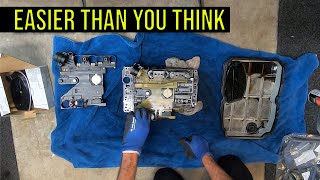
Typical fix: Replace the entire transmission conductor plate assembly. This involves dropping the transmission pan and valve body. It is highly recommended to use a genuine Mopar/Mercedes part for reliability.
Est. part cost: $130-$300 - Leaking 13-Pin Electrical Connector Sleeve 🟡 Medium Probability The O-rings on the connector sleeve that passes through the transmission case are a known weak point. They degrade over time, allowing transmission fluid to leak out and contaminate the electrical connection, disrupting the sensor signal. In some cases, fluid can wick all the way up the wiring harness to the Transmission Control Module (TCM), causing more widespread issues.
How to confirm: Visually inspect the 13-pin connector on the front passenger side of the transmission. If red transmission fluid is present in the connector or on the wiring harness, the sleeve has failed. This is a very common and inexpensive part to fail. 🎬 See how to replace the transmission connector sleeve
Typical fix: Replace the 13-pin connector sleeve. This is inexpensive and should always be done when replacing the conductor plate, even if it's not currently leaking.
Est. part cost: $10-$25 - Damaged Wiring or Loose Connection ⚪ Low Probability
How to confirm: Inspect the wiring harness leading to the 13-pin transmission connector for any signs of chafing, breaks, or corrosion. Unplug the connector and check for bent or damaged pins. A poor ground connection at the TCM can also cause intermittent electronic issues. 🎬 Watch: How to test the conductor plate remotely from the TCM
Typical fix: Repair the damaged section of wiring or clean the connector pins.
Est. part cost: $5-$50 - Low or Contaminated Transmission Fluid ⚪ Low Probability → Shop Transmission Assembly The NAG1 transmission is sensitive to fluid level and condition. Water contamination, even at a 0.5% concentration, can cause shuddering and shifting problems.
How to confirm: Check the transmission fluid level and condition. The NAG1 transmission does not have a traditional dipstick and requires a special tool. If the fluid is dark, burnt-smelling, or contains metal shavings, it indicates a more severe internal problem.
Typical fix: Perform a transmission fluid and filter change using the correct fluid (Shell ATF 134 or equivalent). If significant debris is found, an internal transmission inspection is necessary.
Est. part cost: $100-$250 for fluid and filter service
Rare But Worth Checking
- Faulty Powertrain Control Module (PCM) or Transmission Control Module (TCM): → Shop Engine Control Module (ECM) This is very rare and should only be considered after all other possibilities (conductor plate, connector, wiring, fluid) have been definitively ruled out. Fluid wicking from a leaking 13-pin connector is a more likely cause of TCM failure than the module failing on its own.
Diagnosis Steps
- Scan for Codes: Use an OBD-II scanner to confirm P0720 and check for any other related transmission codes like P0700 or P0715.
- Check Live Data: If your scanner supports it, monitor the Output Shaft Speed sensor data while driving. A reading of 0 RPM or erratic jumps while the car is moving points to a sensor circuit issue.
- Inspect the 13-Pin Connector: Visually inspect the main transmission electrical connector on the passenger side for any signs of red transmission fluid leakage. If fluid is present, the connector sleeve must be replaced. This is a primary and common point of failure.
- Inspect Wiring: Carefully check the wiring harness going to the transmission connector for any visible damage, chafing, or corrosion. Check for good ground connections at the TCM.
- Check Fluid Level and Condition: Using the correct dipstick tool (purchased separately), verify the transmission fluid is at the proper level and is in good condition. The fluid level must be checked at a specific operating temperature. The fluid should be Shell ATF 134 or another fluid meeting MB spec 236.14, not ATF+4.
- Suspect the Conductor Plate: If the wiring, connector, and fluid are good, and the live data shows a failed sensor signal, the conductor plate is the most likely cause of the problem.
- Professional Diagnosis: If you are unsure at any point, seek a diagnosis from a qualified transmission shop, as replacing internal components unnecessarily can be very expensive.
Parts You'll Likely Need
- Transmission Conductor Plate
(OEM #52108308AC)— This is the most common failure point for a P0720 code on the NAG1 transmission, as it contains the integrated speed sensors.
Trusted brands: Mopar, Mercedes-Benz, Dorman, Standard Motor Products (SMP)
OEM price range: $250-$350
Aftermarket price range: $120-$280 - Transmission Electrical Connector Sleeve
(OEM #68021352AA)— The O-rings on this part frequently fail, causing fluid leaks that disrupt the electrical connection. It should be replaced whenever the conductor plate is serviced.
Trusted brands: Mopar, Vaico, APA/URO Parts
OEM price range: $15-$25
Aftermarket price range: $10-$20 - Automatic Transmission Fluid (Shell ATF 134 / MB 236.14 Spec) — The transmission fluid must be drained to perform the repair, and it is critical to refill with the correct type and amount of fluid. The NAG1/W5A580 transmission does NOT use ATF+4.
Trusted brands: Shell ATF 134, Valvoline MaxLife ATF, Fuchs Titan ATF 4134
OEM price range: $15-$25 per quart
Aftermarket price range: $8-$15 per quart - Transmission Filter and Pan Gasket
(OEM #52108325AA)— These should always be replaced when the transmission pan is removed for service.
Trusted brands: Mopar, Mann, Wix, ATP
OEM price range: $20-$40
Aftermarket price range: $10-$20
Related Codes That Often Appear With This One
- P0700 — This is a generic transmission fault code. It simply means the Transmission Control Module (TCM) has detected a problem and has requested the Check Engine Light to be turned on. It will almost always accompany a specific transmission code like P0720.
- P0715 — This code relates to the Input Speed Sensor. Since both the input and output sensors are on the same conductor plate in the NAG1 transmission, it is common for them to fail around the same time, triggering both codes.
Technical Service Bulletins (TSBs) & Recalls
- TSB 21-003-05: 'NAG1 (W5A580) Transmission - Shudder When Torque Converter Clutch Engages' - This TSB details a procedure for flushing the transmission to remove water contamination, which can cause shifting issues even in very small amounts.
Mechanic-Grade Diagnostic Values
- Resistance check of conductor plate solenoids from the TCM connector (Pin 38 is common ground for all solenoids) — expected: Line Pressure Solenoid (Pins 38 to 36): ~5.5 Ohms. Shift Solenoids (e.g., Pins 38 to 16, 38 to 15): ~4.5 Ohms. Lock-up Clutch Solenoid (Pins 38 to 17): ~2.7 Ohms.. Failure: Readings that are open (infinite resistance) or significantly different from the expected values indicate a failure in the conductor plate or internal wiring.
- Torque for Valve Body to Transmission Case Bolts — expected: 8 Nm (71 in-lbs). Failure: Over-torquing can damage the valve body or transmission case; under-torquing can cause fluid pressure leaks and shifting problems.
Scan Tool Commands That Help
- Chrysler wiTECH or advanced bidirectional scanner (e.g., JScan): Reset Learned Adaptives (NAG1) / Store Adaptives — This procedure is required after replacing the conductor plate, valve body, or TCM. It clears the old shift calibration data and allows the TCM to relearn shift points and clutch fill times with the new components. Failure to perform this can result in poor shift quality even after the repair.
Wiring & Ground Locations
- Powertrain Control Module (PCM) — Located in the engine compartment, at the right rear (passenger side).. The PCM (which incorporates the TCM functions for the NAG1) receives the signal from the output speed sensor. All wiring tests, voltage checks, and resistance measurements for the sensor circuit ultimately lead back to this module's connector.
- G102 — A primary ground point located on the right side of the engine compartment.. A poor ground connection at G102 can cause a variety of electrical issues for the powertrain controls, potentially leading to erratic sensor readings and codes like P0720.
- 13-Pin Transmission Connector — On the right (passenger) side of the transmission housing.. This is the sole electrical interface between the vehicle's wiring harness and the internal conductor plate. It's a critical point for inspection for fluid leaks and for performing electrical tests on the sensor circuits before dropping the transmission pan.
Real Owner Repair Stories
- YouTube channel 'Mopar-N-More' (Dodge Charger with NAG1 5-Speed Transmission) — Transmission going into limp mode, lost signal from the input speed sensor (N3 speed sensor), which is on the same conductor plate as the output sensor.
❌ Tried (didn't work) The video focuses directly on the replacement, implying prior diagnosis pointed to the internal components.
✅ What actually fixed it Replaced the transmission conductor plate and the 13-pin connector sleeve. After the replacement and refilling with 5.5-6 quarts of the correct fluid, live data showed a stable speed sensor signal and the issue was resolved.
Documented NHTSA Reports
- NHTSA ODI #11257253: An owner reported that after an ABS light ceased to appear, the check engine light remained steady with codes P0700, P0732, and P0720. The driver noted that when coming to a stop or red light with the brake fully applied, the engine would jerk and the speedometer would behave abnormally.
- NHTSA ODI #10565222: A report describes a vehicle throwing five different codes, including P0720, P0305, P0404, P0736, and P179, following a radiator repair.
OEM Part Supersession History
52108308AB→52108308AC— Standard part revision and update by the manufacturer.
Heads up: The AB and AC versions are interchangeable for this application.
Diagnostic Flowchart
Other Known Issues on This Vehicle
Issues unrelated to this code that are worth knowing about as an owner of this generation:
- Front Suspension Clunk/Rattle 🟠 Medium — Very common. Often appears after 60,000 miles. Caused by worn tension struts, sway bar links, or ball joints. (Ref: TSB 02-001-08 addresses a knock or rattle noise from the front lower control arm bushings.)
- Shifter Stuck in Park ('Pink Thingy' Failure) 🟠 Medium — Extremely common, especially on 2005-2007 models. A small plastic pawl in the shifter assembly breaks, preventing the shifter from moving out of Park.
- Alternator Failure 🔴 High → Shop Alternator — Common after 100,000 miles. Symptoms include dimming/flickering lights, battery warning light, and stalling.
- HEMI (5.7L) MDS Lifter Failure 🔴 High — A known potential issue, often presenting as a ticking noise. A failed MDS (Multi-Displacement System) lifter can damage the camshaft, requiring expensive engine repairs.
- Power Window Motor/Regulator Failure 🟡 Low — Frequently reported problem where windows become inoperative, often due to a bad motor, regulator cable, or broken wiring in the door jamb.
Used vs. New Parts: Buying Guide for This Vehicle
When a used part is the smart pick: A used wiring harness or TCM/PCM could be a cost-effective option if they are confirmed to be the point of failure. However, for the primary causes of P0720, new parts are strongly recommended.
Donor-vehicle mileage cap: roughly under 80000 miles for the part to have meaningful remaining life.
What to inspect on the donor part:
- For a wiring harness, ensure there are no cuts, abrasions, or signs of fluid contamination.
- For a TCM/PCM, check for any signs of water damage or corrosion on the case and pins. Ensure the part number matches exactly.
- Verify the donor vehicle was not involved in a front-end collision or flood.
OEM-only on this vehicle (don't cheap out):
- Transmission Conductor Plate: This is a high-failure-rate electronic part submerged in hot fluid. A used part has unknown remaining life and is very likely to fail again soon. The labor involved makes it not worth the risk.
- 13-Pin Connector Sleeve: This is a very inexpensive part whose failure is due to degraded O-rings. A used one offers no benefit and carries the same risk of leaking. Always buy new.
Aftermarket brands forum-validated for this vehicle:
- Dorman
- Standard Motor Products (SMP)
Brands owners have reported issues with on this vehicle:
- Unnamed, no-brand 'white box' parts from online marketplaces should be avoided, as forum users frequently report premature failures with low-quality conductor plates.
Real Owner Stories
Aggregated from forums and TSBs cited above. Mileages and costs reflect what owners reported in those sources.
2005-2010 Chrysler 300 (NAG1 Transmission)
Symptoms: Issues persisted even after the conductor plate was replaced; the sensor signal remained problematic.
What fixed it: Replacing a low-quality aftermarket conductor plate with a high-quality or genuine part.
Source hint: MBWorld.org Forums - 'P0720 Changed conductor plate'
2005 Chrysler 300 — ~60000 miles
Symptoms: Front end clunking and rattle noises while driving.
What fixed it: Ensuring proper torque on the sway bar links or replacing front lower control arm bushings.
Source hint: Chrysler Forum UK - 'Front End Clunk'
Related OBD-II Codes
Frequently Asked Questions
My 2005 Chrysler 300 is shuddering when the torque converter engages; is there a fix for this?
Can I use ATF+4 fluid in my 2005-2010 Chrysler 300 with the 5-speed transmission?
I replaced the conductor plate on my Chrysler 300 but the P0720 code returned. Why?
Is the 13-pin connector leak common on the Chrysler 300 LX platform?
My Chrysler 300 is stuck in one gear and the speedometer reads 0 MPH. Is this related to P0720?
Does the front-end clunking I hear have anything to do with my transmission code?
Helpful Videos


We Have This Part in Stock


The information in this article is provided for general reference and educational purposes only. Vehicle specifications, procedures, and part compatibility can vary by production date, trim level, and region. Always consult your vehicle's factory service manual and verify part numbers before purchasing or performing repairs. Safety-critical components such as airbags, seat belts, and braking systems should be installed by a qualified professional.
- Chrysler 300:
- 🧭 Diagnostic Flowchart
- 🎬 Helpful Videos
- 🛍️ Shop This Part
- What's Unique About the 2005-2010 Chrysler 300
- Symptoms You May Notice
- Most Likely Causes
- Rare But Worth Checking
- Diagnosis Steps
- Parts You'll Likely Need
- Related Codes That Often Appear With This One
- Technical Service Bulletins (TSBs) & Recalls
- Mechanic-Grade Diagnostic Values
- Scan Tool Commands That Help
- Wiring & Ground Locations
- Real Owner Repair Stories
- Documented NHTSA Reports
- OEM Part Supersession History
- Other Known Issues on This Vehicle
- Used vs. New Parts: Buying Guide for This Vehicle
- Real Owner Stories
- 2005-2010 Chrysler 300 (NAG1 Transmission)
- 2005 Chrysler 300 — ~60000 miles
- Related OBD-II Codes
- Frequently Asked Questions
- 🎟️ Get 5% Off