

P0720 on 2004-2008 Chrysler Pacifica: Output Speed Sensor Causes and Fixes
On a 2004-2008 Pacifica, P0720 almost always points to a failed transmission Output Speed Sensor (OSS), causing limp mode and an erratic speedometer. Before replacing the sensor, have the alternator checked for excessive AC ripple, as a failing diode in the alternator is a very common issue on this platform that can mimic the same symptoms. The sensor itself is an inexpensive part, typically under $40.
- P0720 on a Pacifica means the computer has lost the signal from the Output Speed Sensor, causing limp mode and a faulty speedometer.
- Before buying any parts, have the alternator tested for 'AC ripple'. A bad alternator is a very common hidden cause for this code on Chrysler vehicles.
- If the alternator is good, the most likely fix is replacing the Output Speed Sensor, which is an inexpensive part and a manageable DIY job for many.
- This code rarely indicates a catastrophic transmission failure; do not agree to a transmission rebuild until the sensor and alternator have been ruled out.
- The code P0700 will almost always appear alongside P0720; it is a general alert and P0720 is the specific problem to focus on.
What's Unique About the 2004-2008 Chrysler Pacifica
The first-generation Chrysler Pacifica, along with other Chrysler models of this era using the 41TE (also known as A604) or 41AE (AWD version) automatic transmission, is particularly known for this issue. A unique and very common problem is a failing alternator causing electrical interference (AC ripple) that disrupts the speed sensor's signal, perfectly mimicking a sensor failure and triggering code P0720. Owners often mistakenly suspect a major transmission failure when the root cause is either a simple sensor or the alternator. This alternator issue is so prevalent that many technicians recommend checking it before replacing any transmission sensors.
Symptoms You May Notice
- Transmission stuck in 'limp mode' (usually second gear).
- Harsh, erratic, or delayed gear shifts, especially a clunk when shifting from Park to Reverse.
- Speedometer needle is erratic, reads 0 MPH while driving, or shows a speed (e.g., 10-25 MPH) when stopped.
- Check Engine Light is illuminated.
- Cruise control does not work.
- Vehicle may feel like it's pulling against the brakes when stopped in gear, often with an elevated idle.
- A howling or whining noise from the engine bay, which may be from the failing alternator.
- Replacing the transmission when only the output speed sensor or alternator is faulty.
- Replacing the output speed sensor multiple times without checking the alternator, which is the actual root cause.
- Assuming the problem is internal to the transmission (e.g., valve body, clutches) without first ruling out the simple external electrical causes.
Most Likely Causes
- Failed Output Speed Sensor (OSS) 🔴 High Probability This is a very common failure point on the 41TE/A604 family of transmissions used in these vehicles. The sensor is a simple magnetic pickup that can fail over time.
How to confirm: Use a scan tool to monitor the output speed sensor data while driving. If the reading is erratic, zero, or doesn't change with vehicle speed while the input sensor reads normally, the sensor is likely bad. Also inspect the magnetic tip of the sensor for excessive metal shavings when removed.
Typical fix: Replace the output speed sensor. It is located on the driver's side of the transmission and is typically accessed by removing the front driver's side wheel. It is often recommended to replace the input and output sensors as a pair.
Est. part cost: $20-$50 - Failing Alternator (Excessive AC Ripple) 🔴 High Probability → Shop Alternator A well-documented issue on Chrysler platforms of this era. A failing diode in the alternator creates electrical noise (AC voltage) that interferes with the sensitive speed sensor signal. The speed sensors are particularly sensitive to this AC ripple.
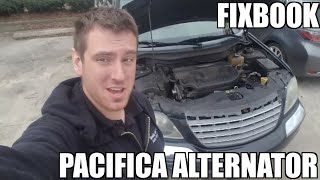
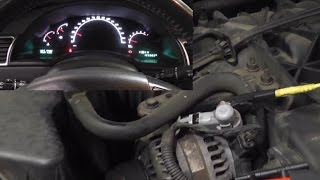
How to confirm: Have a professional auto parts store or repair shop perform a charging system test. Specifically ask them to check for 'AC ripple' or a 'bad diode test'. A reading of over 0.5V AC (or 500mV) can indicate a problem, though some sources suggest any ripple over 0.05V is cause for concern. 🎬 Watch how a bad alternator diode mimics transmission failure. A quick DIY test is to start the car, induce the symptom (e.g., by turning on the A/C), and then unplug the two-wire field connector on the alternator. If the speedometer drops to zero and the shifting issue stops, the alternator is bad.
Typical fix: Replace the alternator.
Est. part cost: $150-$300 - Damaged Wiring or Connector ⚪ Low Probability Corrosion, heat, and vibration can damage the wiring harness or the connector pins leading to the OSS. The harness can also be damaged by other repairs, such as a broken motor mount pinching the wires.
How to confirm: Visually inspect the wiring harness leading to the output speed sensor for any signs of fraying, melting, or corrosion at the connector. Test for continuity and proper voltage at the sensor connector using a multimeter.
Typical fix: Repair the damaged section of wire or replace the connector pigtail.
Est. part cost: $10-$30
Rare But Worth Checking
- Faulty Powertrain Control Module (PCM) or Transmission Control Module (TCM): → Shop Engine Control Module (ECM) This is very rare. In one documented case, a technician fixed a persistent P0720 by replacing the TCM after all other avenues were exhausted. All other possibilities, especially the sensor, wiring, and alternator, should be exhaustively ruled out before considering replacing the control module.
Diagnosis Steps
- Check for other stored trouble codes. Note if P0700 is present with P0720, or if any charging system codes like P2503 are stored.
- Perform a quick diagnostic test for the alternator. With the engine running and the symptoms present, carefully disconnect the two-wire field connector on the back of the alternator. If the speedometer immediately drops to zero and/or shifting normalizes, the alternator is the problem.
- If the quick test is inconclusive, have the charging system professionally tested, specifically checking for AC ripple from the alternator. This should be an early step to avoid misdiagnosis.
- Check the transmission fluid level and condition. Ensure it is full and not burnt or contaminated.
- Using a capable scan tool, monitor the live data stream for the Input Speed Sensor (ISS) and Output Speed Sensor (OSS) while driving. The OSS reading should be smooth and correspond to vehicle speed.
- If the OSS reading is erratic or zero (and the alternator is confirmed good), visually inspect the sensor's wiring and connector for any obvious damage, corrosion, or loose connections.
- If the wiring appears intact, test the sensor circuit for proper voltage, ground, and signal using a multimeter.
- If the circuit tests good, the Output Speed Sensor itself is the most likely culprit and should be replaced. Consider replacing the Input Speed Sensor at the same time as they are a similar age and a common failure part.
Parts You'll Likely Need
- Transmission Output Speed Sensor
(OEM #4800879)— This is the most frequent direct cause of the P0720 code on this vehicle. The input and output sensors are often identical.
Trusted brands: Mopar, NGK/NTK, Standard Motor Products (SMP), Dorman
OEM price range: $50-$75
Aftermarket price range: $20-$40 - Alternator — A failing alternator with excessive AC ripple is a common underlying cause of P0720 on this platform, tricking the computer into thinking the sensor has failed.
Trusted brands: Denso, Bosch, Mopar (Remanufactured)
OEM price range: $250-$400
Aftermarket price range: $150-$300
Related Codes That Often Appear With This One
- P0700 — P0700 is a generic code indicating the Transmission Control Module (TCM) has detected a fault and has requested the check engine light. It's an 'umbrella' code. P0720 is the specific fault that the TCM has stored.
- P2503 — This code indicates 'Charging System Voltage Low'. It can appear alongside P0720 when a failing alternator is the root cause, as the alternator's primary failure affects both charging performance and creates the electrical noise that disrupts the speed sensor.
Technical Service Bulletins (TSBs) & Recalls
- While no TSB directly addresses P0720 with the alternator ripple issue, TSB 21-008-04 (superseded by 21-001-13) discusses other transmission codes (like P1776) for the 41TE transmission in the 2004-2005 Pacifica, indicating manufacturer attention to transmission electronics and valve bodies during this period.
Platform-Specific Known Issues
- A failing alternator diode causing electrical interference (AC ripple) is a widely-reported issue that directly causes P0720 symptoms and codes on these Pacificas. Many owners have confirmed this fix after replacing the speed sensor did not solve the problem.
- The belt tensioner for the alternator is notoriously difficult to access and release, making an alternator replacement more challenging than on other vehicles.
Mechanic-Grade Diagnostic Values
- Output Speed Sensor reference voltage at the sensor connector — expected: 5V ± 0.5V with key on, engine off. Failure: Significantly lower or no voltage points to a wiring or PCM issue.
- Output Speed Sensor ground circuit resistance — expected: Less than 0.1 Ω. Failure: Higher resistance indicates a poor ground connection, which can cause erratic signals.
- Alternator AC Ripple Voltage — expected: Less than 0.5V AC (500mV), ideally less than 0.05V AC (50mV). Failure: Voltage above this threshold indicates failing alternator diodes, which create electrical noise that interferes with the speed sensor signal.
- Speed Sensor Installation Torque — expected: 27 Nm (20 ft. lbs.). Failure: Improper torque can lead to a poor seal or damage to the sensor.
Scan Tool Commands That Help
- DRB III Scan Tool: Using Miller Tool #8333 (Transmission Simulator) to test PCM response. — This is an advanced, dealer-level test used when the sensor and wiring are confirmed good, but a PCM/TCM fault is suspected. The simulator sends a perfect RPM signal to the PCM; if the DRB III doesn't show the correct RPM reading from the PCM, it confirms the PCM is at fault.
- DRB III Scan Tool: TCM QUICK LEARN — This procedure must be performed after replacing the Powertrain Control Module (PCM/TCM) to allow the new module to learn the transmission's specific hydraulic and electronic characteristics. Failure to do so can result in poor shift quality.
Wiring & Ground Locations
- G104 — At the left front of the engine compartment.. This is a primary ground point for the engine control system. A corroded or loose G104 can cause unstable sensor readings and intermittent faults, including P0720.
- Main Chassis Ground — On the driver's side frame rail, behind the headlight assembly.. This is a notorious failure point on the Pacifica for a wide range of electrical issues. The cable can corrode internally, causing intermittent high resistance that creates electrical noise and can trigger the P0720 code by interfering with sensor signals.
- G101 — A ground strap running from a transmission stud to the engine block.. This strap is known to fray or break due to engine movement from a worn motor mount. A poor ground between the engine and transmission can disrupt sensor signals that are referenced to ground.
- Output Speed Sensor Connector — On the driver's side of the transmission case, for the 41TE/41AE transmission.. This 2-terminal connector is where voltage and signal tests are performed. It should be inspected for corrosion, spread pins, or damage to the wiring pigtail.
Real Owner Repair Stories
- Chrysler Forum user 'travis' (Chrysler Pacifica (year not specified, but within 2004-2006 range based on 4-speed trans)) — Speedometer reads 10-25 MPH when stopped in gear, clunk when shifting into reverse, car feels like it's pulling against the brakes. Codes P0700 and P0720 were present.
❌ Tried (didn't work) Took it to AAMCO, who replaced the output speed sensor for ~$150. Problem returned., Replaced the output speed sensor again with a $16 part from AutoZone. Problem returned.
✅ What actually fixed it The charging system was tested and showed 'Excess Diode Ripple'. The user confirmed this by unplugging the alternator's field wire connector, which made the symptoms stop instantly. Replacing the alternator with a used one for $40 permanently fixed the problem.
Documented NHTSA Reports
- An owner reported in NHTSA ODI #11257253 that while driving, the check engine light appeared steadily with codes P0700, P0732, and P0720. The owner noted that when coming to a stop or red light with the brake fully applied, the engine would jerk and the speedometer would react.
- NHTSA ODI #10565222 describes a situation where five different codes appeared, including P0305, P0404, P0736, and P0720, following a radiator repair.
Model Year Variations Within This Range
- 2007-2008 with 4.0L V6 engine: These models are equipped with the 6-speed 62TE automatic transmission, not the 4-speed 41TE/41AE used with the 3.5L and 3.8L engines. While a P0720 code can still occur on a 62TE, the diagnosis is different, and the extremely common alternator AC ripple issue is a known characteristic of the 41TE/A604 transmission family and its associated electronics, not the 62TE.
Diagnostic Flowchart
Used vs. New Parts: Buying Guide for This Vehicle
When a used part is the smart pick: A used alternator from a low-mileage donor vehicle can be a cost-effective option, BUT it is critical to have it bench-tested for excessive AC ripple before installation. Used sensors are not recommended as they are inexpensive new and a common wear item.
Donor-vehicle mileage cap: roughly under 80000 miles for the part to have meaningful remaining life.
What to inspect on the donor part:
- For alternators, check for corrosion on the case and pulley.
- Ensure the pulley spins freely without grinding or excessive noise.
- Most importantly, request a bench test from the seller that specifically measures AC ripple voltage. Do not purchase without this test.
OEM-only on this vehicle (don't cheap out):
- Powertrain Control Module (PCM)
Aftermarket brands forum-validated for this vehicle:
- Sensors: NGK/NTK, Standard Motor Products (SMP)
- Alternators: Denso (often the OEM supplier), Bosch (New, not remanufactured)
Brands owners have reported issues with on this vehicle:
- Unknown or 'white-box' brand sensors.
- Remanufactured alternators from non-reputable sources, as they are a common source of repeat failures if not properly tested for AC ripple.
Real Owner Stories
Aggregated from forums and TSBs cited above. Mileages and costs reflect what owners reported in those sources.
2004-2008 Chrysler Pacifica
Symptoms: Speedometer showed 10-25 MPH when stopped in gear, the car clunked when shifting into reverse, and it felt like it was pulling against the brakes with a high idle. It threw codes P0700 and P0720 and went into limp mode once.
What fixed it: A charging system test revealed an 'Excess Diode Ripple' condition. Replacing the alternator with a used part for $40 resolved all symptoms and codes.
Cost: $40
Source hint: Pacifica P0700, P0720 - tricky issue resolved - Chrysler Forum
NHTSA Reported Case
Symptoms: An owner reported in NHTSA ODI #11257253 that the check engine light appeared steadily with codes P0700, P0732, and P0720. They noted that when coming to a stop at a red light, the engine would jerk and the speedometer would react.
Source: NHTSA ODI #11257253
Related OBD-II Codes
Frequently Asked Questions
I replaced the output speed sensor on my Pacifica for a P0720 code, but the problem came back. What's the most likely cause?
How can I quickly test if the alternator is causing the P0720 code and erratic speedometer on my Pacifica?
Is it true that replacing the alternator on a 2004-2008 Pacifica is a difficult job?
When I replace the Output Speed Sensor (OSS), should I replace the Input Speed Sensor (ISS) too?
My speedometer shows 10-25 MPH when I'm stopped at a light. Is this related to my P0720 code?
Are there any Chrysler TSBs that link P0720 to a bad alternator on the Pacifica?
Helpful Videos
Used OEM Parts in Stock
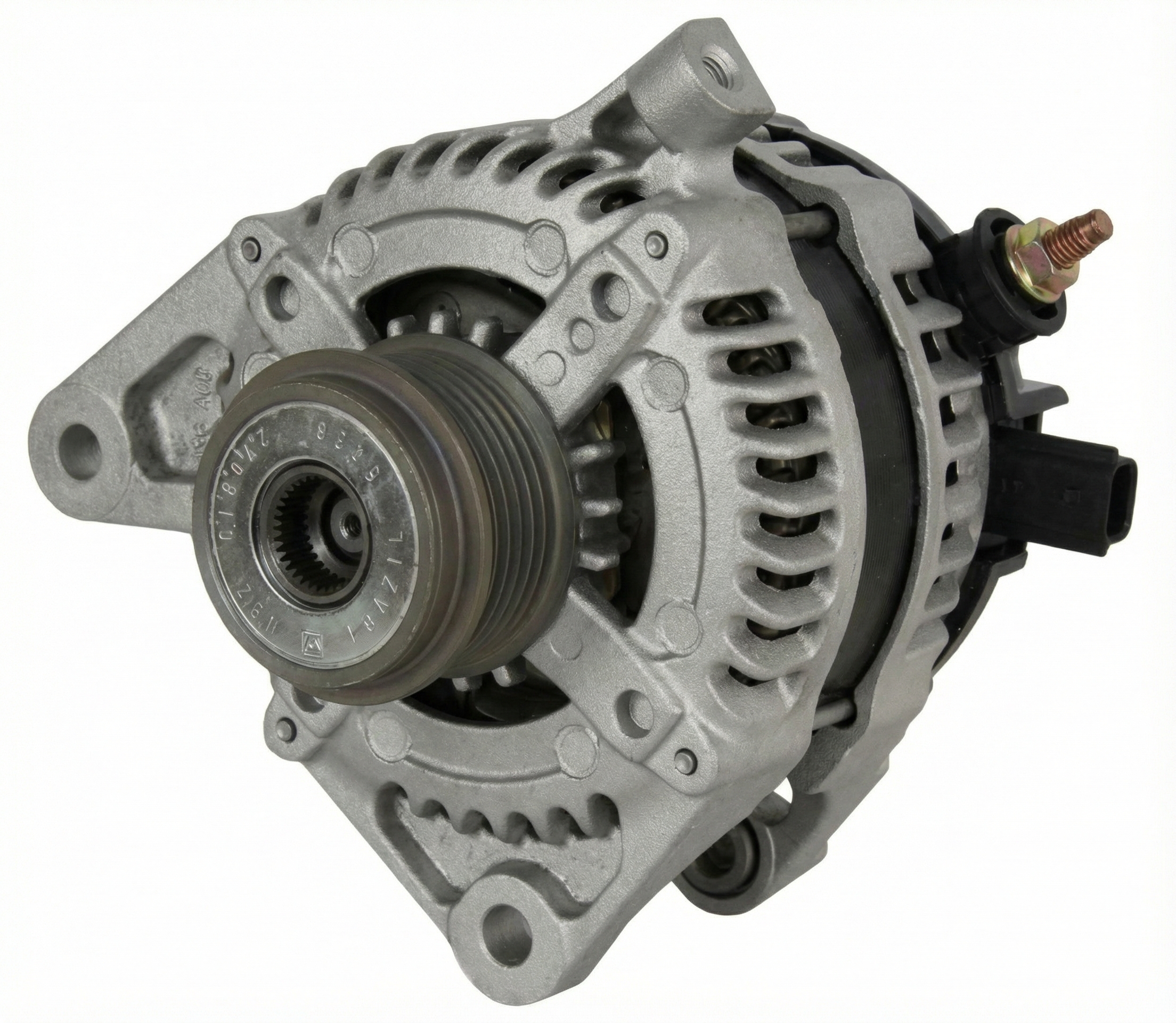
New Aftermarket Parts Available

The information in this article is provided for general reference and educational purposes only. Vehicle specifications, procedures, and part compatibility can vary by production date, trim level, and region. Always consult your vehicle's factory service manual and verify part numbers before purchasing or performing repairs. Safety-critical components such as airbags, seat belts, and braking systems should be installed by a qualified professional.
- Chrysler Pacifica:
- 🧭 Diagnostic Flowchart
- 🎬 Helpful Videos
- 🛍️ Shop This Part
- What's Unique About the 2004-2008 Chrysler Pacifica
- Symptoms You May Notice
- Most Likely Causes
- Rare But Worth Checking
- Diagnosis Steps
- Parts You'll Likely Need
- Related Codes That Often Appear With This One
- Technical Service Bulletins (TSBs) & Recalls
- Platform-Specific Known Issues
- Mechanic-Grade Diagnostic Values
- Scan Tool Commands That Help
- Wiring & Ground Locations
- Real Owner Repair Stories
- Documented NHTSA Reports
- Model Year Variations Within This Range
- Used vs. New Parts: Buying Guide for This Vehicle
- Real Owner Stories
- 2004-2008 Chrysler Pacifica
- NHTSA Reported Case
- Related OBD-II Codes
- Frequently Asked Questions
- 🎟️ Get 5% Off